



Media reform more urgent than need for media council
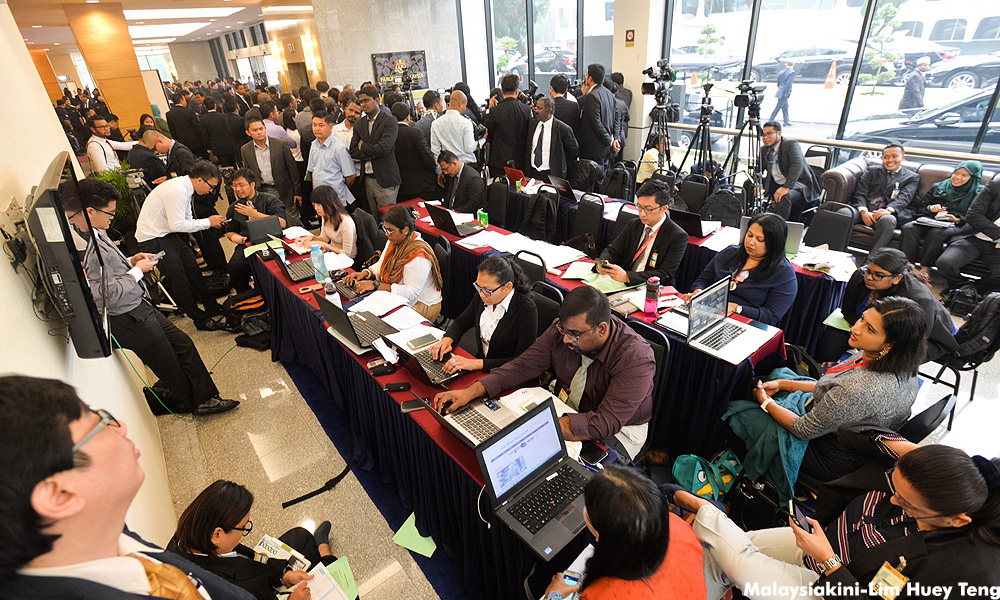
COMMENT | The formation of a media council is not a silver bullet to resolve the malaise confronting the local media. The crisis facing the media is public mistrust of the Fourth Estate which has become more a lapdog than watchdog.
The solution fundamentally lies in industry reform by the media’s stakeholders which include journalists, owners, advertisers, consumers and the regulators. But who is going to bell the cat?
The idea of a media or press council is not new. In his keynote address in conjunction with the National Media Forum organised by the Malaysian Press Institute (MPI) in Serdang last Thursday, A Kadir Jasin, the prime minister's special adviser on media and communications, said the idea was advocated way back in 1974 (when Abdul Razak Hussein was prime minister).
He said the Pakatan Harapan government wants the establishment of the Malaysian Media Council to be expedited. He added the government, however, will not be involved in the process and will leave it to media practitioners to discuss the matter jointly and to come up with a framework by the year-end.
Kadir did not give more details on the proposed media council other than saying he has spoken to the parties concerned and that Prime Minister Dr Mahathir Mohamad has also been informed.
He also said the government was willing to work with media organisations to provide the council with legal backing in the form of legislation and even placing the council under the auspices and funding of Parliament.
This suggests the proposed media council would be both a statutory and regulatory body along lines similar to Suhakam, the Human Rights Commission. This is a top-down approach requiring the Attorney- General’s Chambers to essentially draft the necessary legal framework.
Adopting such an approach would require a pathway and a mechanism. As it stands, the proposal now is rudderless and without form nor substance. But this has not dampened enthusiasm among media practitioners feverishly advocating ideas for a media council or reforms....
COMMENT | The formation of a media council is not a silver bullet to resolve the malaise confronting the local media. The crisis facing the media is public mistrust of the Fourth Estate which has become more a lapdog than watchdog.
The solution fundamentally lies in industry reform by the media’s stakeholders which include journalists, owners, advertisers, consumers and the regulators. But who is going to bell the cat?
The idea of a media or press council is not new. In his keynote address in conjunction with the National Media Forum organised by the Malaysian Press Institute (MPI) in Serdang last Thursday, A Kadir Jasin, the prime minister's special adviser on media and communications, said the idea was advocated way back in 1974 (when Abdul Razak Hussein was prime minister).
He said the Pakatan Harapan government wants the establishment of the Malaysian Media Council to be expedited. He added the government, however, will not be involved in the process and will leave it to media practitioners to discuss the matter jointly and to come up with a framework by the year-end.
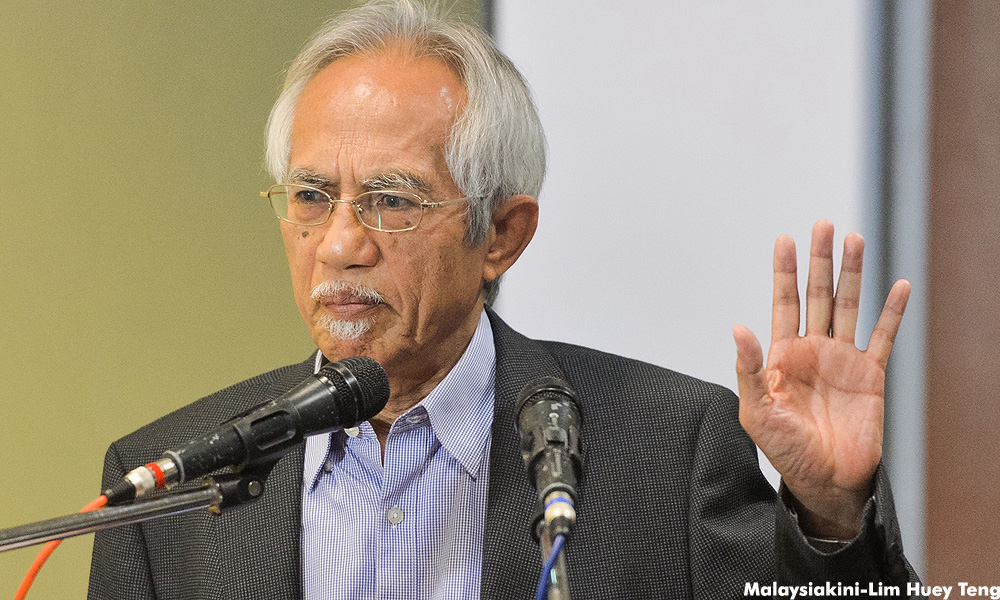
Kadir (photo) did not give more details on the proposed media council other than saying he has spoken to the parties concerned and that Prime Minister Dr Mahathir Mohamad has also been informed.
He also said the government was willing to work with media organisations to provide the council with legal backing in the form of legislation and even placing the council under the auspices and funding of Parliament.
This suggests the proposed media council would be both a statutory and regulatory body along lines similar to Suhakam, the Human Rights Commission. This is a top-down approach requiring the Attorney- General’s Chambers to essentially draft the necessary legal framework.
Adopting such an approach would require a pathway and a mechanism. As it stands, the proposal now is rudderless and without form nor substance. But this has not dampened enthusiasm among media practitioners feverishly advocating ideas for a media council or reforms.
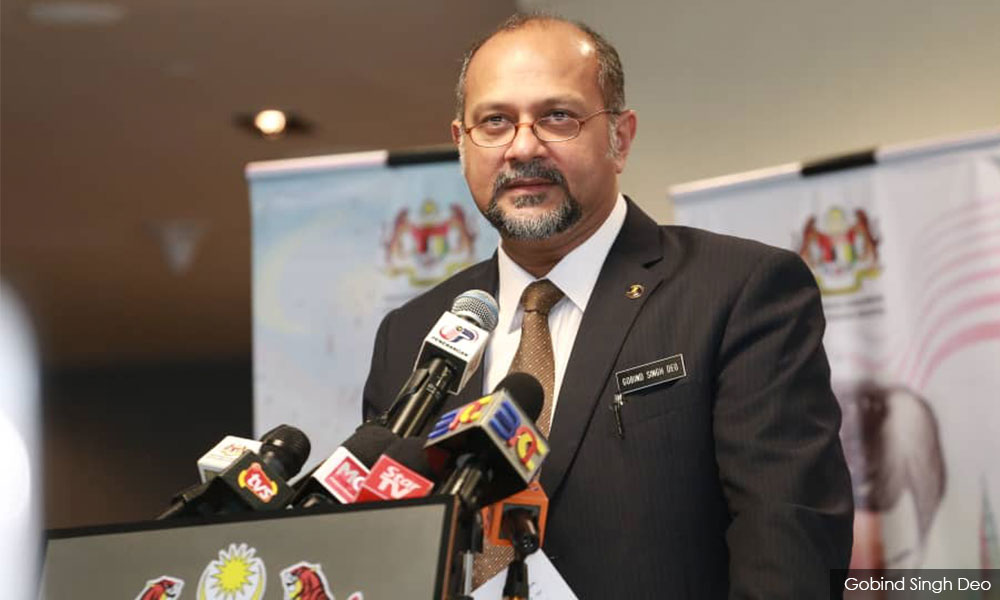
The first inkling that the new ruling coalition was embarking on setting up a media council came from Gobind Singh Deo (photo) almost immediately upon him being appointed the new communications and multimedia minister in May.
He then said a proposal would be tabled before the cabinet within two weeks. No more was heard about the council until Kadir’s keynote address last Thursday.
Under both the Abdullah Ahmad Badawi and Najib Abdul Razak administrations, there were also deliberations for the setting up of a media council but this was mooted by the Home Affairs Ministry, the traditional print media regulator.
The proposal was stillborn because the ministry had wanted to chair or control the council. The new home affairs minister now is Muhyiddin Yassin but he went for chemotherapy treatment even before he could be sworn in.
Meanwhile, Mahathir is understood as standing in for him as home minister. Now it looks like the proposed media council is parked in the Prime Minister’s Office.
Be that as it may, there’s a silver lining to all this uncertainty. Unlike the previous two attempts and as suggested by Kadir, the government will not interfere. But still, the formation of the council cannot be left to practitioners alone as they are too disparate.
To begin with, there are the journalists’ union, the numerous press clubs throughout the country, the associations for editors, publishers, advertisers as well as different groups for the vernacular press.
To add to this, there are also media-related groups and academics in media education as well as public relations personalities. They are like a different kettle of fish swimming in the same media ocean but unable to surf together.
High success rate
There are two possible pathways to resolve this dilemma. One is for a roundtable to be set up for all interested and related parties to come together and discuss possible options. This roundtable can be facilitated by say, the Malaysian Press Institute or even Suhakam or the Bar Council.
Kadir Jasin could very well be suited to play a role given his vast experience as a newspaperman, blogger and now communications adviser to the PM.
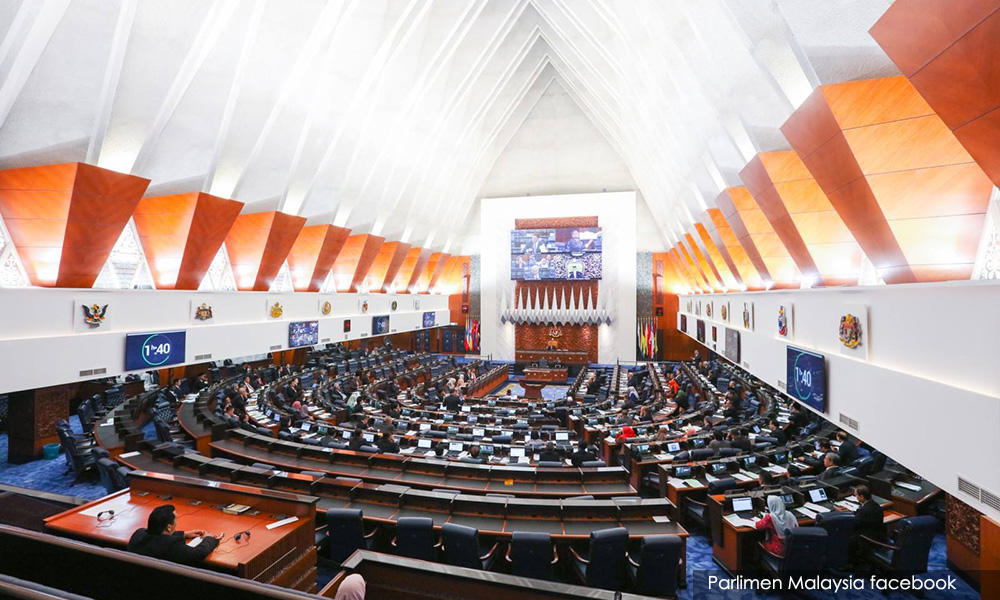
An alternative is to set up a parliamentary select committee since the idea is to put the proposed media council under Parliament itself.
The first task in setting up a media council is to frame a practical and simple structure. I particularly like the working definition used by Unesco:
“A press council stands for good, responsible and reliable journalism. It promotes an ethical code for journalists and investigates complaints about a breach of this code. When abiding by a press council, media professionals declare their dedication to the values of objectivity, plurality and democracy.”
Taking such an approach would free us from the distraction of debating press freedom and the preoccupation with the repeal of oppressive laws. Such laws affect not only the press but everyone else as it curtails speech contrary to the constitutional guarantee of it. This is best dealt by legal experts so we can focus on workplace reform.
Indeed, constitutional law expert, Shad Saleem Faruqi (photo), in his recent column had called for law reform to protect free speech.
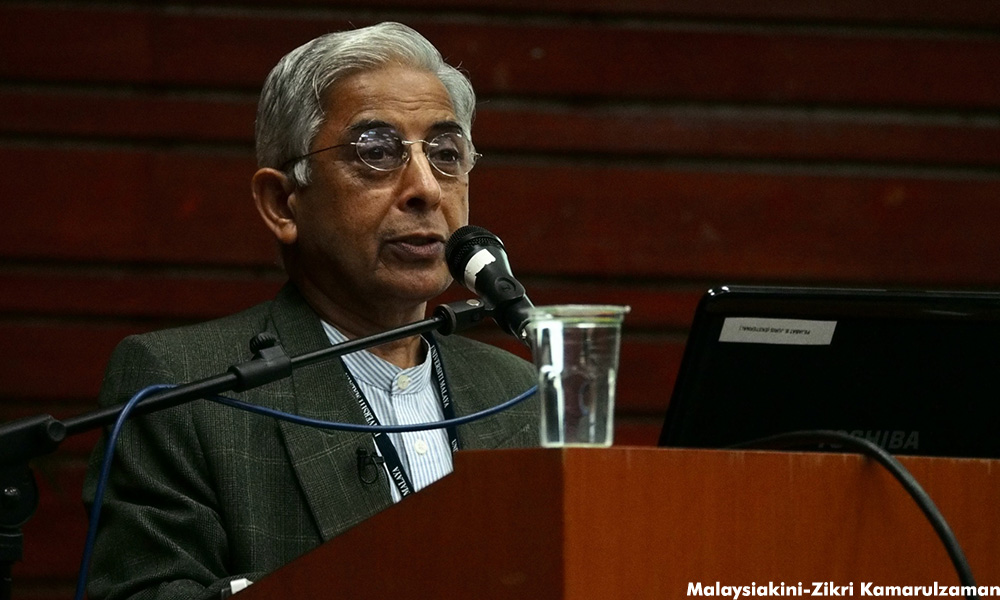
“We need an independent law reform commission to scrutinise the entire legal arsenal constructed to shackle the media, discourage thought and expression, and suppress information.”
He pointed out, “Parliament has crafted nearly 35 statutes covering freedom of speech, freedom of the press and right to assembly and association (which are important instrumentalities of free speech).”
Following the Unesco model, the focus would be on benchmarking ethical conduct and good journalism practices plus a complaints resolution mechanism for breach of ethics.
The task is less daunting if we take a leaf from the Indonesian example. Despite a very complex statutory structure, the Indonesian Media Council has a very impressive record in complaints resolution. It receives about 500 complaints a year yet as high as 97 percent of them have been resolved “amicably”.
Similarly, Malaysia, too, can achieve such high success rates of mediation. One way is to try to resolve this at its lowest level i.e. the in-house level. This can be done through the appointment of an internal independent ombudsman or “readers' advocate” in newspapers and online news outlets.
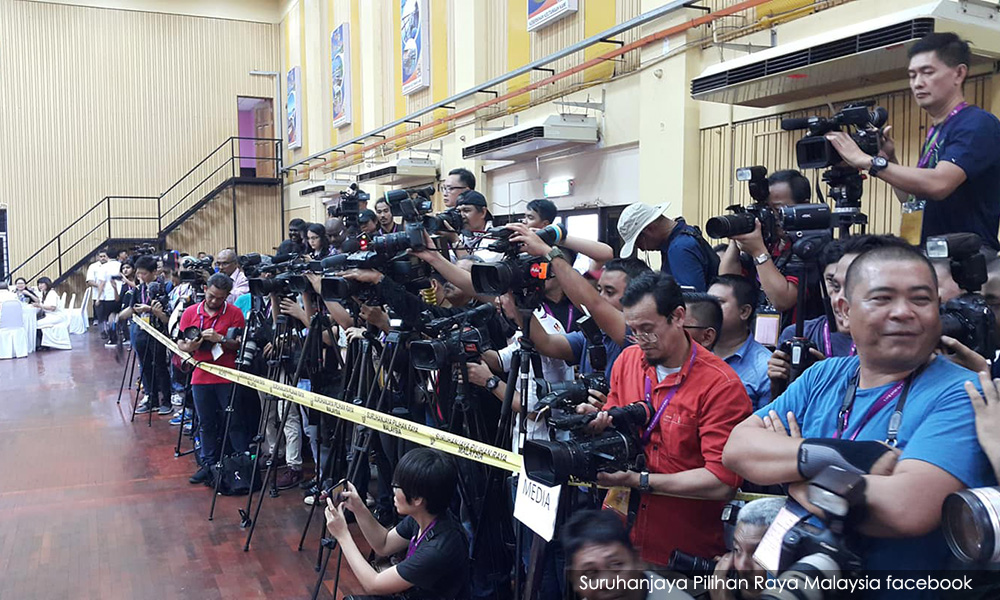
The internal ombudsman can be appointed by the news organisation to act as an internal media watchdog for fair and accurate reporting. The ombudsman would receive and examine complaints of unfair reporting from readers and assess such complaints.
The news organisation involved would then publish the assessment by the ombudsman in either the Letters or Op-ed page. If the complainant is not satisfied with the ombudsman’s decision, then he/she can pursue the complaint through another channel of his/her choice.
The ombudsman would write a monthly summary to be published by the respective paper/portal. The company would also publish a report of the ombudsman in their respective annual reports to inform their shareholders as a media audit. The ombudsman is also to assist the paper/portal in drafting up a code of best practices for its journalists.
In this way, the ombudsman acts as an independent external auditor. To ensure his or her impartiality, the fee of the ombudsman can come from the media council since as Kadir Jasin has pointed out, funding of the council can come from Parliament itself.
The office of the ombudsman in the newsroom will go a long way towards regaining the trust of readers very quickly and more than a media council can.
BOB TEOH is a media analyst and formerly secretary-general of the Confederation of Asean Journalists.
The views expressed here are those of the author/contributor and do not necessarily represent the views of Malaysiakini.


Report this comment
Are you sure you want to delete this comment?
This action cannot be undone.