




We get the media we deserve
COMMENT | While profit making basically motivates the news business, the media ecosystem shows that the educated public is more drawn to journalism that is transparent and accountable - one that speaks truth to power.
I’m thinking of The New York Times and Washington Post's critical reportage of the Trump presidency, and the online news portal coverage of the Malaysian general election and 1MDB scandal.
To show its transparency and accountability in the news-making process, The New York Times, for instance, included this blurb in its coverage of Trump’s immigration policy: “The Times conducted over three dozen interviews with current and former administration officials, lawmakers and others close to the process.”
Malaysian media can likewise show its transparency to regain the public trust when particular stories call for it. For instance, The Star’s report on the Minister in the Prime Minister’s Department Mujahid Yusof Rawa’s comment on khalwat, which the paper was coerced to apologise for misrepresenting the minister.
The audience that matter most in journalism – the readers – need to know how and why misattribution does sometimes happen and why what the source said could be misrepresented in the reporting process.
Journalists are as vulnerable as their readers are in jumping to conclusion or confirmation bias, as apparent in The Star’s report, except that journalists are better trained to filter out their biases, and differentiate between verifiable facts from unqualified opinions, legitimate claims from bizarre conspiracies.
An honest media that admits its errors and resolves it with an immediate correction will only serve to educate and instil in readers greater trust and confidence in its standards of reporting.
This necessitates employing an internal readers’ advocate and "fact-check reporters" to monitor the daily news and point readers to cases of misreporting and disinformation.
While multiple fact-checking is central to all types of reporting, news outlets are now employing specialist fact-checkers to monitor the news, photos and videos circulating online.
A former student of mine emailed me recently of his new job as a "fact-check reporter" at the Agence France Presse South Asia bureau in New Delhi.
Fact-check reporters are essentially digital detectives.
They unpack for readers the disinformation and spread of ‘fake news’ at its source - from discussion forums and tweets to chat apps and other evolving social media...
COMMENT | While profit making basically motivates the news business, the media ecosystem shows that the educated public is more drawn to journalism that is transparent and accountable - one that speaks truth to power.
I’m thinking of The New York Times and Washington Post's critical reportage of the Trump presidency, and the online news portal coverage of the Malaysian general election and 1MDB scandal.
To show its transparency and accountability in the news-making process, The New York Times, for instance, included this blurb in its coverage of Trump’s immigration policy: “The Times conducted over three dozen interviews with current and former administration officials, lawmakers and others close to the process.”
Malaysian media can likewise show its transparency to regain the public trust when particular stories call for it. For instance, The Star’s report on the Minister in the Prime Minister’s Department Mujahid Yusof Rawa’s comment on khalwat, which the paper was coerced to apologise for misrepresenting the minister.
The audience that matter most in journalism – the readers – need to know how and why misattribution does sometimes happen and why what the source said could be misrepresented in the reporting process.
Journalists are as vulnerable as their readers are in jumping to conclusion or confirmation bias, as apparent in The Star’s report, except that journalists are better trained to filter out their biases, and differentiate between verifiable facts from unqualified opinions, legitimate claims from bizarre conspiracies.
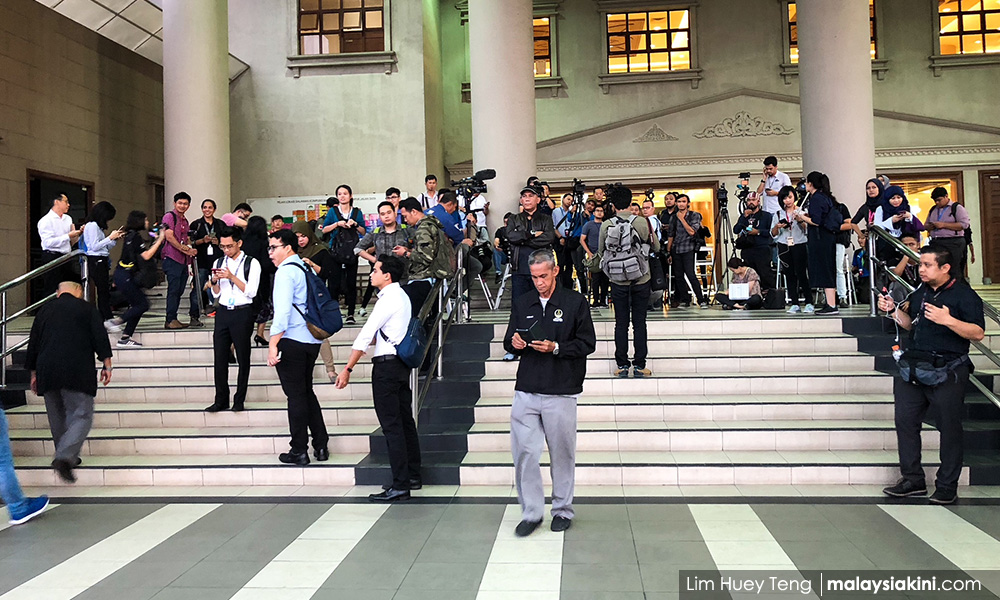
An honest media that admits its errors and resolves it with an immediate correction will only serve to educate and instil in readers greater trust and confidence in its standards of reporting.
This necessitates employing an internal readers’ advocate and "fact-check reporters" to monitor the daily news and point readers to cases of misreporting and disinformation.
While multiple fact-checking is central to all types of reporting, news outlets are now employing specialist fact-checkers to monitor the news, photos and videos circulating online.
A former student of mine emailed me recently of his new job as a "fact-check reporter" at the Agence France Presse South Asia bureau in New Delhi.
Fact-check reporters are essentially digital detectives.
They unpack for readers the disinformation and spread of "fake news" at its source - from discussion forums and tweets to chat apps and other evolving social media platforms.
Media Watch, a weekly programme on the Australian Broadcasting Corporation, is one example of a readers’ advocate and public fact-checker.
Commentators and journalists – ABC journalists included - are kept accountable for their analyses and reporting.
The site is renowned for “exposing conflicts of interest, journalistic deceit, misrepresentation, manipulation and plagiarism”. It essentially “keeps an eye on those who try to manipulate the media” for their own ends.
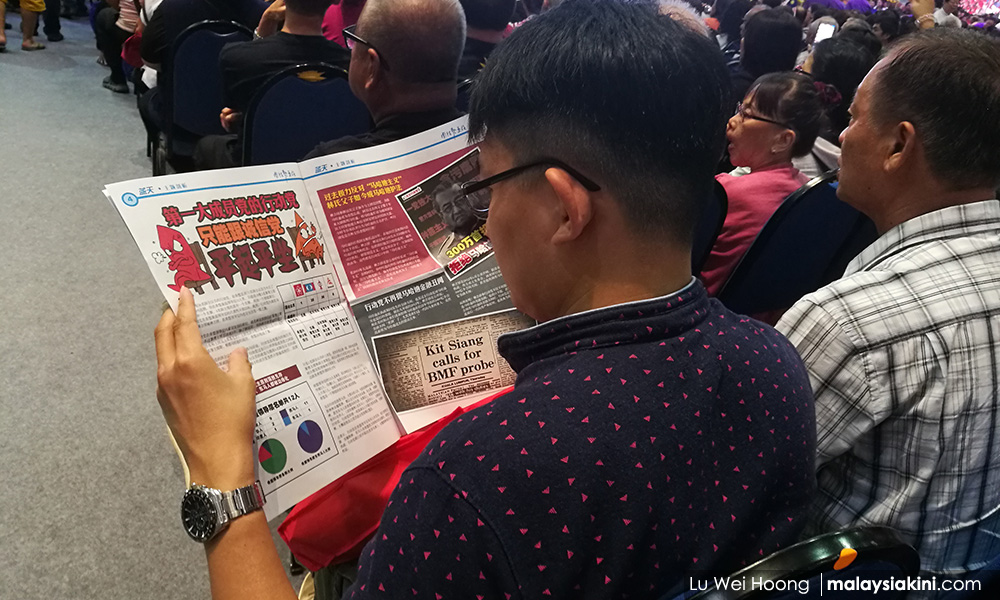
Besides an external watchdog, readers too should hold the media accountable by vigilantly monitoring the news and, hence, consistently keep journalists on their toes.
This requires readers to directly engage with journalists whenever they come across any reporting that compromises the public interest, marginalises minority groups and omits dissenting viewpoints.
Detecting baloneys
With digital technology, it is becoming increasingly easy for readers to question the journalists’ account if they think the stories have not asked the hard questions.
Yes, readers expect journalists to be impartial and fair. Unfortunately, the world of journalism is not that perfect.
To uncover the whole truth, readers need to do the investigative work themselves.
Journalism is only as good as the readers’ commitment to help journalists fill the holes in the stories, and call out any disinformation by manipulative sources.
Theoretically, journalists are the readers’ eyes and ears. The reality is quite different.
In the Malaysian context, journalists are more inclined to give the last word to those in power than ask the uncomfortable personal questions, especially during an election campaign.

For instance, Anwar Ibrahim’s rejection of the “super liberals” and comments on LGBT rights and same-sex marriage should spark a series of journalistic questions on his real stance on homosexuality.
Of course, journalists can see through the baloney and Anwar’s hypocrisies. But few Malaysian journalists have shown to be able or willing to point out that the emperor has no clothes.
Listening to Anwar’s spiel to his Malay-majority crowd at Bagan Pinang, I could not help but wonder about his inner thoughts on the decriminalisation of homosexuality, and criminalisation of sexuality-based discrimination.
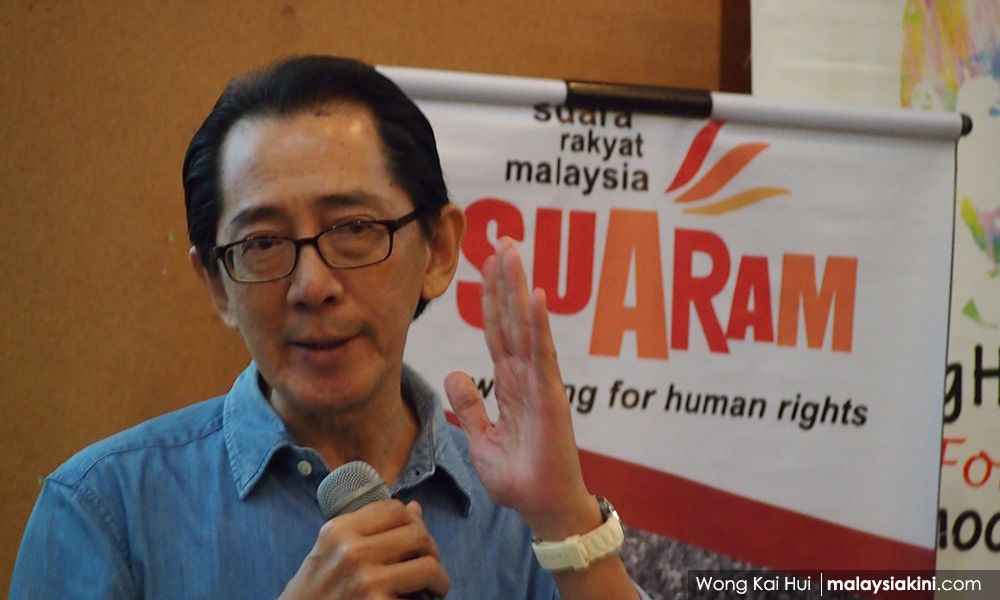
We fall for baloney politics because we are often uncomfortable with ambiguities and uncertainties. Hence, journalists and readers ought to work together to expose the baloney politics and pose the seldom-asked questions of Anwar as listed by Suaram adviser Kua Kia Soong (photo).
The late astrophysicist Carl Sagan had suggested numerous ways to detect baloney – or falsehoods – that politicians and their communication strategists often peddle to achieve their political ends.
The basic principle is to think of “alternative possibilities” to what was said by “authoritative” (or expert) sources. Arguments made from an authority position are not necessarily right.
Like their readers, journalists believe what they believe based on their history, their lived-in environment and their experiences through life.
The media process serves to meet these beliefs and expectations of the journalists and readers alike.
Founder of Sceptic, Michael Shermer, suggested two terms to describe this human tendency “to find meaningful patterns in meaningless noise" (patternicity), and "to infuse patterns with meaning, intention, and agency” (agenticity). Such is the power of beliefs and expectations that shape the media narratives.
Which boils down to this simple observation: If readers continue to be disengaged from the media process, and do not bother to prod journalists to ask the hard questions, then we do get the type of reporting we deserve from our journalists.
ERIC LOO is a senior fellow (journalism) at the School of the Arts, English & Media, Faculty of Law Humanities & Arts, University of Wollongong. He is also the founding editor of Asia Pacific Media Educator.
The views expressed here are those of the author/contributor and do not necessarily represent the views of Malaysiakini.


Are you sure you want to delete this comment?
This action cannot be undone.