


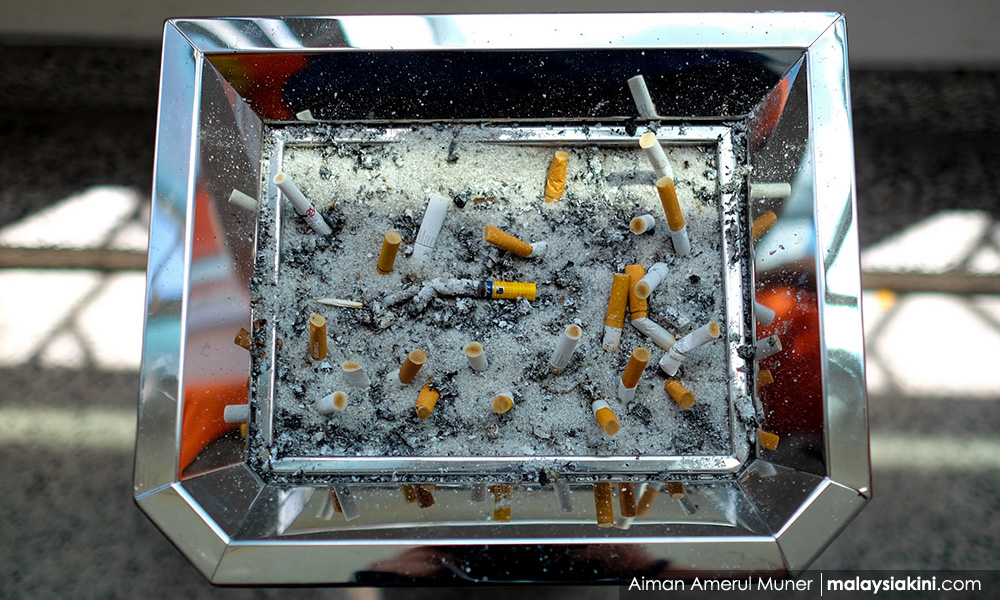

Who will shoulder burden of enforcing new smoking bans?
COMMENT | The Health Ministry recently announced that from Jan 1, 2019, all eateries nationwide, including restaurants, coffee shops and hawker stalls, would become smoke-free zones.
Following the new ruling, a friend of mine who runs a restaurant business in Kuala Lumpur grumbled during one of our meet-up sessions.
“The government's decision to declare all eateries as a smoke-free zone next year is really a pain in the ass. Even with designated smoking areas like what we have currently, things are difficult to manage,” he said.
When I asked him to clarify what was exactly “difficult to manage”, he told me of an incident which took place in his restaurant not too long ago.
“A few months ago, a customer seated at a smoke-free area in my restaurant complained to my waiter about someone smoking within the area. He urged the waiter to take immediate action. So my waiter went to the smoker and politely requested him to move to another table located in the smoking zone.
“However, he refused to do so – he claimed since the premise is an open-air restaurant, it did not matter where he was seated. When my waiter repeatedly asked the smoker to comply with the law, he began creating a scene, accusing the restaurant of discriminating against smokers.
“I had to step in and explain to him that if he doesn’t obey the rule which prohibits smoking in a non-smoking area, as the restaurant owner, I would have to face a penalty. I had to plead with him to be considerate. Even that did not do much, for he only left the restaurant after finishing his cigarette,” explained my friend...
COMMENT | The Health Ministry recently announced that from Jan 1, 2019, all eateries nationwide, including restaurants, coffee shops and hawker stalls, would become smoke-free zones.
Following the new ruling, a friend of mine who runs a restaurant business in Kuala Lumpur grumbled during one of our meet-up sessions.
“The government's decision to declare all eateries as a smoke-free zone next year is really a pain in the ass. Even with designated smoking areas like what we have currently, things are difficult to manage,” he said.
When I asked him to clarify what was exactly “difficult to manage”, he told me of an incident which took place in his restaurant not too long ago.
“A few months ago, a customer seated at a smoke-free area in my restaurant complained to my waiter about someone smoking within the area. He urged the waiter to take immediate action. So my waiter went to the smoker and politely requested him to move to another table located in the smoking zone.
“However, he refused to do so – he claimed since the premise is an open-air restaurant, it did not matter where he was seated. When my waiter repeatedly asked the smoker to comply with the law, he began creating a scene, accusing the restaurant of discriminating against smokers.
“I had to step in and explain to him that if he doesn’t obey the rule which prohibits smoking in a non-smoking area, as the restaurant owner, I would have to face a penalty. I had to plead with him to be considerate. Even that did not do much, for he only left the restaurant after finishing his cigarette,” explained my friend.
Shifting the burden of enforcement
According to my friend, although public health is the main priority in such rulings, the government should not leave it to the restaurant owners to enforce the regulations.
“Instead of making sure our customers abide by the law, we should be focusing on food quality and price; keeping our premises hygienic and clean; and providing good service to our customers.
“We are business people. We comply with the law to run our business. We operate eateries to make money. Why burden us with the responsibility of enforcing the government’s law?”
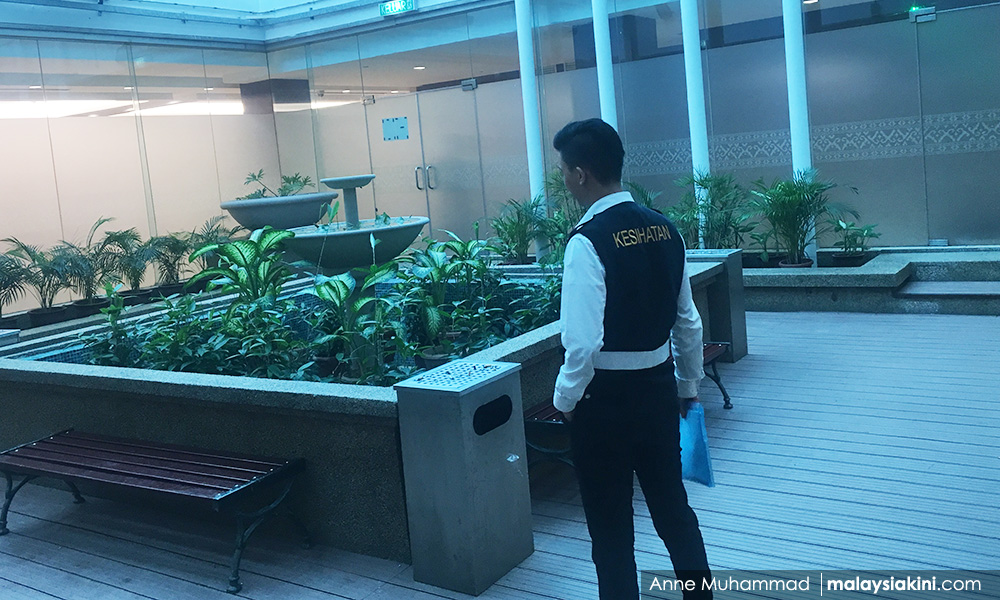
My friend’s argument made complete sense to me. Government-appointed authorities should be the ones enforcing rulings made by the government. The responsibility of enforcing a ruling should not be shifted to others.
The conversation I had with my friend reminded me of an incident I experienced myself a few years ago. I was commuting in a public bus in Kulim, Kedah, when a passenger sitting two seats in front of me was smoking. Although he was blowing the cigarette smoke out the window, I was unfortunate enough to still have the smoke gushing onto my face.
Irritated, I informed the bus driver. However, the response I received felt like a slap in the face.
“Cik mau saya pandu bas ke atau jaga penumpang agar tak merokok (Do you want me to drive the bus or babysit the passengers to ensure they do not smoke)?”
I remember being furious at the bus driver back then.
“Why stick ‘No Smoking’ labels inside the bus when you are not bothered to enforce it?” I thought.
Today, I understand better.
Enforcing smoking ban
Malaysia has been combating tobacco smoking ever since tobacco was identified as one of the leading causes of death in developed and developing countries in the world.
In 1993, the first national legislation aimed at regulating tobacco products, Control of Tobacco Product Regulations 1993, was gazetted and enforced throughout our country.
Under the regulation, tobacco advertisements and sponsorship, distribution of tobacco product samples, tobacco sales to minor and tobacco vending machines were prohibited while smoke-free areas and health warnings on cigarettes packaging were introduced.
In 2004, the 1993 regulation was revised to provide further protection against second-hand smoke. Under the Control of Tobacco Product Regulations 2004, smoke-free areas were increased while smoking areas were limited.
According to the Health Ministry’s MyHEALTH website, this included prohibiting smoking in these areas:
- In any school bus;
- On any floor with a service counter – any bank, TM Bhd, TNB and Pos Malaysia;
- In any area in a shopping complex;
- In any petrol station;
- In any stadium, sports complex, fitness centre or gymnasium;
- In any building used for religious purpose;
- In any area in a library;
- In any area in an internet café;
- In any area in a place of national service training; and
- In any area in a workplace with centralised air condition.
Under the same regulations, the owner (or occupier) of a premises or proprietor of a public vehicle needs to take all reasonable steps to ensure that no person smokes on the premises or in the vehicle. Failing to do so would mean they could be slapped with a fine not exceeding RM5,000 or imprisonment for a term not exceeding one year.
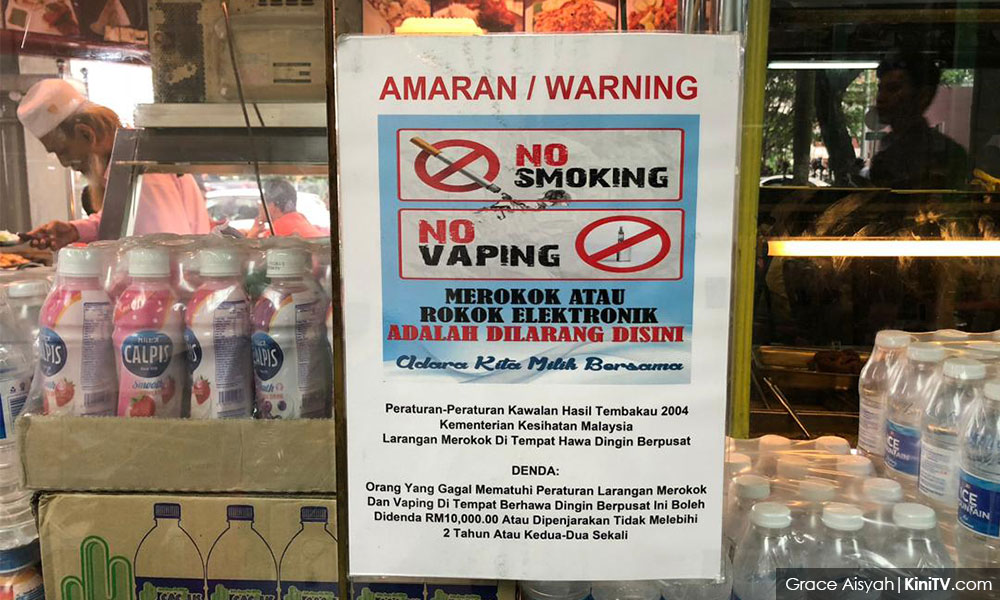
In 2013, the 2004 regulations were further amended. The smoke-free areas were further expanded to include all areas within a three-metre perimeter from the building line and to also include all areas under any permanent roof-covered areas of the building.
I must say, the government’s dedication to combating smoking by progressively amending the regulations to increase smoke-free areas in our country is very much appreciated.
And I do understand that the smoking ban needs to be implemented for better public health, cleaner air and to reduce government expenditure on treatment due to cigarette smoking.
However, taking action against owners (or occupiers) of a premises or proprietor of a public vehicle for the people’s inability to follow the law is just not right.
After all, when a team of enforcement officers can be deployed to enforce the ban on smoking inside the Parliament building, why can’t the government do the same in order to enforce the ban on smoking in other places?
FA ABDUL is a passionate storyteller, a growing media trainer, an aspiring playwright, a regular director, a struggling producer, a self-acclaimed photographer, an expert Facebooker, a lazy blogger, a part-time queen and a full-time vainpot.
The views expressed here are those of the author/contributor and do not necessarily represent the views of Malaysiakini.


Report this comment
Are you sure you want to delete this comment?
This action cannot be undone.