




‘Monopoly in drug procurement’ - Health Ministry makes wrong diagnosis
COMMENT | Secretary-general Dr Chen Chaw Min’s claim that there is no corruption in the Health Ministry doesn’t hold water one bit.
The success of the 72 pharmaceutical companies in each and every bid – whether through open or direct tenders – is too fantastic to suggest no foul play. This would be like winning the first, second and third prizes in the 4D every week for 61 years.
This has been the persistent pattern, leaving reliable medical suppliers that find themselves unable to break the logjam of the 72 bidders, as detailed in the whistleblower document alleging that 20 politically-linked “tendering agents” for the pharmaceutical companies.
Is the Health Ministry secretary-general implying that these 72 companies are unimpeachable in their supplies, cost of supplies, and potential recalls?
Chen should be more careful to dismiss the absence of any corruption outright.
As it is, Malaysian doctors are unable to satisfy all patients. Even Bersatu president Muhyiddin Yassin and PKR president-elect Anwar Ibrahim had to get treatment abroad. If nothing has improved at the VVIP level, what about for the rest of Malaysia?
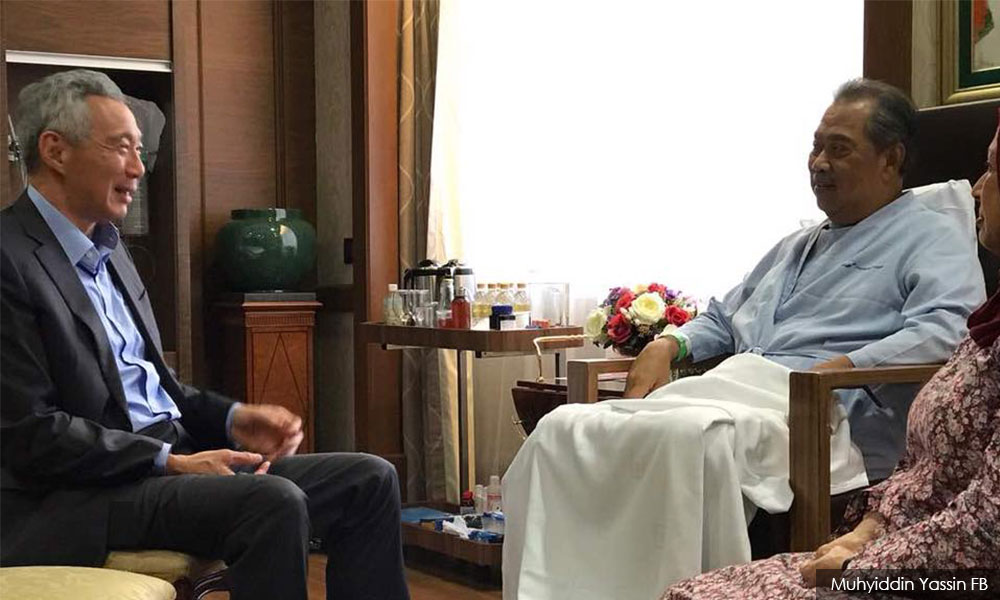
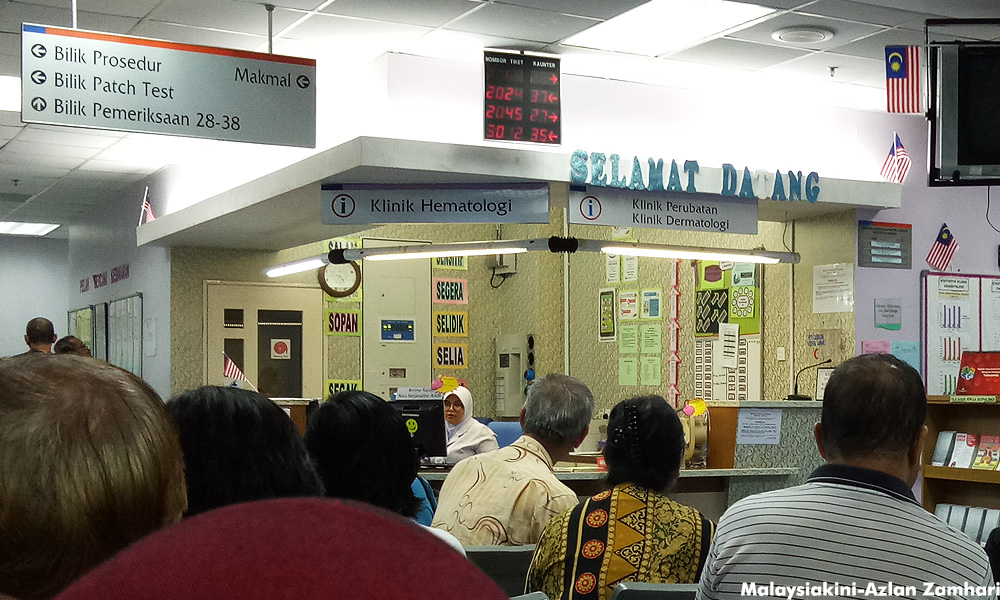
Any medical researcher would walk away with three observations. One, the cost of medical supplies has shot up. Two, the supply chain has been controlled by a cabal of suppliers. Three, the cost of medical services in the private sector have gone up, while the public sector has languished with little or no supplies, often resulting in long lines. That is the effect of keeping 72 on the list and no more at this time.
If the medical standards in Malaysia, from GPs to specialists are spotless, why do Malaysians have a medical system that is now verging on apartheid?
The rich are seeking whatever they can from the private sector on Malaysia (and abroad) while the poor are kept at arm’s length, which has manifested in long queues at public hospitals? As Marcellus in Hamlet says: "Something is rotten in the state of Denmark." And so it is in Malaysia.
Charles Santiago has lodged a police report with the MACC. Instead of inviting the Klang MP to look into the medical protocols of hospitals, ideally through spot checks and open books, Chen has resorted to outright denial. Denial, the good doctor should know, is not the equivalent of truth.
Surely, after all these years – and with both the prime minister and his deputy now being medical doctors – the landscape of medical supplies cannot be as paltry as the number of companies suggests.
Have the agents and the companies they service morphed into a cabal of specialised crack teams that know precisely how to underbid and overcharge with the goal of slipping through the cracks in a procurement system that is not even allowed to function as it should...
COMMENT | Secretary-general Dr Chen Chaw Min’s claim that there is no corruption in the Health Ministry doesn’t hold water one bit.
The success of the 72 pharmaceutical companies in each and every bid – whether through open or direct tenders – is too fantastic to suggest no foul play. This would be like winning the first, second and third prizes in the 4D every week for 61 years.
This has been the persistent pattern, leaving reliable medical suppliers that find themselves unable to break the logjam of the 72 bidders, as detailed in the whistleblower document alleging that 20 politically-linked “tendering agents” for the pharmaceutical companies.
Is the Health Ministry secretary-general implying that these 72 companies are unimpeachable in their supplies, cost of supplies, and potential recalls?
Chen should be more careful to dismiss the absence of any corruption outright.
As it is, Malaysian doctors are unable to satisfy all patients. Even Bersatu president Muhyiddin Yassin and PKR president-elect Anwar Ibrahim had to get treatment abroad. If nothing has improved at the VVIP level, what about for the rest of Malaysia?
Any medical researcher would walk away with three observations. One, the cost of medical supplies has shot up. Two, the supply chain has been controlled by a cabal of suppliers. Three, the cost of medical services in the private sector have gone up, while the public sector has languished with little or no supplies, often resulting in long lines. That is the effect of keeping 72 on the list and no more at this time.
If the medical standards in Malaysia, from GPs to specialists are spotless, why do Malaysians have a medical system that is now verging on apartheid?
The rich are seeking whatever they can from the private sector on Malaysia (and abroad) while the poor are kept at arm’s length, which has manifested in long queues at public hospitals? As Marcellus in Hamlet says: "Something is rotten in the state of Denmark." And so it is in Malaysia.
Charles Santiago has lodged a police report with the MACC. Instead of inviting the Klang MP to look into the medical protocols of hospitals, ideally through spot checks and open books, Chen has resorted to outright denial. Denial, the good doctor should know, is not the equivalent of truth.
Surely, after all these years – and with both the prime minister and his deputy now being medical doctors – the landscape of medical supplies cannot be as paltry as the number of companies suggests.
Have the agents and the companies they service morphed into a cabal of specialised crack teams that know precisely how to underbid and overcharge with the goal of slipping through the cracks in a procurement system that is not even allowed to function as it should?
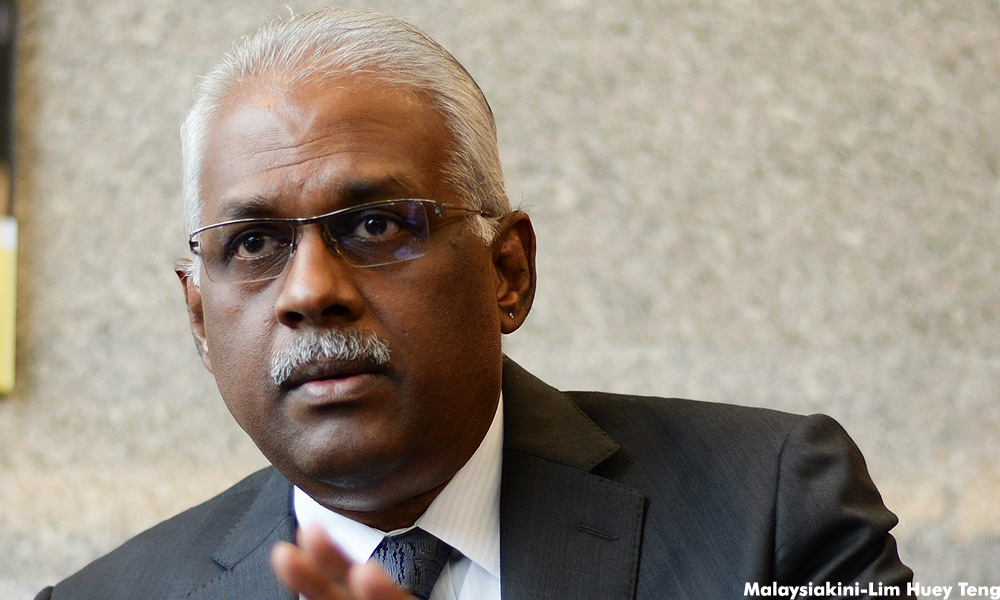
More importantly, why is Chen the one issuing a blanket wide denial when Santiago (photo) is clearly determined to get to the root of the issue? Shouldn't the prerogative of issuing an all-clear be the privilege of Health Minister Dr Dzulkefly Ahmad or a parliamentary select committee? Why skip these two rungs on the ladder?
Stop the charade
May 9 has transformed the entire landscape of how the medical industry and the Health Ministry should be interacting. To begin with, the medical industry and public healthcare system cannot milk or bilk either the government or the people. Enough is enough.
Why should patients who approach public hospitals, be occasionally, if not systematically, asked to get their laboratory tests done outside before public hospitals can look at the state of their health?
Are the public hospitals and private laboratories in cahoots with one another? Have government allocations been abused? This alone deserves to go before a Royal Commission of Inquiry as tax dollars have not been allowed to go the full mile at all.
For that matter, why is there a queue of thousands of housemen each year, sometimes up to a year and a half, when the state of medical services demands instant deployment of these fresh graduates? Doesn't the Health Ministry have a system of training them to be adept and up to date with the latest medical technologies?
Even with public hospitals being unable to perform, new private hospitals are allowed to pop up. Regardless of where or how money is found to build new ones, the creation of ever newer private hospitals is exerting a strain on the brain drain in public hospitals across Malaysia.
Why should seasoned and experienced doctors toil away in an ostensibly flawed system when they can make higher income in private medical sectors that charge higher medical fees? Thus they move to greener pastures, instead of excelling in older public hospitals. This is a vicious cycle that is forcing Malaysians to pay through their nose to access healthcare.
And what about the shortage of catheterisation labs in public hospitals used to perform cardiology procedures? Health Ministry officials have long insisted that the upgrading of public hospitals is in the works. Cath labs, for starters, would dramatically reduce waiting times in hospitals.
In light of these obvious deficiencies in the system, Chen might want to explain to the health minister how such a vital piece of information was missing in the midterm review of the 11th Malaysia Plan.
Has anyone been sleeping on the job when Malaysia has one of the highest cases of obesity and diabetes? Nor was there any urgency attached to stopping the outbreak of rabies in Sarawak. In Japan, there has been not a single case of rabies since 1957. Should the Health Ministry be looking east too?
In any case, if the above oversight was intentional – to allow the 72 pharmaceutical companies to persist with the status quo – their omissions and commissions are deserving of the most severe rebuke.
The clock is ticking for the Health Ministry to implement reforms. Dzulkefly, the toxicologist, should locate precisely where and how the poison has seeped into the ministry, and remove it once and for all.
PHAR KIM BENG is a multiple award-winning head teaching fellow on China and the Cultural Revolution at Harvard University.
The views expressed here are those of the author/contributor and do not necessarily represent the views of Malaysiakini.


Are you sure you want to delete this comment?
This action cannot be undone.