




Culture matters when it comes to mental health
COMMENT | Have you ever stopped to think about what mental health means to you?
Chances are, if you possess a good command of the English language and your personal outlook is oriented towards Western values, your answer might reflect a particular way of thinking about mental health that is couched in Western norms.
These norms emphasise that good mental health is about an individual’s potential to build a sense of self-worth and find satisfaction in social roles, as well as enjoy meaningful relationships with others and contribute to society.
Conversely, when people are unable to cope with the normal stresses of life, unable to realise their own potential and cannot work productively nor contribute to their communities, they are said to be in a state of poor mental well-being (or the opposite of what the World Health Organisation defines as good mental health).
Perceptions of mental health
But in Malaysia, not everyone has worldviews that conform to these conventions.
To use a singular cliché, our society is a vast cultural melting pot made up of various groups. Though populations in urban cities may have adjusted to Western norms, many communities still actively uphold traditional cultural practices – for example, having a shared language and religion, or a common set of social beliefs, expectations, values and taboos.
These groups are likely to favour their own cultural norms as a template for making sense of mental health and mental illness. For instance, cultures that are strongly influenced by religious values and concepts may attribute mental illness to supernatural causes, rather than explanations grounded in medical pathology.
Asrenee Ab Razak's 2017 paper in the Malaysian Journal of Medical Sciences shows that Malays, who follow the teachings of Islam, generally tend to associate mental illness with supernatural elements, such as possession by spirits and jinns.
The study, which explores Malay cultural understanding of mental illness, argues that religion and spirituality are important pathways for Malays in recognising different types of mental illnesses...
COMMENT | Have you ever stopped to think about what mental health means to you?
Chances are, if you possess a good command of the English language and your personal outlook is oriented towards Western values, your answer might reflect a particular way of thinking about mental health that is couched in Western norms.
These norms emphasise that good mental health is about an individual’s potential to build a sense of self-worth and find satisfaction in social roles, as well as enjoy meaningful relationships with others and contribute to society.
Conversely, when people are unable to cope with the normal stresses of life, unable to realise their own potential and cannot work productively nor contribute to their communities, they are said to be in a state of poor mental well-being (or the opposite of what the World Health Organisation defines as good mental health).
Perceptions of mental health
But in Malaysia, not everyone has worldviews that conform to these conventions.
To use a singular cliché, our society is a vast cultural melting pot made up of various groups. Though populations in urban cities may have adjusted to Western norms, many communities still actively uphold traditional cultural practices – for example, having a shared language and religion, or a common set of social beliefs, expectations, values and taboos.
These groups are likely to favour their own cultural norms as a template for making sense of mental health and mental illness. For instance, cultures that are strongly influenced by religious values and concepts may attribute mental illness to supernatural causes, rather than explanations grounded in medical pathology.
Asrenee Ab Razak's 2017 paper in the Malaysian Journal of Medical Sciences shows that Malays, who follow the teachings of Islam, generally tend to associate mental illness with supernatural elements, such as possession by spirits and jinns.
The study, which explores Malay cultural understanding of mental illness, argues that religion and spirituality are important pathways for Malays in recognising different types of mental illnesses.
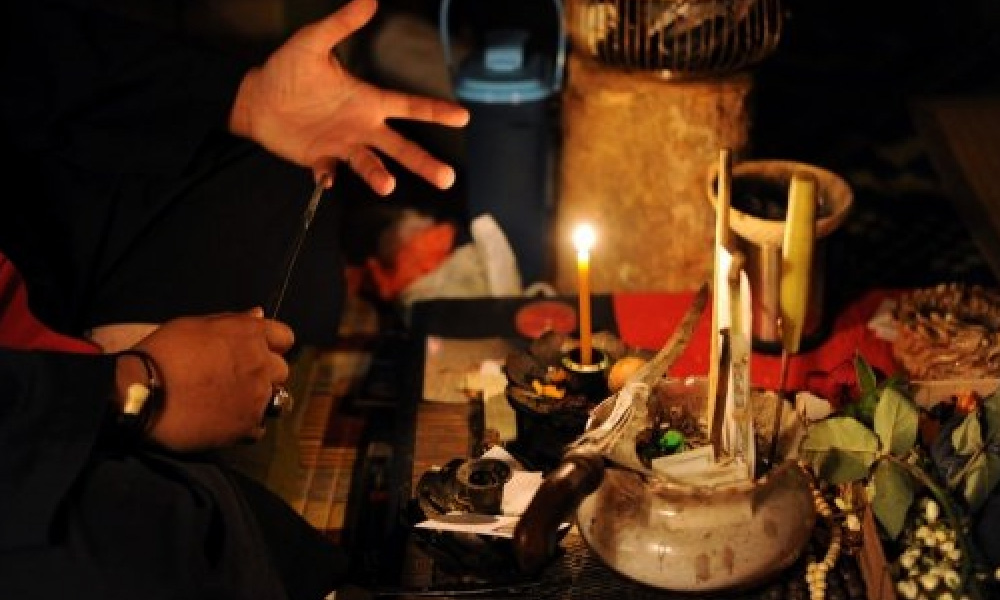
For instance, a post-childbirth mother with symptoms of hallucination, insomnia, stress and depression would typically be labelled as ‘gila meroyan’, in which she is believed to be possessed by spiritual elements.
For traditional ethnic Chinese, meanwhile, Taoism propounds that the human mind is in its purest form when operating in a transcendent, primordial state, and in accordance with the law of nature. Consequently, individuals afflicted with mental illnesses are deemed to have fallen "out of balance" with this harmony by exerting their will against the world.
Similarly, Hindus largely tend to derive their knowledge about human health and life from classical Vedic texts. Based on this philosophical system, mental illness is broadly framed as a result of an imbalance in the various elements of a person’s constitution, causing a perversion of the mind, intellect, consciousness, knowledge, manners and behaviour.
Distress and help-seeking behaviours
These examples illustrate how culture varies the ways different groups understand and make sense of mental health which, in itself, is a highly subjective experience.
Yet, in the process of shaping a collective understanding of mental health, culture also influences what a particular community considers normal behaviour and, by extension, what is considered inappropriate, or socially aberrant.
For mental health professionals trained in Western medicine, this presents certain challenges when dealing with patients from non-Western cultures.
Culture, for instance, shapes the ways that mental illness patients describe their symptoms, such as whether they disclose their distress in terms of emotional or physical signs.
Studies on the clinical presentation of depression among Asian patients and those belonging to Far East cultures have shown that many initially describe psychological distress as physical ailments – such as headaches, weight loss and dizziness. These patients only go on to reveal their emotional afflictions or personal problems later, when further questioned or asked more specifically.
Researchers have interpreted this phenomenon – somatisation – as a form of cultural patterning, in which patients depict discomfort in ways that conform to particular norms or standards of social conduct.
However, the underlying motivations for these behaviours are complex. Is it the case that depressed patients who complain of headaches and dizziness genuinely experience mental discomfort in this way?
Or is that, under the influence of cultural pressures, they avoid expressing ‘inappropriate’ emotional difficulties – unhappiness, guilt, anger and helplessness – for fear of inviting a judgmental response?
Culture and cure
Over and above diagnostic challenges, cultural diversity also affects people’s beliefs about how to cope with mental illness and curative methods.
For instance, communities that possess strong religious beliefs may prefer spiritual healing avenues over Western medical treatment. In Asrenee's paper, it was found that Malay patients – or their family and caregivers – were inclined to seek out folk healers, such as bomoh, and religious-spiritual healers, as a means of curing their condition.
In Malaysia, public healthcare services largely replicate Western models of medical practice. This is understandable, given that our country’s healthcare and treatment systems are a colonial legacy.

Moreover, since a majority of doctors and specialists working in the public healthcare system are trained in Western medicine, their diagnostic and treatment modes would naturally follow Western-based orientations.
In spite of this, given Malaysia’s diversity of cultures and backgrounds, there is a great need for healthcare providers in our country to also understand the ways that culture influences the experiences of individuals, especially how it affects patients’ communicating of distress, and their unique beliefs and behaviours.
This applies equally to psychiatrists, therapists and mental health professionals treating psychiatric patients in clinical settings, as well as primary care doctors and nurses, who play an important role in detecting and treating minor cases of mental illness in the community.
Instead of diagnosing and treating patients purely based on the Western medical model, these healthcare providers should endeavour to see patients against the background of their cultures, and be sensitive to symptom patterns across different cultures. The ability to handle cases in a culturally sensitive manner will surely increase effectiveness in diagnosing and treating patients under their charge.
To sum up, while the cultural factors influencing mental health are complex and subjective, it is important to recognise that there are multiple points of view, and different intricate patterns of understanding of mental health, that are woven into our society’s social fabric.
Mental health remains a largely taboo subject in our society, precisely because it is not talked about, and consequently, misunderstood. The collective reluctance to talk about mental health leads to stigmatisation, and a lack of empathy towards those living with mental health issues.
My personal hope is to inspire, through this column, as many Malaysians as possible to adopt a more inclusive counter-culture.
Most of us may not be practising doctors or specialists, but in our own lives, we can do more to broaden our knowledge by striking up conversations with friends and acquaintances outside of our own identity groups, and asking them how their particular culture affects their point of view in mental health.
Starting the dialogue about mental health and the many factors – including culture – that can affect it is surely the first step in the right direction towards a more stigma-free society, in which resources are made available to anyone who needs them.
LIM SU LIN is a policy analyst with the Penang Institute. A History graduate from Cambridge University, her research interests lie primarily in promoting good mental health as a criterion for public policy, and to carry out research into the social, economic and cultural factors that help to enhance mental well-being and support recovery from mental distress.
The views expressed here are those of the author/contributor and do not necessarily represent the views of Malaysiakini.




Report this comment
Are you sure you want to delete this comment?
This action cannot be undone.