


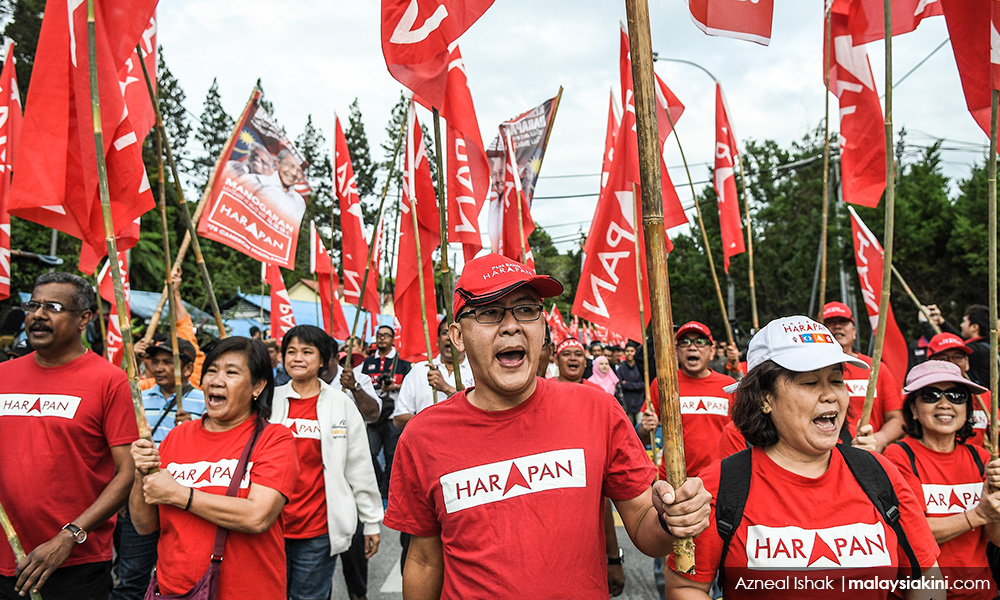

Are you disappointed in Harapan?
“Disappointment is a sort of bankruptcy – the bankruptcy of a soul that expends too much in hope and expectation.”
– Eric Hoffer
COMMENT | Academic Bridget Welsh, as usual, made an interesting point in a recent conference about the disappointment some Pakatan Harapan supporters feel towards this new regime. She said: “Unlike US President Donald Trump who had responded to his political base and hold on to power, in Malaysia we don’t see that.”
Just before the election, I made my case as to why I thought Dr Mahathir Mohamad’s Harapan would get the ‘Trump vote’ instead of Najib Abdul Razak’s BN, which went all out, in the words of then-deputy prime minister Ahmad Zahid Hamidi, to emulate the US president.
“What Zahid should be mindful of is that in these uncertain economic times, Mahathir looks more like someone who can take control of the situation than the current Umno poohbah and his coterie who are mired in all sorts of scandals. This is what Trump promised his supporters and what got him votes from the most unlikely of demographics.”
The reality is that the people most disappointed with the current regime are (mostly) non-Malays who believed that Harapan would be the change this country needed, and not necessarily what the majority wanted.
Now, of course, some people would say that removing Najib was the main goal – and I get that – but there would not be this sense of despondency if they didn’t actually hope that Harapan would save Malaysia.
If removing Najib was all that was important, then these people would be of the same intent as Mahathir – who, in the beginning at least, publicly admitted that removing Najib was the only thing he shared with the then-opposition – and not be clamouring for reforms and nodding their heads with everything he is saying now.
Reform almost seems like a fait accompli. The propaganda was so thick that contrarian voices were shouted down when they pointed out discrepancies in the way Harapan political operatives talked and the polices they came up with. Everything was viewed ahistorically.
It still is. This is why the prime minister warned that we should not forget our history, that minorities could be perceived as an economic threat to the majority, and make the claim that wealth distribution should be done “fairly” – all in the same breath. My political stance has always been that wealth redistribution and egalitarian principles are mutually exclusive, but this is not the place for that conversation.
When Harapan is pushed to actually fulfil their campaign promises to implement the agenda which may actually save Malaysia, they are warned not to spook the Malays by rabid partisans. These partisans have no problem highlighting the systemic dysfunction, but are too concerned that Harapan would lose the next election or stir up the far right in this country to do anything about it. BN, at the apogee of its power, promulgated the same idea...
“Disappointment is a sort of bankruptcy – the bankruptcy of a soul that expends too much in hope and expectation.”
– Eric Hoffer
COMMENT | Academic Bridget Welsh, as usual, made an interesting point in a recent conference about the disappointment some Pakatan Harapan supporters feel towards this new regime. She said: “Unlike US President Donald Trump who had responded to his political base and hold on to power, in Malaysia we don’t see that.”
Just before the election, I made my case as to why I thought Dr Mahathir Mohamad’s Harapan would get the ‘Trump vote’ instead of Najib Abdul Razak’s BN, which went all out, in the words of then-deputy prime minister Ahmad Zahid Hamidi, to emulate the US president.
“What Zahid should be mindful of is that in these uncertain economic times, Mahathir looks more like someone who can take control of the situation than the current Umno poohbah and his coterie who are mired in all sorts of scandals. This is what Trump promised his supporters and what got him votes from the most unlikely of demographics.”
The reality is that the people most disappointed with the current regime are (mostly) non-Malays who believed that Harapan would be the change this country needed, and not necessarily what the majority wanted.
Now, of course, some people would say that removing Najib was the main goal – and I get that – but there would not be this sense of despondency if they didn’t actually hope that Harapan would save Malaysia.
If removing Najib was all that was important, then these people would be of the same intent as Mahathir – who, in the beginning at least, publicly admitted that removing Najib was the only thing he shared with the then-opposition – and not be clamouring for reforms and nodding their heads with everything he is saying now.

Reform almost seems like a fait accompli. The propaganda was so thick that contrarian voices were shouted down when they pointed out discrepancies in the way Harapan political operatives talked and the polices they came up with. Everything was viewed ahistorically.
It still is. This is why the prime minister warned that we should not forget our history, that minorities could be perceived as an economic threat to the majority, and make the claim that wealth distribution should be done “fairly” – all in the same breath. My political stance has always been that wealth redistribution and egalitarian principles are mutually exclusive, but this is not the place for that conversation.
When Harapan is pushed to fulfil their campaign promises to implement the agenda which may save Malaysia, they are warned not to spook the Malays by rabid partisans. These partisans have no problem highlighting the systemic dysfunction, but are too concerned that Harapan would lose the next election or stir up the far right in this country to do anything about it. BN, at the apogee of its power, promulgated the same idea.
Tempering expectations
To consider Welsh’s point further, what may be the problem is that Mahathir (Harapan), unlike Trump, is not too concerned about disappointing the base. They will temper their expectations because it is politically expedient to do so.
In a way, the Harapan base is doing the job of politicians – tempering political, social and economic expectations to maintain power. The irony, of course, is that in certain situations, all Harapan had to do was fulfil certain easy-win election promises, which would have cost them nothing and would have strengthened democratic institutions and processes in this country.
Forget about the International Convention on the Elimination of All Forms of Racial Discrimination (Icerd) debacle, and concentrate on the fact that Harapan promised it would abolish or repeal certain oppressive laws.
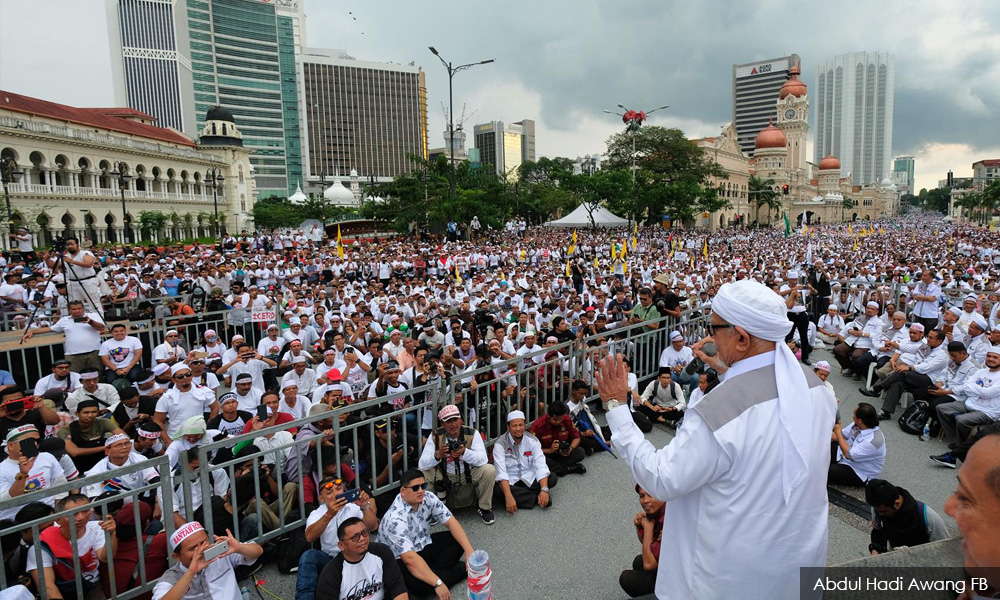
The fact that they backtracked on this and had to be dragged kicking and screaming before they reconsidered their decision should tell you about the kind of people we are dealing with.
Look, these laws are horse manure. They know it and we sure as hell know it. There are some morons – yeah, I think these people are undemocratic and fascist morons – who think that the state needs these laws to enforce peace and stability. There is no evidence of this, but there is copious evidence that these laws stifle democratic norms, rights and practices.
Harapan could have done away with these laws, be secure in the knowledge that there are enough laws out there to deal with specific behaviours deemed detrimental to democracy, and basked in the easy win which would have objectively separated it from the previous regime.
See also patronage – or race-based patronage, to be specific. Economist Edmund Terence Gomez wrote a terrific piece about the trends pointing to revitalise the patronage system under Harapan. He said: “Equally troubling is a gradual and perceptible attempt to reinstitute the practice of selective patronage in the conduct of politics and in the implementation of policies, hallmarks of Umno politics that led to its fall.”
Again, in this post-May 9 reality, the Harapan regime would be abandoning the practices of BN if it was interested in reform. Instead, what we have are neo-BN policies that will ensure that the political ecosystem remains in place, but more importantly, sustain the Umno wildlife that was claimed to have brought this country to ruination.
Not only that, there is also the factor of Bersatu attempting to impose its imprimatur on elements within PKR, which just fuels the conflict between political personalities in various Malay power structures. This, again, has nothing to with the system Harapan inherited – which is the favourite strawman of its partisans – but rather the determined efforts of political operatives to sustain a system which they believe will ensure their political survival.
There are more than enough qualified people in Malaysia – or who would return to the country – to lead government-linked economic entities if they were given the chance, and who would be proud to be part of a regime that was committed to institutional reforms. Instead, we have the wildlife from the previous regime and newly-minted acolytes burrowing into Harapan, attempting to replicate the success of BN, replete with a ‘pragmatic’ but rabid voter base.
Another example would be education reform. Harapan does not need big education ideas. It needs people who have the foresight and integrity to understand that the education system in Malaysia is mired in racial and religious toxicity.

The way out of this is not coming up with fancy ideas, but basic ideas that have worked in the past. Keep in mind we had a functional education system that was broken after years of racial and religious manipulation. We don’t have to start from scratch, but rather acknowledge what worked and what was purposely corrupted.
Manufacturing consent
Blaming Mahathir or Bersatu for this mess is avoiding the real issue. The real issue is the transparency and accountability of the coalition partners in Harapan. DAP, PKR and Amanah, by making excuses and gaslighting for Bersatu, are complicit in the creation of this neo-BN.
We should be thankful that there are political operatives willing to speak truth to power. But unfortunately, there aren’t enough. Bersatu has power because the other coalition partners want to bask in some of that power, and will continue embracing nanny state policies and unearthing previous corruption scandals, hoping to narcotise the base into believing that reforms are on the way, but down the road.
Think of it this way. Nobody expects the Harapan regime to correct the problems – which were created by some of the same people leading this new regime – in eight months. What some people want is for Harapan to save Malaysia by carrying out the reforms they promised without resorting to fabrications – mostly economic – that these are difficult to carry out.
Instead, what the Harapan component parties are hoping is that people will blame Mahathir only, and that their reputations will remain intact enough for some people (most probably on racial and religious lines) to continue voting for them.
The problem is – and I suspect Harapan know this – for every disappointed Harapan supporter, there are many more who are simply in denial.
S THAYAPARAN is a commander (rtd) of the Royal Malaysian Navy. A retired barrister of law, he is one of the founding members of Persatuan Patriot Kebangsaan.
The views expressed here are those of the author/contributor and do not necessarily represent the views of Malaysiakini.


Are you sure you want to delete this comment?
This action cannot be undone.