



Penang Bridge crash: What justice entails
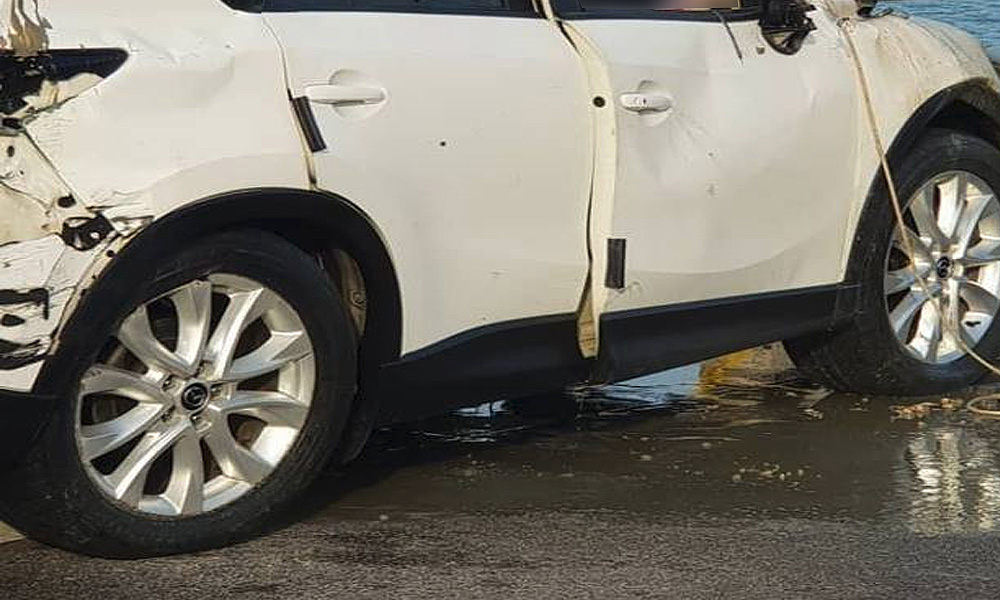
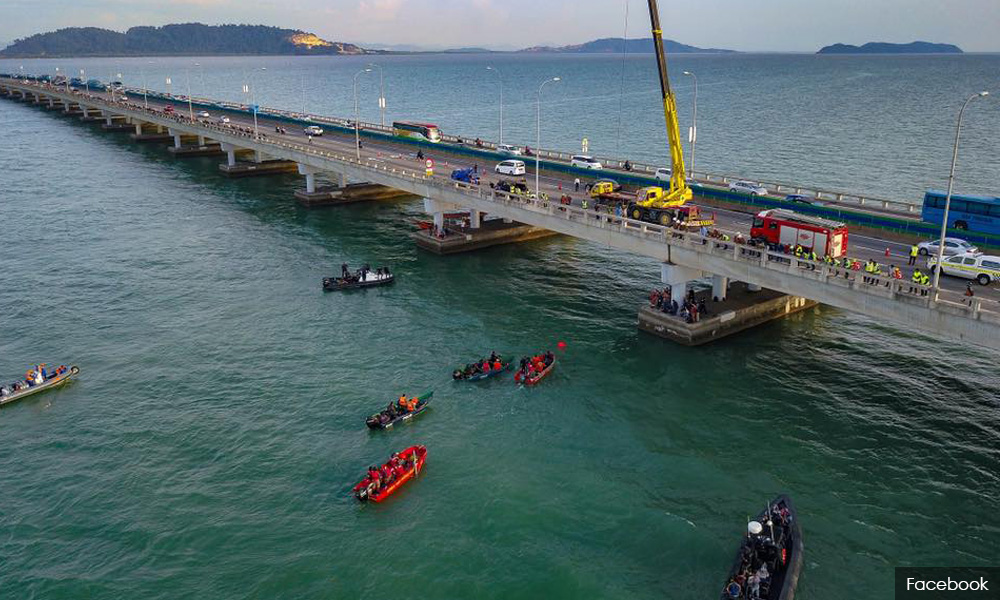
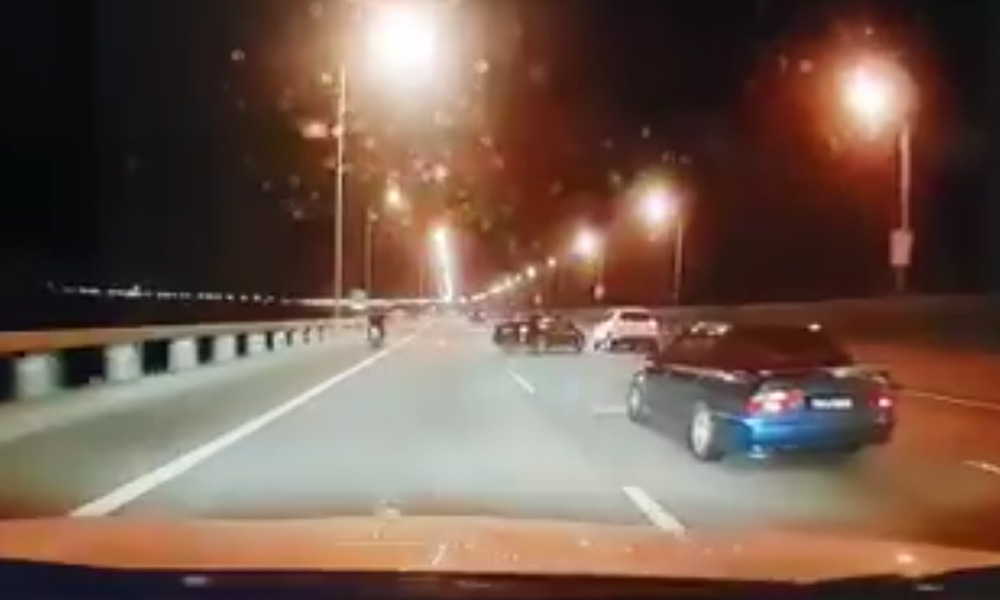
COMMENT | When my father showed me the eight-second video clip of the Penang Bridge fatal car crash, he told me something daunting.
“You see, in life, you can do absolutely nothing wrong, follow the rules to its letter, and still be met with an unfortunate incident like this,” he said
This is what a tragedy is: where the victim’s life has perished without fault, and we search for a sense of fairness that will never come.
Every tragedy like this takes away too much from us.
A man as young as the victim doesn’t deserve to die—he had so much to live for. We know that an innocent death in this country is one death too many, and we must make sure incidents like that do not happen again.
Since the accident, many people have been calling for “justice”.
Some even want the safety standards of the bridge, and all other infrastructure and buildings to be re-examined and reviewed.
Most, however, have called for the heaviest punishment available to be imposed on the Vios driver, to the proportion of anger of the people...
COMMENT | When my father showed me the eight-second video clip of the Penang Bridge fatal car crash, he told me something daunting.
“You see, in life, you can do absolutely nothing wrong, follow the rules to its letter, and still be met with an unfortunate incident like this,” he said
This is what a tragedy is: where the victim’s life has perished without fault, and we search for a sense of fairness that will never come.
Every tragedy like this takes away too much from us.
A man as young as the victim doesn’t deserve to die—he had so much to live for. We know that an innocent death in this country is one death too many, and we must make sure incidents like that do not happen again.
Since the accident, many people have been calling for “justice”.
Some even want the safety standards of the bridge, and all other infrastructure and buildings to be re-examined and reviewed.
Most, however, have called for the heaviest punishment available to be imposed on the Vios driver, to the proportion of anger of the people.
What does “justice” mean?
I agree that punishment is necessary to be meted out according to the law, but I also think true justice in this incident is to relook at a long-forgotten and long-ignored problem of drug addiction and finally solving it, so that tragedies like this do not arise again.
The Vios driver who crashed into the victim’s car was tested positive for ganja. This is unsurprising because driving under the influence of drugs, as well as drug addiction, are both pervasive and underreported problems in the country.
And the reason why the drug problem stays at a stubbornly high level despite our decade-long “war on drugs” is because we have traditionally viewed the drug problem as a crime and not a health crisis.
In other words, merely increasing the penalty for drug-related crimes will not solve the root of the problem.
We have imposed the highest form of punishment in the form of a death penalty on drug possession, and yet, the problem remains. In fact, nearly 73% of the people on death row were sentenced for drug-related crimes.
If we do not start viewing the drug problem as a health crisis, then we will not solve the structural problems surrounding drugs, and this means justice will not be served to the victim of the Penang Bridge accident.
Solving the drug problem
Permatang Pauh MP Nurul Izzah Anwar’s suggestion of harm-reduction programmes against the drug problem should be advocated by every person who truly intends to solve the drug problem.
The harm-reduction programme subscribes to the philosophy that the drug problem is not purely an act of irresponsible criminals; but also health problems that must be solved like any other addictions.
The current playbook of combating drug addiction is to pull up the addicts and place them into jail, and this could typically cost the country as high as RM63,875 per prisoner.
The addicts who go into prison are put under inhumane conditions in their continuous withdrawals and relapses, and once the addicts are released, they go back to drugs and get thrown back to jail again.
This method is not only ineffective, but it is also expensive.
The harm-reduction programme suggested by Nurul Izzah follows a more sensible model that is internationally accepted and tried and tested and succeeded in many developed countries.
Under this model, addicts come to the centre for weekly treatments and are treated by healthcare professionals with the long-term aim of getting them permanently off drugs so that they could integrate and become productive members of the society.
Using methadone and naltrexone implants could treat a wide range of drug addictions, and this model presents itself as a viable alternative.
Many countries around the world have tried imposing heavier punishment as a knee-jerk reaction against the drug problem, and almost all have failed. There is no reason why after failing many times that somehow it would work in Malaysia now.
Too heavy a price to leave the problem alone
The collateral damage that drug addiction brings is too much for a society to bear - a drug addict would first drag his family, then friends, and finally innocent strangers.
Anyone who has dealt with a drug addict before knows that locking the drug addict up in jail will not solve the problem—it only lengthens it. But they also know that they are caught in a bind because the avenues for the drug addicts to seek help are highly limited in this country.
None of this intends to defend the Vios driver nor is this an attempt to garner sympathy for him. Like I have mentioned at the beginning, the due process must take its course and he shall be faced with the consequences of his own actions.
For me, justice is not just punishing a person as hard as the law permits. Justice should mean looking at the problem seriously, and seeking ways to make progress and finally solving it.
Justice should mean that we take interest as a society to ensure this crippling problem is minimised, and collectively ensuring that tragedies like the Penang Bridge accident do not arise again.
I hope this tragedy is not forgotten like any other tragedy in the past. The victim’s name is Moey Yun Peng, aged 20. We must remember what happened and start taking real action.
JAMES CHAI works at a law firm. His voyage in life is made less lonely with a family of deep love, friends of good humour and teachers of selfless giving. This affirms his conviction in the common good of people: the better angels of our nature. E-mail him at jameschai.mpuk@gmail.com
The views expressed here are those of the author/contributor and do not necessarily represent the views of Malaysiakini.

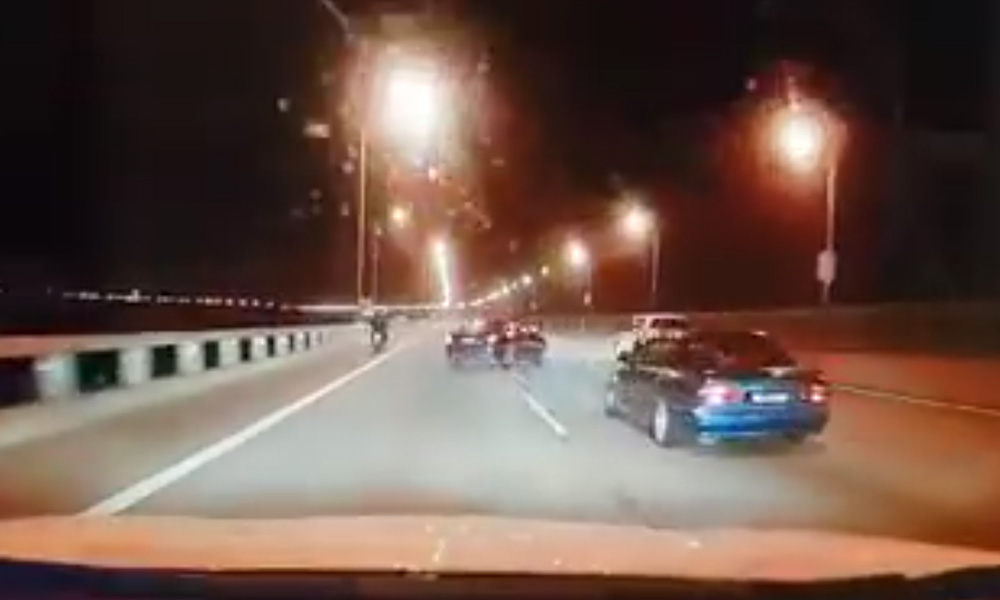


BOTH racing. BOTH drank alcohol. One took weed. Remains to be seen if he was the only one. The conversation we should be having here is ROAD SAFETY. About driving under influence and speeding way above the speed limit in the wee hours of the morning. It wasnt the fault of the car manufacturer, bridge design, the Wira, the kapcai... etc. It is about two youngsters who thought youth gave the immortality and traffic rules were meant to be broken.
James Chai, the root problem is poor education when it comes to road rules not the "scourge of drug addicts", a very disturbing picture you are trying to paint with your views. When your parents don't follow road rules, why should you? Why blame drugs and especially marijuana when it is still remains inconclusive that in the US that it does causes accidents as most cases involve people who have other medications and/or alcohol in their system. There is no proper enforcement of speeding in Malaysia. Be like Australia and have a demerit system for speeding. Three or four speeding offences a year means your license is taken away for at least six months. If you drink and drive, instant suspension. In Thailand, where some 14,000 people die on the roads, the main problem is speed and alcohol. Thai police and army would rather have people on marijuana during Songkran than alcohol and that is why Thailand is on a path of decriminalisation and legalisation. A better solution would be to have the driver assessed by a mental health professional to see why he is abusing drugs and alcohol in the first place, if he is indeed doing so. Sometimes, people make mistakes but consequences vary greatly. Remember, worldwide, the stats are 1 in 4 people will suffer from mental illness sometime during their lives and addressing this in the Malaysian mental health system is a much more efficient and humane solution. Don't label people drunks or drug addicts, define them according to their situation. A judge does not judge but rehabilitates.
James...smoking some weed does not make the boy a "drug addict".
Report this comment
Are you sure you want to delete this comment?
This action cannot be undone.