




Indian community: New parties, old woes
One veteran South Indian politician remarked that all you need is two parties before the two fragments into four and the four into eight. What he remarked about Tamil Nadu politics is very true for the Indian community in Malaysia.
 Although the MIC is the sole official representative of the Indian community, political fragmentation is slowly taking place. Outside the realm of officialdom and formal politics, the Indian community has more than one party.
Dissatisfaction and unhappiness with the autocratic style of the MIC leadership paved the way for the formation of Indian Progressive Front (IPF) in the late 1980s. Although the People's Progressive Party (PPP) was not a splinter from the MIC, it nonetheless benefitted from dissatisfaction with the MIC.
Presently, another new party calling itself Marumalarchi Malaysian Indian Congress Baru (MIC Baru) is about to be formed.
One veteran South Indian politician remarked that all you need is two parties before the two fragments into four and the four into eight. What he remarked about Tamil Nadu politics is very true for the Indian community in Malaysia.
 Although the MIC is the sole official representative of the Indian community, political fragmentation is slowly taking place. Outside the realm of officialdom and formal politics, the Indian community has more than one party.
Dissatisfaction and unhappiness with the autocratic style of the MIC leadership paved the way for the formation of Indian Progressive Front (IPF) in the late 1980s. Although the People's Progressive Party (PPP) was not a splinter from the MIC, it nonetheless benefitted from dissatisfaction with the MIC.
Presently, another new party calling itself Marumalarchi Malaysian Indian Congress Baru (MIC Baru) is about to be formed.
The great tragedy of party proliferation within the Indian community is that none of them are willing to provide new paradigmatic dimension. While the MIC representative politics are quite pathetic, the new formations such as IPF and MIC Baru are not willing to go beyond the confines of the Barisan Nasional (BN).
The pre-occupation to remain within the coalition tells much about the opportunistic nature of these parties and to what extent they can provide effective representation to the community.
The coffin episode
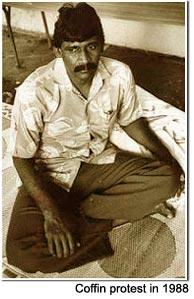 It is public knowledge that IPF president M G Pandithan (
left
) would not have left the fold of the MIC without being thrown out. Apart from the much talked about coffin episode, his criticisms of MIC president S Samy Vellu discreetly supported by the former late vice-president K Pathmanaban and present deputy president S Subramaniam was the main contributing factor to his ouster from the party.
It is public knowledge that IPF president M G Pandithan (
left
) would not have left the fold of the MIC without being thrown out. Apart from the much talked about coffin episode, his criticisms of MIC president S Samy Vellu discreetly supported by the former late vice-president K Pathmanaban and present deputy president S Subramaniam was the main contributing factor to his ouster from the party.
Of course, Samy used the coffin incident and Pandithan's emphasis on caste as reasons for his sacking. Pandithan after his short stint with the opposition decided he would remain loyal and servile to BN.
MIC's strong opposition remains the formidable obstacle for him and his party to join the fold of the BN. Pandithan despite his rhetoric of Tamil language emotionalism remains a politician who is highly opportunistic and self-seeking. His main and overriding ambition is to join BN and be rewarded with a political position. With this in mind, he has stopped talking about the problems of the Indian community but instead has turned his attention to ways and means to humour and please Malay politicians in Umno.
While he organised public campaigns to raise funds for the Palestinian and Bosnian causes, he failed to raise a single cent for the sad plight of Tamils in Sri Lanka. Yet he thinks that he is the champion of the downtrodden and underprivileged Tamil masses.
Loyal servant
The PPP is not an off-shoot of MIC. It started off as a progressive opposition force under the famous Seenivasagam brothers in the 1960s with Perak as its political bastion. However, after its entry into BN in the 1970s and more so after the coming of M Kayveas as its leader, the party abandoned all pretensions of working for the large cause of Malaysians.
Over the years, due to the autocratic nature of MIC, many members have joined PPP hoping for some windfalls. The party terms itself as a multi-racial organisation but for all intents and purposes, it remains very much an Indian party. The president's servility towards Umno leaders has earned him a deputy minister post following the last elections.
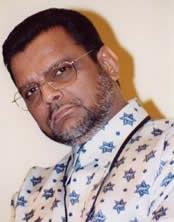 By being a loyal servant of his political bosses, Kayveas has done a lot of damage to the dignity and well-being of Indians in the country. Once he advocated the closure of Tamil schools. When the nine non-Muslim cabinet ministers served a memorandum on the prime minister regarding the grave implications of the M Moorthy case, Kayveas sought to capitalise on the issue by calling for their resignations instead. His sole ambition is to become a minister and to ensure this, he would belittle even small efforts in improving the image and dignity of the Indian community.
If MIC had conducted its efforts well and provided some measure of space for its members, it could have prevented the formation of IPF and some disgruntled members from joining PPP. Alas, its president is not a person who understands the necessity of dissent and how it could be utilised for the betterment of the Indian community. By using his presidential powers, he stifled dissent. Today the party is completely beholden to the president.
While he used autocratic means to marginalise the opposition, he has not taken up problems of the Indians in a consistent and upright manner. Thus, MIC under its long years of leadership has failed to provide dignity and pride to Indians in the country. More than this, the party has failed to correct the injustices perpetrated on Indians as result of the racist and pro-Islamic policies of the regime. For all intents and purposes, the party is becoming quite irrelevant to the problems and challenges faced by the Indian community.
How the party would be able to resurrect itself remains one of the formidable political challenges of the Indian community.
Opportunistic needs
The new formation called MIC Baru is not a paradigmatic response to the sad plight of Indians in the country. Its formation is about the opportunistic needs of few several individuals. It is well-known that the forces behind the formation are those directly or indirectly allied to deputy president Subramanian.
Samy Vellu's endorsement of vice-president G Palanivel to contest the deputy post is the main reason behind MIC Baru. It is the realisation of the Subramaniam camp that if the contest takes place, it would be impossible for Subramaniam to defeat Palanivel (as he would obtain the support of the president), so something else has to be done to ensure Subramaniam would safeguard his position.
After much thinking, the camp has come up with the present strategy to form a new party hoping that such a move would attract the attention of the prime minister to intervene in the MIC affairs to maintain the status-quo.
Although Subramaniam might not have any direct involvement with this new party, some analysts believe that he must have given some kind of implicit blessing to this new move.
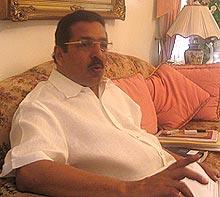 Subramaniam is quite desperate, since he cannot count upon delegates to vote for him in the party, he has pursued an alternative strategy of forming a new party.The important question is whether such a formation would attract the attention of the prime minister and whether he would intervene in the component parties like his predecessor to maintain the status-quo.
Prime Minister Abdullah Ahmad Badawi might possess the necessary powers, but his political style and mannerisms are quite different from Dr Mahathir Mohamad. It is highly probable that he would resist temptation from interfering with the component parties, alternatively he would respect the decision of the delegates.
Bold stand
Subramaniam has been fighting a proxy war too long. So far such a war has not brought any political dividends. Rather his involvement in this proxy war against Samy Vellu has only served to alienate the relationship between the two leaders.
Well, if Subramaniam really thinks that he ought to challenge Samy Vellu than he must do it openly so that the entire Indian community would know his stand. In this way, he might be able to regain respect and dignity.
First, if he thinks there is a need for a new political party, then he should openly announce it to the public. Second, if he thinks he wants to contest for a post, he should rather go for the number one post in MIC rather than trying to safeguard his present deputy post. Rather than taking some bold and risky decisions, he still wants others to do the job for him.
 The formation of new parties and leadership change might be defended on democratic grounds. However, in the case of the Indian community in Malaysia, the primary cause of political fragmentation resulting in the formation of political parties reflects the greed and opportunism of its leaders.
While MIC has served to alienate many rank and file given the autocratic nature of the leadership, the formation of new political parties provide no solution to the innumerable problems faced by Indians in the country.
These new entities are merely trying to outdo MIC by becoming more servile and dependent on the Umno leadership. For Umno, the dependence of Indians is certainly welcomed.
PROF P RAMASAMY is DAP international secretary and visiting professor at the University of Kassel, Germany.


Are you sure you want to delete this comment?
This action cannot be undone.