


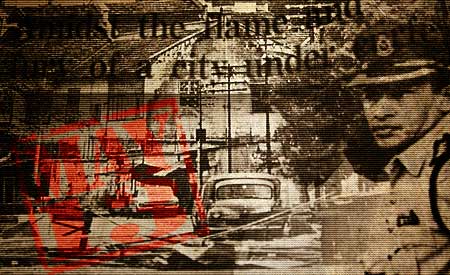

May 13 - at Peace Lane before the storm
COMMENT | It was sometime in April 1969. Maybe earlier. Again, my gallivanting in my village brought me to a house nearby, where I saw a crowd in front of a wooden house. To reach that place I had to take several small streets or lorong (lane). In the neighbourhood, the street names signify the sense of being in a place most peaceful – of Malaysia in the late sixties. The Malay words used have a carnival of a magical feel. A sense of place. And personal history.
There is Lorong Aman, ('peace'); there is Adil ('justice); there is Jaya, ('victory'); there is Bahagia ('happiness'); there is Sentosa ('contentment'); there is Budiman ('good-heartedness'); there is Merdeka ('freedom') and Rahmat ('blessings'). These are some of the names of the lorong in the Malay kampung I pass by often, to get me from one adventure to another. These are where the people of the “Malay race” lived since the village was opened as a new settlement, even before the British gave the country independence. These names I live in gave me a sense of what the words tell me to feel – peaceful, content, fair, free, and above all a person who is budiman or of one possessing to-the-soul-good-heartedness. A note on the seventies:
Growing up in the early 70s, different words to describe reality, practices, and possibilities were dancing happily around me. Perhaps those street names ...
COMMENT | It was sometime in April 1969. Maybe earlier. Again, my gallivanting in my village brought me to a house nearby, where I saw a crowd in front of a wooden house. To reach that place I had to take several small streets or lorong (lane).
In the neighbourhood, the street names signify the sense of being in a place most peaceful – of Malaysia in the late 60s. The Malay words have a carnival magical feel. A sense of place. And personal history.
There was Lorong Aman, ('peace'); there was Adil ('justice); there was Jaya, ('victory'); there was Bahagia ('happiness'); there was Sentosa ('contentment'); there was Budiman ('good-heartedness'); there was Merdeka ('freedom') and Rahmat ('blessings'). These were some of the names of the lorong in the Malay kampung I passed by often, to get me from one adventure to another.
This was where Malays lived since the village was opened as a new settlement, even before the British gave the country independence. These names gave me a sense of what the words tell me to feel – peaceful, content, fair, free, and above all, a person who is budiman - one possessing to-the-soul-good-heartedness. A note on the 70s.
Growing up in the early 70s, different words to describe reality, practices, and possibilities were dancing happily around me. Perhaps those street names tune me to calmness. All these shaped the child’s mind, such as that of mine growing up with a fascination of names, as if living is about being taught names and being able to “read the self and the word” in order to be liberated.
There were also words related to spirituality; words such as sembah-hyang, marhaban, berzanji, kenduri, berkhatan and bersugi gigi. There were also cool words related to Malay magic such as jampi serapah, tangkal, kemenyan, dukun, pawang, and, of course, the mambang laut-mambang darat-mambang udara trinity/trio.
That was the smooth-sailing 70s. Back in the day people were happy wearing what ought to be simple fashion and accessories, the kebaya, baju kurong (not a straitjacket, mind you), baju Melayu Telok Blangah, terompah, selipar chapal, selipar Jepun, manik koran and all kinds of Malay, Chinese, and Indian "bling-bling" to adorn oneself with cultural niceties.
Growing up in the kampung, I was not attuned to hearing totally foreign words, imported from elsewhere to denote and connote the self, spirituality, and salvation, and “saving the soul of others”; words such as solat, dakwah, ushrah, tarbiyyah jihad, muzakarah, jubah, serban, hijab, purdah, burqah, niqab, Arqam, tabligh, Ayatollah, muktamaar, buah tamar, or even Daulah Islamiyah.
Not that I knew, until the beginning of the 80s, when these words, like Karl Marx would say, became technologies of the “body, mind, and spirit” that changed the social relations of production and the ideological landscape of the country and the consciousness of a segment of the Malay people.
I passed through these lorong in a village of Malay-speaking people and in a place reserved for settlers of this ethnic group. These settlers, nonetheless, came from a variety of ethnic groups that would later constitute the “Malays”. There were Javanese, Bugis, Bawean or Boyanese, Madurese, hybrid Chinese, Arabs, Indian-Muslims, and a Sikh young woman Zaida, whose parents were from the land of the Bengalis, who later married one of my mothers’ cousins, Ali.
There were Malays from different states that moved into this kampung Melayu: from Perak, Negeri Sembilan, Melaka, Selangor, even from as far as Kelantan and Kedah. But it was called a Malay kampung with only Malays given land. Malay Reserve Land as designated by the government.
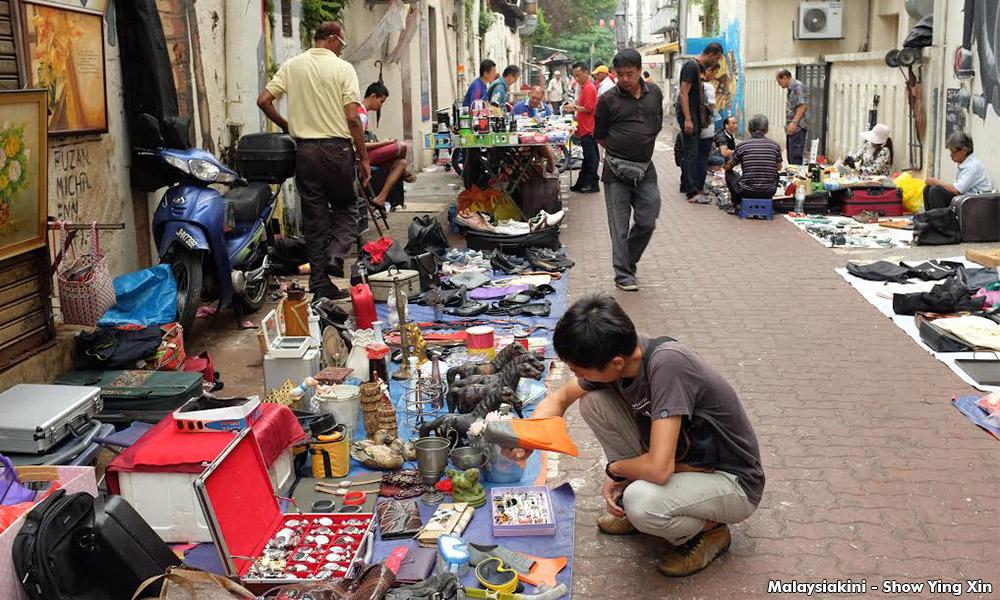
I arrived at the place where a crowd was waiting. I love stopping by and watching what was happening whenever people congregated, whether in my village or in the petrol-diesel-stinky-river-rotten egg-smelling town of Johor Bahru, about three miles from home.
There would always be people selling something; ointments, batik cloth, T-shirts from neighbouring Singapore city, even aphrodisiacs prepared traditionally and packaged as the best sexual-magical-mystical pill that could help one not only sustain happiness in marriage, but marry two, three, and up to four wives. imagine.
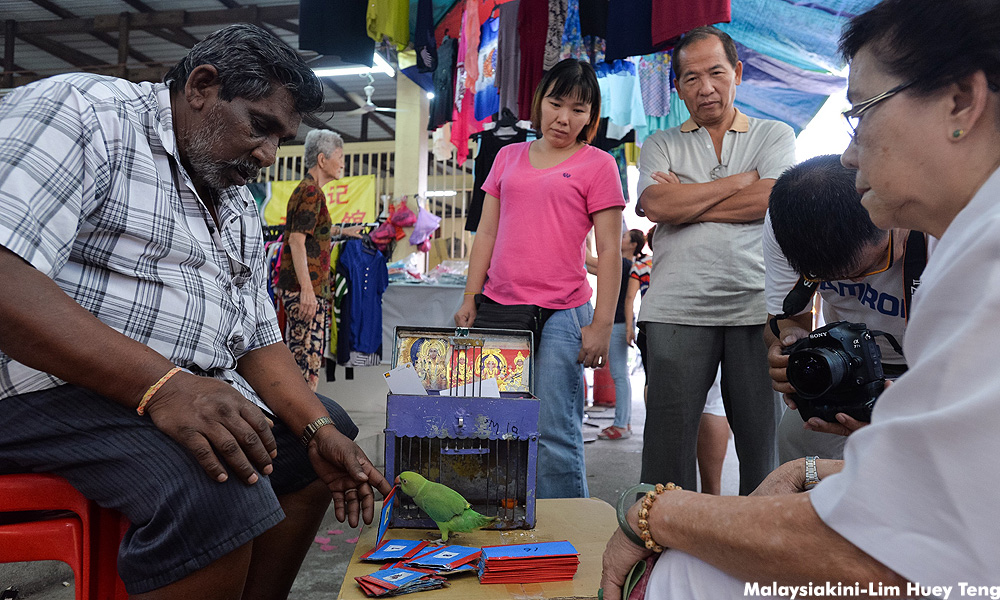
My favourite stopover would always be at the Indian man, in dhoti, smoking a cerutti or cheap-looking cigarillos from India, with a parrot that tells people’s future by picking up cards that would tell you when you will die!
That’s my favourite place in front of a Chinese sinseh’s store, where I would sometimes squat for an hour watching the parrot become Nostradamus. I would listen to such revelations and wonder if the man was a reincarnation of the Angel of Death, and the parrot his sidekick telling the horrifying truth.
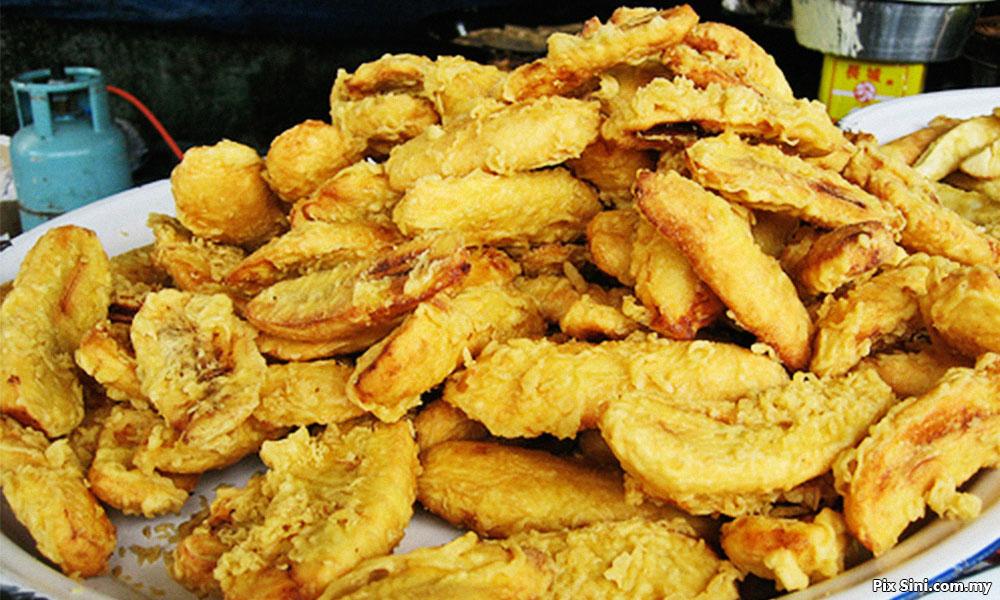
Satisfied, yet scared, I would then head home with a plastic bag of fried bananas, 30 pieces of pisang goreng costing me a Malaysian dollar, one ringgit; those crispy, crunchy banana fritters my mother loves. Always bring something home, as a gift or buah tangan, the fruits of thine hands, as Mother would always remind us. That would signify that even if you are out having fun listening to a parrot pronounce the date of death, we should be happy that we are still alive and bearing gifts to loved ones at home.
So I stopped by the house on Lorong Aman, Peace Lane. Something was happening. It looked like it was a Malay martial arts demonstration. Men in black traditional Malay hero outfits, each with red headscarf with the Arabic words written from right to left that looked like it read Laailaha ‘ilAllah Muhammadar RasulAllah (There is no god but The God and Muhammad is the messenger of God) written on it. In white over red; purity over blood.
Yes, words that I have seen on the flag of Daesh/Isis, the Islamic State of Iraq and Syria; that globalising, terrorising military entity and an informal creation of the American empire.
There was a group of around 30 or so people, all men and some boys. I pushed myself into the group to get a closer look. I was small enough to bonsai myself into the crowd of adults to have a closer view. It was standing room only. I was there with a clear view of what was happening. I could hear screams and religious chants.
(Part 2 next week)
AZLY RAHMAN is an educator, academic, international columnist, and author of seven books available here. He grew up in Johor Bahru and holds a doctorate in international education development and Master’s degrees in six areas: education, international affairs, peace studies communication, fiction and non-fiction writing. He is a member of the Kappa Delta Pi International Honor Society in Education. Twitter @azlyrahman. More writings here.
The views expressed here are those of the author/contributor and do not necessarily represent the views of Malaysiakini.





Report this comment
Are you sure you want to delete this comment?
This action cannot be undone.