


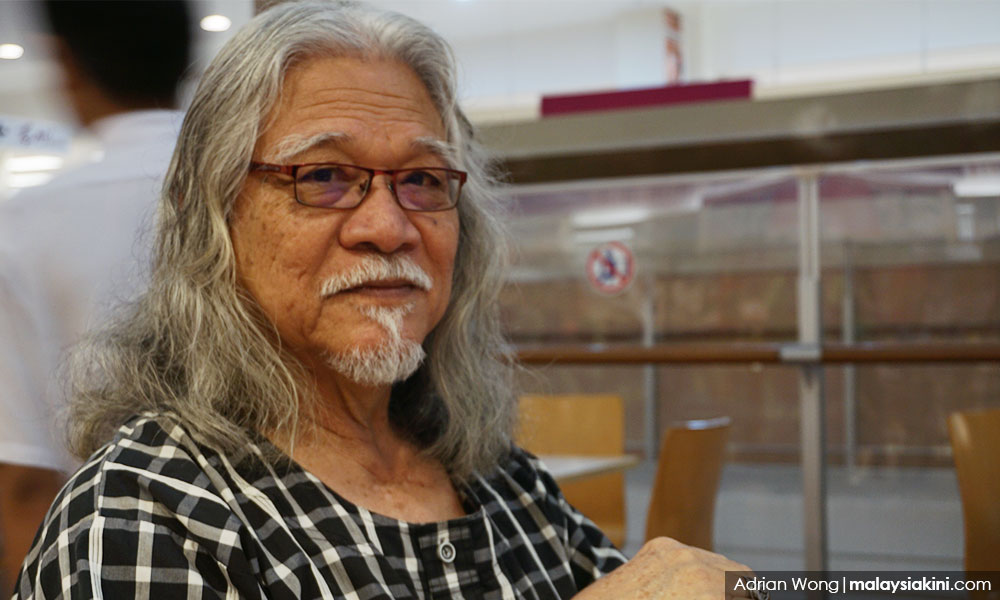

PSM's Nasir: The struggle is a way of life, not a dinner party
“Never throughout history has a man who lived a life of ease left a name worth remembering.”
― Theodore Roosevelt
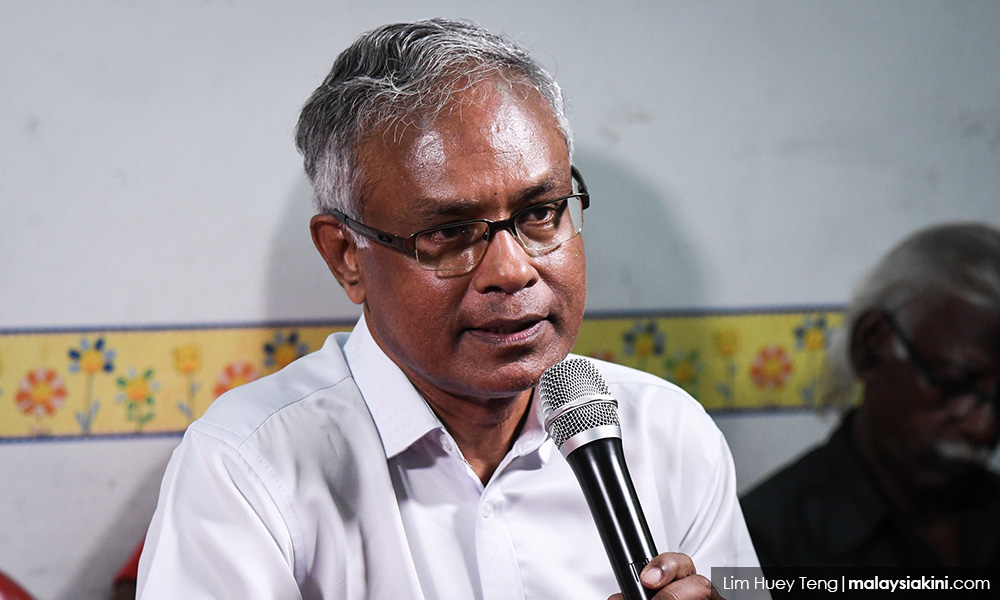
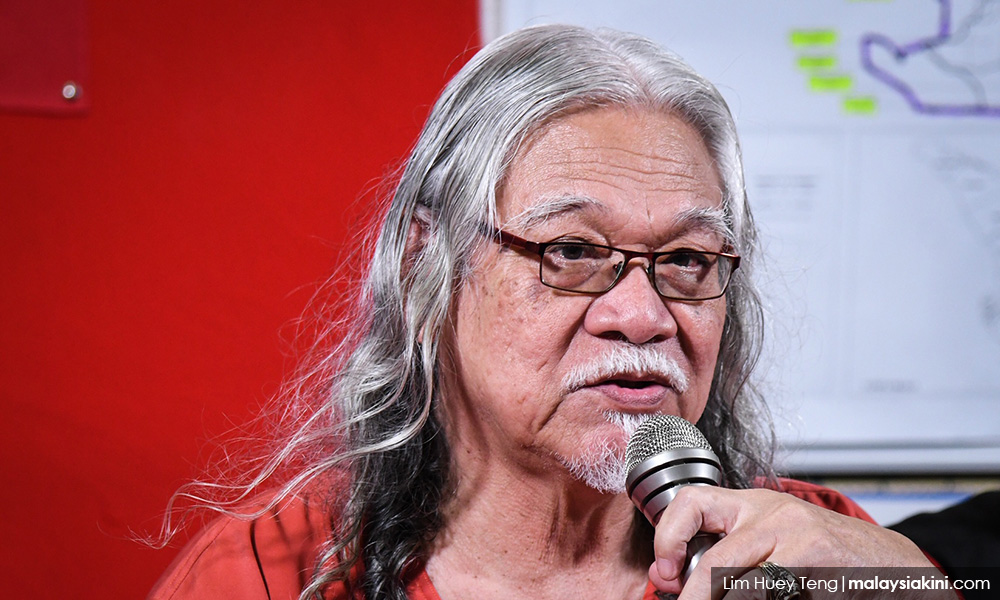
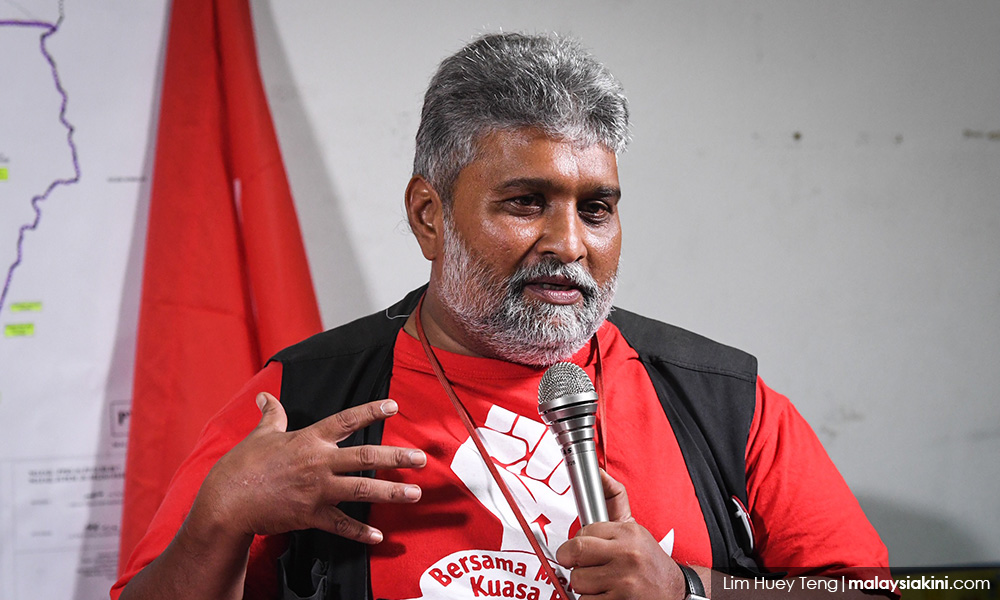
INTERVIEW | While Amanah leader Khalid Samad may think that Prime Minister Dr Mahathir Mohamad is an icon of longevity, the genuine icon of longevity is PSM’s Mohd Nasir Hashim.
Most political operatives, especially those who claim to be on the progressive side of issues, always hedge their bets during interviews. Nasir does no such thing. His principles are not the bromides that political operatives spew, but rather borne from decades in the trenches, with very little success on the horizon.
In the first of this three-part interview, Nasir describes his political awakening and his tenure in the hot seat.
Question: What is your earliest memory of the dysfunctionality of the system and when did you endeavour to attempt to make a change?
Mohd Nasir Hashim: In my early school years, I used to hate politics because it was dirty - and continues to be so.
Later, I realised that the political leaders are the ones who are dirty. Politics is supposed to harness available resources at hand to help people in need to lead a better life.
I soon discovered that those we are supposed to help did not prosper. They developed a subsidy mentality or drowned in the culture of dependency; the rich getting richer and the poor getting poorer and destitute. Exploitation was legalised and politicians they sucked the poor dry through their blood, sweat and tears...
“Never throughout history has a man who lived a life of ease left a name worth remembering.”
― Theodore Roosevelt
INTERVIEW | While Amanah leader Khalid Samad may think that Prime Minister Dr Mahathir Mohamad is an icon of longevity, the genuine icon of longevity is PSM’s Mohd Nasir Hashim.
Most political operatives, especially those who claim to be on the progressive side of issues, always hedge their bets during interviews. Nasir does no such thing. His principles are not the bromides that political operatives spew, but rather borne from decades in the trenches, with very little success on the horizon.
In the first of this three-part interview, Nasir describes his political awakening and his tenure in the hot seat.
Question: What is your earliest memory of the dysfunctionality of the system and when did you endeavour to attempt to make a change?
Mohd Nasir Hashim: In my early school years, I used to hate politics because it was dirty - and continues to be so.
Later, I realised that the political leaders are the ones who are dirty. Politics is supposed to harness available resources at hand to help people in need to lead a better life.
I soon discovered that those we are supposed to help did not prosper. They developed a subsidy mentality or drowned in the culture of dependency; the rich getting richer and the poor getting poorer and destitute. Exploitation was legalised and politicians they sucked the poor dry through their blood, sweat and tears.
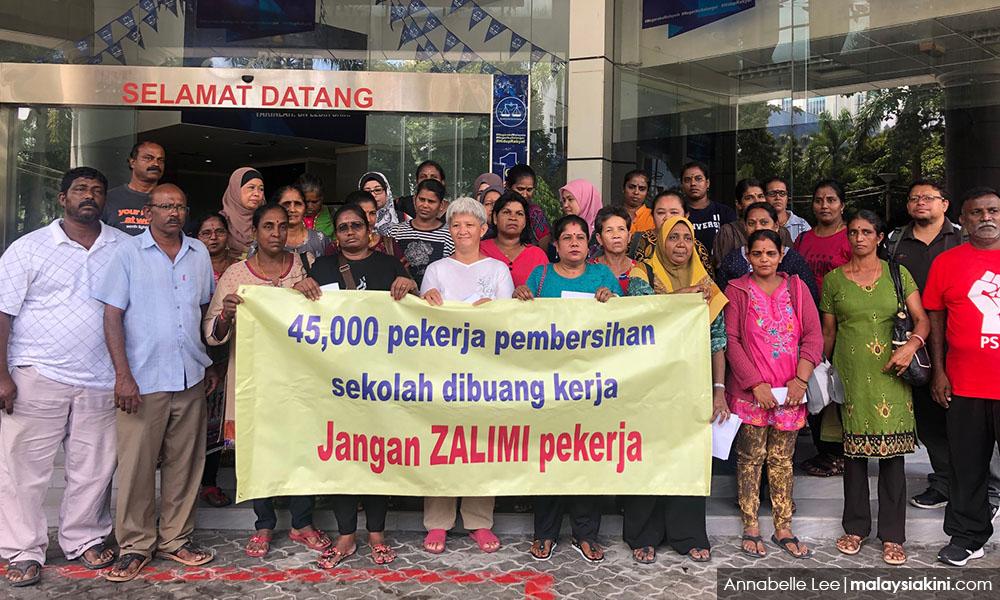
When I was in the United States, I had high hopes that friends in the social and political sciences, who seemed well versed on socialism and revolution, would lead the way.
I was disappointed, and when I returned, I was on my own. They abandoned the struggle and became armchair intellectuals constrained by self-censorship.
This struggle is not a dinner party, but a way of life.
I was on a scholarship sponsored by the people and so I returned to serve them, and I will react if they or their livelihood is threatened. Those who betrayed the people are too small in my mind’s eyes and I will openly confront them.
My philosophy is simple: I will continue to fight, and maybe one day they will gang up and kill me off. So what? That is the price of this beautiful struggle.
What do you consider your most productive achievement as the chief of PSM?
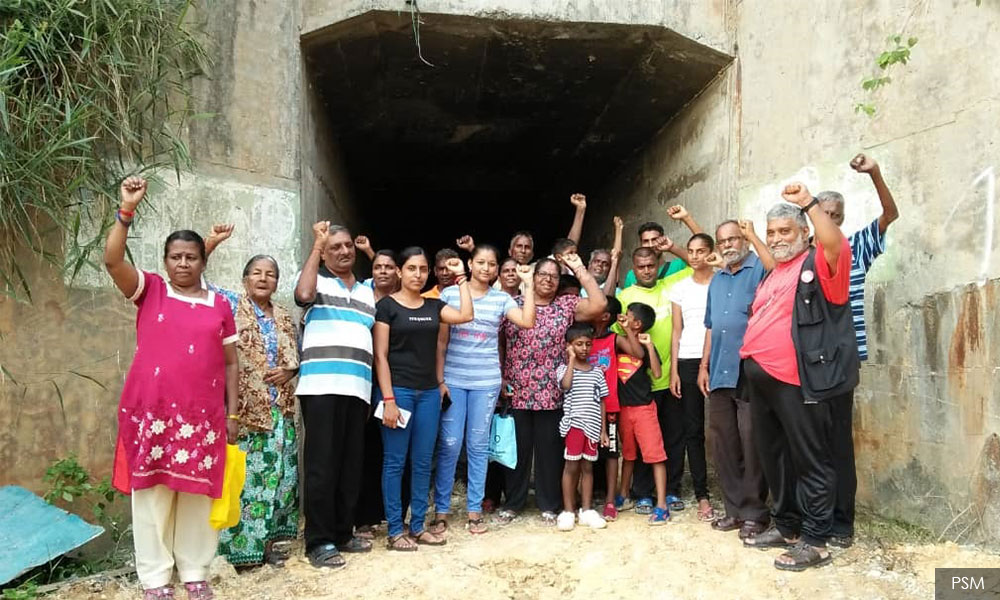
Forming a Socialist Party. It took us 11 years for the government to confirm us as a national political party. We took the government to task and dragged them to the Federal Court. The government called us up on the day of the trial to discuss in lieu of registration.
We are one big family. We decide when to fight or how to fight. We have different levels of leadership during demonstrations so that our actions are not frustrated or stunted when the top leadership is detained.
If they want to negotiate, we negotiate on the basis of strength. If they try to stifle the negotiation, we go back to the streets and expose their hypocrisy.
What have you learnt in your tenure as PSM chairperson?
The family spirit, comradeship and the love of the people as our source of inspiration and the backbone of the national economy. The only way to expose the capitalists who make profit maximisation as their God, is through socialist analysis to expose and strip them to the core.
Could you describe how your role as PSM chairperson, as a prisoner of the state and an independent political operative, has impacted your family?
Being detained for a long period of time does have an impact on the family. Especially so when families at home are constantly harassed by the Special Branch and fed with lies about their loved ones.
They need a family support system to help them through economic, emotional and social hardships. As for those detained, they are confined and have nowhere to go. To some, family visits are rare, it being too far and a financial strain to them. Some children are exposed early to the kind of work their parents do and can manage the heat.
At times they are heckled and jeered in school and come home crying. Divorce and psychological trauma occur. Children may not necessarily follow the footsteps of their parents, but they learn the meaning of discipline, commitment and compassion as they start life on their own.
Can you describe, the circumstances surrounding your detention by the state and what you experienced while detained?
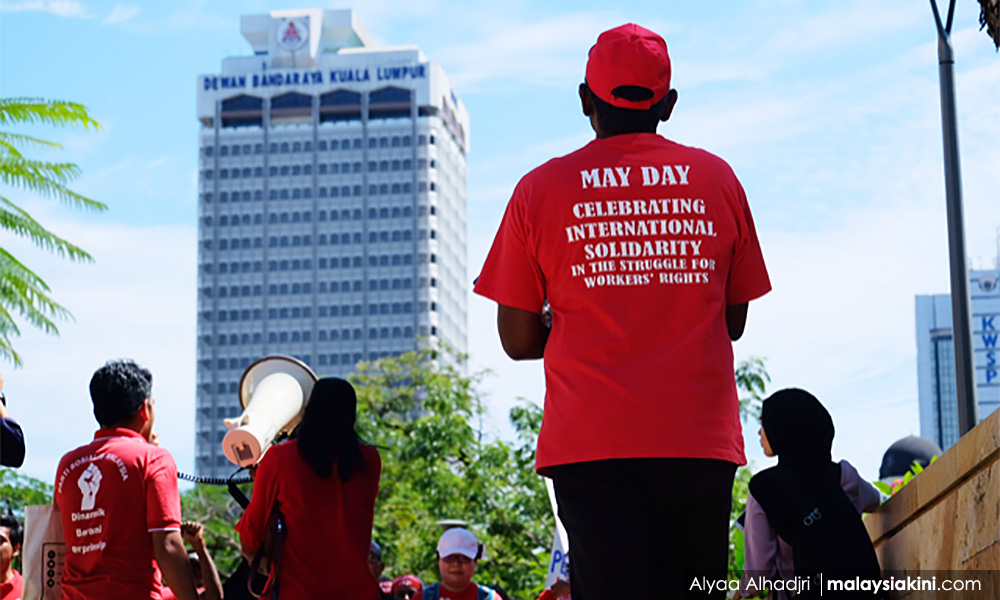
It was tough. I was made a target for being a socialist, an intellectual, a Malay and did not hold a position in PSRM. I was detained a few months after joining PSRM (Parti Sosialis Rakyat Malaysia). My involvement in workers' struggle and my open criticism of the authorities and their cahoots drew flak and was considered dangerous to developers, delinquent unions and authorities.
The first 60 days were bad, but if you know what you want in life, then you can withstand the torments and humiliation every day and night for the next 60 days. They have shifts, taking turns to grill, abuse verbally and break us down as a prelude to confessions.
Of course, tears flowed when I was in the dark corners of my cells, but not in front of them. They will relent if they think they have broken your spirit. I will not criticise those who confessed while in detention, for we do not know how much torture they had undergone.
Confession under duress is not acceptable. I have written a novel, ‘Mengharungi Titik Nokhtah’ that describes such episodes. Since I was not wrong and they tried to put words into my mouth, I came out stronger after the detention. In a live TV interview, I stated that I would do the same, even it meant going through another round of ISA detention.
On one occasion I yelled, ‘Are you for the rich or the poor?’ They thought I was hard-headed. To them, we were already guilty.
There was an occasion the officer was so obnoxious, I said to myself, if I found him outside I would have my fist in his mouth. I was a boxing champion in RMC (Royal Military College) and black belt candidate in US. I met him outside and I just walked away. I had to move on.
I kept my sanity in Kamunting (detention camp) by writing poems (published many years ago), did acrylic paintings on T-shirts for my children, read the Quran (given to me during the 60 days detention in Bukit Aman), read books, did gardening, became an electrician.
Before my friends went on strike and fasted, I, as a nutritionist, prepared written instructions on what to expect and what would happen to their bodies when they fasted so that it would not be too much of a shock to them.
I learned acupuncture from my Chinese friends while in detention. We did barter trading, i.e. I taught them English and they exposed me to acupuncture. When I was released, I learnt acupuncture from a Master for three years, opened a clinic and was in practice for 15 years before becoming the 'wakil rakyat' (state representative) in Kota Damansara.
During your long tenure, how have you encouraged the role of feminism in the PSM discourse?
The rakyat are workers and include all denominations of race, religion, gender, age and culture. We will take on issues pertaining to gender discrimination; safety; industrial disputes of specific people or groups of workers; question the patriarchal system; the sharing of responsibility and house chores.
We must be aware of all forms of discrimination, and we are winning when we address and fight against them.
What has been the most difficult decision you have made as chairperson of PSM?
For health reasons, I am not able to be physically present with the people when they are struggling for their rights. It breaks my heart for I want to be in the midst of their struggle.
I have to deliberately and consciously ease off a bit, or temper my involvement so the young potential leaders have the opportunity to handle situations, create new ideas and direct the charge.
After that, we will do a post-mortem to identify and evaluate our successes and failures. I tell them that they need not follow my suggestions, for they may be obsolete. So they need to analyse with the latest information and seek alternative means (thinking out of the box/paradigm shift). The strength comes from the members and the rakyat.
I experienced something similar when I was the senior under-officer in the Royal Military College in the mid-60s. Before I took over, we were second last among the eight companies. But we became the best company by beating the company seeded to win by a mere one-half point. The team was the same, except for the young batch. It was through their unity and strength that we overcame the odds.
THE MOHD NASIR HASHIM INTERVIEW
Part 1: The struggle is a way of life, not a dinner party
Part 2: Success is when leaders squirm
Part 3: Affirmative action a cheque with no stated amount, no deadline
S THAYAPARAN is Commander (Rtd) of the Royal Malaysian Navy. A retired barrister-at-law, he is one of the founding members of the National Patriots Association.
The views expressed here are those of the author/contributor and do not necessarily represent the views of Malaysiakini.


Report this comment
Are you sure you want to delete this comment?
This action cannot be undone.