


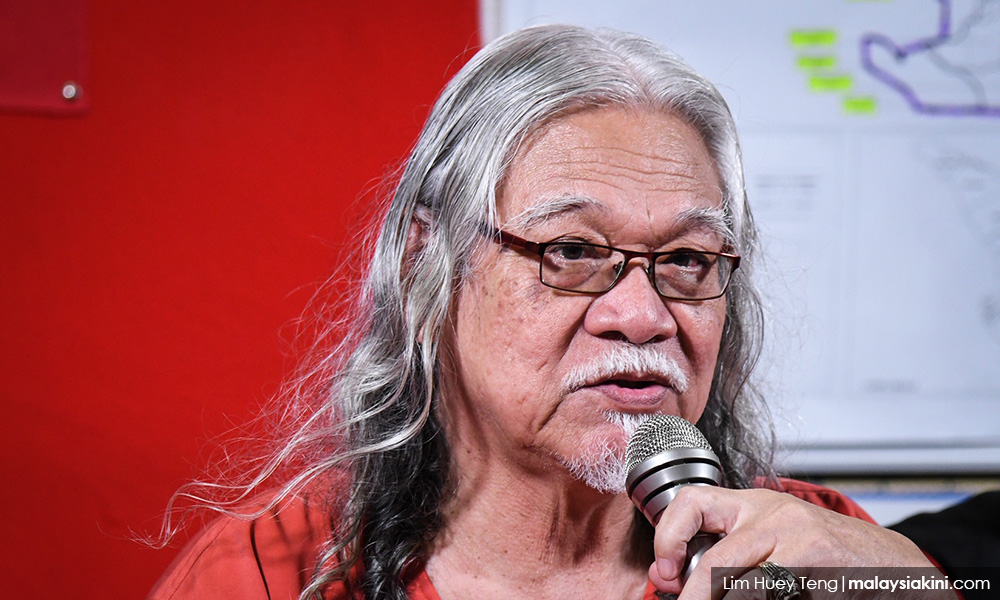

PSM's Nasir Hashim: Success is when leaders squirm
“There is scarcely any passion without struggle.”
- Albert Camus, The Myth of Sisyphus and Other Essays
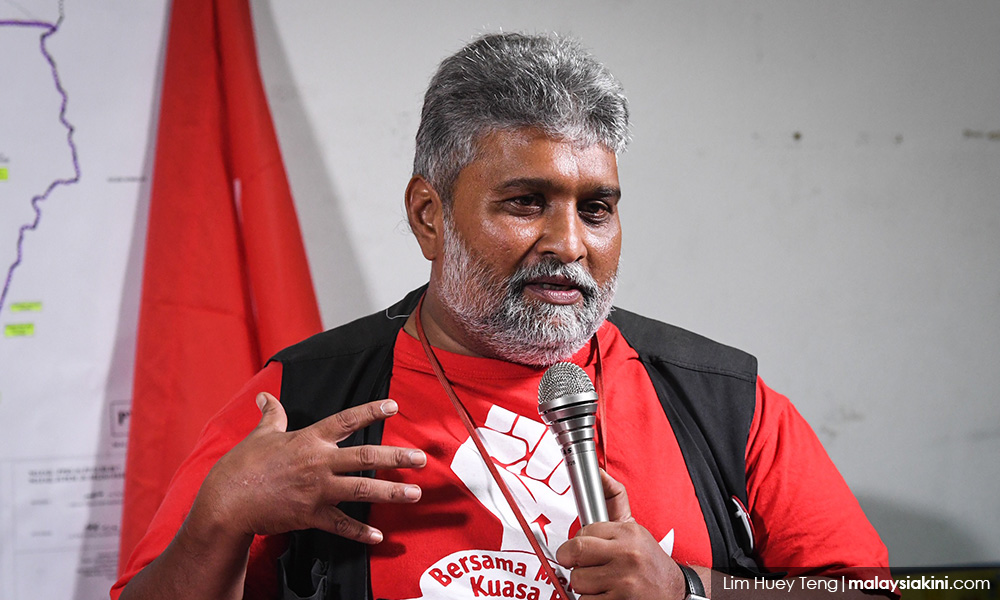
INTERVIEW | In this part 2 of the three-part interview, retiring PSM chief Mohd Nasir Hashim explains why his party wins hearts, but not elections.
Question: As one of the founders of Parti Sosialis Malaysia, what was the motivation behind creating a left-wing party when left-wing parties over the years have been sidelined from the mainstream political process?
Mohd Nasir Hisham: I became a socialist while studying at Cornell University in New York, USA. I was a food technologist and nutritionist (international nutrition), but interested to know about people's struggle for socialism from my Malaysian friends.
Becoming a socialist was an ongoing consciousness process since my early days, and through parental guidance. They may not use the word "socialism", but their actions spoke louder than words. It's as if my innate consciousness was triggered.
I returned to Malaysia to do PhD research and realised that I was especially weak in the field of economics. When I returned to the US to defend my thesis, I found time to do self-study, including studying the works of Karl Marx.
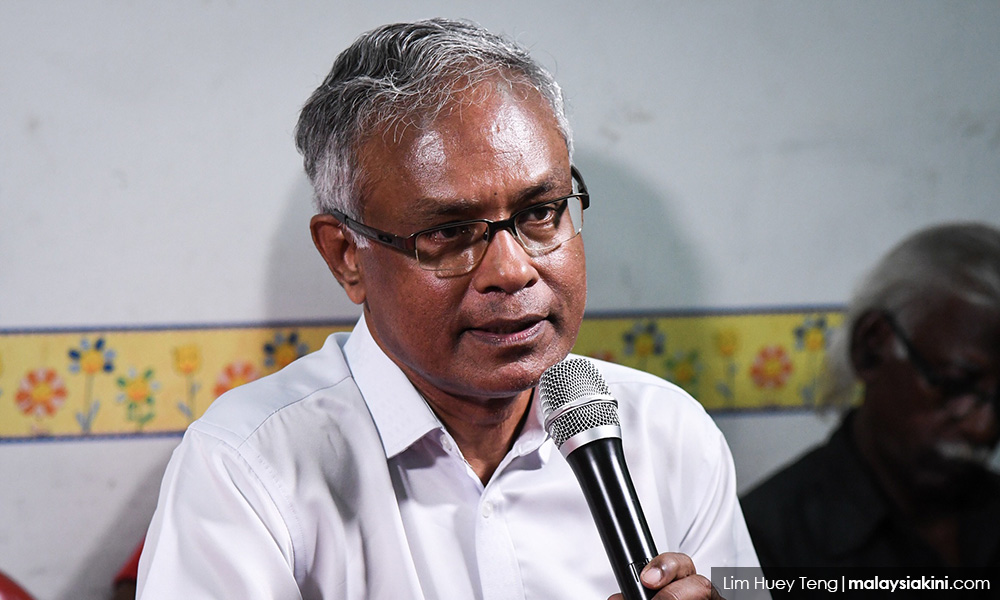
In Malaysia, we formed Insan (Institute for Social Analysis) and published the magazine Nadi Insan. Those involved were Jomo K Sundaram (photo, below), P Ramasamy, Ishak Shari, Rustam A Sani, V Paneer Selvam, Rohana Ariffin and many others, and I was the chairperson. I was further exposed to the plight of the poor masses and had press conferences for the victims to present their cases to the press...
“There is scarcely any passion without struggle.”
- Albert Camus, The Myth of Sisyphus and Other Essays
INTERVIEW | In this part 2 of the three-part interview, retiring PSM chief Mohd Nasir Hashim explains why his party wins hearts, but not elections.
Question: As one of the founders of Parti Sosialis Malaysia, what was the motivation behind creating a left-wing party when left-wing parties over the years have been sidelined from the mainstream political process?
Mohd Nasir Hisham: I became a socialist while studying at Cornell University in New York, USA. I was a food technologist and nutritionist (international nutrition), but interested to know about people's struggle for socialism from my Malaysian friends.
Becoming a socialist was an ongoing consciousness process since my early days, and through parental guidance. They may not use the word "socialism", but their actions spoke louder than words. It's as if my innate consciousness was triggered.
I returned to Malaysia to do PhD research and realised that I was especially weak in the field of economics. When I returned to the US to defend my thesis, I found time to do self-study, including studying the works of Karl Marx.
In Malaysia, we formed Insan (Institute for Social Analysis) and published the magazine Nadi Insan. Those involved were Jomo K Sundaram (photo, below), P Ramasamy, Ishak Shari, Rustam A Sani, V Paneer Selvam, Rohana Ariffin and many others, and I was the chairperson. I was further exposed to the plight of the poor masses and had press conferences for the victims to present their cases to the press.

But the people needed more. They wanted us to organise them and later insisted that we be with them when they demonstrated. Some intellectual friends were uneasy with such a move for they prefered to have press conferences and not rock the boat.
We left to join PSRM (Partai Sosialis Rakyat Malaysia), knowing the party was not strong. But we had to see if we could affect change. We knew that the left's struggle was not strong.
The fall of the Berlin Wall reverberated throughout the world and Malaysian socialists decided to drop the label 'socialist' from PSRM, shortening the name to PRM.
This was finalised when I was released from ISA detention. So we left. My contention was that we needed socialism à la Malaysia, not à la Russia, China, Cuba. So I regarded those who left as a filtering process for better socialism.

To create a socialist state is an uphill battle. We need, by stages, to dismantle the mindset of workers and the rakyat, to let them know there is an alternative to capitalism. So, we analysed the capitalist system that robotised humans and mangled the environment. We saw the emerging faces and phases of profit maximisation (maximal exploitation), with speculation and monopolies leading to economic crisis after crisis.
We saw how the capitalists, in the name of providing development, controlled and ganged up with the politicians and government agencies to crush the people, who are workers and the very beings who are the backbone of the national economy and national development. They are our source of inspiration and through them, we will create a socialist state.
Even religious people indirectly supported the exploiters by saying that they should obey the leaders, even when they are wrong. Whereas the Quran urged people to fight against injustice (Quran 4:135).
Some even said that our move to form a socialist party was suicidal, but we have progressed since then.
PSM – at least in social media – is a much “admired” party. Why hasn’t this translated to electoral success?
It is a different ball game. We are not willing to play to their rules. People are convinced that by ousting the incumbent, we will see paradise or feel the euphoria of a new world. It’s not happening.
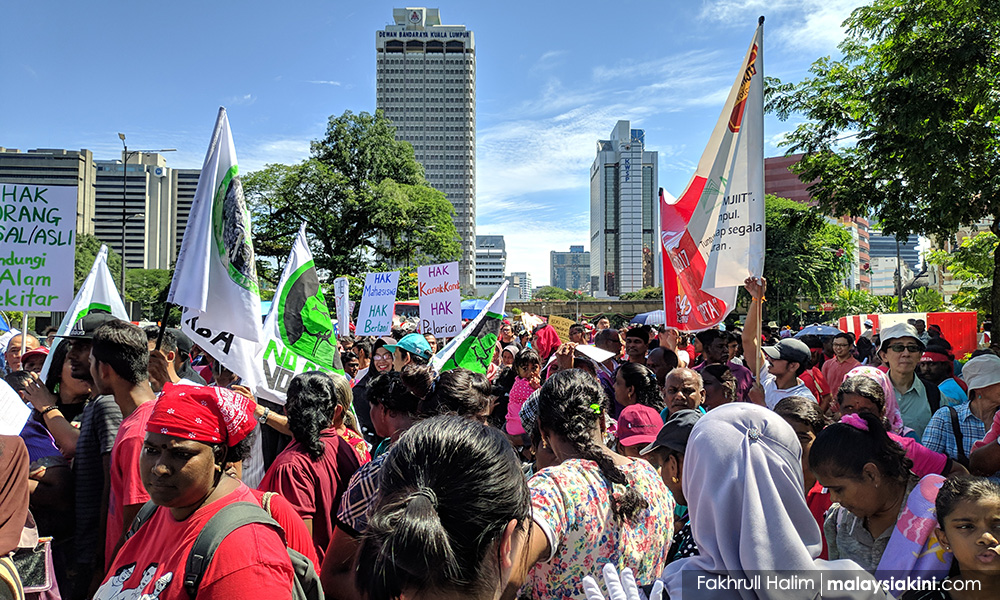
We continue to empower the rakyat. Initially, we would channel the plight of the rakyat through existing friendly political parties, but they would only take it up if it jived with their political agenda. That was one of the reasons why we decided to participate in elections.
It merely means that we have to work harder to expose the hypocrisy of political leaders and create a situation that is conducive to a change of mindset. This will take a longer time when the so-called 'progressives' continue to flirt with race and religion for short-term gains.
Do you think the current electoral system disadvantages independent parties, and if so, how?
The two-party system dismisses other small parties having different approaches to serve society. At present, the modus operandi for the two-party system merely exploits race and religion for political mileage and uses people's votes to come to power, and soon betrays them. It uses insecurity to breed hatred, suspicion, conflict and to divide our society. They worship vice, power and money, and have nothing to do with the race and religion they are supposed to be championing.
There should be a system whereby the minority has a constitutional say in the Parliament and state assemblies, to participate in and contribute to national development. If not, they will be left in a lurch.
How does a left-wing party like PSM gain traction with middle-class voters – especially non-Malay voters – when (so far) working class issues do not translate to votes?
Our starting point was to empower the poor (B40) exploited masses. We soon realised that the middle group (M40) was also suffering from the increasing cost of living, inflation, housing problems, transport, medical care, etc. Pollution and denudation of hills affect the temperature, climate, cause flash floods and prolonged droughts.

We cannot win over all people overnight and must go in stages to show our capabilities, and do not flirt with race and religion for short-term gains. We will work with NGOs and support their programmes, offer our help and analysis of impending problems
The perception is that PSM is an “Indian” party. Why do you think this perception persists and how do you move beyond labels when PSM has an extremely small voice in the mainstream media and the alternative press?
After I was released from ISA detention, we worked on problems of squatters in the early 1990s. At that time evictions and destruction of properties of squatters were rampant.
I was the chairperson of the Support Committee of Urban Pioneers (Jawatankuasa Sokongan Peneroka Bandar). At that time we had more than 50 villagers in our committee. They were mostly Malays, except for one estate.
We did not allow the authorities and developers to label them as squatters or setinggan, for squatters have no rights in court. So we called them urban pioneers because for three generations they developed the land with a promise of permanent housing. We created havoc and since then, they have been given compensation and alternate housing.

Then it came to our notice that the government was acquiring estate land for industries. If the workers lose their jobs, they also lose their housing. So we shifted gear and moved to estates.
Since then we have more Indian comrades in our team till this day. We are colour blind. We want to be with those who are at risk of losing their jobs and homes.
Recently more Malay youths are joining PSM. It’s a good sign.
Why is there hostility between mainstream political parties and PSM?
PSM is not happy with the present system that strives for exploitation and worships profits. It robotises workers, destroys humanity and the environment. We see the rich getting richer and poor getting poorer. The legal system protects the rich, legalises exploitation. They become rich through the blood, sweat and tears of the toiling masses.
We abhor all forms of exploitation or discrimination and will take them to task, even if they are our friends. We prefer cooperation rather than competition/ conflict. We prefer compassion.
We believe that the way to save the country is by empowering the people. We do not appreciate those leaders merely wanting to take over the government, and later use the same administrative modus operandi, which is mere cosmetic.
We want to overhaul the fabric of this exploitative economic system and have economic and social systems revolving around the rakyat, rather than the rakyat revolving around a social economic system.
The poor and workers are our assets, not a liability, and we need to train and harness their skills and energies to develop the country. Success is when the leaders squirm when they see and hear the rakyat articulating the needs of society.
THE MOHD NASIR HASHIM INTERVIEW
Part 1: The struggle is a way of life, not a dinner party
Part 2: Success is when leaders squirm
Part 3: Affirmative action a cheque with no stated amount, no deadline
S THAYAPARAN is Commander (Rtd) of the Royal Malaysian Navy. A retired barrister-at-law, he is one of the founding members of the National Patriots Association.
The views expressed here are those of the author/contributor and do not necessarily represent the views of Malaysiakini.


Report this comment
Are you sure you want to delete this comment?
This action cannot be undone.