


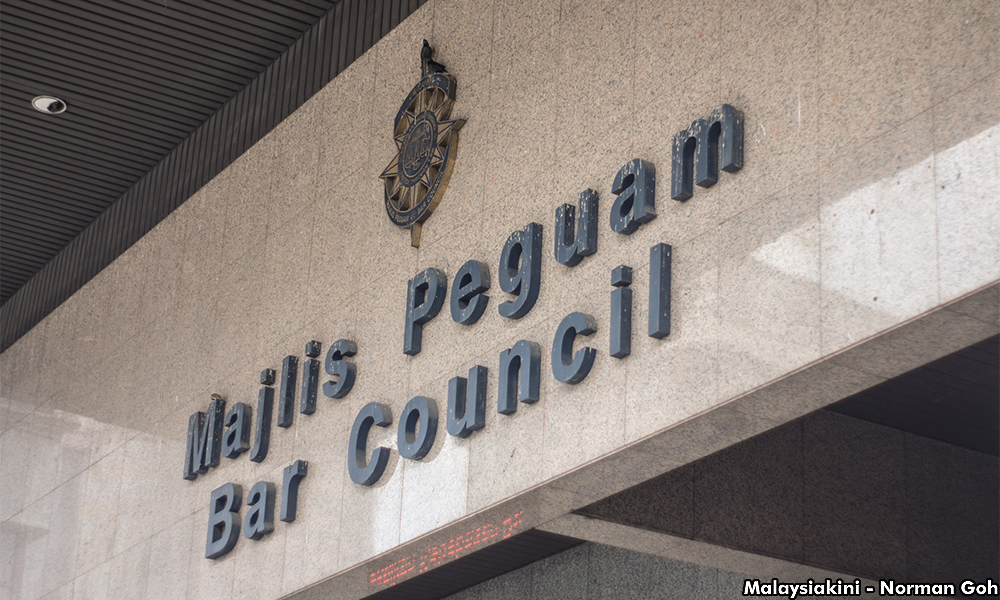

Bar Council elections: After the dust has settled
COMMENT | Last month, I wrote about the contest for 12 places in the Bar Council.
To recap, the Bar Council comprises 38 members to manage the affairs and execute the functions of the Malaysian Bar. Besides the 12 members elected from throughout Peninsular Malaysia by way of postal ballot, the Bar Council also comprises the immediate past president and vice-president of the Malaysian Bar, the chairpersons of each of the 12 State Bar committees, and one member elected by each of the said 12 State Bar committees to be its representative in the Bar Council.
I wrote about how keenly contested this year’s elections were, as can be seen in the formation of ‘teams’ or ‘lists’ of candidates. This year too, candidates had posters and some even had videos, which were shared around in social media.
Last week, after a gruelling month of campaigning and after the ballots have been counted, the results were announced.
The results were surprising, to say the least. All 12 came from the two ‘big teams’, and the count stood at six each. There is, therefore, a balance of power between them, at least from the national ballot.
Candidates who did not run as a team did not garner enough votes to be elected. These included current Bar Council members who managed to be re-elected for years and had served the Bar Council for a long time...
COMMENT | Last month, I wrote about the contest for 12 places in the Bar Council.
To recap, the Bar Council comprises 38 members to manage the affairs and execute the functions of the Malaysian Bar. Besides the 12 members elected from throughout Peninsular Malaysia by way of postal ballot, the Bar Council also comprises the immediate past president and vice-president of the Malaysian Bar, the chairpersons of each of the 12 State Bar committees, and one member elected by each of the said 12 State Bar committees to be its representative in the Bar Council.
I wrote about how keenly contested this year’s elections were, as can be seen in the formation of ‘teams’ or ‘lists’ of candidates. This year too, candidates had posters and some even had videos, which were shared around in social media.
Last week, after a gruelling month of campaigning and after the ballots have been counted, the results were announced.
The results were surprising, to say the least. All 12 came from the two ‘big teams’, and the count stood at six each. There is, therefore, a balance of power between them, at least from the national ballot.
Candidates who did not run as a team did not garner enough votes to be elected. These included current Bar Council members who managed to be re-elected for years and had served the Bar Council for a long time. It would appear that such candidates were overlooked by voters, simply because they were not visible enough in the campaigning.
Encouragingly, the number of ballots returned also increased this year. Last year, 19,000 ballots were issued, and only around 5,000 were returned. The year before that, 17,000 ballots issued and around 3,900 were returned.
A marked improvement in voting number
This year, 19,975 ballots were issued and 6,055 were received. Thirty percent of those who are eligible to vote had cast their votes. This is a marked improvement from previous years, where the ballots received did not reach 30 percent at all.
This could mean two things. Firstly, it could mean that more lawyers realise the importance of the Bar Council in their practice. A Bar Council that does not fulfil their aspirations will have a direct impact on their practice and the public role that the Malaysian Bar plays in the country.
Secondly, it could also mean that the keenly contested elections, including the intense campaigning, have captured attention and inspired more people to come out to vote.
Whatever the reasons, the fact that there are now proportionally more lawyers voting in the Bar Council elections can only be a good thing.
Coupled with the fact that this year, there were 35 contenders vying for the 12 places bodes well for the future of the Bar Council and the Malaysian Bar as a whole. At the very least, it shows that more people are willing to serve the Malaysian Bar.
Those elected this year will begin their term next year, in March.
They may be from different teams, but once elected, all Bar Council members must be part of the same team – the Bar Council team, serving the Malaysian Bar without fear or favour.
As a lawyer, I wish them all the best in their endeavours.
SYAHREDZAN JOHAN is a civil liberties lawyer and political secretary to Iskandar Puteri MP Lim Kit Siang.
The views expressed here are those of the author/contributor and do not necessarily represent the views of Malaysiakini.



Are you sure you want to delete this comment?
This action cannot be undone.