




Nyabung manok the Dayak fighting cocks
To the indigenous peoples of Sarawak, cock-fighting is a traditional way of life.
Like gladiator combat in ancient Rome or soccer matches in modern England, a cock-fight - or nyabung manok in Iban is a spectator sport that perhaps provides a means of releasing man's violent warring instinct through a ritualistic symbolic and often bloody battle that draws no human blood. Through the spilled blood of the vanquished cock, the Iban god of war Kelian may be appeased.
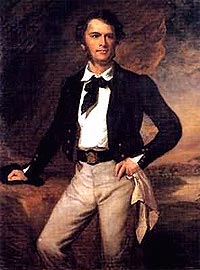
Before the arrival in 1842 of James Brooke (the man who would be king the first Rajah of Sarawak), and during the reign of the Brooke dynasty for about 100 years, the indigenous people of Sarawak were in fact very often at war. They first fought the rule by the Sultan of Brunei who had dominion over them. Then they fought the Brookes over taxes and autonomy over territorial control. More often than not, they fought among themselves, over land, communal honour, and settling of old scores.
Independence in 1963, bringing with it the seduction of modernity and the logic of statehood, has banished the impulse and need to settle conflicts through the razor sharp parangs. The native people could start voting through general elections. In this new form of combat, the risks to personal security are much reduced, and the spoils are much more attractive.
To the indigenous peoples of Sarawak, cock-fighting is a traditional way of life.
Like gladiator combat in ancient Rome or soccer matches in modern England, a cock-fight - or nyabung manok in Iban is a spectator sport that perhaps provides a means of releasing man's violent warring instinct through a ritualistic symbolic and often bloody battle that draws no human blood. Through the spilled blood of the vanquished cock, the Iban god of war Kelian may be appeased.
Before the arrival in 1842 of James Brooke (the man who would be king the first Rajah of Sarawak), and during the reign of the Brooke dynasty for about 100 years, the indigenous people of Sarawak were in fact very often at war. They first fought the rule by the Sultan of Brunei who had dominion over them. Then they fought the Brookes over taxes and autonomy over territorial control. More often than not, they fought among themselves, over land, communal honour, and settling of old scores.
Independence in 1963, bringing with it the seduction of modernity and the logic of statehood, has banished the impulse and need to settle conflicts through the razor sharp parangs. The native people could start voting through general elections. In this new form of combat, the risks to personal security are much reduced, and the spoils are much more attractive.
 But old habits die hard. As the Sarawak election campaign gathers steam now, during numerous political gatherings in all manners of remote farming communities throughout that expansive forested land, the party candidate would be presented to the excited assembly of voters as the most bankable
manok
, the ideal fighting cock who will struggle for the cause of the people, whatever that cause happens to be. The war-cry of "agi idup, agi ngelaban!" will resound through the corridor of many a longhouse.
But old habits die hard. As the Sarawak election campaign gathers steam now, during numerous political gatherings in all manners of remote farming communities throughout that expansive forested land, the party candidate would be presented to the excited assembly of voters as the most bankable
manok
, the ideal fighting cock who will struggle for the cause of the people, whatever that cause happens to be. The war-cry of "agi idup, agi ngelaban!" will resound through the corridor of many a longhouse.
The impressionable village folk, well wined and dined, will then size up the manok , examine his crucial features with great care, even tracing his bloodline in great detail, as they are wont to do with a real feathered cock in a real cock-fight, before deciding on whether to bet on their warrior with their vote and cash.
In this way, any election in Sarawak runs the risk of degenerating into a gaming spectator sport.
Dayaks more deprived
Modern democracy is meant to be participatory, and when active participants are reduced by corruption of the historical process into mere passive spectators, then the electorate have lost all initiative and autonomy in shaping their own destiny.
The historical process in Sarawak since independence has exactly been that: stripping away or stifling the will of indigenous people in self-determination, slowly but surely reducing them to mere consumers of political brand names and development ideologies.
This trend applies to the Malays and the Melanaus of course. But in terms of the dominant politics of race in Malaysia, none has been more deprived and marginalised than the Dayaks.
 Politics in Malaysia is condemned to be the politics of race; this is an iron-clad presupposition that has its source in the birth and growth of Umno. Then it has been entrenched and institutionalised through the Federal Constitution.
The politics of race is also the politics of head-counting. In Malaya, that serves the Malay nationalists well, since the Malays are not only indigenous, but they are also in the majority.
In Sarawak though, this national ideology confronts a peculiar snag. The Malays there make up for less than a quarter of the population. The crucial question then becomes thus: how would the grand Umno vision of building a great Malay Homeland in Malaysia be realised, in a state where the majority of the natives are neither Malay nor Muslim?
This question has played itself out in the short history of Sarawak since the emergence of Malaysia as a modern nation-state in 1963. The final act in this drama has hardly been written though, as indigenous response to the Malayanisation of Sarawak continues to rear its stubborn head, even and especially in the current Sarawak general election.
The Dayak response to the possibility of Malay dominance in their homeland began even at the time when the idea of Malaysia was bandied about by Tunku Abdul Rahman. Many reservations of the Dayak community, especially with regard to the use of land and the invasion of peninsular population, were written into the Federal Constitutions, as special rights and privileges accorded to the state of Sarawak within the federation.
Around independence in 1963 also, there was this unwritten understanding among the pro-Malaysia elite in Sarawak that, while the post of governor was to be held by a Malay, the all-important position of the state's chief minister must be the preserve of the Dayak people. Thus, it came about that the first chief minister of Sarawak was Stephen kalong Ningkan, a home-grown full-blooded Iban.
 The relationship between Kuching and Kuala Lumpur during that period was therefore an uneasy one at best, culminating in the removal of Stephen kalong Ningkan by the federal government through a constitutional amendment in the late 60s. As a stop-gap measure, another inconsequential Iban was appointed to replace him.
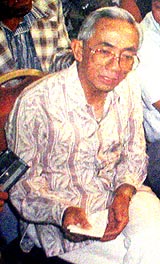
In the 1970 state election, following the blood bath of May 13 in 1969, Rahman Yakub (left), a Melanau Muslim by ethnic persuasion, was asked by Tun Abdul Razak to return to Sarawak to straighten out Sarawak politics.
The 1970 Sarawak election was a turning point in Sarawak politics. The election results were more or less hung, with no one ethnic based party controlling the majority of seats. It necessitated a series of intense negotiation and horse trading.
The then opposition party, the Chinese based Sarawak United People's Party (Supp), could have formed a coalition government with the Dayak based Sarawak National Party (Snap). Instead, the Supp, which was weary of being persecuted as a communist infested opposition party for many years, opted to join hands with Rahman Yakub's party to form the alliance government. Snap was left to languish in the opposition until 1976, when they too rejoined the BN stable.
This then set the pattern for political development and race relation in the three and a half decades since. While the Chinese-based parties and the Malay/Melanau parties enjoyed overwhelming support within the Barisan, Dayak votes were always split many ways among all political parties, on both sides of the political divide.
Second-class bumiputera
The emergence in 1983 of PBDS as a political vehicle to unify all Dayaks under one banner, with their battle cry of "Dayak CM" did shake up Sarawak politics a little, especially during the Ming Court Affair in 1987. Again, overwhelming Chinese support for a Malay/Melanau dominated BN led to the demise of the most potent challenge for state power.
The PBDS soon rejoined the BN, and signed its own death warrant so to speak. Today, this once great party has been deregistered. Its former leading lights have been divided and ruled, vying for courtesan favours within the BN in the guise of different political parties, which can all be registered with lightning speed.
The consequence to the fate of the Dayak people as a whole has been dire. Of all the ethnic groups in Sarawak, they remain the least socio-economically developed, leading many of them to claim that they have become second-class bumiputera and third-class citizens in their homeland. Culturally, the Dayak traditions are dying out, overwhelmed by the forces of modernity and impeded by their political helplessness.
 Obviously, within the parameters of ethnic politics in Malaysia, the Dayaks have been denied their destiny. It causes great anguish among the more aware Dayak minds. Whenever I write an article on this subject, inevitably I receive response from Dayak intellectuals and statesmen expressing their resonance to my sentiment of concern for the fate of the Dayak people.
Is the Dayak cause lost forever?
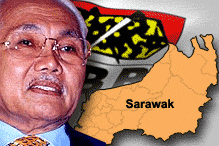
Well, the impending retirement of Abdul Taib Mahmud, the current CM of Sarawak, will definitely bring to Sarawak politics a certain amount of unpredictability. The succession question is unlikely to be settled amiably. There may be cracks within the ruling coalition. Whatever will be, will be! God does work in strange ways, incomprehensible to us mortals.
At least, the ancient fighting spirit of the once proud and independent Dayak people is still alive and well, judging by the adamant challenge to the status quo from the remnants of Snap and PBDS. Apart from the usual motley collection of opportunists and carpetbaggers, there are some fighting cocks of pedigree lineage.

 In a general election, everybody will have his own favourite fighting cocks of course, on whom hope and aspirations for the future of the larger picture are invested. I too have my favourites, in Daniel Tajem (left) in N26 Bukit Begunan and Baru Bian (right) in N70 Bakelalan. Their victory will be cause for my celebration.
If only they can withstand the mighty onslaught of money and development politics..!


Are you sure you want to delete this comment?
This action cannot be undone.