




Kadazandusun - a culture fades...
Every year throughout the month of May, the Kadazandusun of Sabah get together to celebrate a very significant event, the Kaamatan or harvest festival. This year was no different. However, like me, many Kadazandusun feel that, over the years, there are lesser things to celebrate about.
The Kadazandusun people of Sabah are facing a crisis. Yet, there is no one genuinely and actively looking into the issues affecting them. Native lands are being leased out to big companies in the name of development. The people are being chased away from their ancestral land as had happened to the people of Kampung Matabian.
Every year throughout the month of May, the Kadazandusun of Sabah get together to celebrate a very significant event, the Kaamatan or harvest festival. This year was no different. However, like me, many Kadazandusun feel that, over the years, there are lesser things to celebrate about.
The Kadazandusun people of Sabah are facing a crisis. Yet, there is no one genuinely and actively looking into the issues affecting them. Native lands are being leased out to big companies in the name of development. The people are being chased away from their ancestral land as had happened to the people of Kampung Matabian.
 For those who are living on their ancestral land, it might not be for long. The state government's decision recently to relocate residents from Sri Tanjung to Kampung Maang, a serene and green Kadazandusun village, to make way for the expansion of the Kota Kinabalu International airport, caused an outcry from the Kadazandusun community.
Many of the Sri Tanjung residents are believed to be illegal immigrants and holders of fake MyKads. The lack of transparency, proper studies and the by-passing of the normal procedures by the government in the proposed relocation of thousands of people is of great concern.
Even the representatives of the Kadazandusun in the government seem to be unaware of what's going on. Or maybe they are aware of it but have chosen to keep quiet for fear of losing whatever minuscule power that they hold within the government.
Second-class
There is clearly a lack of strong leadership in the Kadazandusun community. The so-called representatives of the community are not united, causing a division within the community based on which political party they favour.
In the government service, many Kadazandusuns are being sidelined for promotions despite their seniority, qualifications and good performance. These victims have nowhere to go for moral help and support, no one to represent them and fight for their rights. In fact, the Kadazandusuns are treated as second-class bumiputeras in Malaysia.
The recruitment of Kadazandusuns in the government service have been declining in numbers even though many hold the necessary qualifications. The fact that many have started to venture into restaurant, handicrafts, agriculture, and other businesses is a positive sign that the people are rising to the challenge. Those educated understand that they need to be more competitive, be an entrepreneur in order to develop and survive.
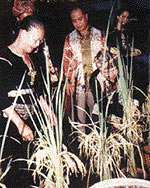 There is an advantage to this and maybe in the near future the indigenous people of Sabah no longer have to rely on the crutches handed out to so-called bumiputeras. However, it will be a long and difficult struggle for the Kadazandusun towards progress especially since there is a lack of leadership amongst the community.
Sadly, alcohol abuse, drug abuse, unemployment, broken families are now common within the community. The Kadazandusun, and all Sabahans for that matter, are very hospitable, tolerant, and generous people. As a result, they often become an easy target for manipulation by unscrupulous parties. Many are not aware of their rights and who to turn to for advice.
There is no clear and united vision from the leaders regarding how the community will progress and develop. The Kadazandusun language is becoming extinct, and according to one study done, the language will become extinct in another 50 years time or sooner if efforts are not being made to preserve the language. Once this is lost, the people will lose a large part of their Kadazandusun identity.
Traditional dances
The Harvest Festival celebrations organised by the government seemed to cater more for the tourists and to promote Sabah as a tourist destination. The community spirit, which was present during the harvest festivals of the past no longer exists. Visitors attending the harvest festival celebrations do not get to know and appreciate the culture.
To many of these visitors, the harvest festival is just another destination, an entertainment. As a Kadazandusun, I no longer feel welcomed during such celebrations. As far back as I can remember, every Kadazandusun village held harvest festival celebrations and people from all over were welcome to join in the celebrations.
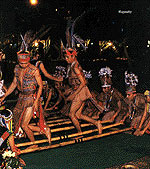 There were sports carnivals to foster community spirit and for enjoyment. The community shared their food with each other and whoever was present during the festivals. The inviting sound of beating of gongs could be heard from afar. Gongs were played by the young and the old, and there were free lessons for those who wanted to learn to play the gongs.
Adult and children wore their traditional costumes which are adorned with beads, sequins, brass ornaments, silver and gold coins. Everyone knew the traditional dances and danced along, and visitors soon became experts in it too since everyone wanted to teach them how to do the dances. Everyone knew each other, and helped each other and respected one another.
Nowadays, some Kadazandusun villages do not even hold harvest celebrations in their villages anymore. Granted, many Kadazandusuns no longer toil the paddy fields today but it should not be a reason to not celebrate the harvest festival.
We must know where we came from in order to know how far we have progressed and to learn from the journey. Otherwise, we will be no better than a feather flying in the wind, lost and unimportant.
Urgent need
In fact, the harvest festival is just like any other ordinary day for many Kadazandusun nowadays. There is no call for the people to wear traditional costumes during these times although that will be a good start to get people to value and be proud of their tradition and culture.
Children scrunch up their faces in disgust when they see traditional food being served, and karaoke has replaced the sound of gongs.
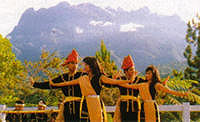 There is an urgent need to unite and set a common goal for the Kadazandusun community to preserve their culture, language, their history, and for their progress. The Kadazandusun are living in a precarious time.
The leaders need to wake up and do their very best to preserve this endangered tribe and ensure that the preservation of the culture and development of the Kadazandusun be included as one of the urgent agenda of the government's overall development plan.
When cultures disappear in a country, the identity of the nation disappears. Without identity it is easy for outside influence to affect and even destroy the country and its people. Let's not forget that.
And a belated Kotobian Tadau Tagazo do Kaamatan (Happy Harvest Festival) to all!
SUSAN BANSIN is a facilitator for community development using theatre as a tool for both development and to provide voices to the marginalised. She believes in grassroots level participation to find solutions as well as to contribute to the development of the country and its people.


