




When faith becomes a political show (Part I)
When Richard Nixon departed the world in 1994, a Christian friend from China whispered to me during a church service, "Nixon was a true Christian. He had contributed tremendously to Sino-American relations."
I have no right to question Nixon's personal faith with God, but he is no doubt an American president that I admire greatly. No, not for the fact that he shook hands with the aging yet ruling Chairman Mao, a handshake that "transformed the world". After all, given the international climate at the time, anyone who was elected into the White House would have opted for a similar strategic move.
 Rather, my respect for Nixon stems from his braveness in shouldering the responsibility over the Watergate scandal by resigning from office, eventually answering to Congress and the American people. For the next two decades, the world might remember Nixon as a former president with ignominious records, but I read from the words of others that the same Nixon, once full of himself and wielding enormous power as head of state, had since become a humble person subsequent to the unprecedented impeachment proceedings against a serving president in American history.
When Richard Nixon departed the world in 1994, a Christian friend from China whispered to me during a church service, "Nixon was a true Christian. He had contributed tremendously to Sino-American relations."
I have no right to question Nixon's personal faith with God, but he is no doubt an American president that I admire greatly. No, not for the fact that he shook hands with the aging yet ruling Chairman Mao, a handshake that "transformed the world". After all, given the international climate at the time, anyone who was elected into the White House would have opted for a similar strategic move.
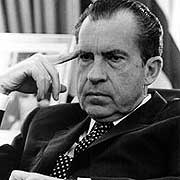 Rather, my respect for Nixon stems from his braveness in shouldering the responsibility over the Watergate scandal by resigning from office, eventually answering to Congress and the American people. For the next two decades, the world might remember Nixon as a former president with ignominious records, but I read from the words of others that the same Nixon, once full of himself and wielding enormous power as head of state, had since become a humble person subsequent to the unprecedented impeachment proceedings against a serving president in American history.
Nixon might have been eager to preserve his legacy, he had nevertheless learned to care less about how history would judge him towards the latter part of his life, all thanks to the firm faith that he had in God.
Jimmy Carter is another American president that I personally look up to. Again, not because of the fact that, during his presidency, Washington formally established diplomatic ties with Beijing, but for his ability and willingness to humble himself and reflect upon his own failings following his failed bid to serve a second term.
As far as Carter is concerned, being defeated as president was not an end to his life, but a turning point. It is this faith that has made it possible for him to assume the role of an international leader working strenuously for world peace and humanitarian causes.
He once openly confessed his own inadequacies, but the faith was keeping his feet on the ground, making him a 'more Christ-like person'. Precisely because he is acutely aware of the perils of human pride, Carter often warns of the dangers that an overconfident and overstretching United States could cause the world.
Blindly subscribed
There is this famous Chinese saying that one will find it hard to withstand the freezing cold upon reaching the pinnacle. It implies that one is desirous of power and influence but although fearful of the possible consequences of falling from grace, does not seek to deny assuming high office as valuable public recognition. But Nixon and Carter once reigned supreme on the international arena, their glories almost unmatched.
What truly marks them out from other leaders is the ultimate values in life they discovered through their personal faith, which freed them from the benchmark of being judged by world opinion and history. The world is replete with those who will do everything to be popular with the masses and to win their applause; but only courage and wisdom in facing up to one's wrongs with humility can build and test one's character.
The Chinese Christian world nowadays is characterised generally by its adoration and extolment for the US, which has given rise to its support for the attempt of the conservative forces in the form of the Christian Right to dictate foreign policy of the White House.
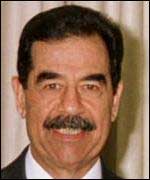 When the Christian Right described Saddam Hussein as Satanic incarnation during the 1991 Gulf War, many Christians, from Taiwan to Singapore, blindly subscribed to such extreme view.
I am least interested in defending Saddam's tyranny. But I was truly amazed to see so many churches turning a blind eye to the series of bloody coups and wars overtly or covertly schemed, executed or supported by the US.
In Matthew 5:14, Jesus reminds his disciples of their being the light of the world, a city on the hill that cannot be hidden. With unfailing engineering and myth-making, the Christians in the US have been working untiringly to shape the country into a "city on the hill". The US can make no wrongs, for it is the "light of the world" tasked with delivering heavenly justice on earth.
But is it not the awareness of one's own wickedness that leads one to the Christian faith? It would seem that the US that is imagined and constructed by the Christian Right is in the same league as the Catholic Church in the old days, which believed in the doctrine of papal infallibility.
Rightwing beliefs
Personally, I have no problem with the universal church taking the US as a model. For one, the separation of powers is even more stringently implemented in America than in Britain, and there is much for the world to learn from the assurance of freedom of speech under the US constitution.
What worries me most is that it is still not quite clear as to what is driving Christians the world over to emulate the US in many ways. Is this phenomenon engendered by the American spirit and ethos at independence? Or is it owing to the fact that the US is currently a superpower, be it in politics, economics, military, technology or culture, and there is no near rival in sight? Is this worship of power a conditional reflection of one's "impotence", a natural consequence of an instrumentalist-oriented extolment?
But it is beyond dispute that these advantages have enabled the ideology of the rightwing Christian beliefs to make inroads into the minds of Christians living in other corners of the world.
Still, one will do well to be mindful of the fact that Japan's drive to prosper and strengthen its military by emulating indiscriminately the US and Europe models in the first half of the last century only led it to disastrous militarism.
[ Part 2 will appear next week ]


