


COMMENT | Malaysia 5.0: Transforming the nation's digital economy
COMMENT | My name is Rais Hussin, and I am deeply honoured and pleased to address you today as Malaysia Digital Economy Corporation's (MDEC) chairperson.
Digital transformation is a personal passion of mine, to which I have dedicated my professional and academic efforts for many years, culminating in the publication of a book entitled "4IR: Reinventing a Nation" which I co-authored with one of the world’s leading blockchain experts, Dinis Guarda and was launched globally at Frankfurt book fair in October 2019.
The book was designed as a blueprint of sorts to assist governments of developing nations in their digital transformation agenda. Digital transformation presents both challenges and opportunities to us all.
Those who succeed can use Fourth Industrial Revolution (4IR) technologies to create a better life for all, including new and more meaningful jobs, reskilling of the workforce, better health and education, and smarter and greener cities.
At the cusp of the 4IR, we are blessed with the chance to re-engineer the human experiment using technologies that decentralised authority and de-emphasised divisions along the lines of colour, creed and country – what the Japanese have coined as "Society 5.0".
The term describes the next stage of the evolution of societal communities. The quest for Society 5.0 is built around...
COMMENT | My name is Rais Hussin, and I am deeply honoured and pleased to address you today as Malaysia Digital Economy Corporation's (MDEC) chairperson.
Digital transformation is a personal passion of mine, to which I have dedicated my professional and academic efforts for many years, culminating in the publication of a book entitled "4IR: Reinventing a Nation" which I co-authored with one of the world’s leading blockchain experts, Dinis Guarda and was launched globally at Frankfurt book fair in October 2019.
The book was designed as a blueprint of sorts to assist governments of developing nations in their digital transformation agenda. Digital transformation presents both challenges and opportunities to us all.
Those who succeed can use Fourth Industrial Revolution (4IR) technologies to create a better life for all, including new and more meaningful jobs, reskilling of the workforce, better health and education, and smarter and greener cities.
At the cusp of the 4IR, we are blessed with the chance to re-engineer the human experiment using technologies that decentralised authority and de-emphasised divisions along the lines of colour, creed and country – what the Japanese have coined as "Society 5.0".
The term describes the next stage of the evolution of societal communities. The quest for Society 5.0 is built around the needs of a human-centred society. I envision MDEC as playing a leading role in catalysing this transition for Malaysia and Malaysians.

Covid-19 has accelerated the migration of society from physical infrastructures onto digital infrastructures, and Society 5.0 holds the promise to converge these environments together through the use of 4IR technologies such as artificial intelligence (AI), Internet of things (IoT), blockchain and Fintech.
After months of quarantine, with both companies and households in survival to recovery mode, we are now emerging from crisis. The ensuing recovery relies largely upon a managed digital transformation into what I have been writing about as "Malaysia 5.0".
Malaysia 5.0 is a new narrative for Malaysia as an innovation economy that can compete in a disruptive technology world, serve as a springboard into Asean, a bridge between Asia, Middle East and Africa, and interconnect with the 1.8 billion Islamic population worldwide.
MDEC will no doubt play a leading role in introducing emerging technologies which are essential tools in the new Malaysia 5.0 digital economy. If such a policy is missing from our national strategy, Malaysia will be left behind and excluded from digital ecosystems and workforces.
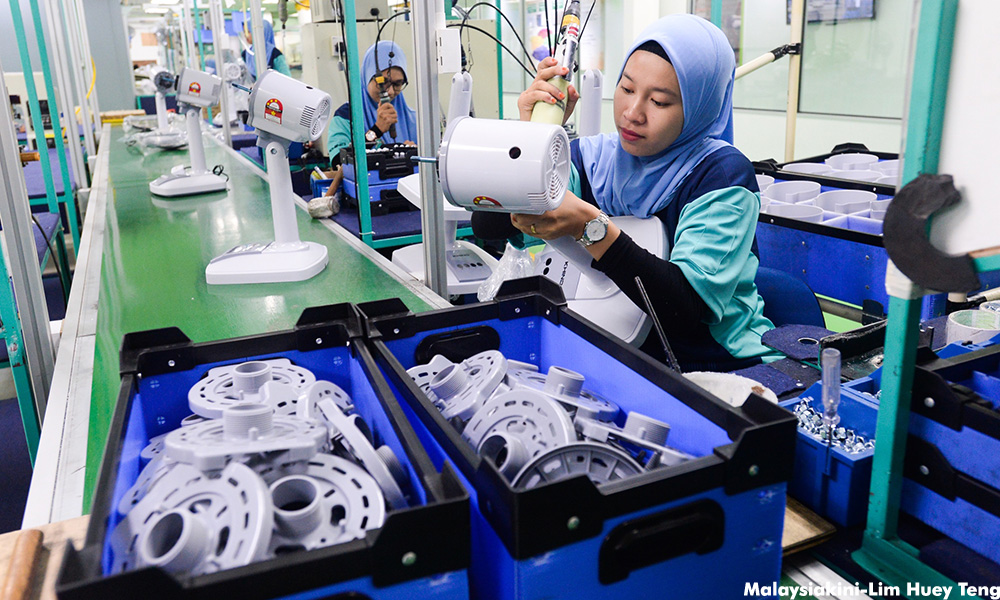
Instead, Malaysia 5.0 can contribute to a more sustainable and circular economy, where greater well-being is possible for all citizens regardless of age, ethnicity, and class.
A new initiative which I will propose is a designated hub that interconnects 4IR companies in Malaysia to the rest of the world, with strong regulatory and strategic oversight and direction from MDEC, and aligned with ongoing and newly announced programs such as Prihatin and Penjana.
Despite the personal and economic pain caused by the pandemic, after months of quarantine, with both companies and households in survival to restart modes, there will ultimately be an end to the crisis. The ensuing recovery is an opportunity to overcome social challenges, improve productivity and create new markets.
With or without the crisis, if we are to migrate into a high-wage, knowledge-based economy envisioned in the Shared Prosperity Vision (SPV) 2030 then we must give more than lip service to encourage innovation, retrain the workforce, and incentivise investment.
Even bigger than the risks from an economic downturn is the likelihood that we will revert to the status quo. Working with and learning from my new colleagues at MDEC, I am confident that we can discover new ways of doing things and become more resilient as a society and more robust as an economy.
RAIS HUSSIN is Malaysia Digital Economy Corporation (MDEC) chairperson and the president/CEO of Emir Research, an independent think-tank focused on strategic policy recommendations.
The views expressed here are those of the author/contributor and do not necessarily represent the views of Malaysiakini.



Are you sure you want to delete this comment?
This action cannot be undone.