


COMMENT | Small businesses dying off, 1m lost jobs – but nobody cares
COMMENT | We are the lucky ones. When other developed countries are still debating how to “flatten the curve”, we are one of the few that have done so successfully. With this, we can reopen our economy.
More cars add to highways on rush hours, more people queue in front of retail stores, more friends catch up over a cup of coffee without a screen dividing them.
But our economy is still nowhere close to recovering.
My job requires me to talk to at least five different businesses each day. And while most have said that businesses are picking up as the economy reopens, they are nowhere near pre-pandemic levels.
Small businesses are at the brink of dying off.
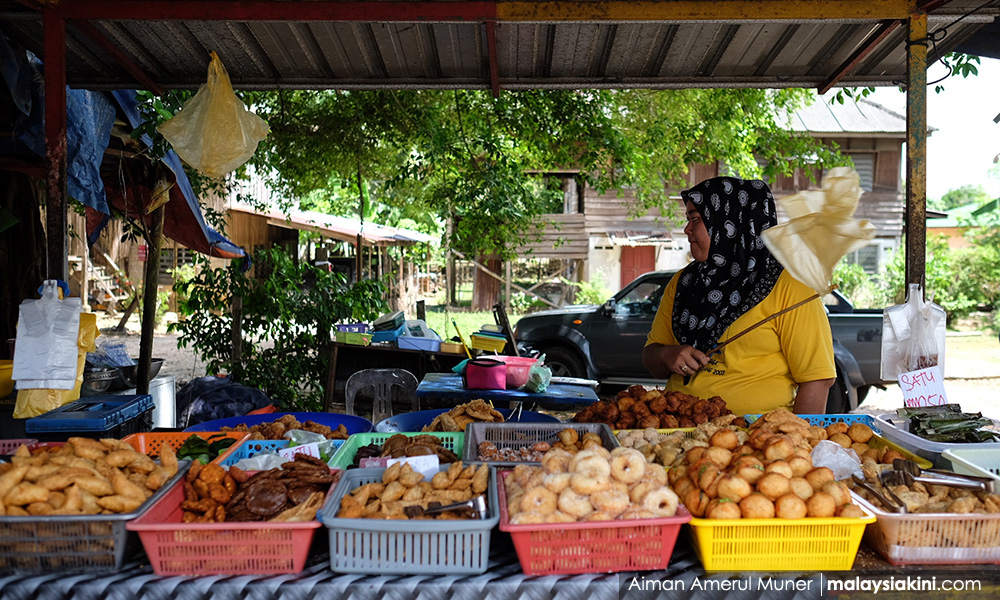
A fashion startup is cutting 30 percent of its staff’s salary as revenue takes a steep 50 percent dive. An event and advertising company had to cut all but one of its fresh graduates from the team. A 12-year-old Malay restaurant has told all its employees that they are losing their jobs if the orders do not pick up, as they only have a one-month runway left.
Worst job loss numbers in 30 years
The economy is reopening but it is not recovering.
Most businesses could only commit to...
COMMENT | We are the lucky ones. When other developed countries are still debating how to “flatten the curve”, we are one of the few that have done so successfully. With this, we can reopen our economy.
More cars add to highways on rush hours, more people queue in front of retail stores, more friends catch up over a cup of coffee without a screen dividing them.
But our economy is still nowhere close to recovering.
My job requires me to talk to at least five different businesses each day. And while most have said that businesses are picking up as the economy reopens, they are nowhere near pre-Covid-19-pandemic levels.
Small businesses are at the brink of dying off.
A fashion startup is cutting 30 percent of its staff’s salary as revenue takes a steep 50 percent dive.
An event and advertising company had to cut all but one of its fresh graduates from the team.
A 12-year-old Malay restaurant has told all its employees that they are losing their jobs if the orders do not pick up, as they only have a one-month runway left.
Worst job loss numbers in 30 years
The economy is reopening but it is not recovering.
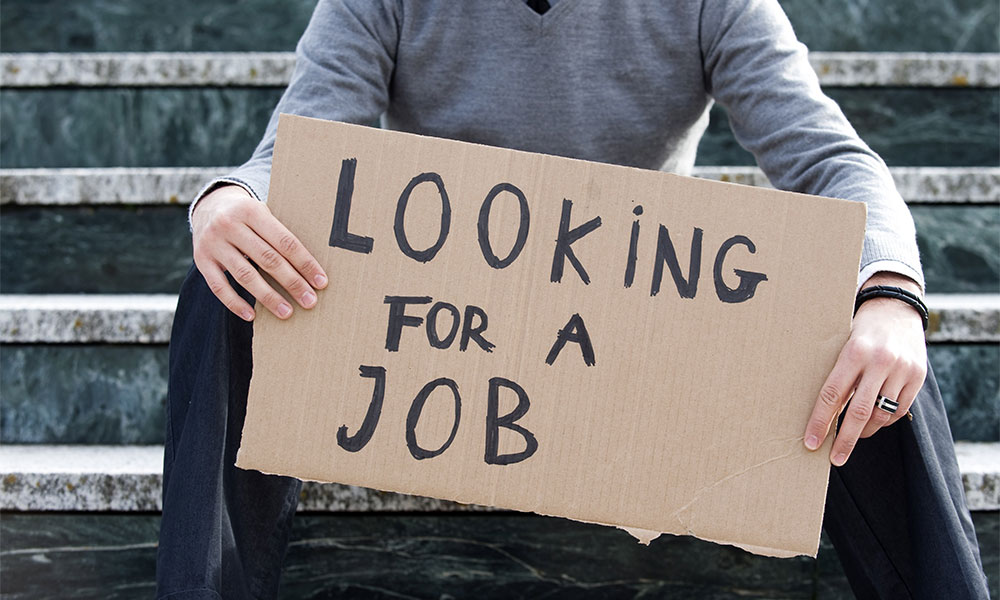
Most businesses could only commit to one-month contracts instead of three or six months. Most job advertisements have hundreds of desperate applicants.
Most property and car agents cut down their paper-thin commissions as people hold back on buying big items. Most business webinars talk about the panic after the loan moratorium ends in September.
This is not a sign of recovery; there has yet to be any reason for optimism.
In the face of grave uncertainty, we lie to ourselves to feel better. Two months ago, Finance Minister Tengku Zafrul Aziz declared that our economy is set for recovery in 2021 as more than 70 percent of the workforce has returned to work.
This was baffling to many, including the Malaysian Trade Union Congress (MTUC) that thought the prediction was highly unrealistic. Not only have certain industries like tourism, manufacturing, construction, entertainment and events suffered a drastic and permanent decline, the ripple effects to other industries have only started.
Two weeks after Zafrul’s statement, Chief Statistician Mohd Uzir Mahidin disclosed that Malaysia’s unemployment rate spiked to 5 percent as nearly 778,000 people are now out of jobs. This is the highest ever in 30 years, and most economists have predicted that this will spiral further.
Worse, this survey does not take into account those who could not fall within the category of “unemployment” despite being poorly affected by the control orders. The time lag also means that the actual figures are much higher.
For context, the unemployment rate was 3.2 percent during the Asian Financial Crisis in 1997 and 3.7 percent during the 2008 Great Recession. Malaysia’s GDP only recovered five years succeeding the 1997 financial crisis – we are definitely not out of the woods.
MTUC’s prediction of more than 2 million people will be jobless at the end of the year is a scary but likely reality.
Mountain of paperwork kills off small businesses
When the prime minister announced that domestic tourism is permitted during the recovery movement control order (MCO), we heard that people were rushing to travel. Langkawi hotels purportedly received 1,000 bookings in 45 minutes. Many thought we were bucking the economic trend – heading for the V-shaped recovery.
It turns out, this was a lie too. Langkawi Tourism Association CEO Zainudin Kadir said that there was no basis for such a claim. Although we hope for a surge and return of consumer spending, this remains a dream.
Reality is harsher. The RM295 billion stimulus bill by the government is important to our economy. But to small businesses, it was either too complicated, too small, or too slow.
Hundreds and thousands of small businesses were not familiar with the application processes, and with only approximately one to two months’ cash at hand, they were forced to lay off, hold back, or close down entirely.
Until May 31, only RM3.22 billion out of the total RM13.8 billion allocation in the first stimulus package had been approved. This low take-up rate meant that the approval and disbursement process is long and inefficient.
This is unsurprising because small businesses have a difficult time figuring out the voluminous paperwork. The jungle of government bureaucracy meant that only the most persistent will survive.
Questions like: “What assistance programmes do you need?”, “Who do you approach?”, “Do you qualify?” or “Do you meet the requirement?” are sources of confusion.
Small business failures accelerant to recession
Banks that are saddled with an influx of applications are also less helpful to small businesses. They give differing opinions or do not respond to queries completely.
Even if one small business gets assistance, it is only enough to act as a disaster relief for another small business. Small businesses suffer together. And once this is cut, everyone sinks.
The spiral continues when people lose their jobs and the ability to spend. The key has always been in consumer spending. When businesses shut down, workers lose their jobs. Without a monthly income, they cannot spend.
Poorer workers are disproportionately affected as they do not have a wealth cushion, being saddled with high debts, forcing them to sell whatever they can to get quick cash.
Pawnshops form a beeline. They now even provide stools for the people in the queue.
Young people, already not market-ready, enter the job market at a bad time. They are most vulnerable to be laid off, and a generation of young entrepreneurs and innovators now have to scale back on their dreams – pushing the country back by a few years.
While Malaysians look for jobs on the ground, politicians also scramble for the highest positions. The political risk in our country would further delay our economic recovery.
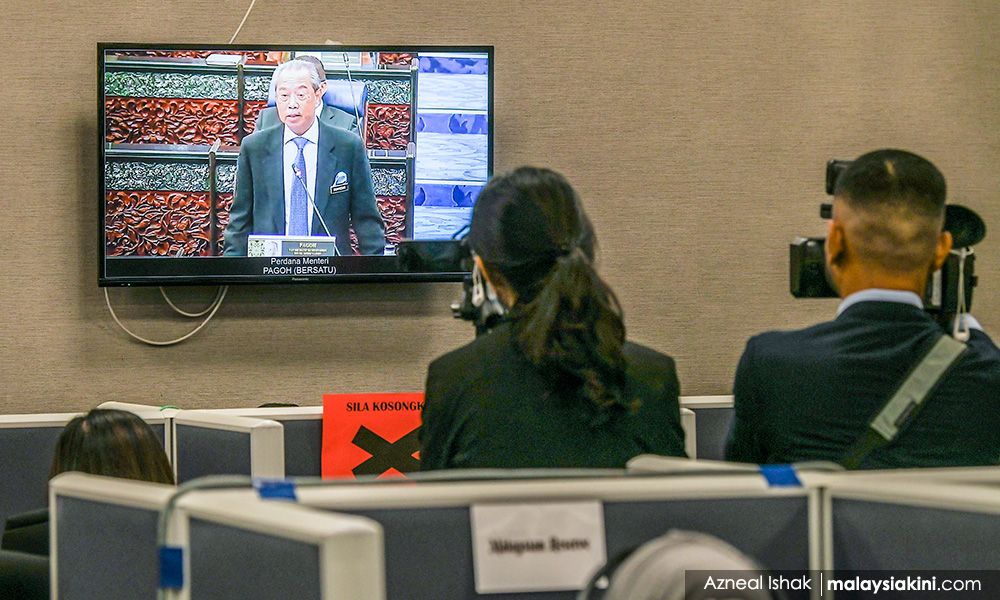
The legitimacy question of the Perikatan Nasional government will not disappear simply when the health crisis – or even the economic crisis – dissipates. The slim majority that Prime Minister Muhyiddin Yassin holds means that there is always a threat of a no-confidence vote and a snap election.
What this means is that money from other countries will not flow rapidly, and money does not trickle down as people hold back on their decisions. We haven’t even talked about the possibility of a second wave of coronavirus.
This is the worst of times – but nobody cares.
JAMES CHAI is a legal consultant and researcher working for Invoke, among others. He also blogs at jameschai.com.my. You may reach him at jameschai.mpuk@gmail.com.
The views expressed here are those of the author/contributor and do not necessarily represent the views of Malaysiakini.
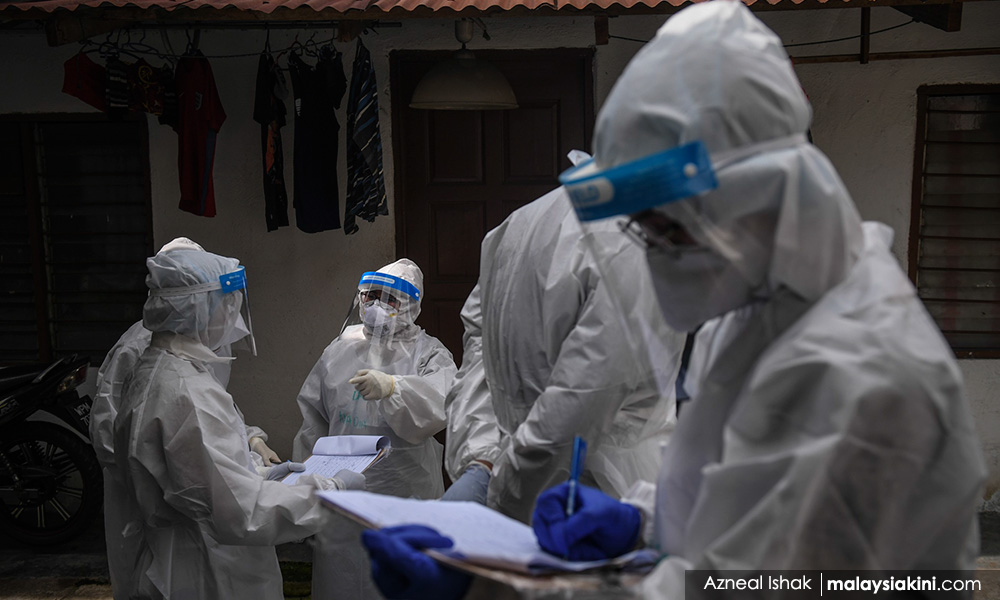


Are we really doing a good job in containing the pandemic? The Star newspaper had an article a few weeks ago stating that 2.3 million foreign workers are yet to be tested. We are not doing enough tests; unlike that of Singapore. So, I ask the question again; are we really containing the pandemic?
Are you sure you want to delete this comment?
This action cannot be undone.