


Dark web - a web of crimes
No country or organisation is immune to cyber-attacks. Recent threats were levelled at the Royal Malaysian Navy (TLDM), the US Air Force as well the as the Nigerian navy regarding highly classified documents that were leaked and ended up on the dark web. This has raised a heightened awareness of the need to be more secure, vigilant and resilient. TLDM is aware of the stolen military-related information and is believed to have taken action to determine what data has been exposed on the dark web.
The dark web is used for nefarious purposes aiming to disrupt critical infrastructure or sensitive or classified information. It also serves as “criminal underground” to facilitate money laundering and criminal activities.
Political activists take advantage of the dark web to hide their activities as they can become virtually untraceable and can operate beyond the supervision of law enforcement agencies.
A group of cyber-extortionists on the dark web claims to have dirt on the current ...
No country or organisation is immune to cyber-attacks. Recent threats were levelled at the Royal Malaysian Navy (TLDM), the US Air Force as well the as the Nigerian navy regarding highly classified documents that were leaked and ended up on the dark web. This has raised a heightened awareness of the need to be more secure, vigilant and resilient. TLDM is aware of the stolen military-related information and is believed to have taken action to determine what data has been exposed on the dark web.
The dark web is used for nefarious purposes aiming to disrupt critical infrastructure or sensitive or classified information. It also serves as “criminal underground” to facilitate money laundering and criminal activities.
Political activists take advantage of the dark web to hide their activities as they can become virtually untraceable and can operate beyond the supervision of law enforcement agencies.
A group of cyber-extortionists on the dark web claims to have dirt on the current US President Donald Trump and have threatened to publish the information in due time before the election.
Criminologist, Dr Michael McGuire stated that the healthcare industry, banking and commerce are the target sectors as they host a mountain of personal, confidential and private data.
During the Covid-19 crisis, hackers have carried out a number of malicious cyber-attacks. Some hospitals are facing ransomware attacks where databases and records of who has Covid-19 are available on the dark web.
Even our Health Ministry is cautioning Malaysians against buying plasma from the dark web, amid reports that cybercriminals were selling fake products online as the demand for it has been increasing during the Covid-19 pandemic.
Recently, Singapore suffered its worst-ever cyber-attack when hackers broke into SingHealth's IT systems to steal data and records of 1.5 million in-patients and outpatients and even the types of medication given to their Prime Minister Lee Hsien Loong.
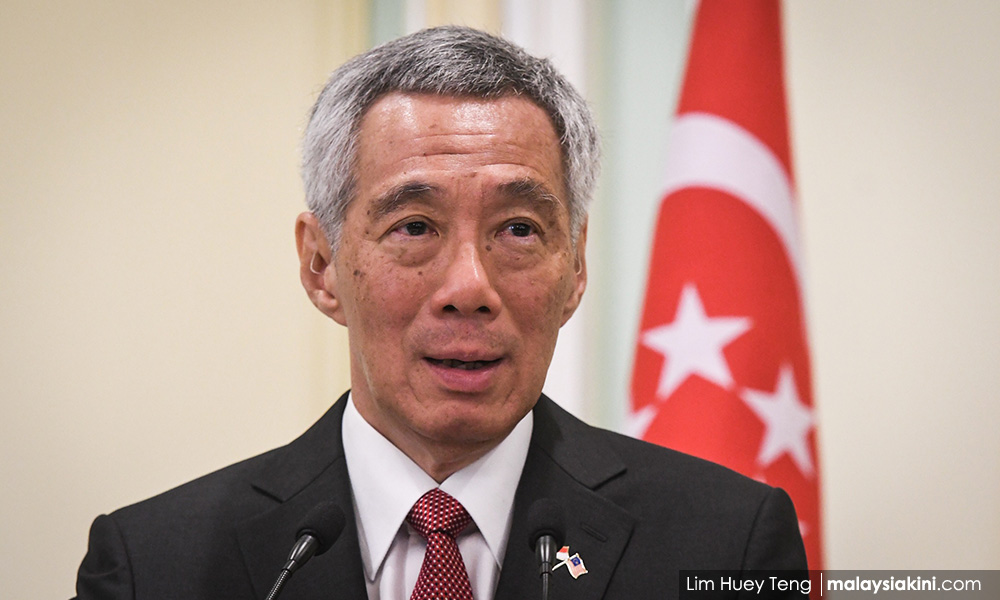
Cyber-attackers have also targeted Singapore’s education sector to steal data and credentials, ultimately to be sold on the dark web.
In July 2020, the Royal Military College of Canada’s student information and financial documents had also been leaked onto the dark web.
Prior to this, a cybercriminal claimed to have the complete set of records and personal details of 1,164,540 Universiti Teknologi Mara (UiTM) students and alumni who studied between 2000 and 2018. The hackers wanted to prove a point and to tell UiTM to beef up their IT security in the university. The information was eventually sold on the dark web.
A few years ago, Richard Huckle who posed as a freelance photographer and an English teacher, got access to impoverished communities in Kuala Lumpur. He had used the dark web to post more than 20,000 pictures of children as young as six months old being sexually abused from 2006 to 2014. Huckle was jailed for life after admitting to 71 charges of sexual abuse against children in Malaysia.
Long-term plan
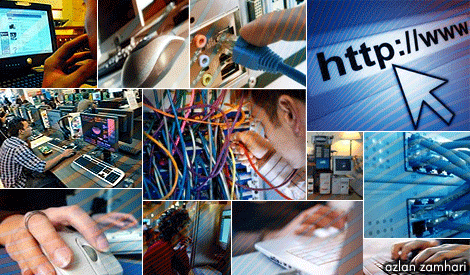
So, what is the dark web? There are three layers of the Internet: surface web, deep web and dark web.
Like an iceberg, interestingly, the surface web contains only four percent of the Internet; the remaining 96 percent is hidden in the deep web.
However, this is not to say the deep web is necessarily malicious. Medical records, academic and legal documents are also kept and stored there for protection and privacy purposes.
What is disconcerting about the deep web is a part of it called the dark web which is also internationally hidden and not accessible through the traditional search engines or standard browsers. To access this level, you need to have a special browser known as an Onion Router browser (TOR), originally developed by the US Navy to protect government intelligence communications. It protects users’ privacy and hides all users’ IP addresses which makes it impossible to be traced.
The organised criminal sites offer their marketplace for purchasing illegal products and services such as sensitive data, financial transactions, corruption, drugs, contract killers, human organs, child pornography, counterfeit money, fake passports and stolen bank account information, etc. They even have their respective business models, advertising and collaboration among hackers and criminals.
Combating criminal activities operating in the dark web environment requires law enforcement agencies to be more proactive. It demands for cybersecurity experts and technical resources combined with an innovative approach. Hackers are becoming more skilled and sophisticated and some countries make use of “ethical hackers” to deal with the cyber-attacks and the dark web.

What would happen if a cyber-attack takes over an electronic voting system or a government's IT network? The government has to be proactive and introduce a more serious and dedicated cybercrime unit to tackle the dark web.
Malaysia may consider initiating a “National Plan to Fight Illicit Activities in Cyberspace” consisting of the relevant law enforcement agencies and regulators in collaboration with Cybersecurity Malaysia and acquire the knowledge and the knowhow to tackle the dark web. This enables the task force to conduct continuous investigations and continuous monitoring to effectively curb serious crimes and activities which include money laundering.
Today, to hide money and make it difficult for law enforcement agencies to investigate, corrupt payments and receipts are transacted using bitcoin, a cryptocurrency in the dark web.
To plan for the long-term, the government may consider forming a federal crime agency, like the UK National Crime Agency (NCA) with a range of specialised capabilities to effectively fight serious organised crime. Currently, the NCA can respond to a wide range of threats in the country including cybercrime, drug, human and weapon trafficking and economic crime. The NCA has also launched a dedicated cybercrime unit to tackle the dark web.
The long-term plan represents a national commitment to ensure a safer and secure environment to the public. To ensure our cyber-space remains immune to cyber-attacks, it has to begin during the design phase. Besides combating cybercrime, greater prevention and mitigation awareness campaigns are very vital aspects in fighting against cybercriminals, militants and white-collar criminals, especially on the dark web.
Even with the best infrastructure, technologies and legislation in place, the human factor that is subjective plays an important part in preventing data breaches. Therefore, the integrity of the data handlers is critical in combatting cyber threats.
AKHBAR SATAR is director, Institute of Crime & Criminology, Help University.
The views expressed here are those of the author/contributor and do not necessarily represent the views of Malaysiakini.




Report this comment
Are you sure you want to delete this comment?
This action cannot be undone.