
COMMENT | Water pollution woes: ‘Finger in the dyke’ solutions?
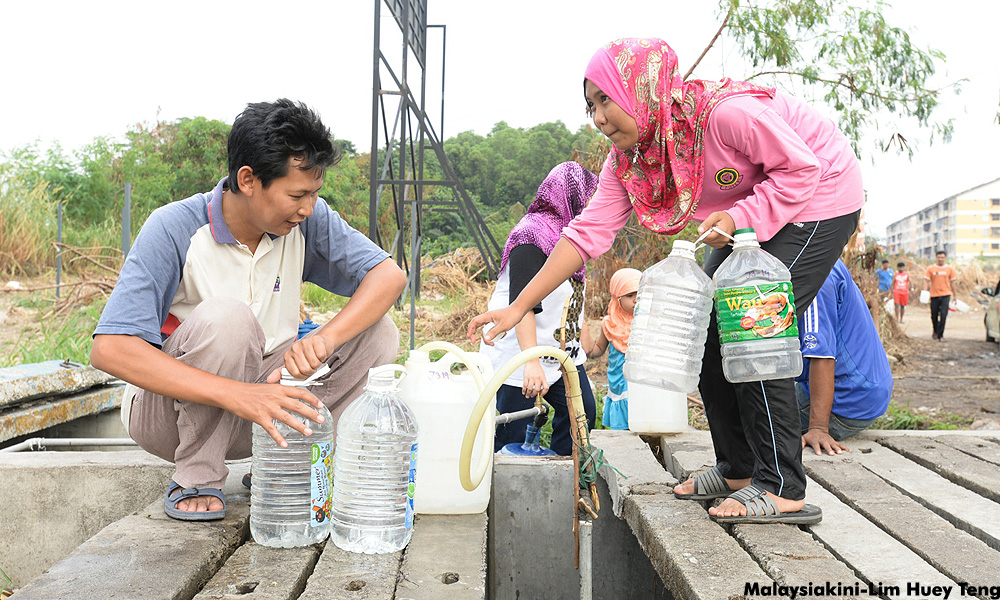
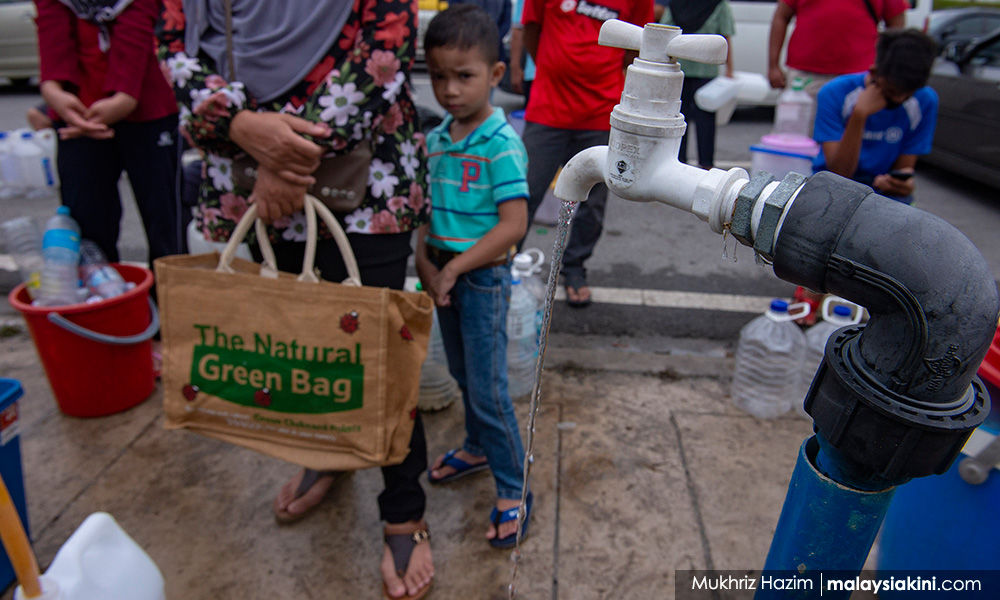
COMMENT | After about a week, the water supply in the Klang Valley has been restored and as the affected consumers regain their normal daily life, one nightmare, undoubtedly, remains on their mind; how soon will the next water crisis occur?
In any calamity, after all the devastation and suffering, a few men (or women) appear standing tall and become a beacon of hope, giving confidence that the worst is over. The current Covid-19 pandemic exemplifies this. We have one or two icons standing tall, fully in charge, amidst the hardworking front-liners who slog day and night, giving us confidence that we are in safe hands even as the virus is threatening a comeback. So much so, the public has become complacent, careless and over indulgent.
But are we in a similar situation after this latest recurring water crises? The myriad and disparate responses coming from various authorities, regulators, and agencies only amplify the apprehension and suspicion of the lack of commitment, consultation and coordinated actions in addressing this multifaceted problem. There’s a perception of washing dirty linen in public to absolve responsibility and inaction. Many of us are left with a bad taste in our mouth, with every response eliciting more questions.
Now, let’s take a closer look at a couple of the responses and their implications. The analysis is...
COMMENT | After about a week, the water supply in the Klang Valley has been restored and as the affected consumers regain their normal daily life, one nightmare, undoubtedly, remains on their mind; how soon will the next water crisis occur?
In any calamity, after all the devastation and suffering, a few men (or women) appear standing tall and become a beacon of hope, giving confidence that the worst is over. The current Covid-19 pandemic exemplifies this. We have one or two icons standing tall, fully in charge, amidst the hardworking front-liners who slog day and night, giving us confidence that we are in safe hands even as the virus is threatening a comeback. So much so, the public has become complacent, careless and over indulgent.
But are we in a similar situation after this latest recurring water crises? The myriad and disparate responses coming from various authorities, regulators, and agencies only amplify the apprehension and suspicion of the lack of commitment, consultation and coordinated actions in addressing this multifaceted problem. There’s a perception of washing dirty linen in public to absolve responsibility and inaction. Many of us are left with a bad taste in our mouth, with every response eliciting more questions.
Now, let’s take a closer look at a couple of the responses and their implications. The analysis is a bit involved, but the devil is in the details.
Scheduled waste management in disarray
The Department of Environment (DOE) should be congratulated for responding swiftly to a viral message on the prohibitive costs of supposedly monopolised management of scheduled wastes (SW), or commonly known as toxic or hazardous wastes. The DOE denied there is such a monopoly, citing the issuance of licences to 406 premises and 343 carriers for Recovery, Processing and Scheduled Disposal Facilities.
But I believe these licences are for ‘on-site treatment facility’, located at the waste generator’s site and used solely to deal with SW produced at that site. The Guidelines on Packaging, Labelling and Storage of Schedule Wastes rightly places an onerous obligation on premises to handle their wastes, which may be stored on-site, not exceeding 20 metric tonnes for up to 6 months, if not further extended.
The final disposal (residuals) of the SW, beyond the treatment capacity of the firm, has to be sent to the Kualiti Alam Integrated Scheduled Waste Management Centre (KA) in Negeri Sembilan. I stand corrected, but for reasons of sophisticated technology and heavy infrastructure costs, KA has been given the monopoly for the final disposal of SW.
Certainly, only established firms could handle the on-site high-tech and high-cost treatment and storage. It is beyond the capacity of many small-scale industries to avail themselves of this licencing opportunity.
The DOE further clarified that the only exclusive right was a “15-year contract to KA to operate the Centralised Integrated Scheduled Waster Management Centre, and which expired on Feb 28, 2015, about five years ago. So what is the arrangement now for the final disposal of SW; is any agency in charge, or is it a free for all?
The DOE further mentioned that essentially the prices set for final disposal are left to market forces, which is rather surprising for any privatised or monopolised public good, service or utility. Furthermore, the fact that the decentralised SW facilities in various locations have yet to be implemented, despite several years in the making, only adds to the prohibitive cost of transportation to the only facility in Negeri Sembilan.
Mysteriously, I have yet to see any feedback to the viral message mentioned from industry or trade associations. I guess they are indeed happy with the current “arrangement”. The lack of any clear authoritative statement only lends credence to the prohibitive costs cited in the viral message.
Legislation and legalisation
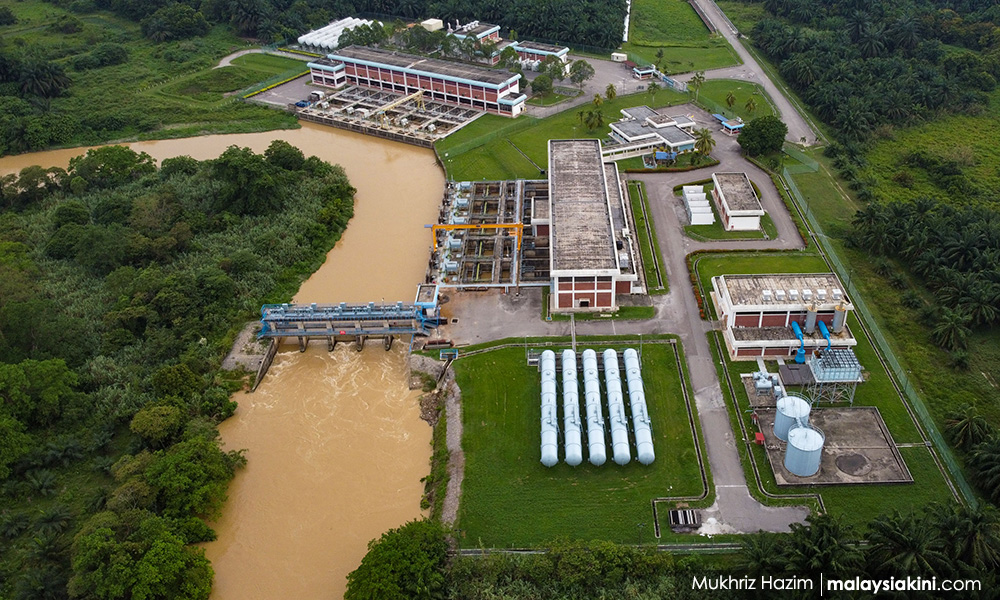
The 2005 Environmental Quality (Scheduled Wastes) Regulations require every waste generator to notify generation, treatment, and disposal of SW. If this database is properly kept, it would serve as an early warning system of any potential leakages (illegal dumping) of scheduled wastes.
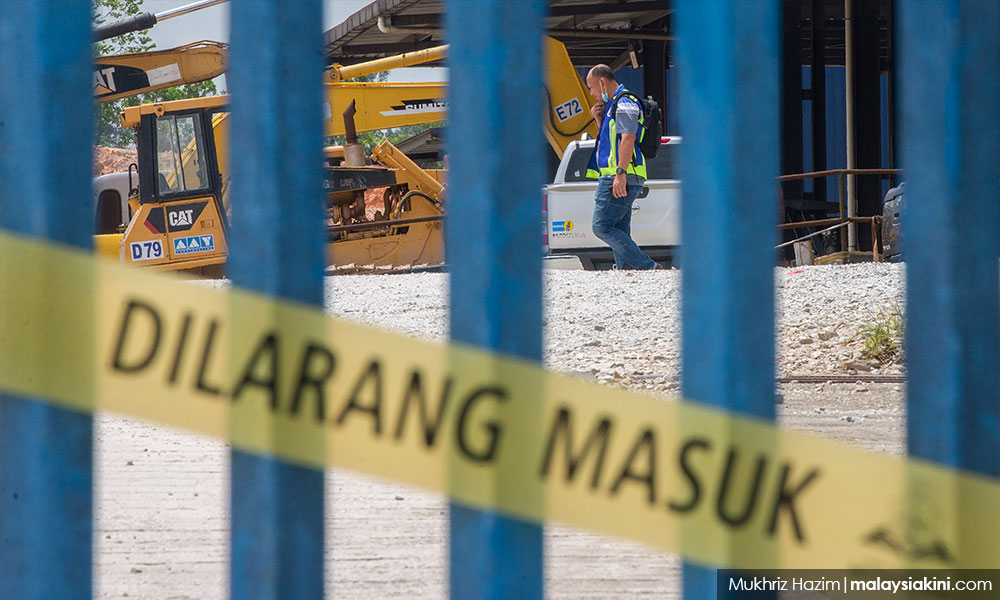
Of course, whenever any problem occurs, the persistent clarion call is to increase the penalties. The Federal and Selangor governments have promised to amend their relevant legislation for increased penalties ‘at the next sitting’. The RM60,000 compound is apparently for up to 30 offences, a tiny drop compared to the penalties in the current Acts.
The attorney-general has quickly debunked the claim that investigation papers were sent to his office for the March 2020 illegal dumping offence. It now appears several legislations are in place for such offences, the Environmental Quality Act, the Water Industry Services Act, Local Government Laws and Bye-Laws, the Penal Code, and now calls for invoking the Security Offences [Special Measures] Act (Sosma).
Obviously, there is no defect or inadequacy in laws, it is the monitoring, enforcement, and prosecution that is woefully lacking. Anyone proposing new laws or enhancement, should in the first instance take a quick assessment of the existing legal framework.
The term ‘legalisation’ is a misnomer and a contradiction in itself. How could one legalise an illegal act without breaking any law or rule? But that has been touted as the panacea for the water pollution woes. The state government has claimed that the legalisation process has been on-going since 2008 but with little success, and yet claims to be able to solve it in the next few months.
I can think of three scenarios where such ‘legalisation’ can occur in the context of river basin and watershed management. First and most obvious are illegal squatters/factories. That may be an easy solution to just evict them, but with their operations going on for years with all utilities legally supplied, it is not that simple. This cannot be legalised, short of evicting them.
Second, land alienated legally, but factories operating illegally without building approval or the necessary licences. The question is if these factories are located in the river basin or catchment areas, how in the first place were these state land alienated. In any local authority (city/municipality/district), zoning, land use, and development plans are laid out, in advance, in their 10-15 years Local Plan (Rancangan Tempatan).
The basic principle is that river basins and catchment areas should be zoned as green or reserve land. Well, I am very much aware of the malaise where green lungs, parks, reserves mysteriously get alienated and then ‘legalised’ through an amendment or in the forthcoming Local Plans. The only costly solution is to reacquire those alienated lands and return it to the original zoning and land use status.
The final scenario would be to ‘legalise’ the factories built on land legally owned, and putting in place strict control measures. This would require land conversion premiums, hefty compounds for operating illegally (if rules are not bent), and heavy infrastructure costs. It would be more prudent for the landowners to just move their operations elsewhere.
Therefore, these are complex and systemic social, development and economic issues. It cannot be solved overnight just because a water pollution crisis cropped up. Any solution should be holistic and not to solve just one sectoral problem.
I am aware of the buzz in social media of the real problems underlying these intractable issues. I don’t want to dwell further into that here. My contention is that all the assurances to solve the water pollution woes is not even band-aid remedy.
I hope the authorities will quickly harness the technological solutions in this era of Artificial Intelligence, 4th Industrial Revolution, and 5G connectivity to manage, monitor, and enforce the laws. We all know that the AES (Automated Enforcement System) camera scares us more than the enforcers on the roads.
Water finds its own level and sooner or later will flow towards justice for the common people. No amount of stonewalling, false facade, denial syndrome, empty promises, or ‘finger in the dyke’ solutions can withstand that onslaught.
RAMAN LETCHUMANAN was director, Environment/Conservation, Ministry of Science, Technology and the Environment (1993-2000), head of Environment/Haze/Disaster Management, Asean Secretariat, Jakarta (2000-2014) and senior fellow at S Rajaratnam School of International Studies (RSIS), Nanyang Technological University, Singapore (2014-2016).