
COMMENT | Snap polls will not restore political stability
COMMENT | In response to PKR leader Anwar Ibrahim’s claim that he has parliamentary majority to form a new government, the Coalition for Clean and Fair Elections (Bersih 2.0) stresses that whoever is the prime minister and whichever parties form the government, Malaysia badly needs a “stability package” to fix party politics.
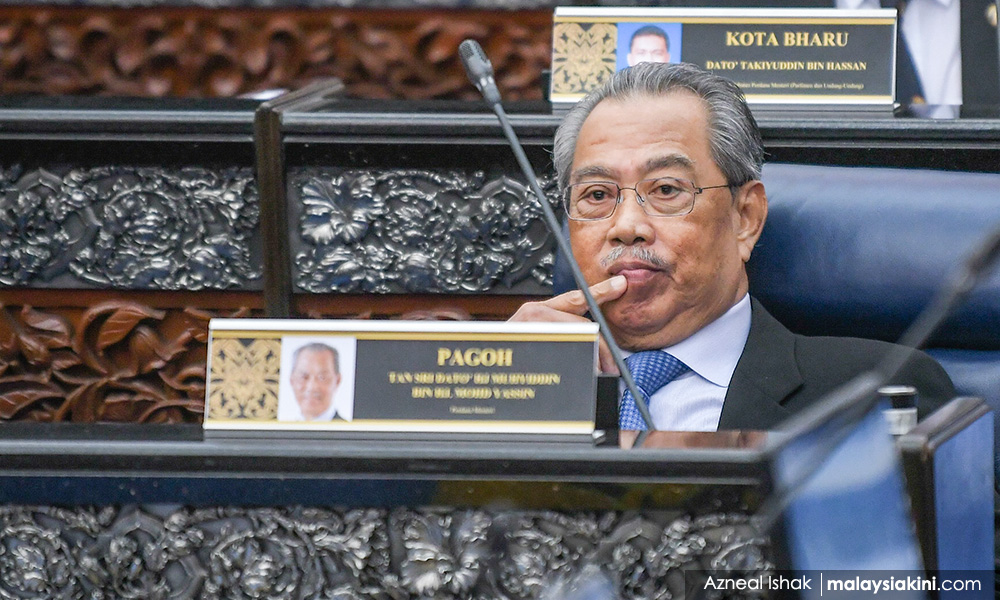
Whether it is Anwar who emerges victorious or Muhyiddin Yassin who survives the counter-coup, the prime minister is duty-bound to put a stop to constant changes of government due to party-hopping by elected representatives.
Even snap polls are unlikely to restore stability since a hung Parliament will very likely be a new normal in Malaysian politics.
To restore political stability, the government must be given the space to govern and the opposition must be given the room to scrutinise and compete with the government.
This requires a “stability package” which must contain at least four immediate steps within the next six months...
COMMENT | In response to PKR leader Anwar Ibrahim’s claim that he has parliamentary majority to form a new government, the Coalition for Clean and Fair Elections (Bersih 2.0) stresses that whoever is the prime minister and whichever parties form the government, Malaysia badly needs a “stability package” to fix party politics.
Whether it is Anwar who emerges victorious or Muhyiddin Yassin who survives the counter-coup, the prime minister is duty-bound to put a stop to constant changes of government due to party-hopping by elected representatives.
Even snap polls are unlikely to restore stability since a hung Parliament will very likely be a new normal in Malaysian politics.
To restore political stability, the government must be given the space to govern and the opposition must be given the room to scrutinise and compete with the government.
This requires a “stability package” which must contain at least four immediate steps within the next six months:
1. Introduction of recall elections at both the federal and state level to allow a constituency's voters the opportunity to either sack or affirm their elected representative who party-hopped. If their representative is sacked, a by-election will be held;
2. Parliamentary reform to allow opposition lawmakers and government backbenchers meaningful roles in scrutinising the government and offering alternatives, so that they do not crave to be ministers or deputy ministers at all costs;
3. Political funding reform which:
a) Guarantees all lawmakers equal constituency allocation regardless of their party/coalition affiliation;
b) Provides public funding for parties based on their vote share, and;
c) Prohibits abuse of statutory bodies and government-linked companies to induce defection of lawmakers or reward government supporters.
4. Creating an independent office for public prosecution in the Attorney-General’s Chambers to end selective prosecution or immunity from prosecution.
The "stability package" should also include two medium-term measures to be completed before the end of the 14th Parliament:
5. A royal commission of inquiry (RCI) to study how political parties can be strengthened, democratised and professionalised, the scope of which should cover electoral system change, candidacy selection mechanism for parties, and other aspects of intra-party democracy.
6. A RCI to study a reconfiguration of our federal system to ensure not just full materialisation of promises in the Malaysia Agreement 1963 (MA63) but also rational redistribution of power between three-tiers of governments: federal, state/federal territory, and municipality/district in Penisular Malaysia and divisions in Sabah and Sarawak.
This pragmatic reform package was initially advocated by Bersih 2.0, Gabungan Bertindak Malaysia (GBM) and Angkatan Belia Islam Malaysia (Abim) on June 10.
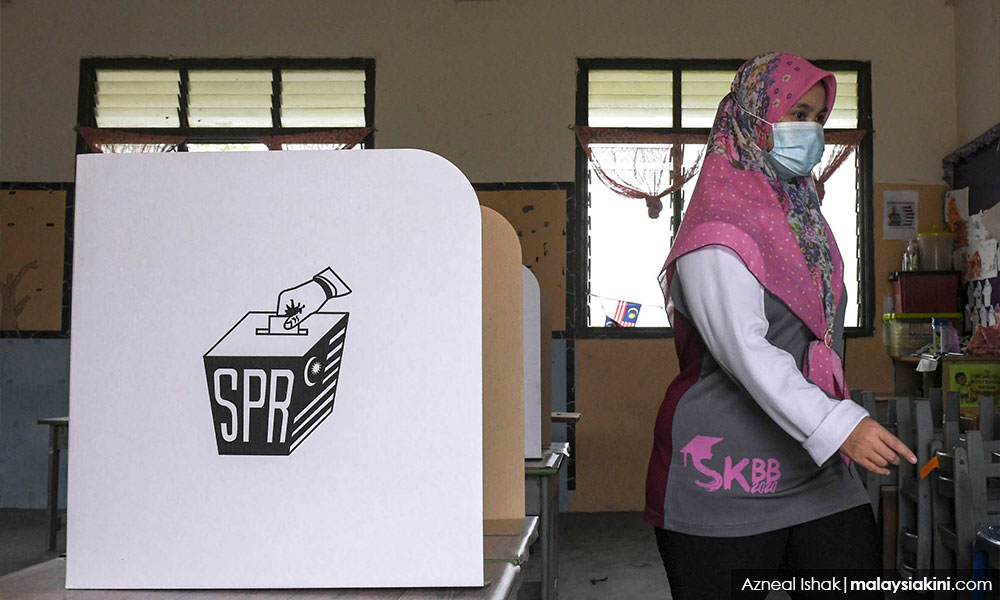
As stated above, snap polls are unlikely to ensure stability. Bersih 2.0 further reminds Malaysians that the threat of a Covid-19 resurgence is very real and holding a general election now could reinforce this threat.
We should also consider the fact that snap polls before next July will unnecessarily exclude almost 8 million new voters – including 4 million young voters between the age of 18 and 21. These new voters can only enter the electoral roll when automatic voter registration is implemented.
Given the dubious benefits of snap polls against its obvious costs, Bersih 2.0 calls upon the prime minister of the day to boldly seek inter-party consensus to implement the “stability package”.
BERSIH 2.0 is an electoral reform coalition.
The views expressed here are those of the author/contributor and do not necessarily represent the views of Malaysiakini.