


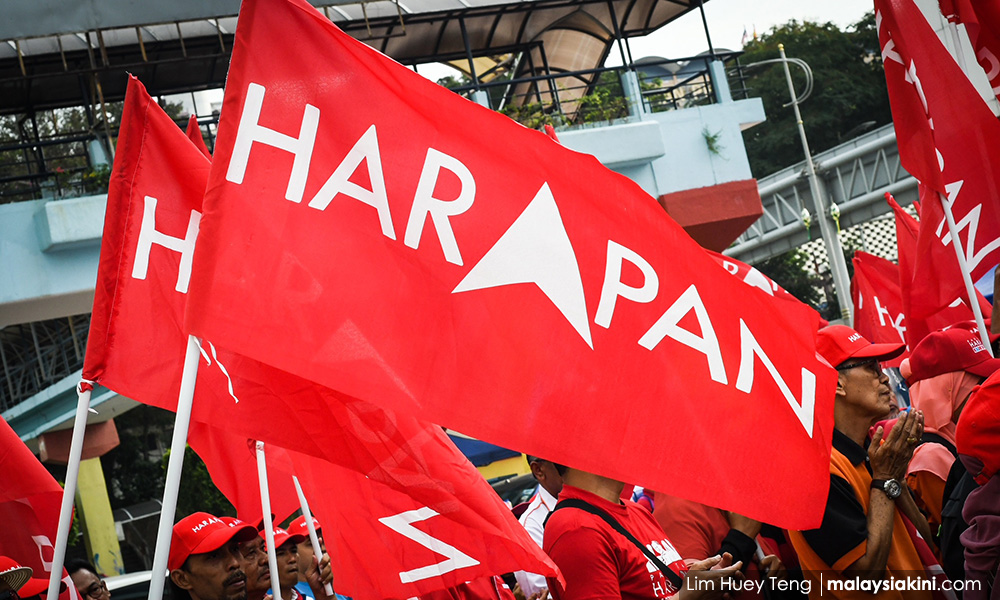

COMMENT | The end of Pakatan Harapan
COMMENT | This is something everyone knows but no one wants to talk about: Pakatan Harapan is long dead. The coalition we know as Harapan today exists in name only; there are no substantive or strategic reasons to continue. After losing multiple by-elections by huge margins, and now, a state-wide election in Sabah, Harapan’s morale and support levels are at an all-time low.
Harapan’s mainstay is that they are victims of a treacherous act by a backdoor government. At the federal level and four state levels (Kedah, Melaka, Johor, Perak), the loose and informal Perikatan Nasional (PN) coalition has taken power from Harapan, mainly through a series of defections.
While the moral claim and justice hymns were certainly valid from Harapan, they were not appealing to voters. The by-elections and the Sabah state election seem to indicate this. Voters seem to express a sense of regret and loss for having chosen Harapan in the past; that is why they are returning to the stable coalition of PN (a variation of the former BN coalition).
If Harapan was a car, its exterior, interior, and the road ahead seems broken. There is not much to hope for and it is running on its final few miles before it is taken to the scrapyard...
COMMENT | This is something everyone knows but no one wants to talk about: Pakatan Harapan is long dead. The coalition we know as Harapan today exists in name only; there are no substantive or strategic reasons to continue. After losing multiple by-elections by huge margins, and now, a state-wide election in Sabah, Harapan’s morale and support levels are at an all-time low.
Harapan’s mainstay is that they are victims of a treacherous act by a backdoor government. At the federal level and four state levels (Kedah, Melaka, Johor, Perak), the loose and informal Perikatan Nasional (PN) coalition has taken power from Harapan, mainly through a series of defections.
While the moral claim and justice hymns were certainly valid from Harapan, they were not appealing to voters. The by-elections and the Sabah state election seem to indicate this. Voters seem to express a sense of regret and loss for having chosen Harapan in the past; that is why they are returning to the stable coalition of PN (a variation of the former BN coalition).
If Harapan was a car, its exterior, interior, and the road ahead seems broken. There is not much to hope for and it is running on its final few miles before it is taken to the scrapyard.
A broken exterior: The formula no longer works
This is usually what happens after Harapan suffers an electoral loss. Lose, post-mortem, business-as-usual, lose. Repeat. Even when they were in power, by-electoral losses were common but that did not create a real sense of urgency for the coalition beyond lip service.
The governance approach and campaign tactics stayed the same. They relied on this vague belief that people will somehow come to their senses and realise that Harapan was the best choice they had all along.
But this was not how voters saw it.
Harapan was built on a unifying factor of a common enemy. The good thing about not tasting power is that people have nothing to measure Harapan against. There was a freshness to its leadership lineup and many young reformists capitalised well on the contrast to Najib’s poor administration.
Harapan was so good at campaigning that in GE14 they walked away with an unprecedented victory. Many voters took the leap of faith and entrusted Harapan to run their lives. When the economy was bad, the cost of living was high, and good jobs were scarce, voters were willing to pass the baton for the first time to absolute newcomers.
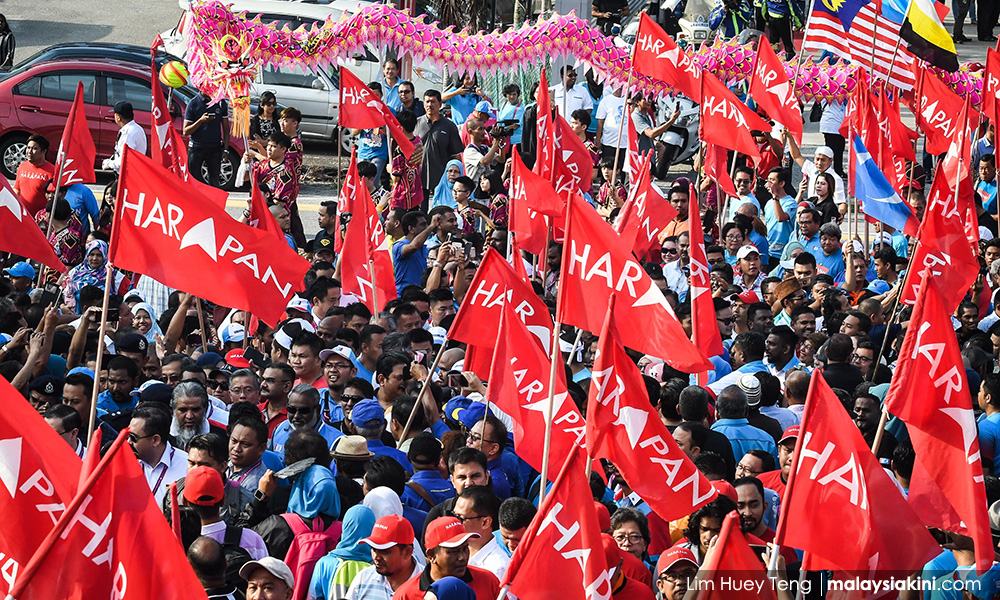
But this leap of faith had a condition. Change must be made within a short timeframe. It could not be delayed or postponed; change must be seen and felt instantly.
Voters may be able to put up with 100 days, six months, or even a year. But 22 months is too long. And it is not wise to continue assuming that voters were impatient or ignorant of the upside of a new Harapan administration. No one has ever failed by overestimating the wisdom of the masses.
What used to be a conglomerate of the right talents and good timing, with similar origin stories of victimhood, quickly evolved into a marriage of convenience.
In Sabah, Harapan's opponents could be fragmented internally, fight in public, and sabotage one another – and still come up on top. This is indication enough that the Harapan formula simply does not work.
If the long-rumored snap general election is to be held by the end of this year or even in the first half of the next, most people would know that Harapan's opponents would win. The question is not whether they would win – but by how much.
Once we can accept that the current formula does not work, we would know that it is imperative for us to end Harapan and find a different formula. It is time to pivot.
A broken interior: No longer see eye to eye
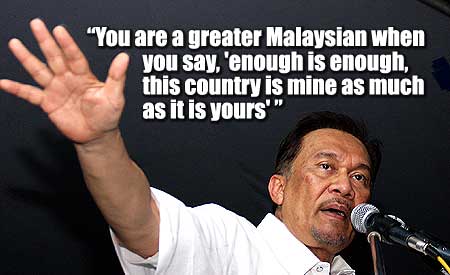
Harapan's biggest fracture has always been the question of its prime minister candidate. At its inception in 2017, the issue of a Mahathir-Anwar transitional prime ministership dragged the coalition’s feet for several months.
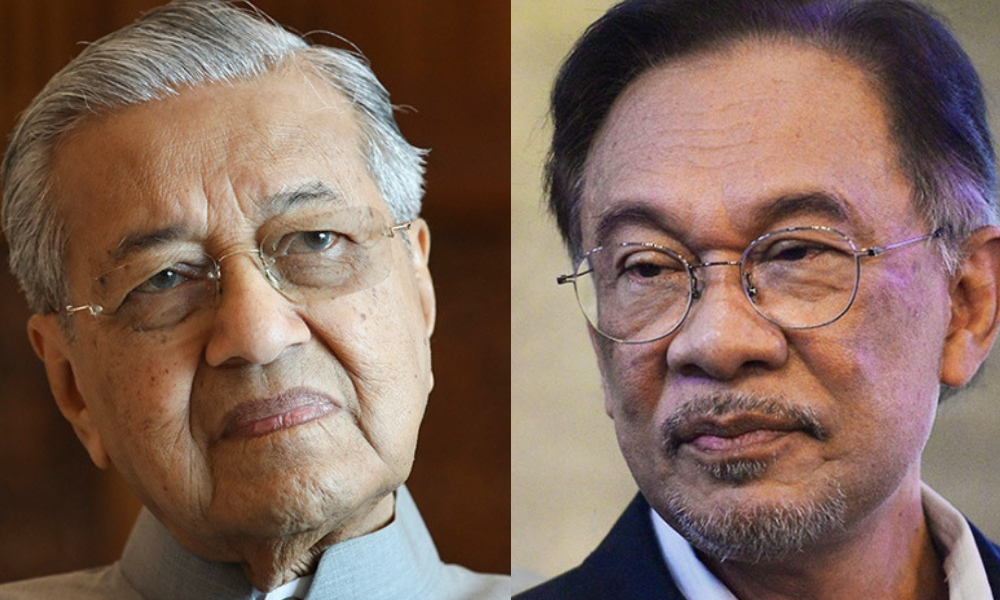
Once they obtained power in May 2018, the internal conflict worsened. Every Harapan interview by the press would include similar questions of prime ministership. It did not help matters that the two men who were supposed to cooperate – Mahathir and Anwar – had a sour past from being archnemeses, and Mahathir changed his position on the prime ministership question regularly.
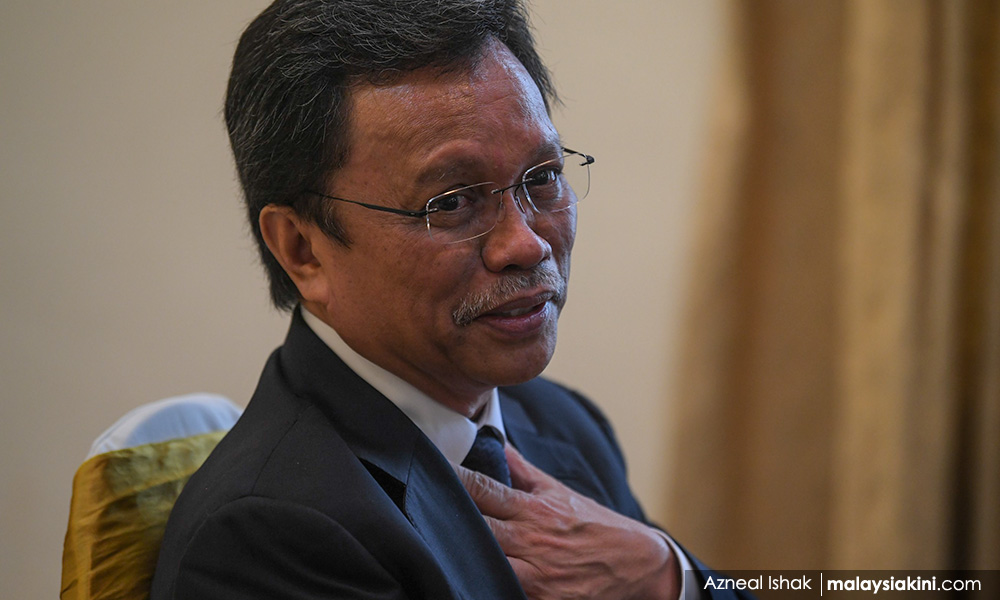
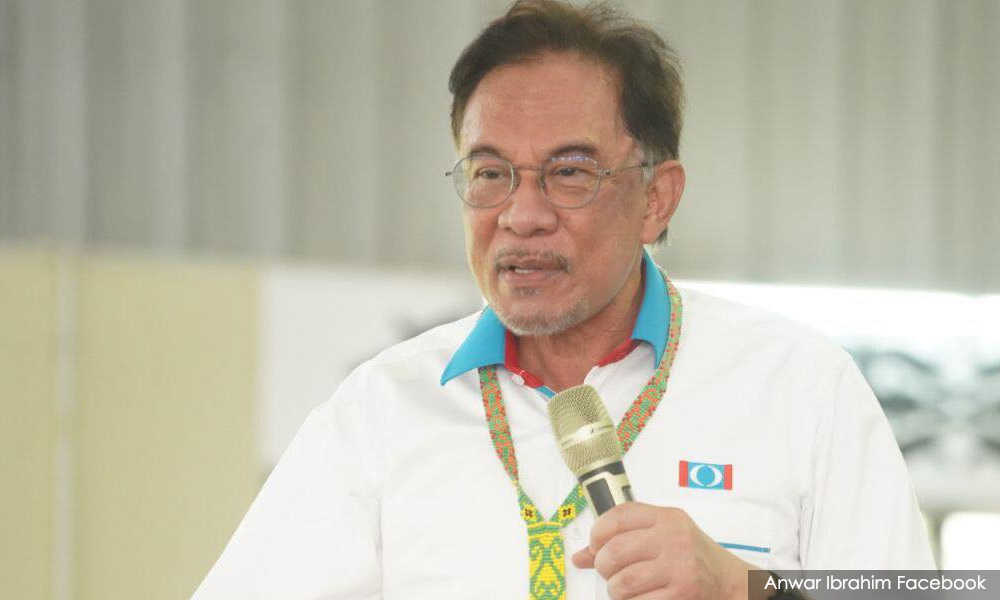
Even after Mahathir left the coalition in early 2020, Harapan has not resolved the question of prime ministership. Longtime friends PKR, DAP, and Amanah put their friendship on the line and chose other partners like Mahathir or Shafie Apdal to assume the position of prime ministership instead of Anwar.
This division gave rise to the first real fracture within Harapan. DAP adopted Warisan’s logo in the Sabah state election whereas PKR used its own. DAP had also stated their openness for Shafie to take the leading role in government, and this drove a wedge that is considered fatal to the working relationship of DAP, Amanah, and PKR.
Trust and camaraderie would forever be affected, especially between the personalities of Anwar, DAP secretary-general Lim Guan Eng, and Amanah president Mat Sabu who were once regarded as close friends in their common struggle.
A broken future: A fail-sure strategy
The only reason why Harapan partners still cling on to each other is the numbers they hold. With 42 seats from DAP, 38 seats from PKR, and 11 seats from Amanah, the collective of 91 seats is too close to power – they could not do without each other. Or so they presume.
The number of parliamentary seats is based on historical numbers – the events that happened on May 9, 2018. But things have changed substantially since then. And strategies ought to be built on forward-looking predictions rather than backward-looking former glories.
If we consider this, then it becomes even more obvious that Harapan could not be sustainable beyond this time.
A coalition that does not have winnable qualities or a believable track record does not make a good coalition. There is no point in maintaining Harapan if it does not have a good chance of winning the upcoming snap general election.
A broken formula, broken cooperation, and a broken future.
In life, most things stay the same. We are uncomfortable with changes because they uproot a lot of what we are used to and they take significant courage to admit something is much different than before. It takes a leader with an iron fist and a heart of steel to pivot.
But we don’t have leaders like that. That is why I said from the first sentence that this is something everyone knows but no one wants to talk about: The end of Pakatan Harapan.
JAMES CHAI is a legal consultant and researcher working for Invoke, among others. He also blogs at jameschai.com.my. You may reach him at jameschai.mpuk@gmail.com.
The views expressed here are those of the author/contributor and do not necessarily represent the views of Malaysiakini.



Are you sure you want to delete this comment?
This action cannot be undone.