


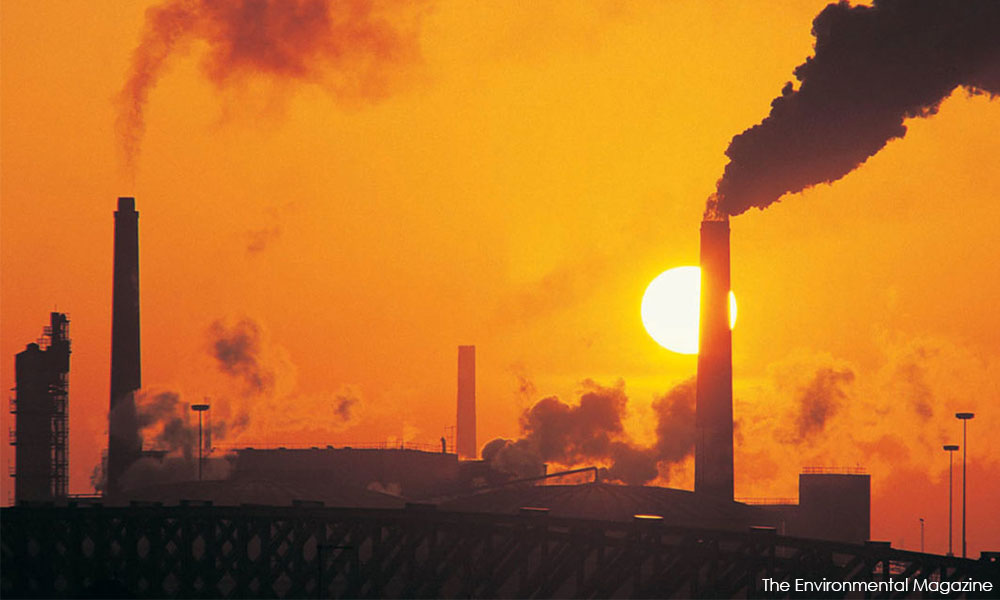

COMMENT | Climate change and M'sian middle-class inertia
COMMENT | There is a term, coined by environmental philosopher Glenn Albrecht, for the unease felt and distress experienced by the changing environment - solastalgia.
Upon reviewing publications on the environment and climate change over the years, it is sobering to realise that much of what has finally entered the current discourse is not actually new. One of these is author Andrew Simms’ searing Ecological Debt, in which he explains how ecological debts are disproportionately racked up by what we can describe as the Global North, which generally includes those nations with a history of spearheading military conquest, colonial exploitation and international capitalism, to which the Global South, including the postcolonial world, remains exploited.
Neoliberal capitalism and rampant consumerism are the results today, in which “[n]othing, not even the loss of a habitable atmosphere, is allowed to interfere with the important business of business. (p. 119)” The poor, it is understood, will continue to subsidise the rich, economically and environmentally, while bearing the worst burdens.
But from a Malaysian perspective, why does this matter, considering the apparent remoteness of the subject matter? As Imagined Malaysia coordinator Jeremy Lim writes in Progressive International: “Malaysia wears all the trappings of civilisation and modernity. It has developed a consumer society that has a massive carbon footprint, generates a great amount of municipal waste and frivolously...
COMMENT | There is a term, coined by environmental philosopher Glenn Albrecht, for the unease felt and distress experienced by the changing environment - solastalgia.
Upon reviewing publications on the environment and climate change over the years, it is sobering to realise that much of what has finally entered the current discourse is not actually new. One of these is author Andrew Simms’ searing Ecological Debt, in which he explains how ecological debts are disproportionately racked up by what we can describe as the Global North, which generally includes those nations with a history of spearheading military conquest, colonial exploitation and international capitalism, to which the Global South, including the postcolonial world, remains exploited.
Neoliberal capitalism and rampant consumerism are the results today, in which “[n]othing, not even the loss of a habitable atmosphere, is allowed to interfere with the important business of business. (p. 119)” The poor, it is understood, will continue to subsidise the rich, economically and environmentally, while bearing the worst burdens.
But from a Malaysian perspective, why does this matter, considering the apparent remoteness of the subject matter? As Imagined Malaysia coordinator Jeremy Lim writes in Progressive International: “Malaysia wears all the trappings of civilisation and modernity. It has developed a consumer society that has a massive carbon footprint, generates a great amount of municipal waste and frivolously uses our water resources.” This is hardly acknowledged, even though governments and corporations are very well aware of the seriousness of the issue.
Yet in the Penjana economic stimulus plan, climate change was not addressed but perversely, incentives for purchasing cars was as if the problems of traffic congestion and further pollution was not bad enough. For all its attempts “towards a better future”, it is an old-fashioned plan deeply entrenched in neoliberal ideas of growth. “Sustainability” was used only in the context of business. Understandably, this is meant to be a short-term plan, but it squanders an enormous opportunity for change.
Despite this, the idea of a Green New Deal continues to be discussed. As Kenneth Cheng from the Penang Institute once remarked in a Malaysiakini op-ed, general public awareness is still largely minimal and the private sector is risk-averse. The solution, of course, would be for the government to take the lead in creating new green technology opportunities, research and incentives aimed at erasing the false dichotomy between economic growth and environmental issues. Specifically, public awareness of the “huge monetary costs of natural disasters in Malaysia, and the projected future costs of climate change” would spur change.
Similarly, Frederik Paulus of Refsa acknowledges the importance of the government in driving this sort of initiative, given the inherent weaknesses and selfishness of the free market, “to provide the investment in physical infrastructure that is required for the private sector to flourish”.
At the same time, it is important to acknowledge the reality on the ground. Returning to Lim’s analysis, it is obvious that effective changes require the “reorientation of state institutions, policymaking and politics, away from the interest of capital towards that of labour”, in order to squarely combat our reliance on a destructive form of development that has not only wrecked our natural heritage, but also the communities of our indigenous fellow citizens.
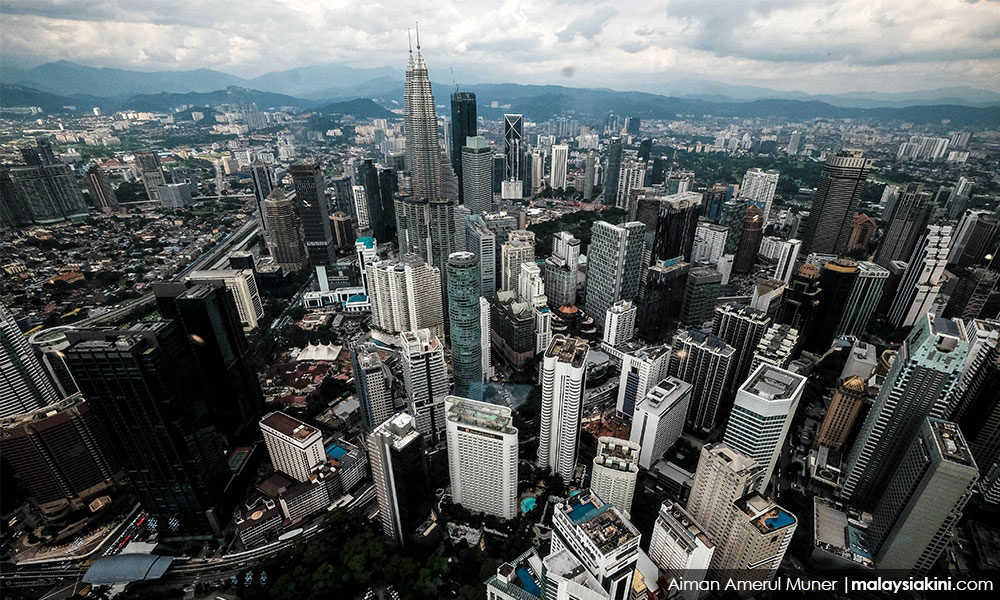
Upon closer reading, two particular issues stand out particularly strongly, surprisingly they are little-mentioned. One of them is the deliberately planned lack of public participation in a supposedly democratic society - leaving community movements largely piecemeal and cobbled together in the wreckage of the discredited suburban development plans.
There is also the problem of affluent cultural norms and our obsession with consumption. Put simply, there is no effective bottom-up approach currently available to ordinary citizens.
Although our society is complex, the rest of this discussion will focus largely on class. Within the more affluent sections of the Malaysian urban middle classes - our patterns of consumption dovetail beautifully with capitalist ideals, in which we are taught and actively encouraged to buy, spend, replace and waste. On a whole, many of the elites fit into historian Neil Davidson’s definition of the “New Middle Class” in an article for the Oxford Left Review.
What we have are not necessarily just rich bankers versus the disenfranchised poor - complicit in the overall exploitation are the ones in-between: “managers and supervisors”, “media journalists, higher education lecturers or advertising designers” who collectively form an intermediary group. While not necessarily controlling the means of production, this group has a vested interest in the perpetuation of the capitalist system, from which they stand to gain financially.
Part of the power of neoliberalism today is its ability to rein in the very people who would normally be ideologically opposed to it - which probably includes many of us. In this scheme, you can care about gender equality or identity politics while still remaining comfortably in the system that perpetuates inequality.
Bad behaviour
Historically, Malaysians have been susceptible to similar traps. We have always been a conservative society, lacking the sort of revolutions and mass movements associated with the rest of Southeast Asia. Largely maintaining the apparatus of the colonial system and nascent public facilities and social security nets, still operating in the interests of global capital, the post-independence economy was controlled from the start by what political scientist Chandra Muzaffar describes as the “administocrats” in Protector? (1979).
Divided along racial lines, there was virtually no potential for class-based movements aimed at restructuring society politically and economically, and in fact, the newly minted elites from across the ethnic spectrum were eager to be co-opted into the existing systems of patronage, which eschewed a functional and equitable economic plan in favour of the capitalist model. Thus, those in a position to effect change agreed to join the establishment in return for their continued prosperity.
Such factors have conspired to leave the affluent classes materially rich but seemingly incapable of committing a systemic change. It is possible to still have an understanding of social awareness, but concrete actions are largely limited to small projects. In the context of the environment, urban farming projects like Kebun-kebun Bangsar and sustainable architecture are the preserve of the urban elite and have little trickle-down effects. Real solidarity, awareness and individual action are lacking.
There are small, virtually meaningless token efforts to not use plastic straws or the self-congratulatory aspects of Earth Hour (I once remembered it being “celebrated” in a shopping mall with live music and dimmed lighting), negated by our addiction to cars and idling in traffic, increased appetite for meat, disposable cups and the right to destructive air travel.
Easier, of course, to entirely scapegoat the poor, the migrant workers and refugees for disease, bad behaviour and littering, even though they are the ones who are largely providing the labour that makes the atas (upper class) lifestyle possible in the first place: ecological debt, on a local scale.
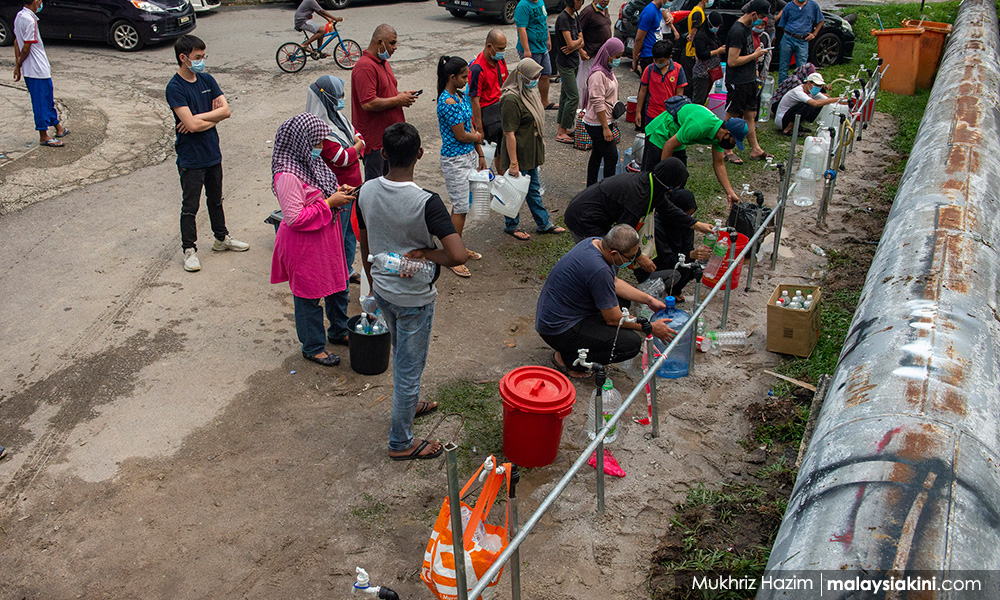
There is also our sheer indifference - even as activist Kua Kia Soong was demanding that the “head of enforcement, the environment minister, and the Selangor menteri besar” take responsibility for the recent pollution scandal, within a day of water being restored, it was already being wantonly wasted on washing floors and cars by multiple, comfortably well-off households within my immediate neighbourhood while other areas in the Klang Valley saw members of the public queuing up to bring home water supply from public water taps.
The suburban environment, with the alienation of the individual from the community, aggravates the situation further. The way that climate and sustainability have been co-opted into advertising and corporate agendas is another worrying trend. What is needed is a greater consciousness of our impact on an individual level. As author Adam Minter writes in Secondhand, “encouraging consumers to think more seriously about the financial, environmental, and personal costs of their consumption would be a major step in addressing the crisis of quality and the environmental and social impacts of too much stuff.”
While this article takes a relatively pessimistic view of our situation, this is not to say that the middle classes are incapable of generating change. One only has to look to the example of the Consumers Association of Penang (as well as its sister organisation Sahabat Alam Malaysia), which in addition to campaigning for basic necessities, was prominent in championing a variety of causes, environmental and economic alike, and effective change at a government level (Hilton, 2017).
While the balance of power lies with corporations and governments, the people are not necessarily powerless. We need mass action that crosses class lines, versus simply placing the blame on larger forces or simply resigning ourselves to fate.
We need a proper top-down action from the government as well as bottom-up, democratic awareness and actual commitment to change from the people themselves. It’s not a case of being tidak apa (it's ok), of it being someone else’s problem. It’s not very much use demanding a solution only from the top, resigning ourselves to be saved by more powerful people. Change, as history has shown us many times, comes from the masses. The individual has their own part of a collective role to play.
WILLIAM THAM WAI LIANG is an editor at Gerakbudaya and the author of two novels. His new novel, The Last Days, is set in 1981 and covers the continuing legacy of the Emergency. His first book, Kings of Petaling Street, was shortlisted for the Penang Monthly Book Prize in 2017.
The views expressed here are those of the author/contributor and do not necessarily represent the views of Malaysiakini.

/file/publisher-c1a3f893382d2b2f8a9aa22a654d9c97/2019/08/888daa4fb7a6f009fd61088287605323.jpg)


Are you sure you want to delete this comment?
This action cannot be undone.