



COMMENT | It’s time we recognise 'extremely vulnerable' segment of society
COMMENT | I am somewhat disturbed by the narrative that suggests society is not facing financial difficulties simply because the iPhone 12 Pro and Playstation5 are sold out.
What a fallacy indeed! To take the actions of a small segment of society to mirror society as a whole.
When the movement control order (MCO) was introduced, the sale of instant noodles also soared. Going by the same logic, can I then make an assumption that people are sinking into poverty, and can only afford cheap, but unhealthy noodles?
As Budget 2021 continues to be tabled in Parliament, I have heard, on several occasions, the use of the term “golongan rentan”. Translated, I believe this means “vulnerable”.
Like many other government terms coined by the elite, this definition is far from accurate. In the context of Budget 2021, there are still segments of society who remain below this vulnerable group and yet, are given less attention.
After reading the Budget 2021 documents, I have come to the...
COMMENT | I am somewhat disturbed by the narrative that suggests society is not facing financial difficulties simply because the iPhone 12 Pro and Playstation5 are sold out.
What a fallacy indeed! To take the actions of a small segment of society to mirror society as a whole.
When the movement control order (MCO) was introduced, the sale of instant noodles also soared. Going by the same logic, can I then make an assumption that people are sinking into poverty, and can only afford cheap, but unhealthy noodles?
As Budget 2021 continues to be tabled in Parliament, I have heard, on several occasions, the use of the term “golongan rentan”. Translated, I believe this means “vulnerable”.
Like many other government terms coined by the elite, this definition is far from accurate. In the context of Budget 2021, there are still segments of society who remain below this vulnerable group and yet, are given less attention.
After reading the Budget 2021 documents, I have come to the conclusion that this vulnerable group that the government is referring to, is those with potential, or have lost their jobs.
These individuals would, at the very least, have some savings with the Employees Provident Fund (EPF) and make contributions to the Social Security Organisation (Socso).
This is why the debate on contributors withdrawing RM500 a month (up to a maximum of RM6,000) and increasing the income replacement period under the Employment Insurance Scheme (EIS) has become an important point of contention by the government, which insists that this vulnerable segment of society has received the necessary assistance.
This is why I say that this elitist group, the ones who drafted the budget, tend to overlook the segment of society that is most vulnerable.
Let me bring to the attention of the government, a term I choose to refer to as the “extremely vulnerable”. None of the assistance rendered to the vulnerable communities ever reaches this extremely vulnerable community.
Who are these extremely vulnerable individuals? They are the workers with no social protection, no savings in EPF nor in a position to contribute to Socso.
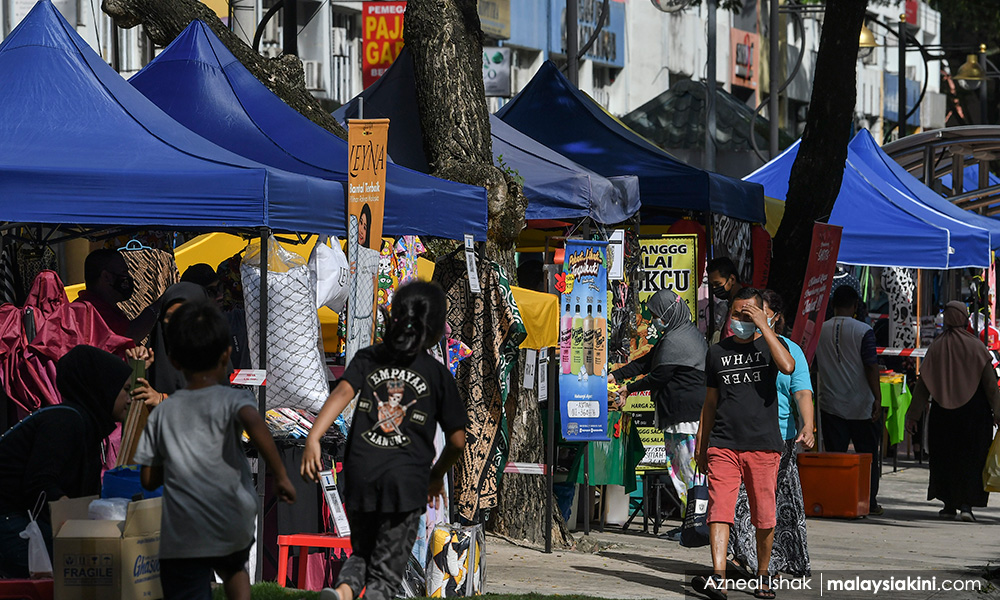
The humble Mak Cik Kiah, who is constantly mentioned by the government, is the simplest example. As she toils over her pisang goreng stall to fulfil our cravings for a good tea time snack, she does not have this protection.
We have become accustomed to sudden MCOs declared, but for Mak Cik Kiah, her income is affected each time such an announcement is made. And while we are told that we are allowed to make EPF withdrawals, she has no such withdrawals to look forward to.
Like many of us, however, Mak Cik Kiah also has rent to pay. The irony is that while her landlord receives a moratorium on his loan, Mak Cik Kiah will still have to fork out the rent to pay her landlord. Where is she going to find the resources for this?
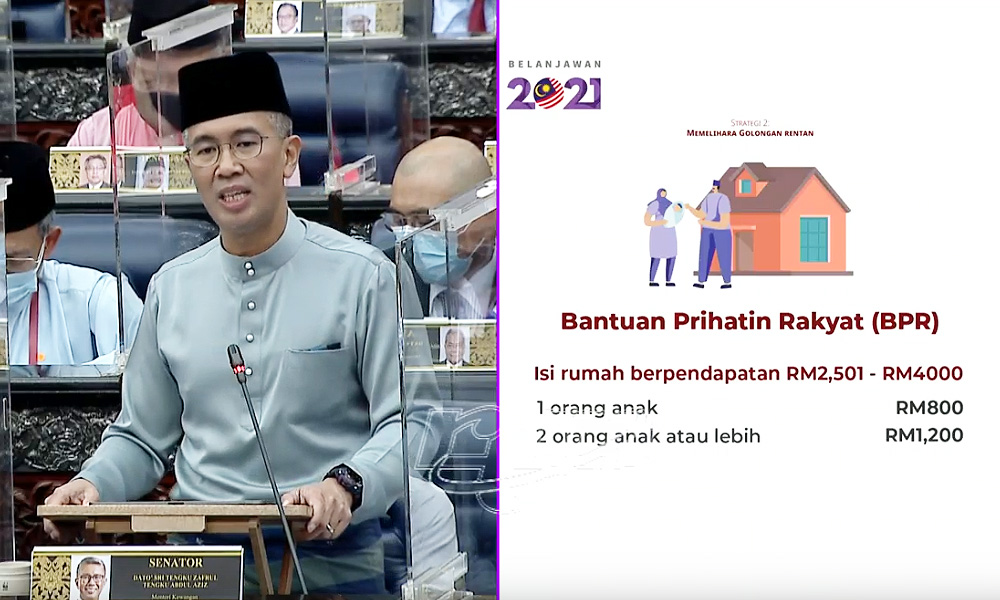
Some will be quick to spring to action and argue that this extremely vulnerable community will get their assistance through Bantuan Prihatin Rakyat (BPR), which replaced the Bantuan Sara Hidup (BSH).
Ever since this social assistance was introduced in Najib Abdul Razak’s era, we all know it only offers temporary relief, and cannot address the issue of income loss.
If this social assistance is insufficient even in normal situations, where the money is depleted in less than a month, how can we be so confident that this will be sufficient when we are faced with something as crippling as Covid-19?
This leads me to talk about the Universal Basic Income (UBI), a pertinent topic we should already be discussing. The UBI is a basic income plan that can be implemented in a matter of 2-3 years for this extremely vulnerable group.
I am confident that the annual expenses incurred for UBI are far lower than the hefty allocation given to the Special Affairs Department (Jasa). When we provide this segment of society with a small, basic income, we can take comfort in knowing that no one will go hungry. Like it or not, at some point in time, the UBI is something the country will need to implement.
Why do I say this? In the not too distant future, machines and robots will take over many job functions. This is likely to happen in the next 20-30 years, and this job loss crisis we will face then will be very similar to the situation created by the pandemic we are facing today.
The government need not fear spending, or give such optimistic projections of our economic situation. Any spending now must be focussed on the vulnerable and extremely vulnerable so that they are given a chance to get on with their lives.
A lot of the expenses tabled in Budget 2021 that have been allocated for development can be postponed, and the allocation for Jasa, cancelled.
These funds should instead, be channelled into urgent initiatives for social assistance.
A good budget is an inclusive budget, not an elitist one.
RAHMAN IMUDA is a labour activist.
The views expressed here are those of the author/contributor and do not necessarily represent the views of Malaysiakini.




Report this comment
Are you sure you want to delete this comment?
This action cannot be undone.