




COMMENT | Who will drive an anti-corruption culture in Malaysia?
COMMENT | Last Friday, a friend responded to my article on corruption in the police force with this statement: “Corruption is not only part of the police culture. It is a Malaysian culture.”
Many of us will readily agree. I’m sure Lim Kit Siang will also nod his head in agreement. Only last Thursday, the DAP veteran and Iskandar Puteri MP spoke up against corruption, noting a global survey which gave Malaysian MPs a bad name.
The long-serving MP has valid reasons to be ashamed too. Why? He is in the profession frowned upon by many but we do know one thing – Lim has never been linked to any dubious deals during his many decades as an MP. His record is impeccable on that score.
As Lim roared last week, “Malaysian MPs should be ashamed that 36 percent of Malaysians surveyed in the Global Corruption Barometer for Asia 2020 regard them as corrupt”.
As a Malaysian MP, I expect Parliament to act swiftly and promptly to establish the honour and integrity of Malaysian MPs, the DAP supremo said. Lim also wants a greater commitment to fight corruption and establish Malaysia as one of the top 30 countries in the world in public integrity before 2030.
Sorry, Mr Lim, I doubt that will ever happen.
Corruption has long been a Malaysian culture, that’s why. The culture of corruption in Malaysia, as it is everywhere, is tough to defeat. The majority are in politics to seek a better life for themselves. They are 'careerist politicians'. Even the ‘cleanest’ among them has to concede to that fact.
If not, why are politicians reluctant to let go of their positions voluntarily but would cling on till their final breath, if possible?
(I feel bad to bring this up but let me do it anyway. How ...
COMMENT | Last Friday, a friend responded to my article on corruption in the police force with this statement: “Corruption is not only part of the police culture. It is a Malaysian culture.”
Many of us will readily agree. I’m sure Lim Kit Siang will also nod his head in agreement. Only last Thursday, the DAP veteran and Iskandar Puteri MP spoke up against corruption, noting a global survey which gave Malaysian MPs a bad name.
The long-serving MP has valid reasons to be ashamed too. Why? He is in a profession frowned upon by many but we do know one thing – Lim has never been linked to any dubious deals during his many decades as an MP. His record is impeccable on that score.
As Lim roared last week, “Malaysian MPs should be ashamed that 36 percent of Malaysians surveyed in the Global Corruption Barometer for Asia 2020 regard them as corrupt”.
As a Malaysian MP, I expect Parliament to act swiftly and promptly to establish the honour and integrity of Malaysian MPs, the DAP supremo said. Lim also wants a greater commitment to fight corruption and establish Malaysia as one of the top 30 countries in the world in public integrity before 2030.
Sorry, Mr Lim, I doubt that will ever happen.
Corruption has long been part of Malaysian culture, that’s why. The culture of corruption in Malaysia, as it is everywhere, is tough to defeat. The majority are in politics to seek a better life for themselves. They are 'careerist politicians'. Even the ‘cleanest’ among them has to concede to that fact.
If not, why are politicians reluctant to let go of their positions voluntarily but would cling on till their final breath, if possible?
(I feel bad to bring this up but let me do it anyway. How many by-elections did we have to go through since GE14 because of the demise of our lawmakers? I’m surprised they were unaware of their ill health.)
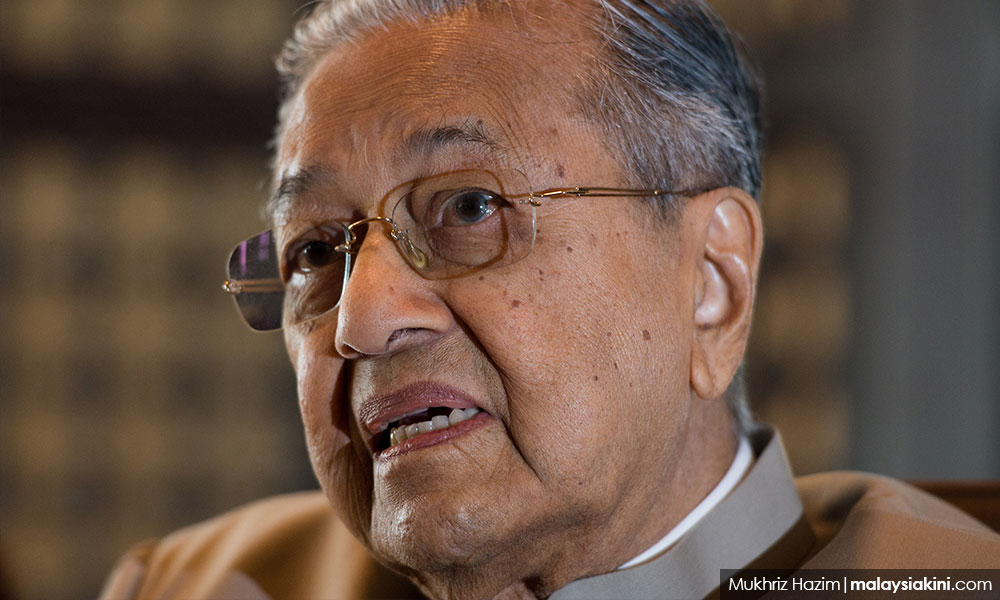
Last Friday, a fuming Dr Mahathir Mohamad again called the PN government corrupt when he lashed out at opposition MPs for allowing Budget 2021 to pass at the policy stage in Parliament.
The Langkawi MP and Pejuang chairperson said that a government of the corrupt was now backed by an opposition of the remorseless. Of all our prime ministers, the longest-serving Mahathir should know that corruption is very much a Malaysian culture as well.
He has spoken up many times, warning of the dangers of corruption and the harm it would inflict on the people and nation. But critics have also blamed Mahathir for allowing it to nurture and flourish during his years in power.
Last month, anti-corruption campaigners sounded the alarm about the dangers of corruption in government procurement, warning that such leakages will result in the building of substandard infrastructure and the erosion of confidence in government agencies.
Pointing out that corruption increases the cost of doing business, Transparency International Malaysia president Muhammad Mohan said it would cause companies to compromise on specifications to cut corners and save cost.
Ramon Navaratnam, a former MACC adviser, said corruption would deprive the public of proper investment in resources, create inefficient economies and increase income inequality.
Mohan and Navaratnam are known anti-graft crusaders and I trust that they know what they are talking about.
Their messages are fair warning of the seriousness of corruption in our midst and the onus is on those in authority to heed them and take the necessary action before it causes massive destruction on our nation and our way of life, if it has not already.
We have heard every new prime minister, upon taking office, making the solemn declaration that his administration will be clean, transparent and accountable.
But we learn soon enough that their pledges were mere sound bites and lip service. Where corruption is a deeply embedded culture, nothing will change when political will is lacking.

Notwithstanding the gloom before us, I would still attempt to suggest instilling an anti-corruption culture among Malaysians. This work on the anti-corruption culture can start by covering all educational institutions; in our schools, colleges and universities.
Not too long ago, I’ve heard of the MACC/Education Ministry proposing “Corruption” as a subject in schools. I hope it is still in the works as this is a good start.
Let us also learn from the experiences of other countries which have been fairly successful in their anti-corruption drive. One tells us that the rejection of corruption at the moral and ethical level is the most effective approach.
Another says that the formation of anti-corruption culture is closely connected with anti-corruption consciousness. The concept of "anti-corruption consciousness" comprises all forms of public consciousness.
Several years ago, our police force made a serious anti-corruption effort, directing all their men and women to wear a “Say No to Corruption” and “Saya Tak Rasuah” tag while on duty.
I’m not sure why this practice dwindled away. I thought that was a commendable effort which also received public support. That falls into the anti-corruption consciousness concept too.
Another important factor which must be stressed is that the anti-corruption culture, just as anti-corruption consciousness, is an integrative form of spiritual culture.
Oh, don’t we have very holy men and women in Malaysia? They would not hesitate to impose their spiritual doctrines upon others, banning this and that in the process.
Now, perhaps these holy souls would seriously take up the real spiritual challenge of inculcating an anti-corruption culture among their followers.
Seriously, who will drive the anti-corruption culture in Malaysia? My honest answer is “I don’t know”. But what I do know is that we have to start with the strongest political will and our leaders at the top have to be exemplary.
Failing which, this is just an article and a suggestion to be read today and conveniently forgotten tomorrow.
Then, we have to stare at one harsh reality right in the face – that is it would be foolhardy of us to expect the corrupt in power to lead the fight against corruption.
FRANCIS PAUL SIAH is the author of Hijack in Malaysia: The Fall of Pakatan Harapan which was recently launched. The book retails at RM42. Obtain autographed copies from sirsiah@gmail.com.
The views expressed here are those of the author/contributor and do not necessarily represent the views of Malaysiakini.


Report this comment
Are you sure you want to delete this comment?
This action cannot be undone.