



COMMENT | Ranking the Covid-19 incidence in Malaysia with other countries
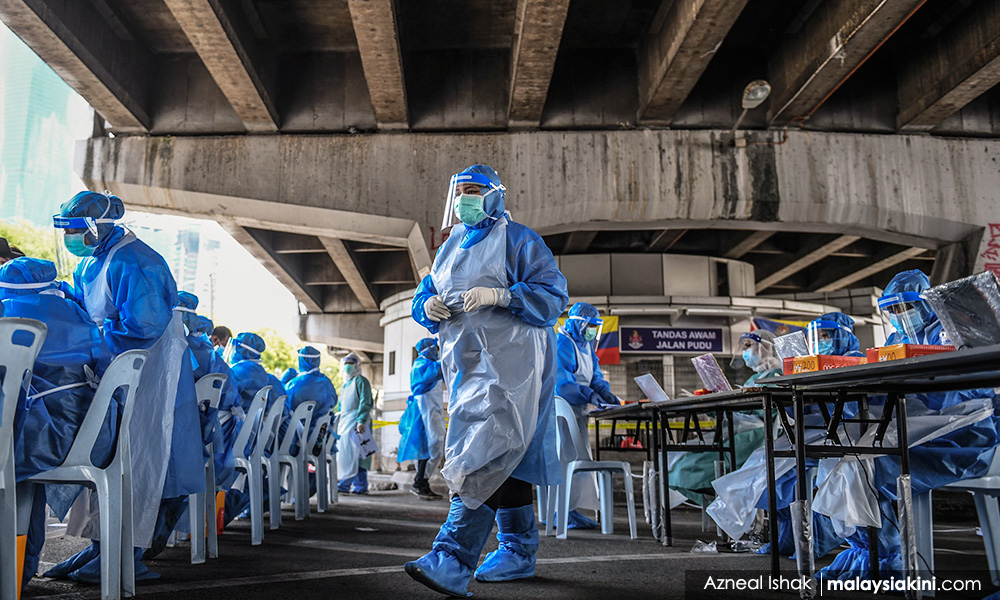
COMMENT | Covid-19 has rapidly swept across the globe, and Malaysia has experienced a resurgence of infections since September.
While some feel numb with Covid-19 fatigue, others may have increased anxiety and fear. However, as this crisis progresses, it is important to 'take a deep breath' and reposition ourselves within the greater scheme of things in the hopes of developing a fresh perspective on our local situation.
Using public domain data, we compared the number of new Covid-19 infections per 100,000 population in Malaysia with other countries from various regions through three-time periods; March to May, June to August, and September to Nov 2020.
Gaining context
Within Malaysia, the global rankings of Malaysia, its central region (Selangor, Federal Territory Kuala Lumpur, Federal Territory Putrajaya, and Negeri Sembilan) and the rest of Malaysia are now similar to the March to May period. There was a large drop in rankings during June and August.
As the rankings suggest, the first and second waves we experienced were dealt with rapidly and effectively resulting in
COMMENT | Covid-19 has rapidly swept across the globe, and Malaysia has experienced a resurgence of infections since September.
While some feel numb with Covid-19 fatigue, others may have increased anxiety and fear. However, as this crisis progresses, it is important to 'take a deep breath' and reposition ourselves within the greater scheme of things in the hopes of developing a fresh perspective on our local situation.
Using public domain data, we compared the number of new Covid-19 infections per 100,000 population in Malaysia with other countries from various regions through three-time periods; March to May, June to August, and September to Nov 2020.
Gaining context
Within Malaysia, the global rankings of Malaysia, its central region (Selangor, Federal Territory Kuala Lumpur, Federal Territory Putrajaya, and Negeri Sembilan) and the rest of Malaysia are now similar to the March to May period. There was a large drop in rankings during June and August.
As the rankings suggest, the first and second waves we experienced were dealt with rapidly and effectively resulting in a large drop in our rankings within three months (alongside large outbreaks beginning concurrently in other regions).
The rise of infections within the last three months have unsurprisingly increased our rankings but not beyond that which we experienced in March to May. The situation is different with Sabah and Federal Territory Labuan, where the incidence density ranks have increased to 76 in the last three months.

Looking beyond our borders, incidence rankings within Southeast Asia reveal three markedly different trajectories (Figure 1). Singapore reported the 8th highest incidences in the world between March and May.
Impressively, incidence within the country has drastically declined since then. Indonesia, the Philippines, and Vietnam experienced their spikes mid-year. Both Vietnam and Thailand have reported low numbers throughout this pandemic.

Most intriguing within the current epidemic has been the progress of Covid-19 propagation within East Asia and Oceania (Figure 2). China, Taiwan, Japan, South Korea, Australia and New Zealand have all consistently reported low incidence densities and have been largely successful in quickly flattening their curves for new outbreaks.

Across the Middle East and South Asia, the incidences of all nations here peak somewhat later, reporting higher incidence between June and August (Figure 3). Israel had reported higher incidence density followed by the United Arab Emirates, Iran, and India.

Like Malaysia, there appears to be a bimodal peak in incidence in European countries such as Belgium, the United Kingdom, France, and Germany (Figure 4). The United States and Sweden appear to have continuous transmission through this period, but their relative ranking has reduced since September.
There also appears to be distinct patterns of transmission between the regions across the time periods. Transmission in Europe, and in Malaysia peaked between March and May before a period of relatively reduced transmission before spiking again between September and November.
Transmissions in the Middle East, South Asia and several other countries like Brazil, the Philippines and Indonesia peaked between June and August followed by a reduction in the ensuing months.
Meanwhile, transmissions in East Asia and Oceania and also several nations in Southeast Asia were at their highest between March and May and have subsequently remained consistently low throughout.
Additionally, the burden of Covid-19 appears to be much higher as we move further west, whilst the most efficient models of control can all be observed closer to home- especially in East Asia and Australasia.
Deriving new insight.
In contextualising the situation in Malaysia with other nations globally, the rankings paint a picture of active Covid-19 transmission in many parts of the world.
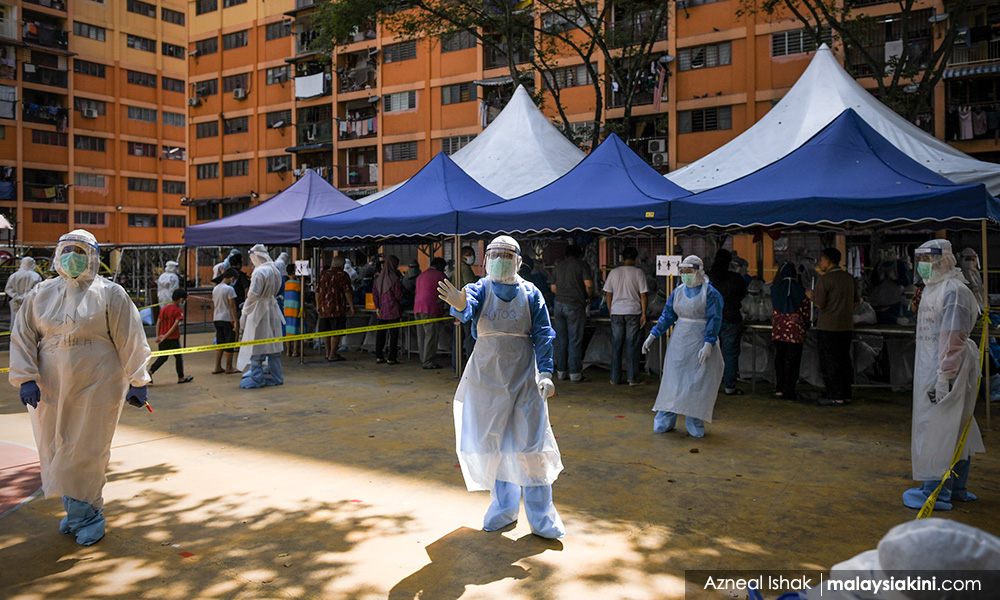
Incidences in Malaysia remain much lower than in many countries, including those in Europe and the Americas. However, the chain of infection in Malaysia remains unbroken. Nonetheless, lessons can be derived from our neighbours in ensuring we flatten the curve.
Singapore, which has reported the highest drop in rankings within this analysis, is one such model that has used an aggressive test-trace and isolate policy.
Taiwan, China, South Korea, and New Zealand have similarly used a national policy that comprises multiple policy interventions that are tailor-made to the needs of each of their countries needs and resources.
Deriving key lessons from these models and integrating them into a comprehensive national policy is key if we are to continue to live without anxiety, panic and fear during this pandemic.
Covid-19 infections have been resurgent; this third wave still appears cluster-based except for Sabah.
The overall Covid-19 response by the government can be gauged by the lower incidence density ranking of Malaysia (114) compared with many other countries in the world. However, the rankings do vary by the different grouped regions of Sabah (76), Central (109), and the rest of Malaysia (147).
More insights into the epidemiology of Covid-19 in Malaysia is available here.
DR VIVEK JASON JAYARAJ is doctor of Public Health (DrPH) candidate, and DR SANJAY RAMPAL is professor of Epidemiology and Public Health Medicine Specialist, Universiti Malaya.
The views expressed here are those of the author/contributor and do not necessarily represent the views of Malaysiakini.


Report this comment
Are you sure you want to delete this comment?
This action cannot be undone.