



COMMENT | What is Malaysia’s human rights message to the world?
COMMENT | On International Human Rights Day last year, Dec 10, 2020, Malaysia launched its bid for a seat on the 47-member United Nations Human Rights Council (HRC) for the 2022-2024 term.
If elected by members of the United Nations General Assembly later this year, it will be Malaysia’s third stint, having served before from 2006-2009 and 2010-2013. The third bid in 2017 was unsuccessful.
In its launch video, the Malaysian government highlighted two major domestic human rights developments in recent times: the reduction of the voting age eligibility from 21 to 18 and its continued support of a worldwide moratorium on the use of the death penalty.
As of the time of writing, we have not yet implemented “Undi 18” and it is still not certain whether 18 to 21-year-olds will be able to vote should there be an election once the proclamation of emergency is revoked as promised by the prime minister.
And while we have voted to support the worldwide moratorium on the use of the death penalty, the government has not published the report and recommendations by the Special Committee to Review Alternative Sentences to the Mandatory Death Penalty.
The report was presented to the government on Feb 11, 2020, but has not been made public. As of June 30, 2020, 1,314 people are on death row in Malaysia.
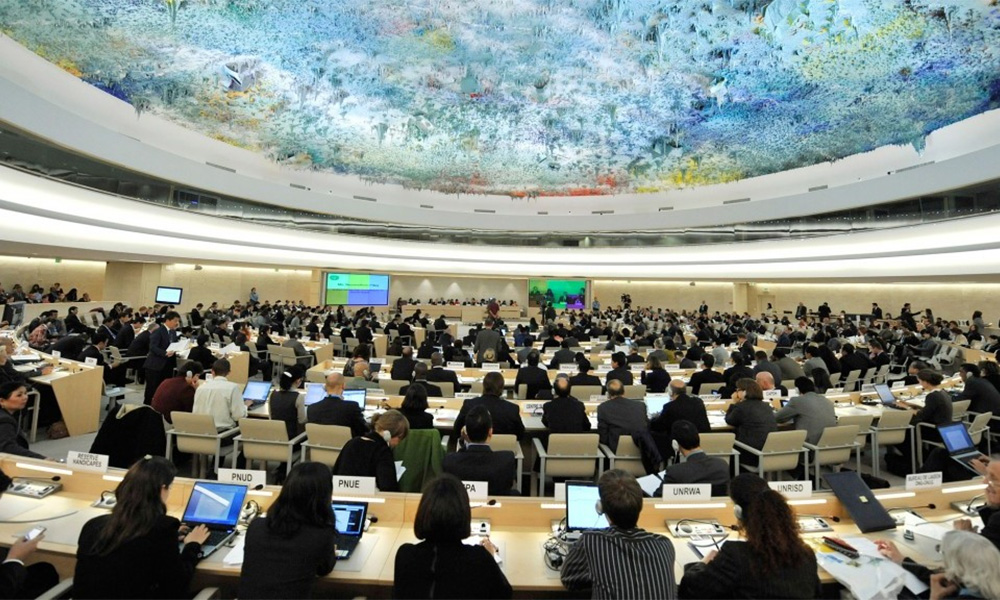
Why does Malaysia seek membership of the HRC (above)? What Malaysian message do we want to send to the world in relation to human rights? In his speech on Dec 10, 2020, the foreign minister said, “The HRC embodies the spirit of multilateralism, which Malaysia continues to advocate for, and as a member of the HRC, Malaysia will work closely with all actors to drive progress on human rights at home and also globally.”...
COMMENT | On International Human Rights Day last year, Dec 10, 2020, Malaysia launched its bid for a seat on the 47-member United Nations Human Rights Council (HRC) for the 2022-2024 term.
If elected by members of the United Nations General Assembly later this year, it will be Malaysia’s third stint, having served before from 2006-2009 and 2010-2013. The third bid in 2017 was unsuccessful.
In its launch video, the Malaysian government highlighted two major domestic human rights developments in recent times: the reduction of the voting age eligibility from 21 to 18 and its continued support of a worldwide moratorium on the use of the death penalty.
As of the time of writing, we have not yet implemented “Undi 18” and it is still not certain whether 18 to 21-year-olds will be able to vote should there be an election once the proclamation of emergency is revoked as promised by the prime minister.
And while we have voted to support the worldwide moratorium on the use of the death penalty, the government has not published the report and recommendations by the Special Committee to Review Alternative Sentences to the Mandatory Death Penalty.
The report was presented to the government on Feb 11, 2020, but has not been made public. As of June 30, 2020, 1,314 people are on death row in Malaysia.
Why does Malaysia seek membership of the HRC (above)? What Malaysian message do we want to send to the world in relation to human rights? In his speech on Dec 10, 2020, the foreign minister said, “The HRC embodies the spirit of multilateralism, which Malaysia continues to advocate for, and as a member of the HRC, Malaysia will work closely with all actors to drive progress on human rights at home and also globally.”
To its credit, Malaysia has recently announced that foreign citizens, including undocumented migrants, will be vaccinated against Covid-19. This is a positive move that acknowledges that we are all in the same boat and that discrimination based on citizenship or immigration status is illogical as well as harmful.
The slogan #KitaJagaKita makes no sense if the migrant community in our country, whether documented or not, are excluded. No one must be left behind.
However, we have seen a difference in opinion on timing. Some within government want vaccination of Malaysians to be prioritised. This is a view supported by the MTUC. Others, also within government, say it should be done contemporaneously. This view is supported by the Malaysian Employers Federation.
The issue here, among others, is one of re-opening the economy in the midst of the Covid-19 pandemic. Only now, when Covid-19 infection has severely disrupted the manufacturing, production and plantation industries, has there been an emphasis on foreign migrant workers.
I have attended several public forums on the topic of business and human rights, and it is rare for representatives of employers to support better protection for human rights and better terms and conditions of work for their foreign migrant workers.
Their main complaint has been that more human rights recognition means higher compliance costs. And higher costs mean lower profits. Fortunately, the government has stated that the vaccines will be provided free of charge.
But where was support by the government and employers for the protection of the human rights of foreign migrant workers before the onset of Covid-19?
As far back as February 2016, five years ago, Malaysia had already agreed to a Labour Consistency Plan (“LCP”) with the United States as part of the Trans-Pacific Partnership Agreement.
In Section 1(c) of Part B of the LCP document, Malaysia had already committed, “[to] amend the Workers’ Minimum Standards of Housing and Amenities Act 1990 (Act 446) so that it covers all sectors (beyond only plantations).”

Further, in Section 4(b) of the LCP document, Malaysia agreed “[to] amend the implementing regulations to Act 446 to require that private employers or recruitment agencies, which provide housing for foreign workers, provide notice, in a language the workers understand, informing those workers of their right to acceptable housing conditions under this act and information on how to report violations of their right to acceptable housing conditions. Private employers with more than 10 foreign workers and recruitment agencies shall also be required to post the notice on their premises visible to workers.”
The government only gazetted the amendments in September 2019 and scheduled implementation for June 1, 2020. This was eventually delayed until Sept 1, 2020.
The regulations were only gazetted on Aug 28, 2020. Employers had pleaded with the government for a further one-year extension for implementation, claiming that this was not the right time to impose new regulations.
Yet foreign migrant workers have had to suffer from cramped and crowded accommodation for years without their employers doing very much to alleviate the problem in the first place.
Just imagine, if the government had not delayed amending the law and immediately implemented the regulations in 2016 itself, and not in September 2020, the impact of Covid-19 in foreign migrant worker dormitories or accommodation may not have been so widespread and deeply damaging to businesses.
The government has also said that it cannot stop condominium and apartment management bodies from imposing Covid-19 testing requirements on foreigners living in their condominiums and apartments, but that this requirement cannot be applied to Malaysian citizens.
This discriminatory approach is hardly a positive statement of progressing on human rights at home. Instead of putting its foot down and saying a firm "no", the government waves its hands in the air and says there is nothing they can do. With respect, this is utter rubbish.
This “them and us” treatment of foreigners is certainly not in the spirit of the Sustainable Development Goal’s slogan of “No one left behind” which is a key feature of the United Nations 2030 Agenda for Sustainable Development.
However, “No one left behind” must also include a more generous approach to the issue of statelessness and the plight of children born to a Malaysian and a non-Malaysian spouse.
Today is the 26th anniversary of Malaysia’s accession to the United Nations Convention on the Rights of the Child. Yet 26 years after acceding to the convention and 20 years after the passage of the Child Act 2001, under our current constitution and laws, children of a Malaysian father and non-Malaysian mother born outside of marriage cannot automatically inherit Malaysian citizenship; they take the citizenship of their non-Malaysian mother, even if they have never stepped foot in their non-Malaysian mother’s country.
Children born outside Malaysia to a Malaysian mother and her non-Malaysian spouse also cannot automatically inherit Malaysian citizenship on a similar basis as Malaysian men. The grant of Malaysian citizenship is at the discretion of the Home Ministry. This is an area ripe for constitutional and legal reform.

This pandemic has been utter hell for such families, where the non-Malaysian parent and children are subject to the application and renewal of long-term visit passes in order for them to remain in Malaysia.
Imagine being told that you have to leave the country and return to have a new pass stamped onto your passport, at a time when re-entry into Malaysia is being restricted and there is no guarantee that you would be allowed back in. This senseless and inhumane treatment must stop.
Failed to translate
Malaysia signed the Treaty on the Prohibition of Nuclear Weapons on Sept 20, 2017, and ratified it on Sept 30, 2020. It was one of the first fifty countries to do so, thereby allowing the treaty to enter into force on Jan 22, 2021.
While this is a noteworthy development, Malaysia has yet to introduce any domestic legislation to criminalise the crime of genocide. Malaysia acceded to the Convention on the Prevention and Punishment of the Crime of Genocide 1948 on Dec 20, 1994.
One of its obligations under the convention was to create the offence of genocide under Malaysian law. This it has consistently failed to do, even after 26 years. Malaysia also initially acceded to, but then quickly withdrew its accession to the Rome Statute of the International Criminal Court (“ICC”) in 2019.
A few days ago, the ICC announced that it has jurisdiction to hear allegations in relation to the Israeli occupation of Palestine. In November 2019, the ICC ruled that it had jurisdiction to hear cases relating to the Rohingya escaping to Bangladesh.
For many years now, Malaysia has championed the causes of both the Palestinians and the Rohingya, who are fellow Muslim communities, but it has failed to translate those positions substantively into actually joining and contributing to the ICC.
On June 26, 1987, the United Nations Convention against Torture and Other Cruel, Inhuman or Degrading Treatment or Punishment entered into force. On Dec 23, 2010, the International Convention for the Protection of All Persons from Enforced Disappearance entered into force.
Malaysia has yet to accede to either international instrument. Surely Malaysia is not in favour of torture, or enforced disappearances, nor is it interested in protecting those who commit such heinous crimes.
If such crimes do not occur in Malaysia, it would be easier to accede to them. Having legislation in place that would criminalise these acts, including asserting universal jurisdiction for the prosecution of such crimes, even if they were committed outside Malaysia, would contribute towards an international framework to counter any potential form of impunity. Yet Malaysia has not done so.

In fact, when it comes to the accession of international human rights instruments, Malaysia ranks as the lowest within the 10 countries of the Association of Southeast Asian Nations (Asean).
It has signed or ratified or acceded to only three out of the nine. We trail Brunei, Myanmar and Singapore with four each, Thailand and Vietnam with seven each, Laos and the Philippines with eight each, and Cambodia and Indonesia with nine each. This does not mean, of course, that these other countries have a perfect or better human rights record.
What it does mean is that they are prepared to render themselves, their laws, policies and practices accountable to the international system of human rights treaties and obligations that currently exist.
Malaysia has, however, chosen to adopt a very minimalist approach and not engage in these other human rights areas that deal with civil, political, economic, social and cultural rights, ending racial discrimination and protecting migrant workers, indigenous peoples, refugees, asylum seekers, the LGBT and other minority communities.
Even when it comes to women, children and persons with disabilities, our record of human rights protection is not great.
All these then beg the question - in what way exactly will Malaysia strengthen multilateralism and drive human rights globally as a member of the HRC?
It has chosen to do nothing at both the international and domestic levels to prevent impunity for prosecution for genocide, war crimes, crimes against humanity, crimes of aggression, torture and other forms of cruel, inhumane and degrading treatment or punishments, and enforced disappearances.
Even if Malaysia were to argue that as a Muslim-majority country and government it has an Islamic-centred example and message of human rights to share with the world, it cannot deny the fact that it lags behind all its fellow member states of the Organisation of Islamic Cooperation (OIC).
Amongst the 56 members of the OIC, Malaysia ranks 56th in terms of the number of signatures, ratifications, accessions or successions to the nine international human rights treaties.
This is not to say that Malaysia should not seek a seat on the HRC. No member of the HRC has an absolutely perfect, just and equal society or is a paragon of human rights virtue.
However, the Malaysian government needs to provide justification for this decision - why do we want to be on the HRC? And how will the human rights situation in our own country improve or progress with our membership?
These questions remain to be answered.
ANDREW KHOO is an advocate and solicitor in private practice. He served as co-chair of the Bar Council Human Rights Committee from 2009-2018 and is currently the co-chair of the Bar Council Constitutional Law Committee. He writes here in his personal capacity.
The views expressed here are those of the author/contributor and do not necessarily represent the views of Malaysiakini.




Report this comment
Are you sure you want to delete this comment?
This action cannot be undone.