



COMMENT | Are motor vehicle insurers profiteering from Covid-19?
COMMENT | Last November, I contacted my insurance agent to renew my annual motor insurance. This time, however, this rather mundane routine provoked me to explore deeper which led to this story of questionable matters. What I suspect is that motor insurers have made a profit from the Covid-19 pandemic while making a mockery of motor insurance tariff liberalisation.
This is a personal experience drawn from information readily available online. I hope the regulators such as Bank Negara Malaysia and the Malaysia Competition Commission and industry associations such as Persatuan Insuran Am Malaysia would respond and provide some clarity.
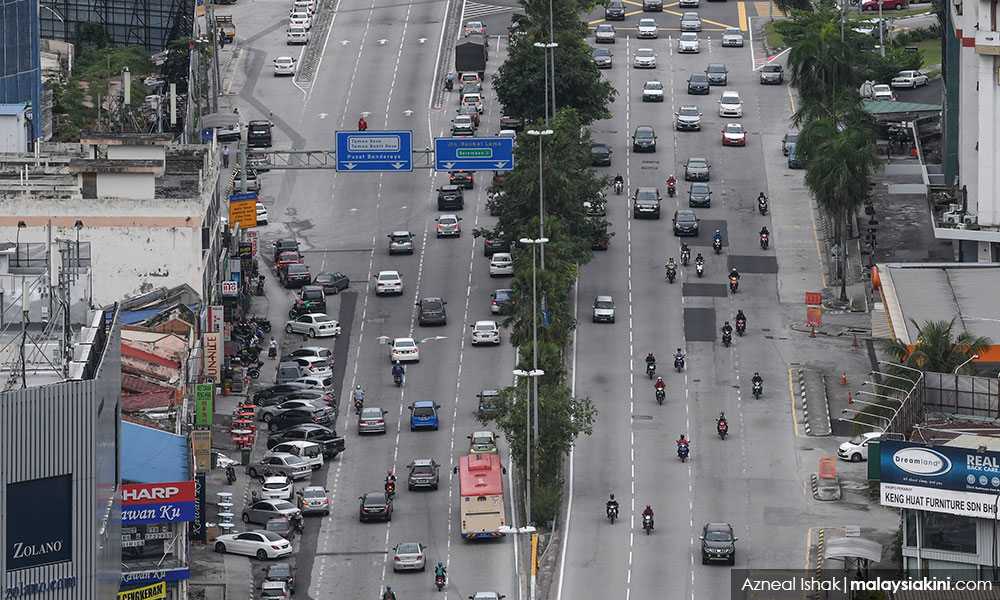
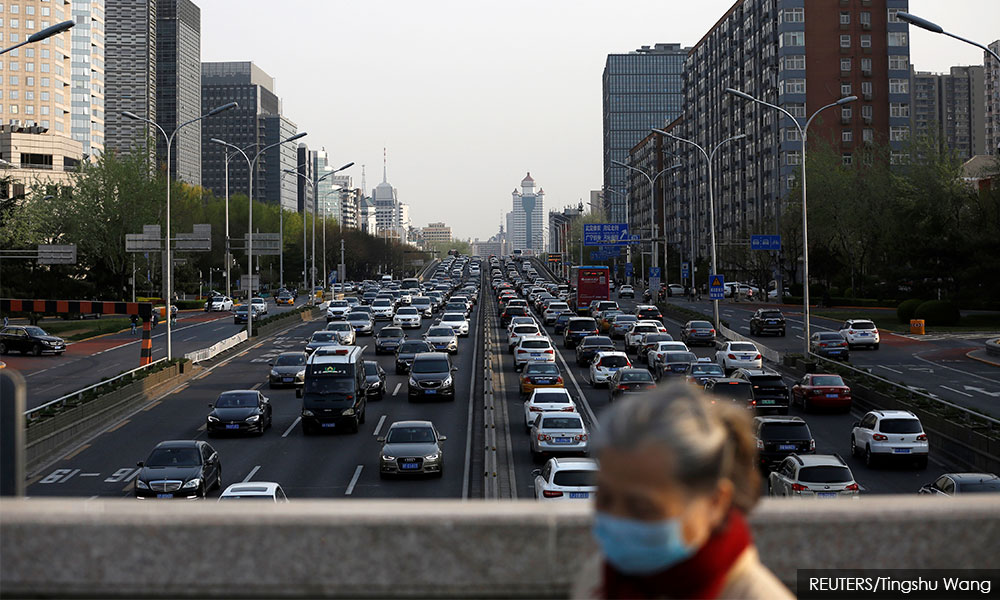
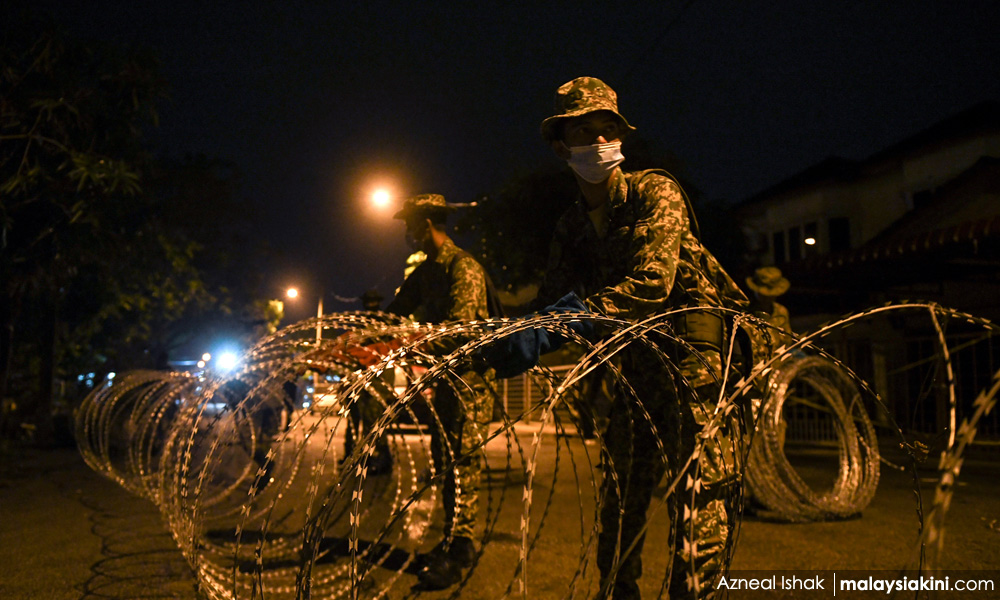
Malaysia has been under lock-down since March last year due to the Covid-19 pandemic. There are severe restrictions in the movement of people across districts and state, while social activities are curtailed limiting travel only within the neighbourhood. The primary means of travel are motor vehicles. We have seen how perennially congested highways were deserted for the most part of the year, and city roads almost empty even in Kuala Lumpur.
A classic case of this phenomena was the empty highways and roads during the recent Chinese New Year celebrations. For the first time, there was no drive-safely campaigns nor daily depressing statistics of accidents and deaths. Most vehicles were practically cocooned in the house and in parking lots or storage areas.
We can safely estimate that usage of roads by motor vehicles are down to about 20-30 percent from the normal. However, the police reported only a 26.3 percent decrease in accidents with 418,237 cases in 2020 (12.7 deaths daily) compared to 567,516 cases in 2019 (16.8 deaths).
Probably, the seemingly modest reduction in accidents by the police could be due to people being frustrated, angry, or confused ...
COMMENT | Last November, I contacted my insurance agent to renew my annual motor insurance. This time, however, this rather mundane routine provoked me to explore deeper which led to this story of questionable matters. What I suspect is that motor insurers have made a profit from the Covid-19 pandemic while making a mockery of motor insurance tariff liberalisation.
This is a personal experience drawn from information readily available online. I hope the regulators such as Bank Negara Malaysia and the Malaysia Competition Commission and industry associations such as Persatuan Insuran Am Malaysia would respond and provide some clarity.
Malaysia has been under lock-down since March last year due to the Covid-19 pandemic. There are severe restrictions in the movement of people across districts and state, while social activities are curtailed limiting travel only within the neighbourhood. The primary means of travel are motor vehicles. We have seen how perennially congested highways were deserted for the most part of the year, and city roads almost empty even in Kuala Lumpur.
A classic case of this phenomena was the empty highways and roads during the recent Chinese New Year celebrations. For the first time, there was no drive-safely campaigns nor daily depressing statistics of accidents and deaths. Most vehicles were practically cocooned in the house and in parking lots or storage areas.
We can safely estimate that usage of roads by motor vehicles are down to about 20-30 percent from the normal. However, the police reported only a 26.3 percent decrease in accidents with 418,237 cases in 2020 (12.7 deaths daily) compared to 567,516 cases in 2019 (16.8 deaths).
Probably, the seemingly modest reduction in accidents by the police could be due to people being frustrated, angry, or confused with the SOPs which led many to drive into a drain, tree or a wall.
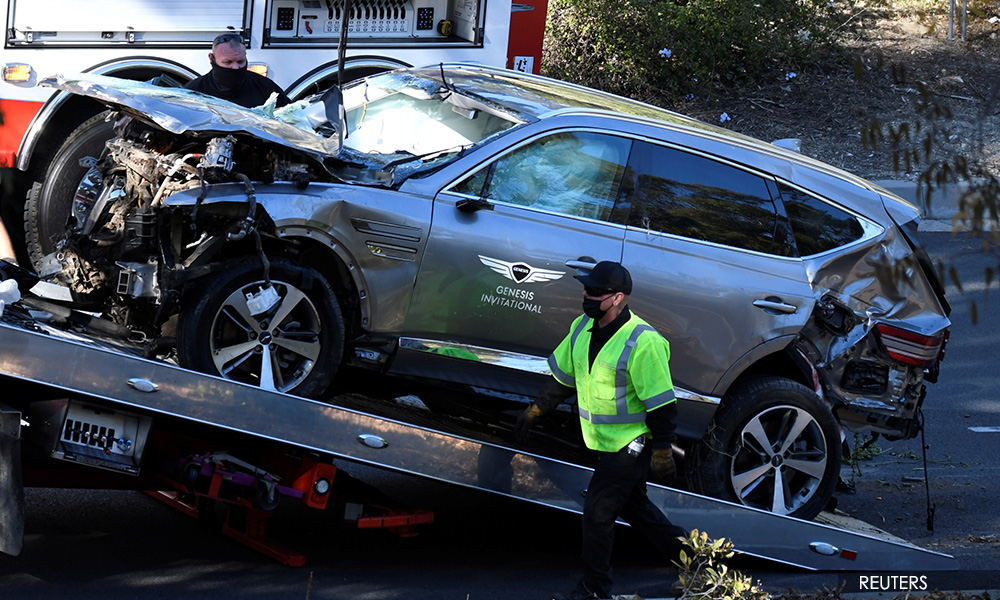
In any case, insured claims, made up mostly of severe accidents and damage to property, could be modestly estimated to have reduced by about 50 percent, pending confirmation of final statistics by the insurers.
Well, common sense and logic will dictate low usage will lead to a low number of accidents to proportionally fewer insurance claims and hence a reduction in motor insurance premiums. But the sophisticated actuarial-science driven motor insurance industry does not seem to think so.
The roll-out of motor insurance liberalisation started in July 2017 and should have been fully liberalised in 2019. This meant motor insurance premium, particularly comprehensive (first-party) and fire and theft (second party) cover, will not be based anymore on fixed tariff or prices determined by the authorities. With liberalisation, the premium is touted to be determined by a very open and highly competitive market place.
Previously, the regulated fixed tariff was based on a few factors such as vehicle model, age and engine capacity. The liberalised prices will depend on a whole lot of other factors, such as one’s personal risk profile, driving habits, history of claims or reckless driving, the volume of usage, safety and security features in the vehicle and also where it is parked or driven, loyalty discounts or rewards, and of course the corporate standing of the insurers itself.
Theoretically, if a car is expected to be hardly driven, it should attract a lower premium. In fact, insurers should offer premiums based on bands of mileage/usage, as offered in a truly competitive market. Insurers, therefore, need to collect a whole range of information before they can offer the best premium for a particular risk profile, which is different for each driver or class of drivers.
It would also mean that insurers should instantly revise their premiums should a persistent calamity occur, such as the Covid-19 pandemic, without waiting for other insurers or being forced to do so by the authorities. Well, does this happen in our so-called “open and competitive liberalised marketplace”?
Please read on.
The expected reality
So imagine the sickening feeling I had when I requested a renewal quote for my 2009 Kia Sportage with the same terms as before but probably a lower valuation one year on. Instead, I was quoted a premium with an increase of 10 percent for both first and second party.
Well, with the promise of a liberated market, I went on an online search for the “best offer”. Incidentally, I have not made any insurance claims for the past 40 years.
I found that all insurers seem to be operating on a pre-agreed range of offers. My car was valued at RM18,000-RM21,000 by all the insurers. Whereas the market value based on a search of popular online vendors ranged from RM10,000-RM15,000, and the final negotiated price could be lower. In fact, I bought the car three years ago for RM18,000.
Now, how could the insurers who are supposed to be operating independently and competing against each other, have the same valuation which is much higher than the actual market price?
In terms of premiums offered, there is hardly any difference either, with only the lesser-known insurers offering a slightly lower price. The system does not allow one to choose beyond the range of valuation, even if you prefer lower valuation and become self-insured for the difference.
One is requested to contact an insurance agent for this purpose. Surprisingly, the information requested is the same few details as before; and lo and behold, you are made an offer instantly “personalised to your risk profile”. Anyone else can just key in the car model and age, and they too get the same best-personalised offer.
So what happened to the impact of Covid-19 on insurance premiums? How can one claim to be operating in an open and highly competitive market, when all the insurers have a fixed menu to offer as if it was pre-negotiated? Why the vast difference between the insurers and market valuation; if not to charge a higher insurance premium, but to cut back on claims later on based on actual market price?
Why do the insurers incur additional cost and commission to their agents when anything outside the menu is referred to their agents? Most tellingly, how are insurance premiums tailored to the risk profile of each individual or class of persons, when such data is not collected?
It is certainly tempting to insure a vehicle at the highest recommended valuation, claim for a total loss and buy a similar car in the market thereafter with plenty of cash to spare.
This experience can only lead to the conclusion of a cartel-like anti-competitive collusive behaviour, worse still profiteering from the miseries of the people suffering from Covid-19. Our vehicle cannot be driven and yet we need to pay a higher insurance premium.
It is early for the FY2020 financial statistics to be announced for it would be interesting to see whether motor insurers still claim that motor insurance is a loss-incurring business.
However, Maybank reported a 12.3 percent year-on-year increase in net insurance and investment income in FY2020 while making a lower net profit of RM6.48 billion (RM8.2 billion FY2019) overall.
On a macro-scale, can our markets be truly liberalised and highly competitive? After all, with the government and its corporate entities controlling a major share of the capital market and businesses, and politicians helming these corporations, how can government regulators operate independently and enforce the regulations for the benefit of the public?
To call our markets very open and highly competitive is, at best, fake.
I hope to be proven wrong here, the optimist as I always have been. In the meantime, I may consider leaving my car, insured with the maximum value recommended, parked on the streets for a few days. As sure as the sun rises, it is bound to be stolen.
RAMAN LETCHUMANAN was formerly director, environment/conservation at the Ministry of Science, Technology and the Environment.
The views expressed here are those of the author/contributor and do not necessarily represent the views of Malaysiakini.



Report this comment
Are you sure you want to delete this comment?
This action cannot be undone.