




COMMENT | Corruption is scariest without rules
COMMENT | How much money is enough to make you lie? Not much.
Famous behavioural scientist, Dan Ariely, specialises in the study of worst human behaviours. He believes that given a chance, most humans would act worse than what you had imagined.
Put a person inside a room with a researcher. Ask him to roll a dice and inform him that whatever number appears at the top of the die is what he will be compensated in money. The more he rolls, the more money he gets.
But after he rolls, ask him if he would like to cheat and choose another number instead. If he keeps rolling “1”, ask him if he would like to pick “6” instead to receive more money.
Almost everyone would cheat and pick the highest number.
Add another twist. Before you ask them to roll a dice, reward them even more. Flip a coin and tell them that they either would receive $4 or $40 extra depending on heads or tails. If he gets $4, tell him that you are open to receiving $3 in bribes because the boss is not here; in return, he will be receiving the $40 prize. Once again, almost everyone (84 percent) went with the bribe.
That is not the most surprising thing. When compared, the people who had cheated once in the flip-a-coin test were also more likely to cheat in the roll-a-dice test.
The ones who first cheated on the flip-a-coin test were also more likely to steal again and again. When they are about to leave, the cheaters of the flip-a-coin test would inflate their winnings and collect more than they have earned...
COMMENT | How much money is enough to make you lie? Not much.
Famous behavioural scientist, Dan Ariely, specialises in the study of worst human behaviours. He believes that given a chance, most humans would act worse than what you had imagined.
Put a person inside a room with a researcher. Ask him to roll a dice and inform him that whatever number appears at the top of the die is what he will be compensated in money. The more he rolls, the more money he gets.
But after he rolls, ask him if he would like to cheat and choose another number instead. If he keeps rolling “1”, ask him if he would like to pick “6” instead to receive more money.
Almost everyone would cheat and pick the highest number.
Add another twist. Before you ask them to roll a dice, reward them even more. Flip a coin and tell them that they either would receive $4 or $40 extra depending on heads or tails. If he gets $4, tell him that you are open to receiving $3 in bribes because the boss is not here; in return, he will be receiving the $40 prize. Once again, almost everyone (84 percent) went with the bribe.
That is not the most surprising thing. When compared, the people who had cheated once in the flip-a-coin test were also more likely to cheat in the roll-a-dice test.
The ones who first cheated on the flip-a-coin test were also more likely to steal again and again. When they are about to leave, the cheaters of the flip-a-coin test would inflate their winnings and collect more than they have earned.
The corruption experiment
What this means is that corruption happens in a series that starts with the initial push. If the first person of authority has approved of the ways of cheating and rule-breaking, it is likely that the rest would also follow.
This happens almost at an unknowing and subconscious level. Ariely calls this the social norm, and this could change as quickly as one approval from the top.
Of course, in most corruption matters, there is always the law. But most of our acts are actually not governed by the law, since the police could not be monitoring your every movement. Instead, most of our acts are determined by our inner conscience – and our conscience is shaped partly by the social norms of where we live.
Politicians who appear on social media and national TV are not simply people who decide what policies to implement; they are also our moral guardian. Children and adults absorb what is accepted by the authority, regardless of our disagreement with the content of what is preached.

The door of defection has long been open. Since Dr Mahathir Mohamad’s administration as prime minister in 2018, there were already defections that occurred from Umno to Bersatu. Though the rule-breaking act was not as malicious or sinister as the present, they were nonetheless negative acts that shaped what is considered acceptable.
The opening from Mahathir
It should not come as a surprise that the large-scale defection during Sheraton Move happened, as this was simply an exploitation of the social norm that was built under Mahathir.
The slow but steady defections every other month no longer has the sensational effect as they once did, and the people either by fatigue or disillusionment has also fallen quiet. “Traitor” became overused and lost its meaning. A social norm is assumed for the rest of the country.
Joe Papp was one of the fastest kids ever to cycle. He began racing professionally from the age of 14 and was barely the legal age when he raced for the United States national cycling team.
There is no failure in Papp’s vocabulary, as the dream of being first in every race he has set foot became an addiction. Until everything was cut short when he was involved in the highest-profile doping scandal in sports history.
It wasn’t enough that Papp was talented and hardworking, he wanted something extra to give him a boost. That was when he resorted to a performance-enhancing drug from China. When his teammates wanted the same, he realised he could make a profit from selling to them. He did make some money, but he was eventually convicted for drug distribution charges.
Jail makes you sober. Papp admitted that looking back, it was hard for him to know where to stop. The push for rule-breaking is often gradual and unnoticed until it became too late.
When he met the doctors, the doctors prescribed the medicine. When the doctors prescribed the medicine, you use it. When you use it, your friends want it. When your friends want it, you supply it. And when you supply it, you make money until you could not do it legally anymore.
What pushed Papp into this spiral was the initial opening, the social norms that the authority endorsed. If Papp had gone directly to the drug dealer, none of this would have happened.
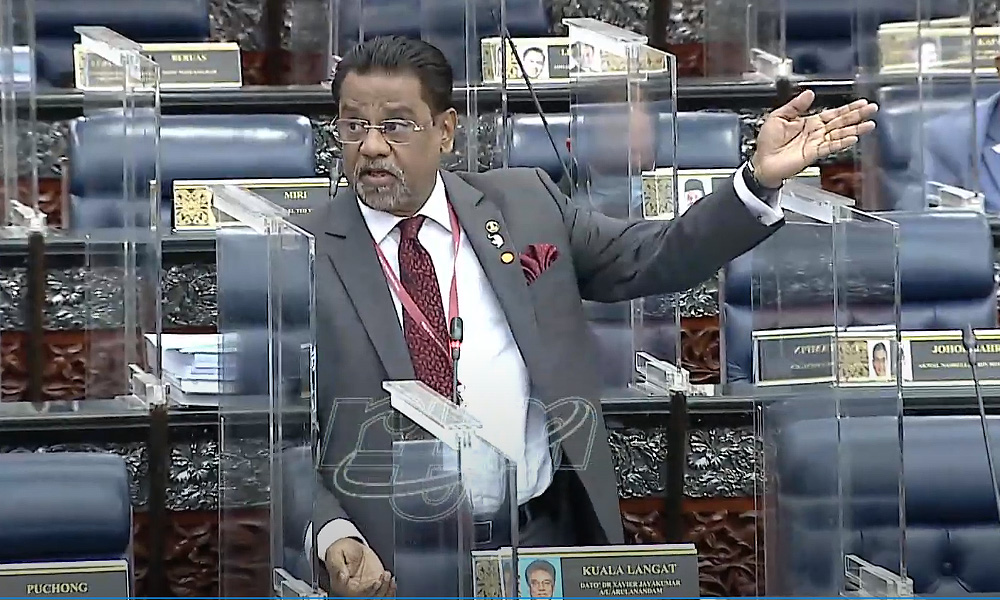
I don’t know if I am disappointed seeing more and more MPs defecting to the new government. I just think that people who analyse each MP who chose to jump ship is missing the point. This is not about whether Dr Xavier Jayakumar was guilty or what reasons motivated his defection.
Defection happens because the highest politician allowed it; what more an endorsement.
JAMES CHAI is a legal consultant and researcher working for Invoke, among others. He also blogs at jameschai.com.my. You may reach him at jameschai.mpuk@gmail.com.
The views expressed here are those of the author/contributor and do not necessarily represent the views of Malaysiakini.







Report this comment
Are you sure you want to delete this comment?
This action cannot be undone.