



COMMENT | Covid-19 - can we really achieve herd immunity?
COMMENT | Covid-19 vaccination has become the focus of many in the nation and internationally. We look to it as one of the mechanisms by which we can return to more social and community interactions.
With vaccination, we will still have to maintain our masks and limit our numbers but we can move about more freely and life can return to a closer semblance of ‘normality. However, for this to happen we will require vaccination to give us herd immunity.
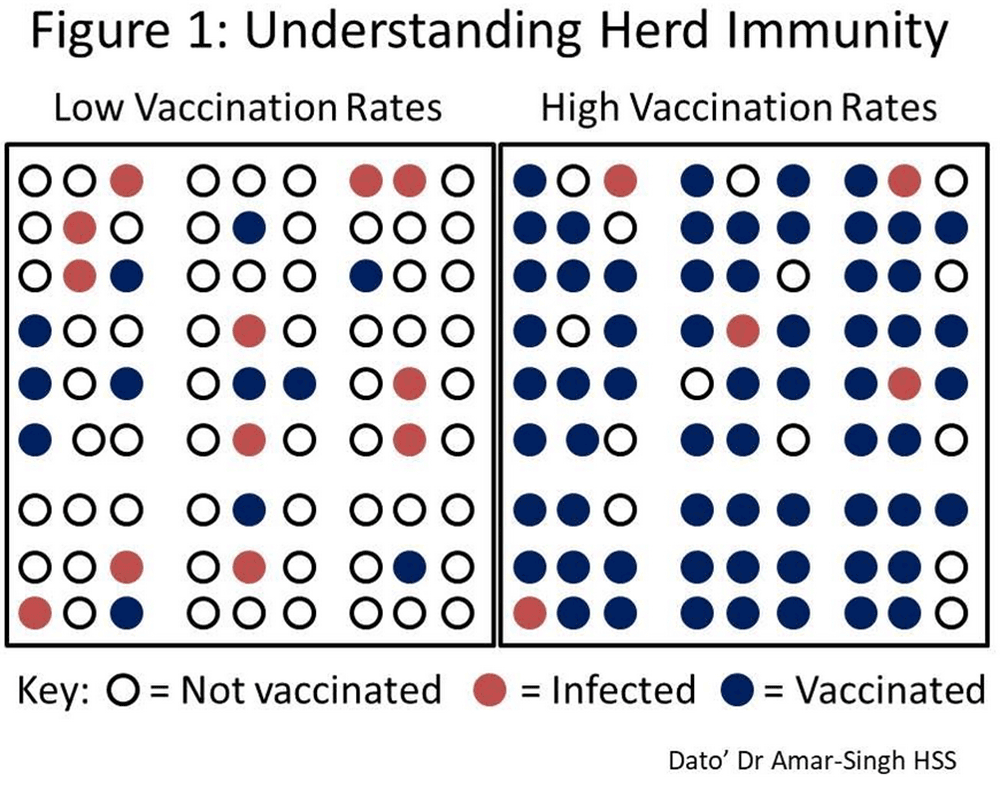
Herd immunity is where a sufficient proportion of the population has achieved immunity against Covid-19 through vaccination and this significantly reduces the spread of the disease and also protects those that cannot be vaccinated (contraindicated). See Figure 1 which illustrates this.
We are aware that the vaccines are effective at reducing hospital admissions and clinical infections but the data is still uncertain as to how good they are at preventing transmission. Overall it would result in a huge reduction in symptomatic cases, long term morbidity (‘long Covid’) and deaths.
To achieve herd immunity against Covid-19 a substantial proportion of the population would need to be vaccinated but we are currently uncertain ...
COMMENT | Covid-19 vaccination has become the focus of many in the nation and internationally. We look to it as one of the mechanisms by which we can return to more social and community interactions.
With vaccination, we will still have to maintain our masks and limit our numbers but we can move about more freely and life can return to a closer semblance of ‘normality. However, for this to happen we will require vaccination to give us herd immunity.
Herd immunity is where a sufficient proportion of the population has achieved immunity against Covid-19 through vaccination and this significantly reduces the spread of the disease and also protects those that cannot be vaccinated (contraindicated). See Figure 1 which illustrates this.
We are aware that the vaccines are effective at reducing hospital admissions and clinical infections but the data is still uncertain as to how good they are at preventing transmission. Overall it would result in a huge reduction in symptomatic cases, long term morbidity (‘long Covid’) and deaths.
To achieve herd immunity against Covid-19 a substantial proportion of the population would need to be vaccinated but we are currently uncertain as to what this percentage is. In some diseases like measles, 90-95 percent of a population need to be vaccinated to achieve herd immunity.
In others like polio, we require about 80 percent. It is very likely that for Covid-19 we will require at least 75-85 percent of the population to be vaccinated. This can be supplemented by those who had a prior infection of Covid-19.
Figure 2 roughly illustrates the population of the country by proportion to try and answer the question of how we can achieve herd immunity. Approximately 30 percent of our population of 32 million is below 18 years of age and currently are not indicated for vaccination as the data for children is still not available.
At any one time, we will have 2-3 percent of women who are pregnant or breastfeeding and vaccination for this group will generally be deferred until later (unless they are in a high-risk situation). At least one percent of the population will be too ill, in a hospital or have a contraindication to vaccination.
Too slow
I have assumed that a modest 10 percent will choose not to vaccinate. This will leave us with the ability to vaccinate only ~55-60 percent of the population; this is also assuming we are sensitive to our economic migrant and refugee populations that account for at least 10 percent of our population.
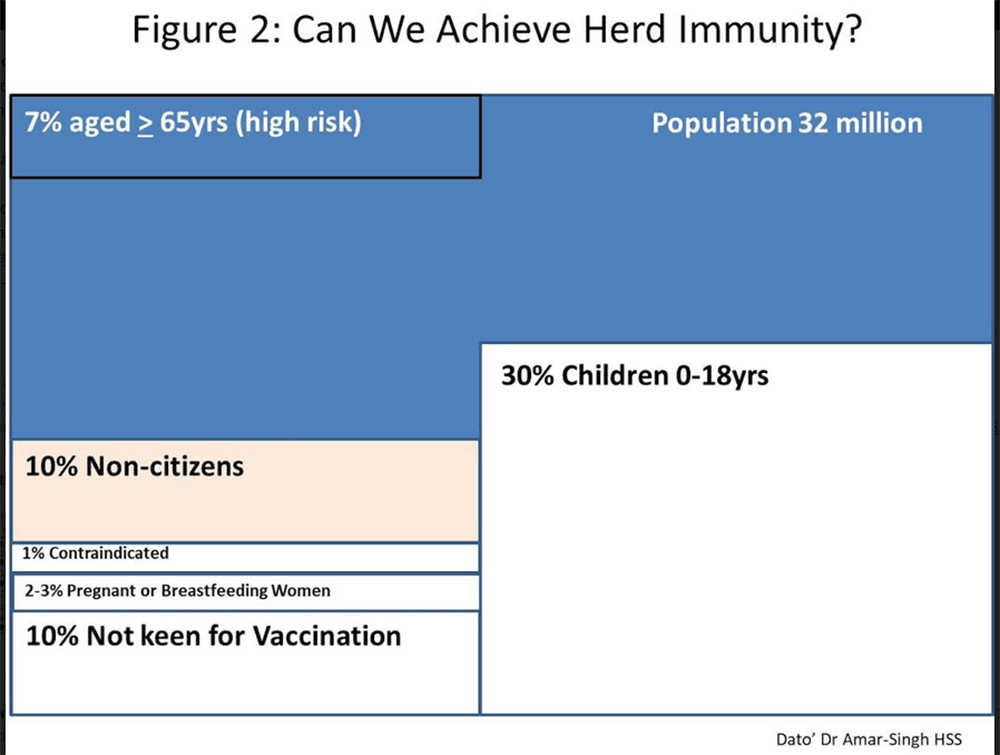
Hence, it can be seen that we will not be able to reach sufficient rates of Covid-19 vaccination in the population to reach herd immunity. Many countries realise this and studies are now being conducted on Covid-19 vaccination in children to see if we can increase the proportion of those vaccinated by involving children.
It is quite likely that we will end up vaccinating children down to 12 years of age. We must remember that even if 60 percent of the population is vaccinated, when children go to school or their kindergarten there is no herd immunity present in that environment (as all the children are not vaccinated).
Herd immunity for children will currently only work when they are with many vaccinated adults.
As of yesterday, 367,213 Malaysians or 1.15 percent of the population have been vaccinated with one dose of a Covid-19 vaccine. In addition, 5,867,497 have registered to receive the vaccine, i.e. ~30 percent of those eligible.
Only 15.8 percent of people above 60 years of age and those with comorbidities have signed up (the target population for these groups is 9.4 million but only 1.45 million have registered). Both vaccinations and registrations are too slow.
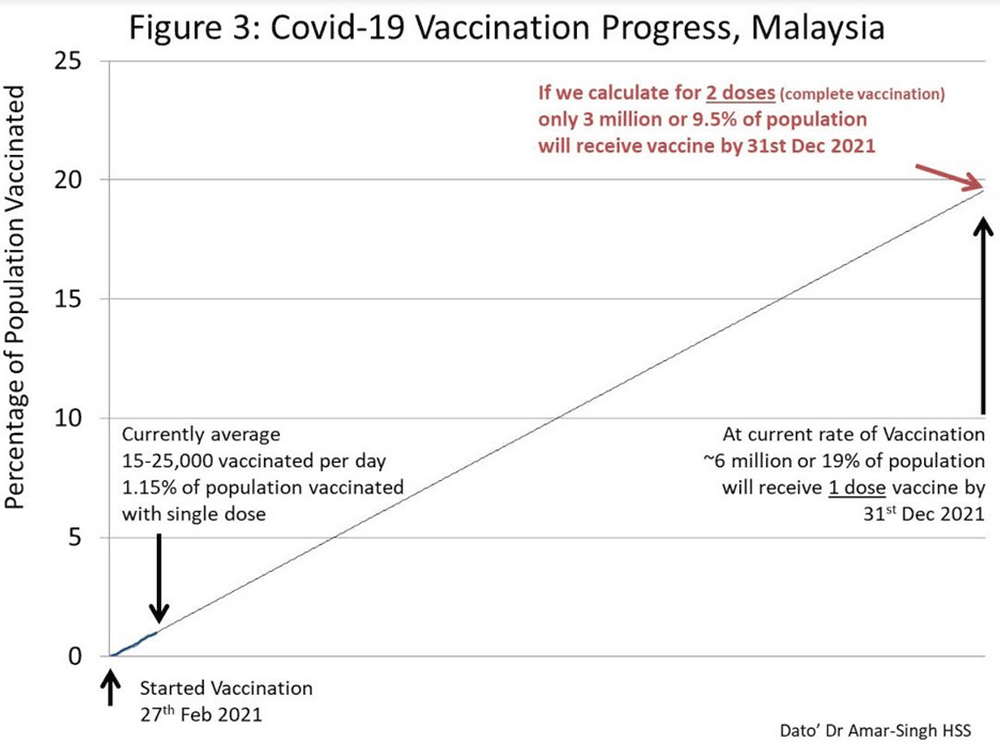
Figure 3 shows our vaccination rate at present extrapolated to the end of the year. At the current rate of vaccination, only approximately six million or 19 percent of the whole population will receive the first dose of a vaccine by the end of the year, not to mention the need for a second dose.
We expect that the Health Ministry, in partnership with the private sector, will ramp up vaccinations for Phase 2 that starts in April. The vaccination rate depends on the vaccine supply, logistics and the capacity of the health system to deliver them.
In this pandemic that affects every single person, we need to take personal responsibility. We cannot expect others to help control the outbreak for us. We are in this together and our collective vaccination is part of the way forward.
DR AMAR-SINGH HSS is a consultant paediatrician.
The views expressed here are those of the author/contributor and do not necessarily represent the views of Malaysiakini.



Report this comment
Are you sure you want to delete this comment?
This action cannot be undone.