



COMMENT | Financing women representation in politics - best way forward
COMMENT | Recently, the issue regarding the gross underrepresentation of women in Parliament and the state legislative assemblies came to light when Zuraida Kamaruddin planned to propose to the Election Commission (EC) to allocate 30 percent of parliamentary seats for women.
Similarly, she called for 30 percent women representation for state legislative assemblies, local governments and any leadership or decision-making positions.
From this call, we need to deliberate this proposal in detail. Currently, EC has no power to change the seat allocations for the Parliament, let alone impose reserved seats for women. Hence, Zuraida’s proposal to EC is a redundant exercise.
Moreover, Zuraida’s proposal is an attempt to address the serious issue of the low women representation in Malaysian politics. Hence, there are multiple ways that we can explore how to increase women representation, other than the concept of reserved seats.
The gross underrepresentation of women in politics in Malaysia is nothing new as Zuraida said that after GE14, we only had 33 women representatives or 14.86 percent of the total number of members of Parliament (MPs) in the country.
Hence, we need to analyse what are the factors deterring women representation, the reasons to increase women representatives and the methods to strengthen women representation. We propose the middle way forward to increase women representation – seat-based public funding of political parties who produce winnable women candidates...
COMMENT | Recently, the issue regarding the gross underrepresentation of women in Parliament and the state legislative assemblies came to light when Zuraida Kamaruddin planned to propose to the Election Commission (EC) to allocate 30 percent of parliamentary seats for women.
Similarly, she called for 30 percent women representation for state legislative assemblies, local governments and any leadership or decision-making positions.
From this call, we need to deliberate this proposal in detail. Currently, EC has no power to change the seat allocations for the Parliament, let alone impose reserved seats for women. Hence, Zuraida’s proposal to EC is a redundant exercise.
Moreover, Zuraida’s proposal is an attempt to address the serious issue of the low women representation in Malaysian politics. Hence, there are multiple ways that we can explore how to increase women representation, other than the concept of reserved seats.
The gross underrepresentation of women in politics in Malaysia is nothing new as Zuraida said that after GE14, we only had 33 women representatives or 14.86 percent of the total number of Members of Parliament (MPs) in the country.
Hence, we need to analyse what are the factors deterring women representation, the reasons to increase women representatives and the methods to strengthen women representation. We propose the middle way forward to increase women representation – seat-based public funding of political parties that produce winnable women candidates.
Deterrent factors
According to the Department of Statistics, women constitute 48.3 percent of the Malaysian population of 32.5 million (2019). Using Malaysia Gender Gap Index (MGGI), the gender gap identifier between men and women in four sub-indices, women outshined men in educational attainment with a score at 1.053 (where a score of 1.0 indicates equality between men and women).
However, we recorded the lowest MGGI score (score of 0.108) when it came to women political empowerment rate and this shows women lag behind men in political positions. Hence, we need to examine the reasons that underpin this political gap.
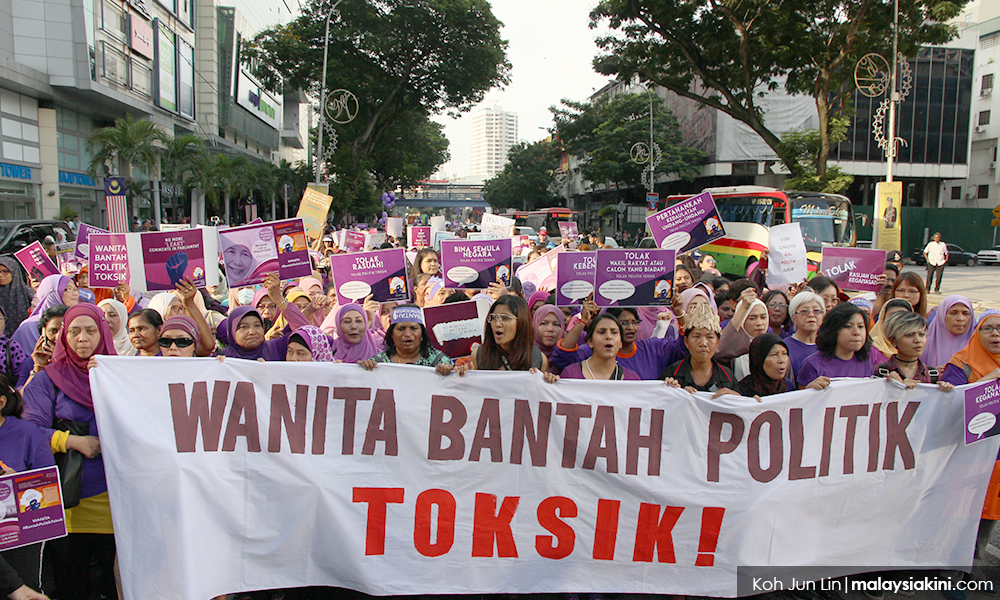
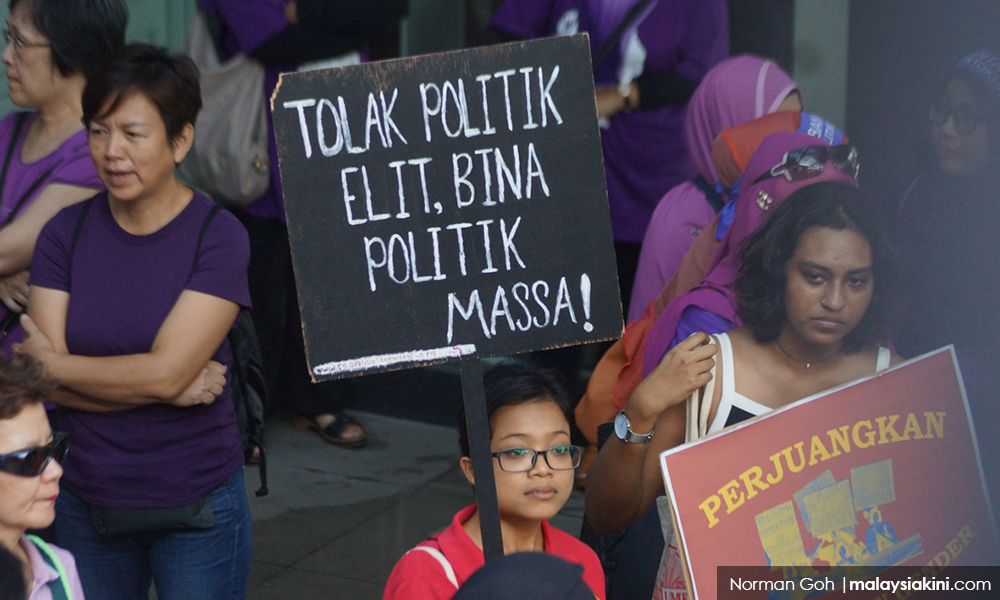
There are various factors which had deterred the increase in women representation in politics. We must acknowledge that the toxic culture of the Malaysian Parliament has created a deterrence for women representation. Women politicians have been subjected to harassment, name-calling, and the use of bad and toxic language by male parliamentarians towards their women counterparts. Such remarks constitute unaddressed sexism and gender inequality issues in Parliament.
Moreover, women representatives not only bear the responsibility of serving their constituents but also shoulder the weight of domestic responsibility (i.e. childcare) at the same time. The lack of such facilities can deter women from considering political involvement. After the last change of federal government, Parliament finally took steps to institute childcare centres for female parliamentarians.
Furthermore, we should accept that our first past the post (FPTP) electoral system serves as a deterrent for women representation. Under the FPTP system in Malaysia, constituencies are divided among the various component political parties. The component parties can only field a limited number of candidates and this will exclude most women candidates.
Most of the male incumbent candidates are also reluctant to give up their seat to woman candidates. With a combination of a patriarchal society and the present FPTP system, political parties tend to field candidates who are winnable or widely accepted and these candidates are primarily men.
Moreover, even if a political party adopts a voluntary quota of 30 percent women candidates, the FPTP system cannot guarantee a 30 percent women representation. This is because women candidates are not assured of electoral victory, especially if the seats were to experience close fights.
Which way forward?
There are multiple options to increase women representation for Malaysia. There are three major options to be explored:
1. Changing the electoral system
2. Quotas
3. Seat based direct public funding of political parties.
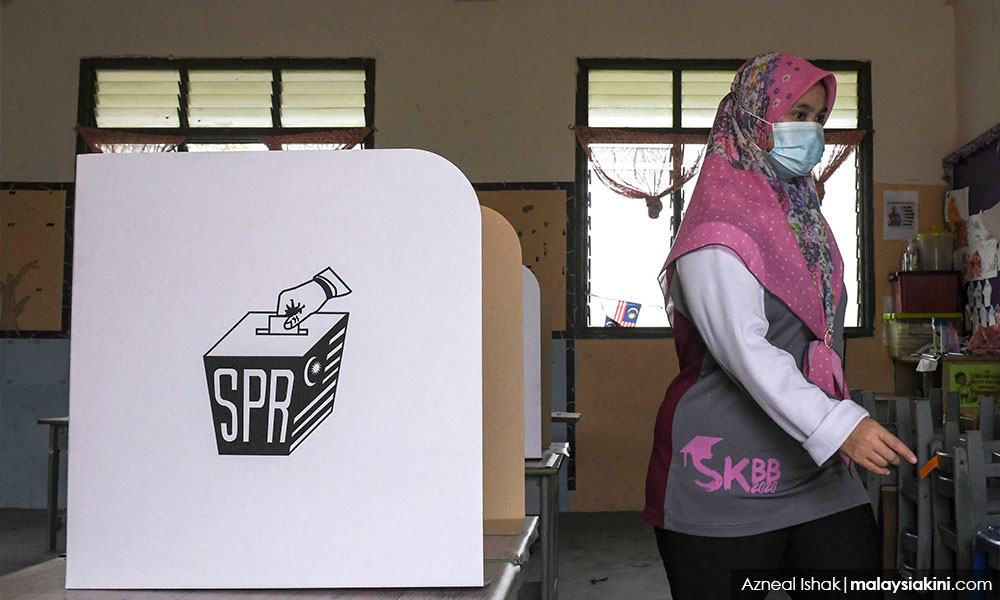
As mentioned before, our FPTP system is no friend to the cause of women representation in Malaysia. The countries that have the highest women representations in the world have an electoral system with some element of list proportional representation (List PR). When an electoral system has a List PR in it, political parties have more room to appoint women candidates and more opportunity is accorded to voters to choose more women candidates.
Using a closed list PR (CLPR), each political party is required to present a list of candidates to the voters. Political parties choose and rank the candidates and once the list is finalised for an election, the candidate list cannot be tampered with by parties or voters.
Voters vote for the party or the list, not for the individual candidates. Within this realm, a political party can voluntarily adopt a zipper style candidate list (i.e. woman-man-woman-man order). If Malaysia has a CLPR to complement our FPTP, we can have nationwide or statewide multimember constituencies for the CLPR elections.
Since parties receive seats based on vote share and the zipper list is implemented, the CLPR will greatly boost women representation in Malaysia. We advocate the mixed-member proportional (MMP) electoral system as the electoral platform (for the longer term) to increase women representatives in legislative halls.
However, we do acknowledge that electoral system change requires a more substantive discussion, and it may not be the immediate platform to address the political underrepresentation of women.
Quotas
There are three general categories for the quota system – reserved seats, legislated quotas and voluntary quotas. Firstly, reserved seats are a specified number of seats that will be allocated for certain politically underrepresented communities such as women.
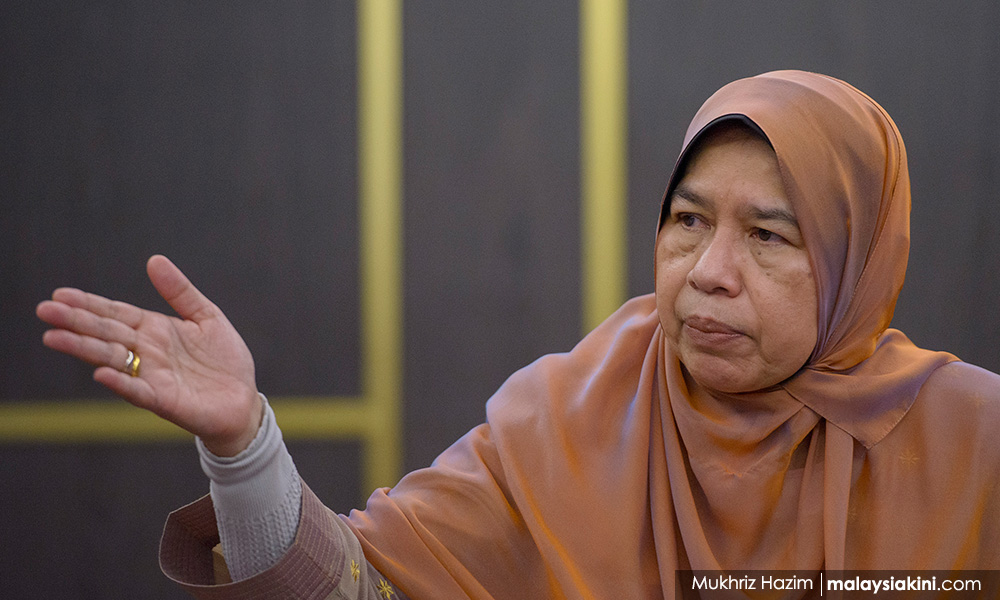
Zuraida’s proposal falls under this category. Secondly, legislated candidate quotas are constitutional or electorally enforced requirements for candidacy. The legislated quota can mandate a zipper or ranking order for the candidate list to enhance women representation.
"Top-up women-only additional seats" (Twoas), which is being explored in Penang, is a hybrid approach towards reserved seats (for women only) and potential legislated quota (for specific women backgrounds). A voluntary quota exists when a political party opts for an internal gender quota for the candidacy list.
We must acknowledge that gender quotas are highly effective tools to increase women representation in any given country. A combination of closed-list PR and gender quotas is an assured path to attain a 30 percent women representation goal. However, we must examine the reservations or criticisms of the adoption of the quota concept.
Among the main criticisms of the 30 percent gender quota is that it is against the principle of equal opportunity. Moreover, it is generally viewed as being undemocratic since it will create the perception that women must always be given preference over men. Hence, Zuraida’s proposal of reserved seats will create more opposition from male politicians as the number of available seats for men are reduced.
Another problem with the imposition of gender quotas is the argument that women politicians will only be elected because of their gender and not based on merits and qualifications. Quotas treat the symptoms of poor women representation in Malaysia but do not address the root causes.
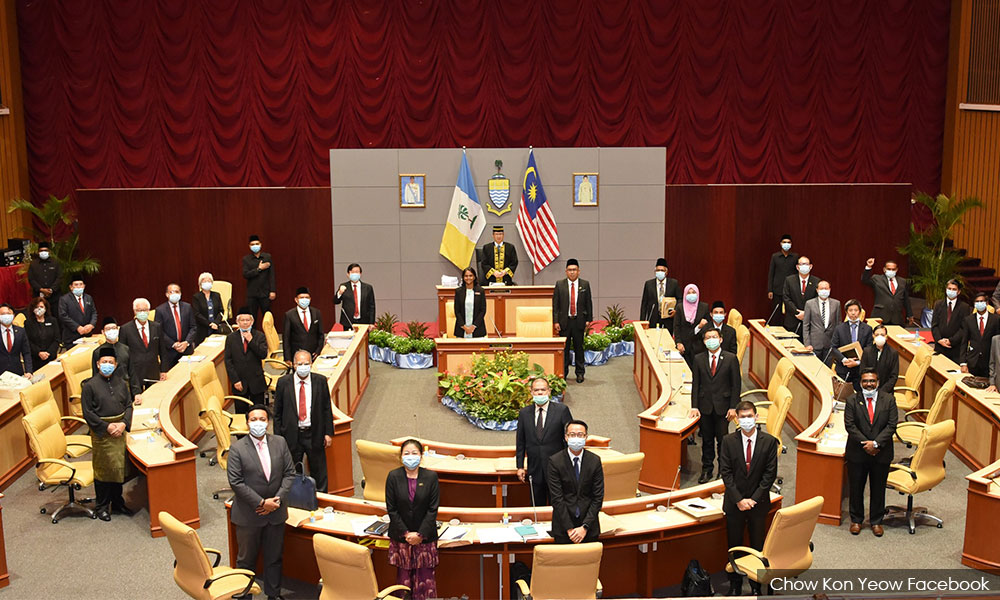
Furthermore, the success of legislated quotas or similar measures rests on enforcement. Unfortunately, Malaysia has performed poorly in enforcing the 30 percent women representation requirement, especially in local councils. This issue transpired in the state of Selangor.
In 2020, the women’s wing of ruling Pakatan Harapan of Selangor welcomed the menteri besar’s call to implement a 30 percent women councillors representation. Despite this, only three councils out of 12 in Selangor met the 30 percent target for the 2021-2022 term. In short, the failure to follow through a simple policy guideline has done a disservice to women’s representation in Selangor.
Tindak Malaysia is of the strong opinion that legislated gender quotas and reserved seats are not the answer or an antidote to poor women representation in Malaysia. Hence, this leads to the discussion of a long term and viable solution for this issue.
Seat-based direct public funding
Tindak Malaysia is of the view that public funding of political parties that field winnable women candidates is the middle way forward for the women’s political cause. We refer to this path as recommended in Bersih 2.0’s report on public funding for parties.
Bersih, in its study, had proposed RM10 million in public funding (out of the wider public funding for parties) to be annually allocated to increase women representation.
This is known as the seat-based direct public funding which means that public funding will the given on a proportionate basis to any political party based on the number of female MPs that each political party has. In simple terms, the more female based representatives that a party has, the more public funding the party receives on an annual basis.
This incentive-based approach is viable because it does not only encourage political parties in Malaysia to nominate more women candidates, but it also will be an incentive to political parties to nominate more women representatives for winnable seats during elections. Hence, this translates to parties treating women candidates seriously. Moreover, small parties, too, will receive this benefit by nominating winnable women candidates.
Among the three approaches, the public funding approach is the most viable and has a long-term view in addressing the issue. This proposal can be implemented immediately without the difficulty of constitutional amendments. Hence, it is a faster approach compared to waiting for constitutional changes to host quotas or an electoral system change.
Political transformation
Furthermore, this approach can be used to complement and strengthen other measures to increase women representation. Either with the retention of the existing FPTP or adoption of a new electoral system (preferred option), the public funding approach can incentivise more parties to adopt their own measures to increase women representation. Public funding can foster greater training capacity for parties to groom future women leaders. This, in turn, will reduce or nullify any arguments about the quality of women candidates.
Finally, the public funding approach ensures women candidates are elected based on their merits and it respects the essence of elections – the contest between parties, personalities and ideas.
This approach straddles a middle way between voluntary quota (depending on the party’s subjective will) and legislated quotas (requiring enforcement). This approach also can facilitate women representation to go beyond the minimum 30 percent target.
After examining the three approaches, we support and advocate the seat-based direct public funding of political parties as recommended by Bersih. This approach is simpler and faster in terms of implementation, incentivising cultural change in political parties and is also a viable long-term solution for the cause of women representation. This middle way forward overcomes the various challenges faced by the approaches found in electoral system changes and quotas.
We call upon all readers to study this approach recommended by Bersih and create the political will for our Parliament and state assemblies to implement this middle way forward. The swift implementation of seat-based public funding of political parties approach either at the national or state level will signal the necessary shift in our political scene both in composition and discourse. Ultimately, this approach will herald the political transformation that Malaysia sorely needs.
DANESH PRAKASH CHACKO is Tindak Malaysia’s director and research analyst at the Jeffrey Sachs Center on Sustainable Development (Sunway University). FORK YOW LEONG and WAN YUE GONG are Tindak Malaysia’s activists.
The views expressed here are those of the author/contributor and do not necessarily represent the views of Malaysiakini.



Are you sure you want to delete this comment?
This action cannot be undone.