



COMMENT | 24 years and gender wage gap still a chasm
COMMENT | Malaysia must make closing the gender wage gap in all sectors of the workforce a priority before offering itself as a candidate for membership to the UN Human Rights Council, as it has already made a commitment to fully incorporate the principles of the Equal Remuneration Convention (C100) that was ratified 24 years ago.
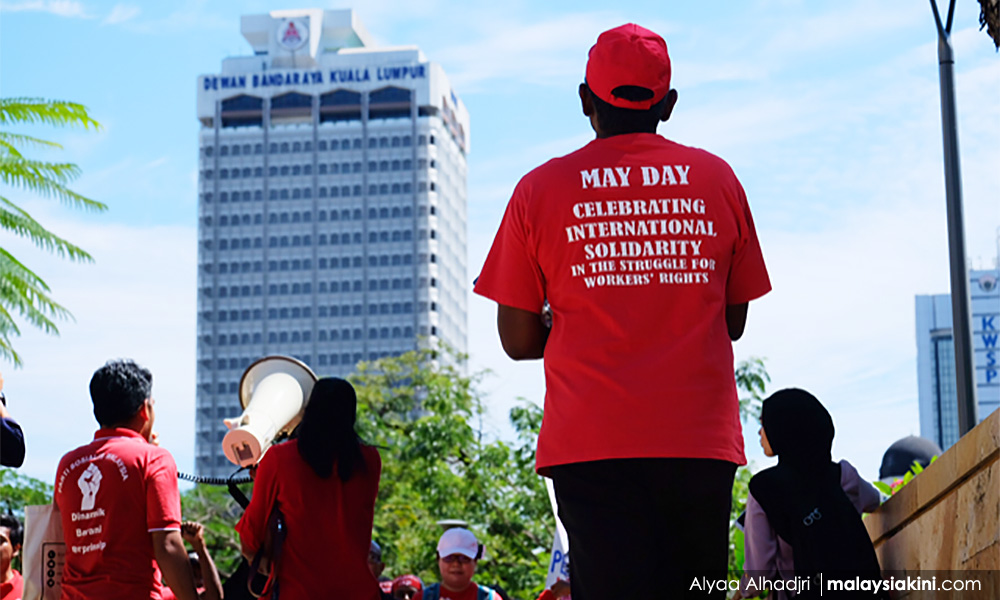
In conjunction with Labour Day 2021 and because human rights is not a tool to rebrand the government image for political gain, Persatuan Sahabat Wanita Selangor (PSWS) calls on the government to take responsibility for its failure to address the explicit discriminations that continue to exist in the country’s labour laws throughout the purview of six prime ministerial terms since ratifying C100 in 1997.
The Committee of Experts on the Application of Conventions and Recommendation (CEACR) published its report on Malaysia at the 109th session of the International Labour Conference (ILC) 2021, and indicated that firstly, there was a “possibility of indirect discrimination where female-dominated groups of workers are excluded from the application of minimum wage legislation”, further noting “in particular those most vulnerable to wage discrimination such as domestic workers”.
The CEACR stressed that “where certain categories of workers are excluded from general labour or employment law”, it needs to be determined whether special laws or regulations are needed to apply to such groups and whether they provide the same level of right and protection as the general provisions.
This observation was made in reference to the exclusion of domestic workers from the minimum wage coverage in the 2018 Minimum Wages Order, which the government had reported was upon the advice of the National Wages Consultative Council (NWCC)...
COMMENT | Malaysia must make closing the gender wage gap in all sectors of the workforce a priority before offering itself as a candidate for membership to the UN Human Rights Council, as it has already made a commitment to fully incorporate the principles of the Equal Remuneration Convention (C100) that was ratified 24 years ago.
In conjunction with Labour Day 2021 and because human rights is not a tool to rebrand the government image for political gain, Persatuan Sahabat Wanita Selangor (PSWS) calls on the government to take responsibility for its failure to address the explicit discriminations that continue to exist in the country’s labour laws throughout the purview of six prime ministerial terms since ratifying C100 in 1997.
The Committee of Experts on the Application of Conventions and Recommendation (CEACR) published its report on Malaysia at the 109th session of the International Labour Conference (ILC) 2021, and indicated that firstly, there was a “possibility of indirect discrimination where female-dominated groups of workers are excluded from the application of minimum wage legislation”, further noting “in particular those most vulnerable to wage discrimination such as domestic workers”.
The CEACR stressed that “where certain categories of workers are excluded from general labour or employment law”, it needs to be determined whether special laws or regulations are needed to apply to such groups and whether they provide the same level of right and protection as the general provisions.
This observation was made in reference to the exclusion of domestic workers from the minimum wage coverage in the 2018 Minimum Wages Order, which the government had reported was upon the advice of the National Wages Consultative Council (NWCC).
Apart from a new regulation that extends social security coverage for domestic workers, effective June 1, 2021, the rights of workers in this sector, despite being heavily discriminated against by Malaysian labour laws, are not addressed in any other regulation or law.
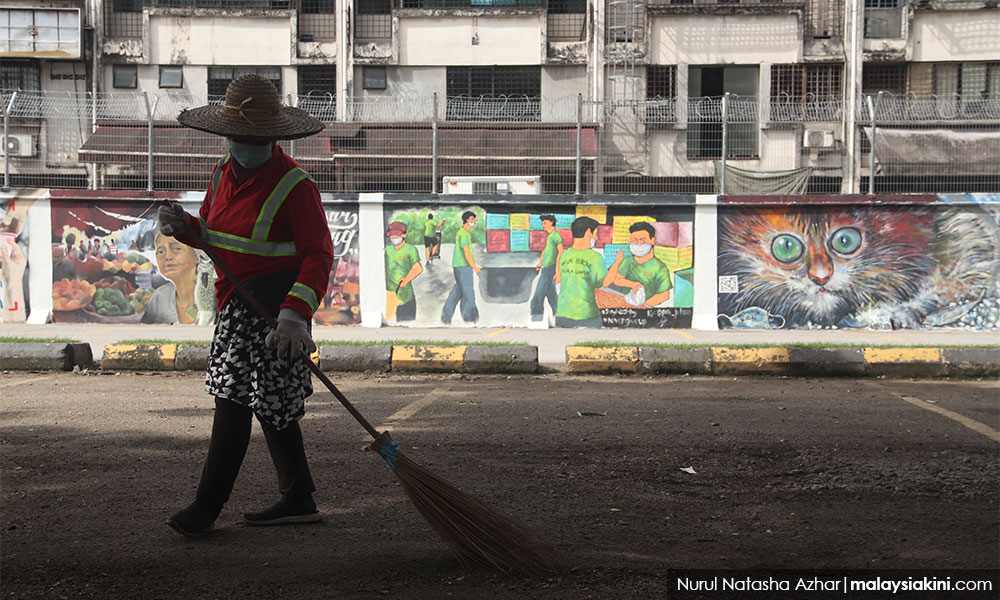
In conjunction with Labour Day 2021 when workers in Malaysia are honoured for their contributions to the development of families, communities and this nation, we want to remind the government of our previous demands and adapt to the top of this list of words from the CEACR’s observation to the government on its implementation of C100 provisions into the law:
1. To ensure that the amendment of the Employment Act 1955 (EA 1955) will expressly incorporate the principle of equal remuneration for men and women for work of equal value and allow for this comparison, not only of same jobs, but also of work of an entirely different nature which is nevertheless of equal value, taking into account that equality must extend for all elements of remuneration; and to ensure that measures taken to implement the changes that the amendments to the law will bring will be included in the 12th Malaysia Plan;
2. To amend the Employment Act 1955 with explicit removal of Subsection 2(1) (5) of the First Schedule;
3. To ratify the International Labour Organisation (ILO) Convention on Domestic Workers (C 189) which details the minimum set of labour standards to promote decent work for domestic workers. This convention covers all domestic workers regardless of their terms of employment - live-in, part-time, full-time, local and migrant workers - and even those who have more than one employer. C189 also regulates the recruitment agencies and provides guidelines to legal protection that will prevent exploitation and abuse and prevents the lowering of standards of work conditions;
4. To ratify the ILO Convention on Violence and Harassment 190 (C190) which not only sets out the guidelines to eliminate the occurrence of unacceptable behaviours and practices in the world of work but also addresses equal opportunities, physical health, family and social environment that apply to both the public and private sectors; and
5. To amend the EA 1955 so that all domestic workers who are engaged in employment are accorded all the rights of a worker, regardless of their legal status and gender; and
6. To amend the EA 1955 to replace the classification ‘servant’ used to address domestic workers, with the word “employee”, so that they too can enjoy the labour protections provided under all other labour laws and regulations.
PERSATUAN SAHABAT WANITA SELANGOR (PSWS) is a non-governmental organisation that has, since 1984, been committed to the concerns and interests of women workers as well as to the larger issues of democracy, justice and equality in Malaysian society.
The views expressed here are those of the author/contributor and do not necessarily represent the views of Malaysiakini.







Report this comment
Are you sure you want to delete this comment?
This action cannot be undone.