


COMMENT | Empower the disabled with decent jobs
COMMENT | Access to decent work for persons with disabilities remains one of the top recurring challenges in Malaysia. The Covid-19 pandemic pushes us to rethink and reformulate the local agenda and ecosystem for employment.
This includes telework, digitalisation of the workplace and the aggressive promotion of e-commerce.
However, many of these strategies and working options have been advocated by persons with disabilities and their organisations around the world for a long time.
Unfortunately, with the Covid-19 vaccination efforts in progress, it seems that many of the progressive steps in the labour sector, especially the work-from-home option, are viewed as measures only during an emergency, thus things are gradually reverting to the old, disabling status quo.
Although we commend government initiatives concerning the opportunity of persons with disabilities to have gainful employment since the late 1980s such as the policy on the one percent quota for job placement for persons with disabilities in the public sector, the tax incentive for the private sector and the continuous job fairs, we have yet to achieve the aspired substantial change.
It is reported that only 0.35 percent of employees in the civil service are persons with disabilities, thus highlighting the lack of success of the one percent quota policy....
COMMENT | Access to decent work for persons with disabilities remains one of the top recurring challenges in Malaysia. The Covid-19 pandemic pushes us to rethink and reformulate the local agenda and ecosystem for employment.
This includes telework, digitalisation of the workplace and the aggressive promotion of e-commerce.
However, many of these strategies and working options have been advocated by persons with disabilities and their organisations around the world for a long time.
Unfortunately, with the Covid-19 vaccination efforts in progress, it seems that many of the progressive steps in the labour sector, especially the work-from-home option, are viewed as measures only during an emergency, thus things are gradually reverting to the old, disabling status quo.
Although we commend government initiatives concerning the opportunity of persons with disabilities to have gainful employment since the late 1980s such as the policy on the one percent quota for job placement for persons with disabilities in the public sector, the tax incentive for the private sector and the continuous job fairs, we have yet to achieve the aspired substantial change.
It is reported that only 0.35 percent of employees in the civil service are persons with disabilities, thus highlighting the lack of success of the one percent quota policy. Moreover, we have yet to have reliable statistics of employees with disabilities in the private sector. In addition, no data on discrimination cases against employees with disabilities is available.

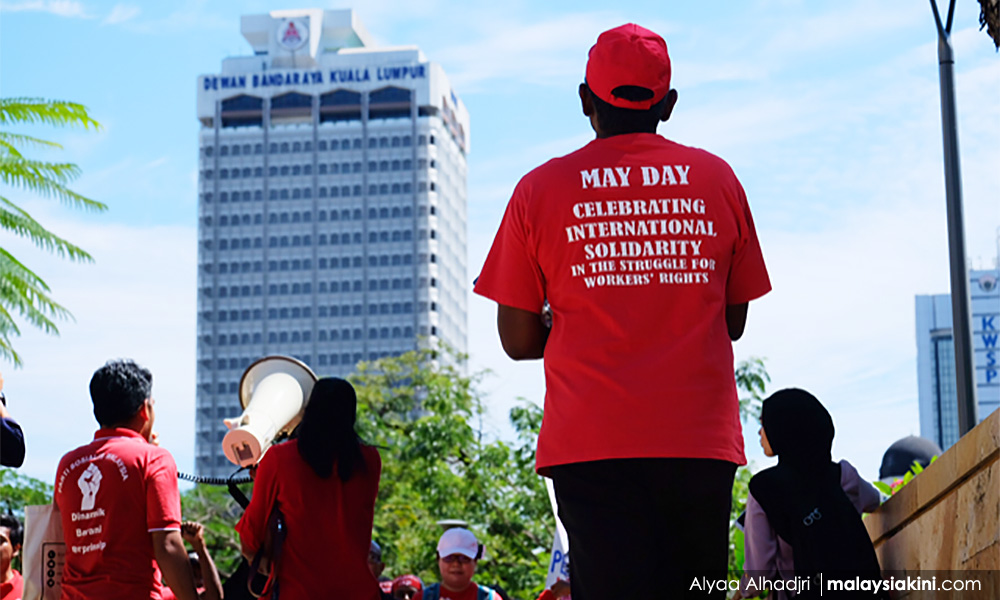
On this day, as we celebrate Labour Day, the National Council for the Blind, Malaysia (NCBM) calls upon the government of Malaysia to fulfil its obligations as stipulated under Article 27 of the Convention on the Rights of Persons with Disabilities, under Section 29 of the Persons with Disabilities Act 2008, as well as meeting key actions underlined in the Asean Enabling Masterplan 2025, particularly key action AEC 1, AEC 24 and ASCC 8, by enacting the following measures:
1. Review and report the progress of the Plan of Action for Persons with Disabilities 2016-2022, particularly target programmes under the second strategic core, and ensure that the progress report is publicly available for all stakeholders.
2. Develop and implement, through close collaboration with organisations of and for persons with disabilities and other relevant stakeholders, a comprehensive strategic framework regarding the access and equity of persons with disabilities to decent work that encourages multiple employment tracks, including professional careers and self-employment in the various economic sectors. The framework should include, but not be limited to:
Continuous investment
(i) Review and amend the policy on the one percent quota placement of persons with disabilities in the public sector to take into account the diversity of persons with disabilities, have provisions for resources to establish an appropriate support system as well as meaningful career development among civil servants with disabilities.
(ii) Review and amend all tax incentive policies for employers for employing persons with disabilities and general tax incentives for the private sectors to encourage reasonable accommodation in the workplace and the industry overall, as well as ensuring persons with disabilities are part of the direct beneficiaries of such policies.
(iii) Further strengthen measures regarding the promotion of entrepreneurship among persons with disabilities, including digital economic activities, by providing entrepreneurial training, access to financial services and access to online platforms including websites, banking services and other technical support as underlined in the Asean Enabling Masterplan 2025, especially key actions AEC 2, AEC 4, AEC 21, ASCC 25, and ASCC 27.
(iv) Amend the Labour Act 1955 and other related laws so local laws are aligned with the provision under Article 27 of the Convention on the Rights of Persons with Disabilities.
(v) Establish a division under the Ministry of Human Resources that is responsible for ensuring access and equity for persons with disabilities in the local employment sector.
3. Provide sufficient funding and make a continuous investment for the above strategic framework and all of its catalytic projects.
We call for greater cooperation between the government, particularly the Ministry of Human Resources, and the organisations of and for persons with disabilities to advance the inclusion of persons with disabilities in the local labour sector.
We, persons with disabilities, as citizens of this country, are eager to contribute to our nation’s economic and social development and therefore we should not be viewed as merely welfare recipients.
Happy Labour Day 2021.
The views expressed here are those of the author/contributor and do not necessarily represent the views of Malaysiakini.







Report this comment
Are you sure you want to delete this comment?
This action cannot be undone.