



COMMENT | MARI aims to help M'sia breathe again
COMMENT | Malaysia is at a crossroads. Over half a century of race-based politics and socioeconomic policies have become the proverbial albatross around the neck of the nation. It is a chokehold, and the nation cannot breathe. It is crippling its citizens and inflicting great harm on the nation's ability to fulfill its vast potential at a time when it should be a leading light in Asean and even Asia.
There is a growing awareness amongst people of all races and various walks of life that it is time to confront deep-rooted institutional racism if the country is to successfully navigate what everyone realises will be a challenging 21st century.
This has resulted in growing confidence amongst some to voice their opinions and speak about Malaysia’s institutional racism more frequently. But the majority remain fearful of discussing it openly or have no platform and constructive narrative around which to base their discussions.
This is in part because we have not legitimised the discussion around race away from the toxic race-based policies of the political parties and their leaders. There can be no change as long as leaders depend on racial politics and all forms of racism to further their multi-faceted agendas whilst being granted a free pass by the silent majority to shape the discussions and policies. A few opinion pieces and interviews by “dissidents” from all races will not change anything either.
What is needed is an organised, well-structured and sustained mechanism to bring race issues out of the closet in which we are all trapped, so we can breathe again. It has to be mainstreamed and thus be built on a network of institutions and platforms away from the toxic political landscape.
It will allow people to openly talk about it, analyse it, understand it, research it, provide outreach and, most importantly, offer solutions as we educate the people about its perverse roots and destructive nature.
One step in this direction would be the creation of ...
COMMENT | Malaysia is at a crossroads. Over half a century of race-based politics and socioeconomic policies have become the proverbial albatross around the neck of the nation. It is a chokehold, and the nation cannot breathe. It is crippling its citizens and inflicting great harm on the nation's ability to fulfil its vast potential at a time when it should be a leading light in Asean and even Asia.
There is a growing awareness among people of all races and various walks of life that it is time to confront deep-rooted institutional racism if the country is to successfully navigate what everyone realises will be a challenging 21st century.
This has resulted in growing confidence among some to voice their opinions and speak about Malaysia’s institutional racism more frequently. But the majority remain fearful of discussing it openly or have no platform and constructive narrative around which to base their discussions.
This is in part because we have not legitimised the discussion around race away from the toxic race-based policies of the political parties and their leaders. There can be no change as long as leaders depend on racial politics and all forms of racism to further their multi-faceted agendas whilst being granted a free pass by the silent majority to shape the discussions and policies. A few opinion pieces and interviews by “dissidents” from all races will not change anything either.
What is needed is an organised, well-structured and sustained mechanism to bring race issues out of the closet in which we are all trapped, so we can breathe again. It has to be mainstreamed and thus be built on a network of institutions and platforms away from the toxic political landscape.

It will allow people to openly talk about it, analyse it, understand it, research it, provide outreach and, most importantly, offer solutions as we educate the people about its perverse roots and destructive nature.
Why 'MARI'?
One step in this direction would be the creation of Malaysia's first anti-racism institute - the Malaysian Anti-Racism Institute (MARI) - to help combat the country’s entrenched institutional racism - the bedrock of the country's ills.
Institutional racism is unacceptable and cancer in any society. No country can prosper and be a respectable part of the international community if it relies on racism to govern.
After all, no citizen should be excluded from participating in the opportunities offered by the country based on race, religion or gender, ever. No society should tolerate such crude inhumanity and injustice, which is what is occurring in Malaysia.
It is a key factor in the widening the inequality gap between the rich and the poor because it cuts across all races.
By remaining silent, Malaysians have allowed racism to corrode the governance architecture of the country and the very fabric of its multi-cultural society. The country thus cannot profess to have any value system around which its citizens can lay claim to, when the most fundamental value of treating people as equals is not part of the system of governance.
And it cannot claim to be adhering to inequality-inducing policies under false promises of assisting the most disenfranchised, as these have failed and no longer serve those they were meant to uplift.
So many Malaysians know it is morally wrong yet have very few avenues by which to express their view and ideas for dismantling it. Institutional racism has been normalised and achieved by instilling fear in anyone who is willing to question or challenge it.
It must, however, be challenged and can be done without playing into the hands of racists and those who use political power to intimidate the majority. This is why an organisation like MARI is necessary as it can help play a critical role in unifying the nation in addressing this most damaging of ideologies.
MARI will be the people’s institute to help the country construct a fresh new narrative on the issue of race, around which all Malaysians can be galvanised with one goal in mind. That would be to allow the country to prosper again by providing equal opportunities for every citizen and by focusing and targeting efforts first and foremost towards the most needy of our fellow Malaysians, irrespective of race.
The lessons from the Covid-19 pandemic provide a timely reminder of the challenges ahead, the changes needed and that the old ways are a relic of history. The country needs a new framework for this new narrative on development that rejects outdated race-based policies.
In this role, MARI can be a proactive barometer and can empower citizens to establish their expectations of how the nation goes about achieving this framework, which will help to monitor the accountability and fairness of governance.
Institutional racism is the first and most urgent issue to rectify. It contributes to almost all underlying factors that have resulted in poor governance in the country. If it is not urgently addressed, there is little hope of escaping the moral, social and economic rut the nation is stuck in.
There is a desperate need to restore integrity, competence and moral leadership across all spectra of our society to build trust and generate positive outcomes. Institutional racism has been the main factor driving the erosion of these critically important features of building a strong society. The citizens do not need reminding that the country desperately needs institutions and leaders who work for all citizens irrespective of race.
The country needs meritocracy as a critical building block for its future and not a system of race-based patronage which masquerades as affirmative action. We want all our marginalised and underprivileged citizens to be given the same degree of help, opportunity and support to better themselves. A nation rises together. This is not a zero-sum game. That is the cardinal error of race-based policymaking.
The big question that MARI hopes to get citizens to understand is this - how and why did rent-seeking and corruption become so ‘normalised’ that so few in power and elsewhere question the ethics, sustainability and the damaging consequences for the country? Silence is no longer an option as it makes us all complicit. Only by answering this question and understanding the reasons can solutions be found.
A public trust
MARI will be open and inclusive. It will be crowdfunded so that all citizens have a stake in its success. There is widespread consensus that the Malaysian political and governance architecture is dysfunctional.
The next generation should redefine what it means to be a citizen, to have a common national identity and force reform. We need new targets and indicators for national rejuvenation, to harness the full potential of our diversity and to build complementarity skills, creativity and leadership in all fields.
A nation that deliberately hampers some of its citizens from fulfilling their potential is failing in its most basic obligation. If the knowledge, skills, and ambition of every citizen cannot be harnessed, it will result in a collective decline.
MARI’s main objectives are as follows:
- A national apolitical platform to bring together Malaysians of all races committed to reversing the debilitating effects of institutional racism on the nation.
- To conduct studies on all aspects of institutional racism in the country to demonstrate through research and analysis, with facts, that it is a cancer which is the major impediment to progress in the country and the root of most of the country’s ills.
- To make this information available in all languages and to all segments of the population, including the youth.
- To offer policy solutions to the government, the corporate sector and civil society.
- To help build and facilitate dialogue between the various parties who are fundamental to bringing about the change. To help bring about a change in mindset between these parties through dialogue.
- To conduct seminars and workshops – using material produced by MARI if needed - as well as conferences where Malaysians of all races can come and engage in a constructive and productive process.
- To bring international experts to share their experiences and to learn from their lessons - through talks, panel discussions and an annual conference.
- To build collaborations with media partners in Malaysia to allow Malaysians to speak and write on this topic.
- To engage academic institutions and invite them to be partners in research.
- To get the private sector to become partners and support the above and where appropriate, funds for research and other activities such as forums for discussion. To make them aware of the dangers of practising any form of racism and to come to the fore in dismantling it with sound policies and actions.
- To work with and assist civil society organisations so that they can bring about bottom-up change via their grassroots approach and networks.
MARI's ethos
As an institute calling for an end to institutional racism and the all too familiar ills associated with race-based organisations in Malaysia that are typically lacking in diversity, failing ethical standards, eroding integrity, practising favouritism and cronyism, exhibiting a lack of meritocracy and having poor levels of professionalism, MARI will strive to establish the highest standards of governance with regard to these issues.
It will demand this of all its staff, supporters and partners.
In order to set the bar high and create confidence among its supporters, MARI will assemble an advisory council made up of Malaysians with impeccable reputations and not tainted by association with the status quo. Most importantly, invitations will not be because of their stature in political or business circles but instead because of their commitment to the cause of dismantling institutional racism.
Patronage will not be part of the MARI architecture. Council members will be representative of the diversity of the county and thus include Malays, Chinese, Indians, East Malaysians, indigenous groups and critically important minorities.
As MARI will compile and release reports on the core failings of the institutions responsible for governance, it will need to remain independent as it grows its outreach together with the support of citizens. It will not be aligned to any political party, corporate interests or wealthy individual donors. Yet it will seek to work with all parties, even its detractors.
It will seek to work for all the citizens of the country irrespective of ethnicity, creed or gender. MARI will be open to collaboration with any individual or organisation with an interest in addressing the existential threat to the country posed by institutional racism.
No institute like MARI can be run without being suitably funded. MARI will use three approaches to funding once it is legally established. The first will be to raise funding from a nationwide crowdfunding exercise whereby concerned citizens will be invited to donate anything from RM10 to RM10,000. This will hopefully allow participation across the economic spectrum.
The second will be to invite Malaysian companies – including their foundations etc. - to donate and make contributions from RM10,000 and capped at RM100,000.
These contributions will be made transparent so that there is total disclosure. Monies will only be accepted on a 'no strings attached' basis. MARI will not accept donations from foreign organisations.
And finally, MARI will invite the government to support the entity with grants, etc, which are directed towards nation-building, national unity and with 'no strings attached'.
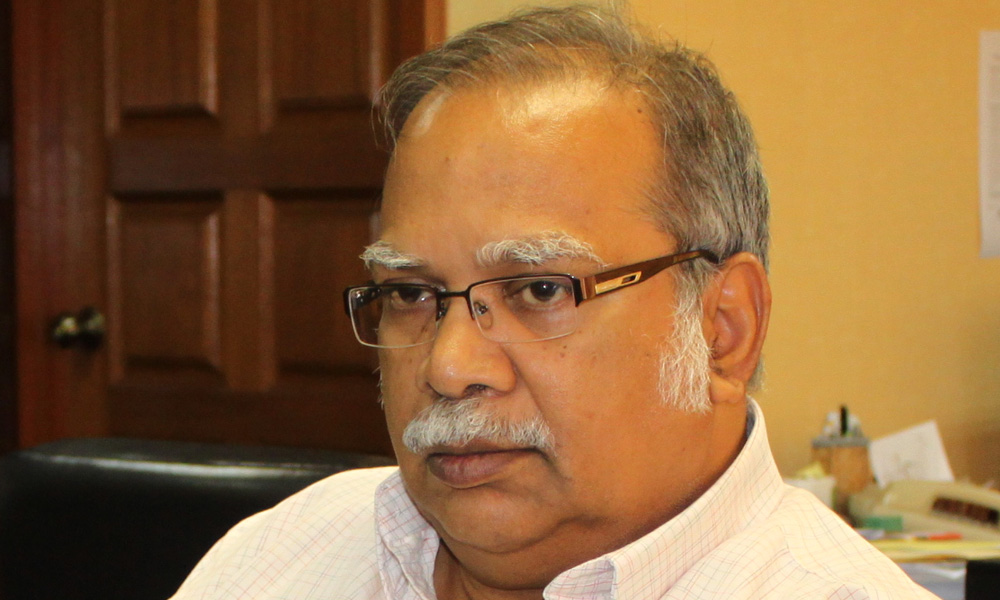
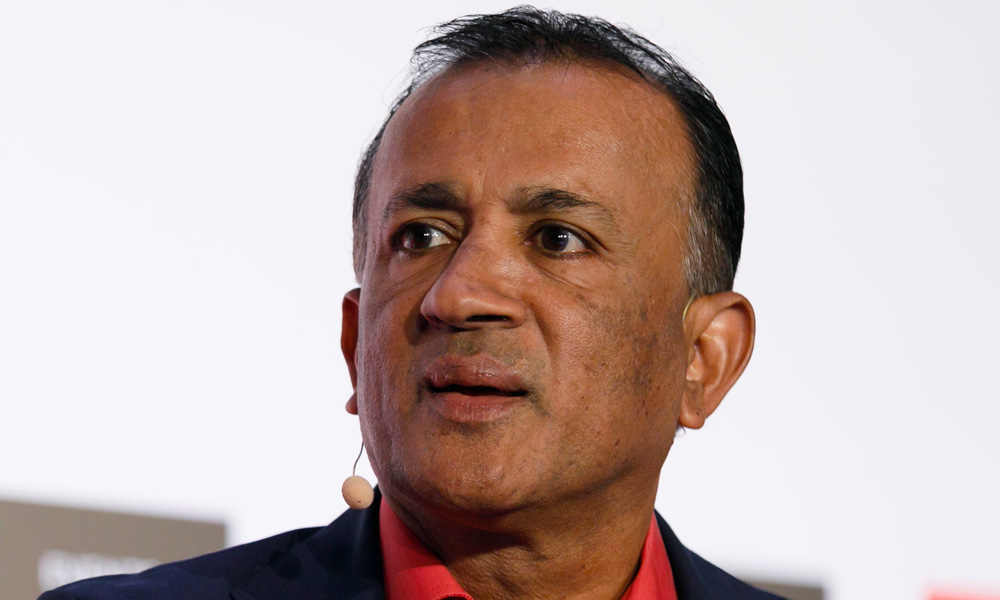
CHANDRAN NAIR is a businessperson, author and founder of The Global Institute for Tomorrow.
The views expressed here are those of the author/contributor and do not necessarily represent the views of Malaysiakini.






Report this comment
Are you sure you want to delete this comment?
This action cannot be undone.