


COMMENT | 'Hello, is anybody out there?' The silent cry of forced labour
"My wages haven’t been paid for months.”
“The agent’s fee hasn’t been settled.”
“There is endless overtime.”
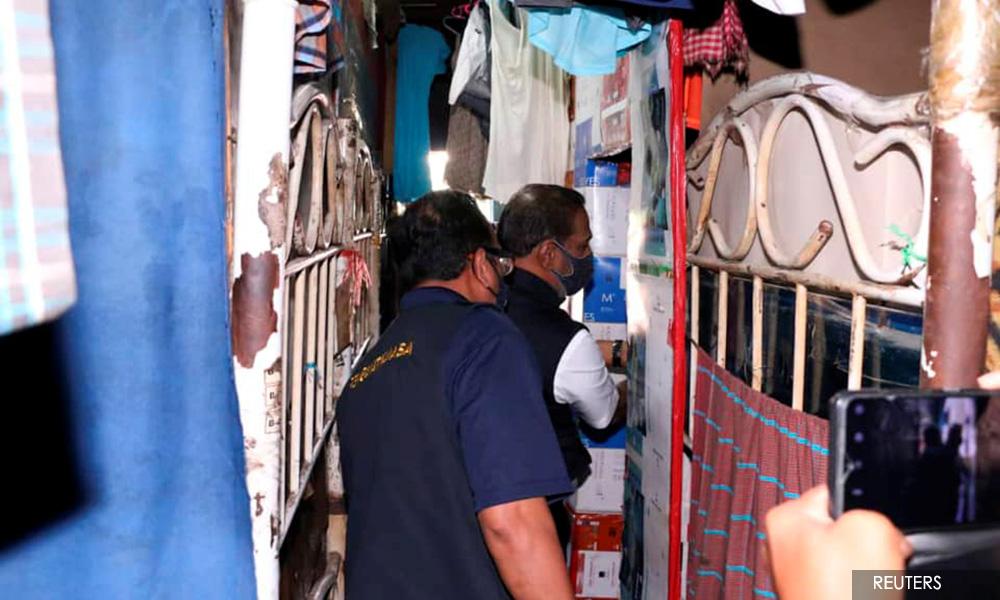
“The room is overcrowded.”
“I don’t have my passport.”
“I can’t ask for less work or more pay; I’d be beaten and my family will suffer.”
“I can’t leave to go out.”
“Actually, I’m not sure where I am.”
“They didn’t tell me I would be doing this work.”
“I don’t speak the language.”
“Is there anybody out there to help me?”
COMMENT | That is how the 11 indicators of forced labour are likely to sound.
Seizure of exports on account of suspicion or findings of forced labour disrupts business. It affects profits. It mars the reputation of a company and the country from which the goods originate. It is distressing. But even more distressing is the unheard voices of forced labour.
It is the 21st century. Almost 100 years since the Forced Labour Convention of 1930 was introduced to combat all forms of forced or compulsory labour.
Its prohibition forms a body of fundamental rights of human beings. Malaysia ratified the Convention and has been a member of the International Labour Organisation, ILO since 1957.
As part of Malaysia’s Sustainable Development Goals, it would appear that the Decent Work Country programme has been developed; with “enhanced protection of migrant workers” being one of four of the country’s priorities, proposed for the period 2018 – 2020.
Malaysia is said to have about two million documented migrant workers...
“My wages haven’t been paid for months.”
“The agent’s fee hasn’t been settled.”
“There is endless overtime.”
“The room is overcrowded.”
“I don’t have my passport.”
“I can’t ask for less work or more pay; I’d be beaten and my family will suffer.”
“I can’t leave to go out.”
“Actually, I’m not sure where I am.”
“They didn’t tell me I would be doing this work.”
“I don’t speak the language.”
“Is there anybody out there to help me?”
COMMENT | That is how the 11 indicators of forced labour are likely to sound.
Seizure of exports on account of suspicion or findings of forced labour disrupts business. It affects profits. It mars the reputation of a company and the country from which the goods originate. It is distressing. But even more distressing is the unheard voices of forced labour.
It is the 21st century. Almost 100 years since the Forced Labour Convention of 1930 was introduced to combat all forms of forced or compulsory labour.
Its prohibition forms a body of fundamental rights of human beings. Malaysia ratified the convention and has been a member of the International Labour Organisation (ILO) since 1957.
As part of Malaysia’s Sustainable Development Goals, it would appear that the Decent Work Country programme has been developed; with “enhanced protection of migrant workers” being one of four of the country’s priorities, proposed for the period 2018-2020.
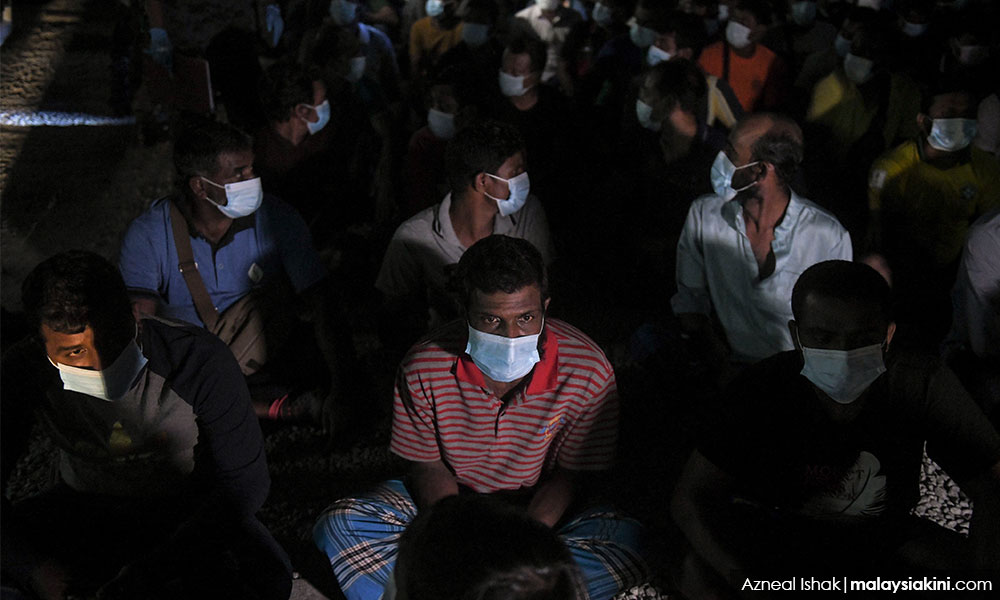
Malaysia is said to have about two million documented migrant workers. We have our Human Resources Ministry and numerous organisations that have an eye out for the workforce of Malaysia.
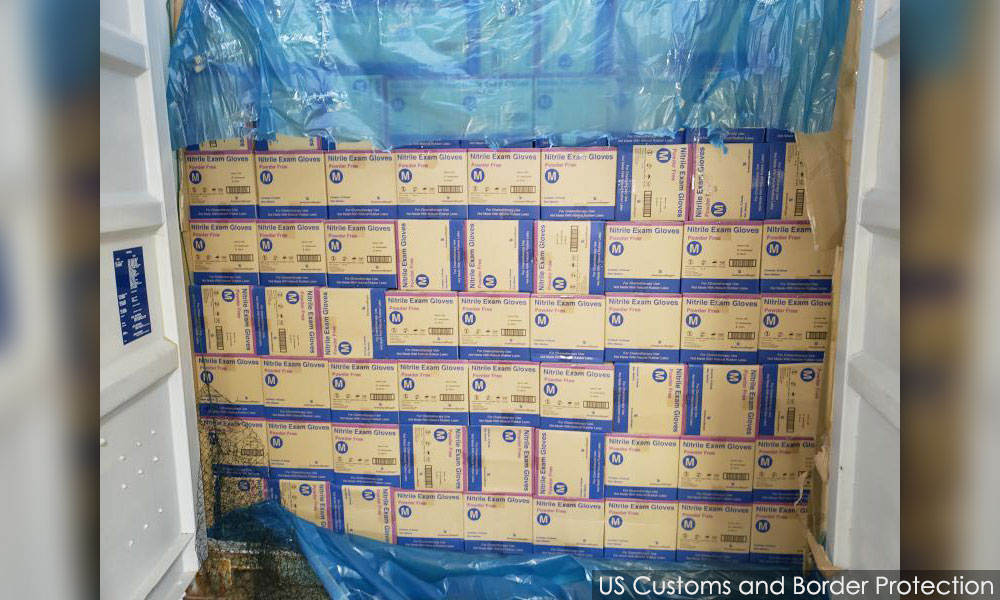
Yet, on May 5 and May 13, we read of the seizures of 3.97 million nitrile gloves worth about RM2 billion, and 4.68 million latex gloves worth about RM2.65 billion, by United States Customs and Border Protection Department (CBP).
The report by Reuters on May 5 carried a response from Top Glove that they have “remediated the 11 ILO force labour indicators” and the import ban is expected to “have only a minimal impact on its sales from Malaysia”.
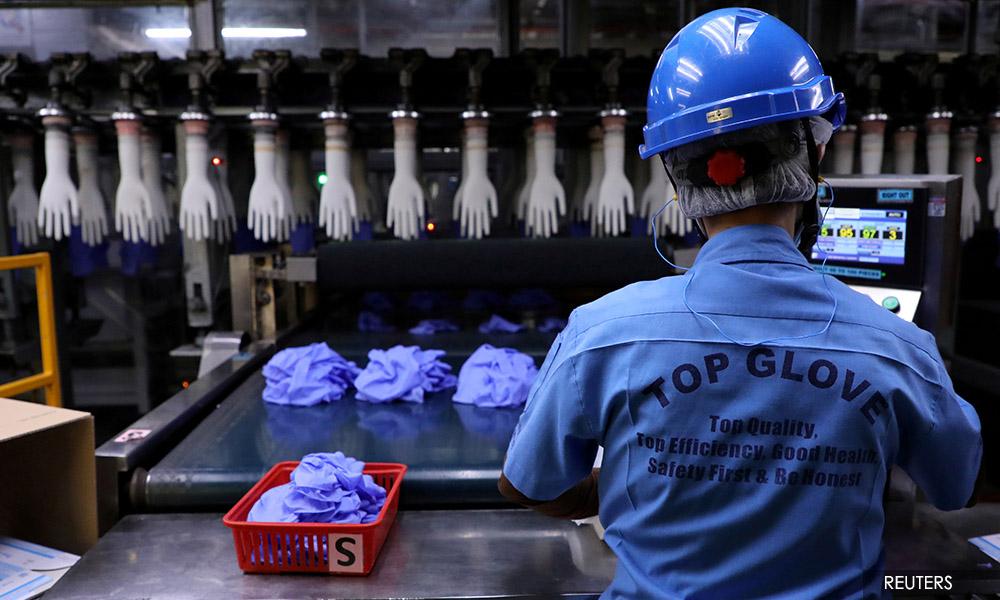
CBP’s response, also carried in that report, was that “CBP continues to facilitate importation of legitimate PPE needed to fight the Covid-19 Pandemic”. Other markets can be found. The wheels of trade carry on. Rules broken; sanctioned. Rules broken; remedied.
Is there anybody out there who truly cares for the unheard voices of forced labour?
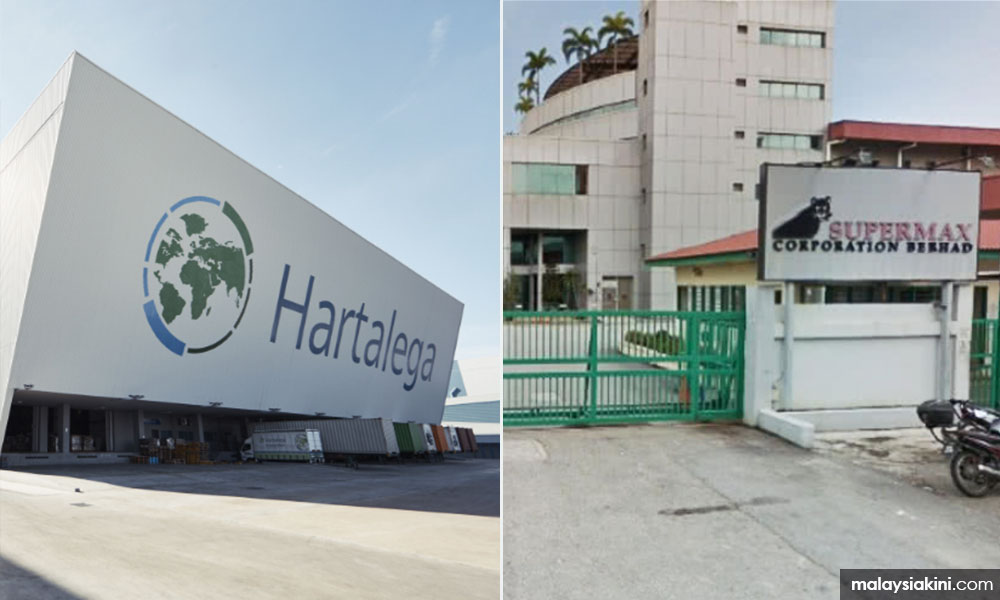
Sanctions are intended to force conformity with accepted behaviour. Top Glove and several other gloves producing companies, including Hartalega Holdings and Smart Glove, have to conform to ILO requirements against the use of forced labour if they want to sell their gloves in the USA.
The 11 indicators of forced labour are an abuse of vulnerability, deception, restriction of movement, isolation, physical and sexual violence, intimidation and threats, retention of identity documents; withholding of wages; debt bondage; abusive working and living conditions; excessive overtime.
There was a finding by the CBP on March 29 that certain disposable gloves of Top Glove produced in Malaysia were mined or produced with the use of forced labour.
Top Glove accepts that they have remediated the 11 indicators. That’s good. The purpose of sanctions achieved. But, it means that until the sanction and remediation, the dialogue at the top of this page was happening in our backyard. Didn’t anyone in Malaysia hear these voices? It took the USA to uncover this.
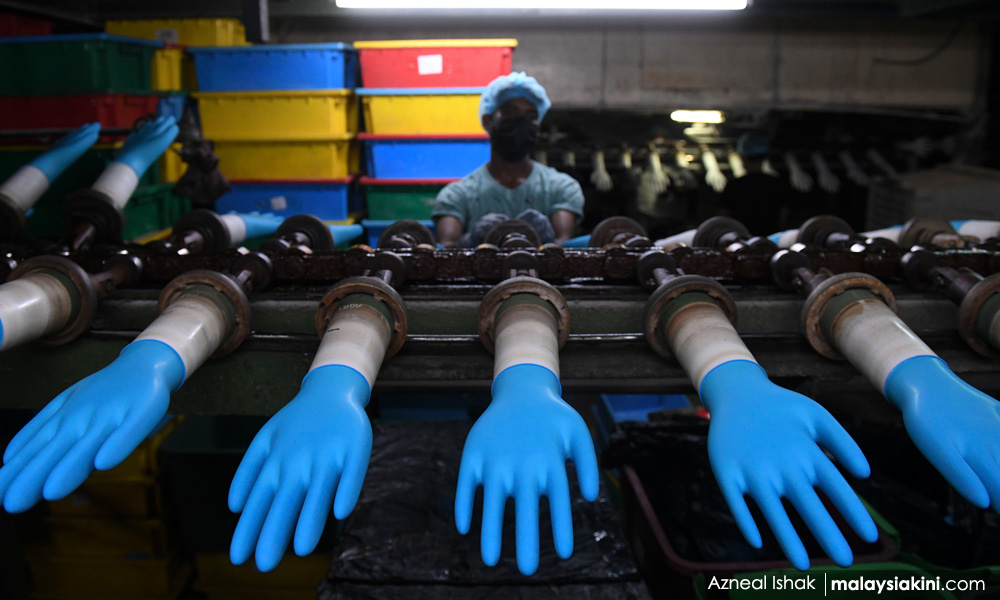
We hear of the stunning profits earned by Top Glove; of RM 1.79 billion in profits after tax in 2020. That is a Malaysian success story, and we are tremendously proud of our entrepreneurs.
But true success is in how we treat human beings; with compassion and fairness. Top Glove’s true success is in turning around the situation and removing the 11 ILO forced labour indicators. That’s what we need to hear more about. That is what truly matters – lives.
If we spoke more about fair treatment of lives, rather than bottom-line ringgit and sen, there would be less room to exploit circumstances, locally and abroad. There is undoubtedly a growing environment of mistrust of institutions and governments, the world over.
Developing countries in particular view with disdain some measures that are taken by developed countries, as our commodities and industries gain market share. The response to the success of palm oil is obvious. So, it is natural to be protective of our latex glove and rubber industry.
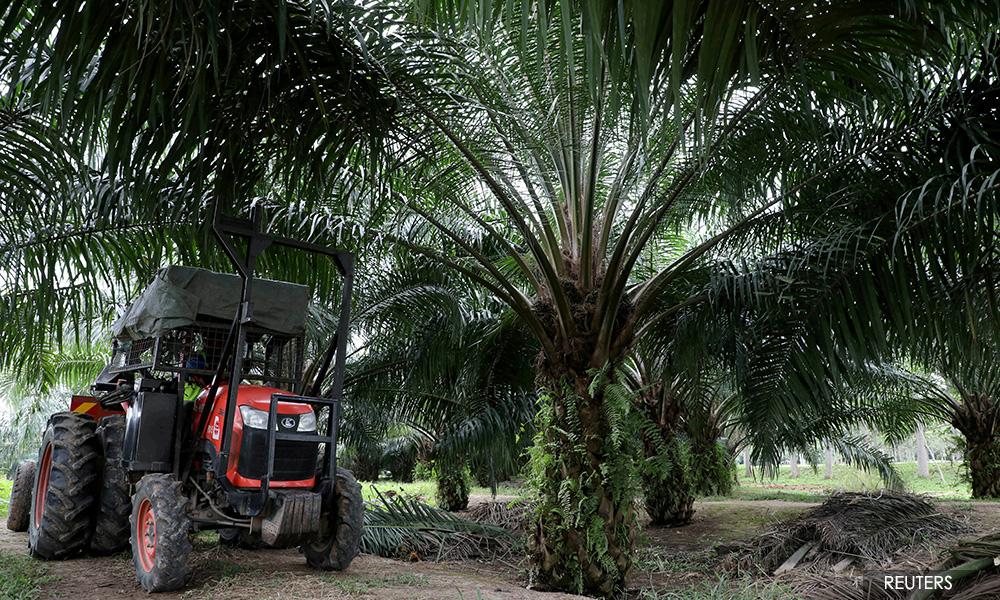
The unequal treatment of oil crops under EU’s Renewable Energy Directive II (RED II), with palm oil singled out for ban as biofuel, benefits crops of the European continent under allegations of excessive deforestation and human rights violation by palm oil-producing countries.
We simply cannot allow this narrative to continue. As a society, we cannot give an inch of room for this spin. Take control of the narrative. Listen out for voices of forced labour, for the sake of a fellow human being, as much as the commercial well-being of us all.
The CBP has no tolerance for ILO forced labour abuse. They reject the importation of the gloves produced by forced labour. That will pressure manufacturers to make life better for their workforces. Two questions scream out to be answered. First, does it take CBP to make life better for the workforce in Malaysia? Malaysians, surely we have greater national pride and a better sense of responsibility.
Second, isn’t it adding insult to injury for the products of the forced labour victims to go to “waste” by seizure, especially in the exceptional times of the Covid-19 pandemic when the need for gloves and PPE is dire?
The gloves seized should be sold by CBP and put to the urgent use they are meant for. The proceeds of the sale should be placed by the seizing country into a fund to compensate the victims of forced labour.
The 2014 Protocol to the Forced Labour Convention 1930, seeks to provide victims of forced labour access to compensation and rehabilitation. The primary duty to do so is on the member state, Malaysia. But in the face of a pool of seized assets, that would appear to be a natural means to afford compensation to the victims.
A parallel can be drawn with the IOPC Fund; the International Oil Pollution Compensation Fund, which provides financial compensation for the damage that occurs to member states arising from oil spills from tankers.
Not only would sanctions then have the intended effect of deterrence and punishment, but they will also provide compensation to the victims. More than that, in an age of trust deficit, when no one really trusts institutions, it will instil confidence that sanctions and seizure are not intended merely to cripple industries of developing countries.
SITPAH SELVARATNAM is an advocate and solicitor, an international arbitrator and the author of the newly released book The Arrest of the Superyacht Equanimity – How Malaysia reclaimed what was hers’'. You can read more about her here.
The views expressed here are those of the author/contributor and do not necessarily represent the views of Malaysiakini.


Report this comment
Are you sure you want to delete this comment?
This action cannot be undone.