



COMMENT | Malaysian crisis needs structural solutions, not Superman
COMMENT | It is tempting to think that the world’s problems can be solved by Superman, be it metaphorically a larger-than-life saviour or some magic task force.
The flaw of over-emphasising agency – individuals’ ability to cause changes – and under-recognising structures – constraints that limit impacts of individuals’ actions – is perfectly human. It makes life more dramatic and interesting, and superhero movies more exciting than social science books.
As Malaysia struggles to get out of the triple crisis of health, economy and politics, quick fixes are as tempting as some magic tools promoted by sales personnel in shopping malls.
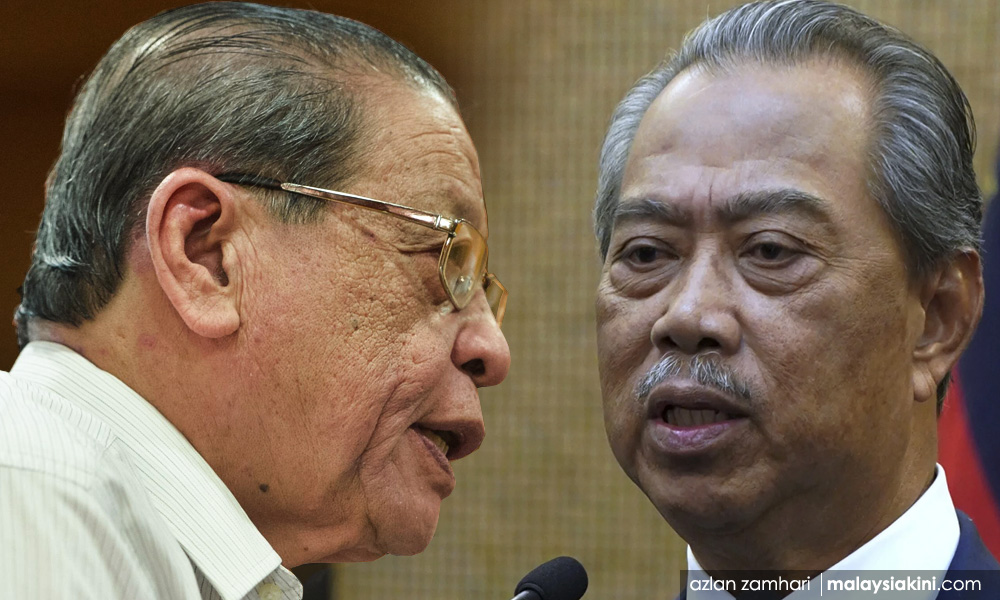
To sell a quick fix, we must have a single main cause to blame for our problems. For our triple crisis, it is none other than Prime Minister Muhyiddin Yassin.
You can blame him generally for the government’s flip-flopping policies, his failure to discipline standard operating procedure (SOP)-defying ministers and VIPs, his inability to face the media, his rise through the backdoor if you are a Pakatan Harapan supporter, and his "scheme of things" to divide and swallow his ally if you are an Umno supporter.
If decapitation is the only surgery needed, then the options are straightforward: a reconstructed government within Perikatan Nasional (PN) and a new government of perhaps Harapan and Umno.
If you think the new prime minister needs to co-opt the opposition, then a unity government. If you think all but one or few politicians are trustworthy, then an unelected, partyless oligarchy in the form of the National Operations Council (NOC).
Before we get excited with all these alternatives, let’s ask some tough questions...
COMMENT | It is tempting to think that the world’s problems can be solved by Superman, be it metaphorically a larger-than-life saviour or some magic task force.
The flaw of over-emphasising agency – individuals’ ability to cause changes – and under-recognising structures – constraints that limit impacts of individuals’ actions – is perfectly human. It makes life more dramatic and interesting, and superhero movies more exciting than social science books.
As Malaysia struggles to get out of the triple crisis of health, economy and politics, quick fixes are as tempting as some magic tools promoted by sales personnel in shopping malls.
To sell a quick fix, we must have a single main cause to blame for our problems. For our triple crisis, it is none other than Prime Minister Muhyiddin Yassin.
You can blame him generally for the government’s flip-flopping policies, his failure to discipline standard operating procedure (SOP)-defying ministers and VIPs, his inability to face the media, his rise through the backdoor if you are a Pakatan Harapan supporter, and his "scheme of things" to divide and swallow his ally if you are an Umno supporter.
If decapitation is the only surgery needed, then the options are straightforward: a reconstructed government within Perikatan Nasional (PN) and a new government of perhaps Harapan and Umno.
If you think the new prime minister needs to co-opt the opposition, then a unity government. If you think all but one or few politicians are trustworthy, then an unelected, partyless oligarchy in the form of the National Operations Council (NOC).
Before we get excited with all these alternatives, let’s ask some tough questions: How can the alternatives succeed where the current government has failed? If not, how long will the new government last? Ultimately, why has the current government failed?
Obviously, the last question should be answered first, and there are many ways to diagnose and organise the diagnosis. Allow me to share mine.
Policymaking and enforcement in a pandemic are tough in any country because they inevitably cause hardship and inconveniences to some if not all people. In other words, necessary policies may not be popular and popular policies may not be prudent.
Three pitfalls
In Malaysia, this is complicated by three issues that started with the Sheraton Move and got worse with the emergency proclaimed in January.
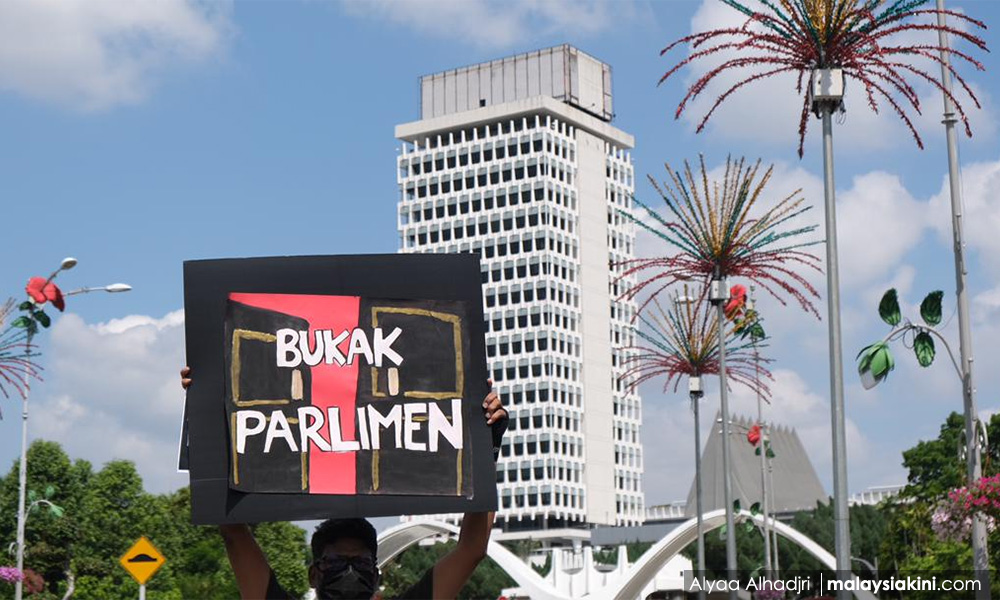
First, a narrow political base in policymaking. While policymaking in Malaysia is conventionally decided by ministers and top civil servants, with little parliamentary oversight, the emergency has entirely removed inputs from not just opposition MPs but also government backbenchers.
The net result is blindspots, public outcries and flip-flopping, worsened by rivalries between ambitious ministers, captured by the hashtag #KerajaanGagal.
Second, favouritism and inconsistency in policy implementation and law enforcement due to removal of parliamentary oversight. From compounds for breaking SOPs to exemptions from full lockdown for businesses, who you know matters more, a phenomenon aptly labelled as #DuaDarjat.
Third, the intense rivalry between parties – including those in government – because of uncertainty and realignment in and after the next election. The emergency merely delays the election and the government’s promise to hold elections once the pandemic subsides only creates competing goals for ministers in managing the crisis and securing their and their party’s electoral fortune.
No new government will work without effectively mitigating the three pitfalls. On the other hand, if these pitfalls can be addressed, then the pandemic and economic governance may improve even without a government change.
Which would be better – experimenting with a new government or sticking with the current one for now, if the structural solutions may be found for both?
A key factor to consider is then: How long can the new/current government last? The durability of government matters because frequent changes of government can only erode the confidence of the public and foreign investors. And if the government duration is attributed to the palace's preference, the backlash may even hurt the legitimacy of the constitutional monarchy.
And one must not assume, a fresh election after a short-lived government will necessarily return a durable government. More likely, with growing fragmentation and fluidity, short-lived governments beget shorter-lived successors.
Structural solutions
How do we find solutions to these three pitfalls: narrow-based policymaking, favouritism and power abuse, and, election-induced infighting?
The first and second pitfall can be resolved by lifting the emergency and reopening Parliament as the first step. To really broaden the political base of policymaking, Parliament must set up more parliamentary select committees (PSSCs) so that every ministerial portfolio would be scrutinised by at least one PSSC and every parliamentarian who is not a minister or deputy minister get to sit on at least one PSSC.
This would fundamentally turn our Parliament from a part-time, amateurish club that meets only 60-70 days a year to a full-time, professional institution that is active throughout the year with 20 over committees.
To halt the election fever from distracting energy and attention of political parties, ministers, parliamentarians and other politicians from the pandemic and economy, the 15th general election (GE15) must be fixed now at some remote date – 12, 18 or 25 months away (when the 14th Parliament stands dissolved on June 16, 2023) – instead of any time when herd immunity is attained.
How do you get students to focus on their studies if you tell them they can go to the cinema once the rain stops? Politicians excited by elections can only be less disciplined.
While Sarawak must be allowed to have the state election once the pandemic condition permits, there is no reason why the federal Parliament cannot run a full term.
The next challenge: Why should the opposition parliamentarians refrain from bringing down the government at the first available opportunity? What concessions in power and resources must the government make to the opposition MPs or disgruntled government backbenchers to not bring down the government if its majority can be overturned?
This is where the second solution lies and is tied back to the first solution of an empowered Parliament: a Confidence and Supply Agreement (CSA) between the government and enough opposition parties or parliamentarians to attain a ceasefire.
Who is the best captain?
Who is best placed to be the prime minister? Will Foreign Minister Hishammuddin Hussein, Umno veteran Tengku Razaleigh Hamzah or opposition leader Anwar Ibrahim do better than Muhyiddin?
The yardstick is not talking smart like an outsider critic when you are a minister or how many years you have been the waiting prime minister.
The yardstick is whether you as the prime minister can build a stable coalition with the collaboration of the opposition on a CSA. If anyone can do a better job than Muhyiddin to negotiate a working majority on a CSA, then the person deserves the top job. Alternatively, if Muhyiddin can be the first to negotiate a workable CSA, he should keep the job.
What about the idea of NOC? An unelected oligarchy of technocratic and security elites led by one or few politicians will only make the political base of policymaking even narrower than now, potentially causing more policy blindspots, public outcries and flip-flops. And when such oligarchy makes policy mishaps, the public backlash will pit the citizenry against the bureaucracy and security forces and even the constitutional monarchy.
It’s when crisis deepens that we must stay even more sober. Whoever wants to be the captain of the boat must first show that they can better organise the boat and bring more crews together. This is the time we can least afford some narcissistic Superman wannabe.
WONG CHIN HUAT is an Essex-trained political scientist working on political institutions and group conflicts. Mindful of humans' self-interest motivation while pursuing a better world, he is a principled opportunist.
The views expressed here are those of the author/contributor and do not necessarily represent the views of Malaysiakini.


Fully agreed Wong! - We need a PM who can muster supply & confidence agreement with opposition. - elections until end of this term in 2025 - parliament to be called and meet regularly - check and balance with parliament oversight committee. Only non cabinet/GLC parliamentarians sits in this committee to oversee all ministries and answerable to them. - Sarawak elections to be held since term expired - whoever the PM cannot sustain majority support in Parliament must step down and allow the one who can command majority support. - all major appointments must be with approval of majority in Parliament nominated by PM. This includes : AG and all agencies. Can we do this to bring back Malaysia to be the Tiger of the world! The king can start this off to save this country??
Are you sure you want to delete this comment?
This action cannot be undone.