



COMMENT | The confluence of art, science and society
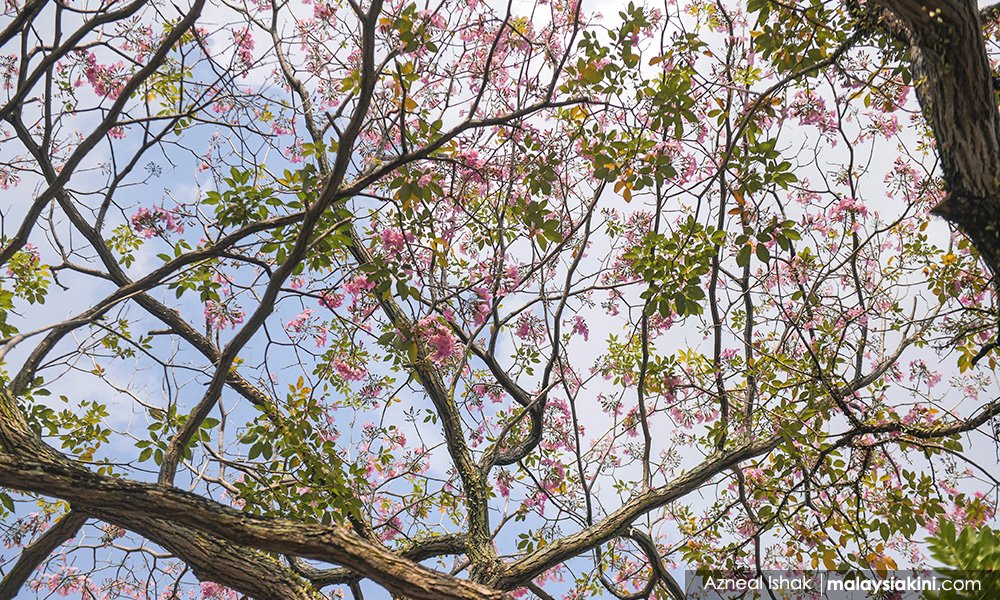
COMMENT | In Next Spring, a pandemic-era exhibition held at the Beaty Biodiversity Museum at the University of British Columbia, genetically impossible flowers spring up on display, each bearing their individual Linnean binomial classifications.
One of them is the Frankenflora pruina, a hybrid flower collected in 2080, having evolved in accordance with extreme conditions brought about by climate change – not too difficult to visualise given the extreme climactic disasters of the past months.
While the work is highly speculative, it does have a grounding in and appreciation for natural biological and chemical processes, resulting in a heady fusion of art and science, inspired in turn by themes of impermanence and connection. In her artist’s statement, Katrina Vera Wong writes that:
"The world’s flora has evolved curious morphologies and compositions, specially adapted to the areas they happen to germinate in and the pollinators they might rely on. … I marvel at the structural and chemical means with which plants thrive, and seek to puzzle out combinations for future flowers."
Such an approach should not just be considered as a current fad, or a pop-science gimmick, but rather a form of speculation which collapses the rigid boundaries between art and science.
This is not the only such exploration, of course. Closer to home, Tan Zi Hao’s work throws in additional elements of Malaysian history and immigration patterns to imagine new species of the...
COMMENT | In Next Spring, a pandemic-era exhibition held at the Beaty Biodiversity Museum at the University of British Columbia, genetically impossible flowers spring up on display, each bearing their individual Linnean binomial classifications.
One of them is the Frankenflora pruina, a hybrid flower collected in 2080, having evolved in accordance with extreme conditions brought about by climate change – not too difficult to visualise given the extreme climactic disasters of the past months.
While the work is highly speculative, it does have a grounding in and appreciation for natural biological and chemical processes, resulting in a heady fusion of art and science, inspired in turn by themes of impermanence and connection. In her artist’s statement, Katrina Vera Wong writes:
"The world’s flora has evolved curious morphologies and compositions, specially adapted to the areas they happen to germinate in and the pollinators they might rely on. … I marvel at the structural and chemical means with which plants thrive, and seek to puzzle out combinations for future flowers."
Such an approach should not just be considered as a current fad, or a pop-science gimmick, but rather a form of speculation which collapses the rigid boundaries between art and science.
This is not the only such exploration, of course. Closer to home, Tan Zi Hao’s work throws in additional elements of Malaysian history and immigration patterns to imagine new species of the real-life genus Xenophora, while Zedeck Siew and Sharon Chin tread similar creative ground in Creatures of Near Kingdoms.
While retaining whimsical elements, the various ideas inspired by the development of scientific knowledge lend themselves to raising questions of social, historical and cultural importance.
One can trace this genealogy of biological re-imaginings back to its starting point: Mary Shelley’s Frankenstein, perhaps the archetypal modern work of science fiction.
Inspired by what was then the cutting edge of science, when the secrets to life through pseudoscientific reanimation seemed tantalisingly within reach, her fable of the “modern Prometheus” retains its multifaceted, thematic power today.
Out of Shelley’s book evolved the archetypal, iconoclastic image of the scientist, the scholar at the rarefied heights of knowledge. Without the titular Dr Frankenstein, it is hard to imagine the sinister mathematician/criminal mastermind Professor Moriarty in the Sherlock Holmes stories, or even the playwright Bertolt Brecht’s two versions of Galileo, written in the 1930s and the 1940s respectively.
Brecht’s work is particularly interesting for its social commentary. Here, the mythologised image of Galileo Galilei, standing up in defence of the Copernican system against the Church (contrary to popular opinion, the Catholic Church supported the pursuit of scientific knowledge, although within certain parameters), lends itself to two separate interpretations, depending on which version of the play one is referring to.
As corroborated by his translator and editor, Eric Bentley, Brecht’s two versions explored two very different themes: the underground intellectual resistance against Nazi Germany, and later, the unease over the invention and deployment of the atomic bomb, with Galileo committing science’s original sin.
Broader questions
Moving on to more technical aspects of this subject, there is an opportunity to deploy art and science in the further development of knowledge, besides simply asking broader questions about society.
Dr Clarissa Lee notes in Artscience: A Curious Education, that Shelley’s aforementioned work was written in the context of “[t]he rise of the Romantic Movement in Europe … [which] also conceived of a speculative philosophy of nature known as speculative physics”.
This would not quite gel with the later 19th-century obsession with precision, measurement, specialisation and jargon, one which has persisted until today.
Nevertheless, the work by figures such as von Schelling laid the philosophical groundwork for the conceptual framework of speculative science, in which what we consider as a “given” is never fixed in stone — such as the methods by which knowledge is developed, the perceptions of technology and even the supposed rigidity of the scientific process.
Lee’s work, with its implications for design fiction and media physics, among others, falls under what we can consider as “artscience”. As defined by The Laboratory at Harvard University:
"Idea development in culture, industry, education and society can be conceived as a kind of experimentation, where the catalyst for change, for movement – for innovation – is a fusion of those creative processes we conventionally think of as art and as science."
If we take, as a starting point, the rapid fusion of physics and mathematics that began in the 17th century, science became increasingly divorced from the concrete and the observable, while heading rapidly into the abstract. Hence, the roots of CP Snow’s “Two Cultures”.
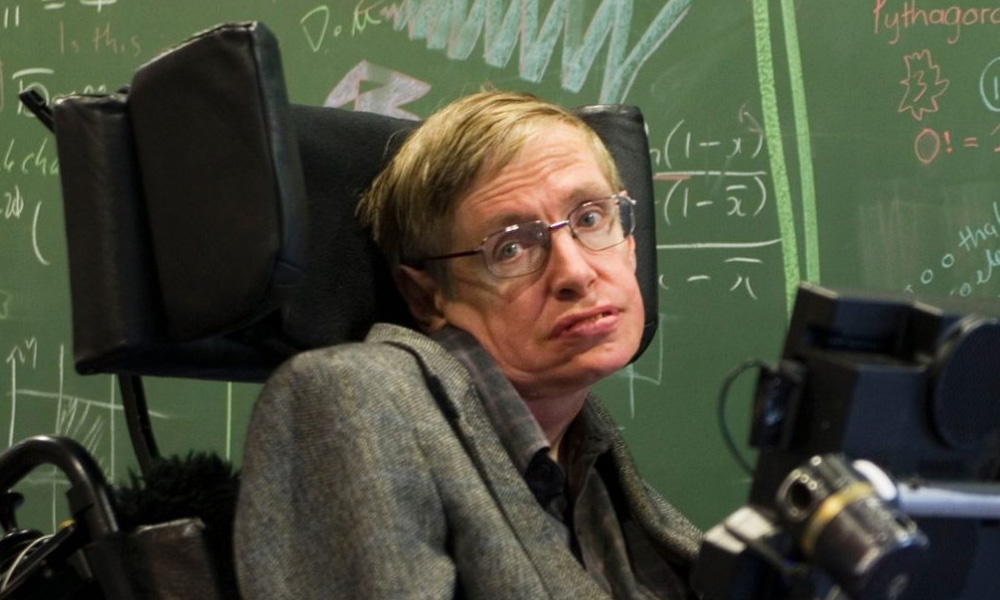
This would eventually manifest in a famous comment centuries later, when Stephen Hawking acknowledged in A Brief History of Time that “each equation I included in the book would halve the sales”. But even while science and art seemingly went further apart, science retained its power over the imagination, even if not in entirely precise or accurate forms.
Ingrained prejudice
In the Malaysian educational context today, such a division remains clear. Science and knowledge of the world and technology mean progress, particularly in the never-ending game of catching up with the metropole. In the postcolonial world, science, or more precisely, technologisation, has played a role as the harbinger of modernity.
So much so that the division between “arts” and “sciences” manifested in literal class differences, where it became possible for well-meaning teachers to speak dismissively of the “lower classes” in school.
I believe I speak for my classmates when this led to a sense of entitlement and ingrained prejudice that would take years to unlearn. With the focus on technologisation and a rigid focus on technical specifics, the “two cultures” were taken to their logical extreme.
Fortunately, there are corrective measures underway. Akademi Sains Malaysia has embarked on a project to “promote appreciation of the arts towards acculturation of science among Malaysians”, in which professionals in various fields collaborate and communicate their work to the public, allowing for greater convergence.
This includes an engagement subprogramme that engages and facilitates “communication between participants and prominent figures from the art and science communities”.
In neighbouring Singapore, the concept is more institutionalised. I previously referred to the novella/choose-your-own-adventure-book, Somewhere Else, Another You, written by its author during a residency at the Centre for Quantum Technologies.
For the curious public, there is also the ArtScience Museum, which seeks to “explore where art, science, culture and technology come together. It is here at the intersection of art and science that innovation and new ideas are formed”.
A recent exhibition, “Floating Utopias”, explores the social and technological history of inflatable objects. Exhibits range from the implications and effects of inventions like the hot air balloon all the way to how “a new generation of architects began using inflatable structures in a search for new approaches to designing space and alternative ways of living”.
Such a study of objects, blending and borrowing from different approaches and disciplines, lends itself to interlinked understandings of science, art and society – and even culture and history.
A slight digression into a related topic: In Sumathi Ramaswamy’s Terrestrial Lessons, the globe was operationalised not just as a tool of pedagogical importance in South Asia, but also welded British scientific advancements and the development of a “modern planetary consciousness” into political, cultural and to some extent, religious dominance.
The globe found its way into the artwork of the subcontinent’s old princes and kings, and eventually into religious iconography and cinema, becoming a ubiquitous feature of modernity. In other words, entirely different conceptions of the world could be imagined.
The intersections between art, science and society open the doors to various iterations of knowledge well beyond their narrow silos.
A variety of ideas can be strung together, allowing for the boundaries between disciplines to be broken and for new possibilities and imaginings to emerge. I shall leave the last words to Lee, who remarks that:
"… it is possible for science to be studied and worked on beyond the confines of the so-called scientific method, and the understanding that art does not always fit into frames of reference recognisable to art institutions and their purveyors."
WILLIAM THAM WAI LIANG is an editor at large for Wasifiri. His new novel, The Last Days, is set in 1981 and covers the continuing legacy of the Emergency. His first book, Kings of Petaling Street, was shortlisted for the Penang Monthly Book Prize in 2017.
The views expressed here are those of the author/contributor and do not necessarily represent the views of Malaysiakini.



Report this comment
Are you sure you want to delete this comment?
This action cannot be undone.