


COMMENT | Designate Kuala Langat forest as national park
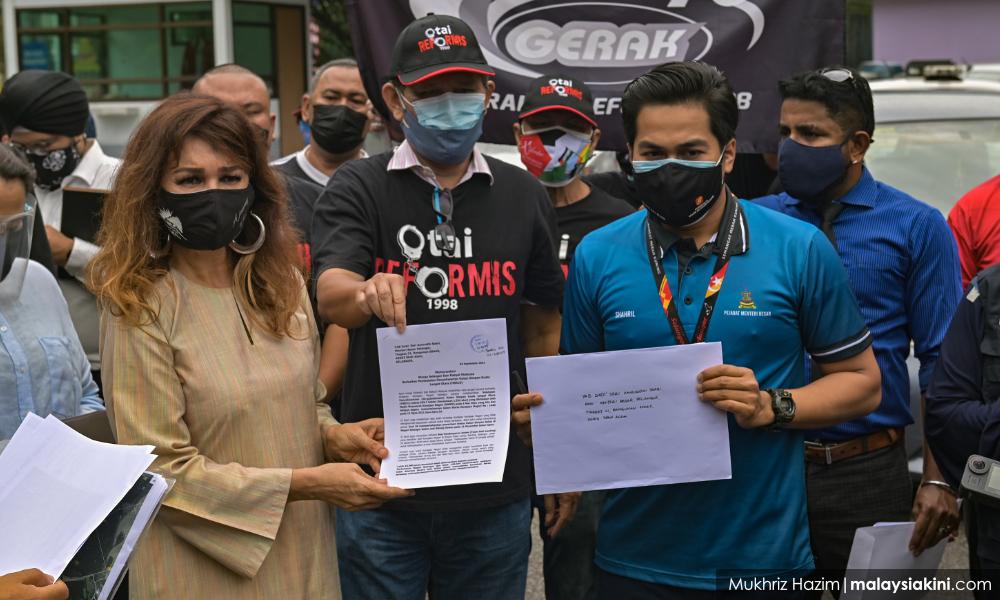
COMMENT | On Sept 7, I wrote “another day, we lose another part of our precious natural heritage”. On Sept 8, the Selangor exco announced that the de-gazetted Kuala Langat North Forest Reserve (KLNFR) will be re-gazetted.
Indeed, what a huge difference a day makes.
This is timely vindication of organised people’s power against the tyranny of the powers-that-be. We can move mountains and change the course of maladministration of the country if we unite across all divides.
Yes, we should celebrate having won the battle taking a vantage position in the war against the destruction of our natural heritage. But we are not out of the woods yet. Many questions linger. Is this re-gazetting temporary? Can we let our guard down now? What happens when another set of marauding politicians and greedy developers take over?
Is the government committed to maintaining the ecological integrity of the forest, or let it degrade further to serve its vested interest in the future? Who will pay for management and conservation? Who will take the lead in this effort?
I will attempt to answer these questions and propose workable tried solutions based on my experience.
Before that, let me also congratulate the Selangor exco. However, I cannot fail to notice the term...
COMMENT | On Sept 7, I wrote “another day, we lose another part of our precious natural heritage”. On Sept 8, the Selangor exco announced that the de-gazetted Kuala Langat North Forest Reserve (KLNFR) will be re-gazetted.
Indeed, what a huge difference a day makes.
This is timely vindication of organised people’s power against the tyranny of the powers-that-be. We can move mountains and change the course of maladministration of the country if we unite across all divides.
Yes, we should celebrate having won the battle taking a vantage position in the war against the destruction of our natural heritage. But we are not out of the woods yet. Many questions linger. Is this re-gazetting temporary? Can we let our guard down now? What happens when another set of marauding politicians and greedy developers take over?
Is the government committed to maintaining the ecological integrity of the forest, or let it degrade further to serve its vested interest in the future? Who will pay for management and conservation? Who will take the lead in this effort?
I will attempt to answer these questions and propose workable tried solutions based on my experience.
Before that, let me also congratulate the Selangor exco. However, I cannot fail to notice the term “membatalkan pemberimilikan tanah itu kepada syarikat tersebut” in their announcement. It seems the complete process of excision and transferring title was accomplished in a few months.
When I wrote about the indefeasibility of title and its consequences, I never imagined this would happen in such a short time, all done secretly. What will be the compensation to the one-ringgit one-person company - is it just monetary or another piece of land of similar value?
Anyway, I will leave it to Selcat to unravel this and take appropriate action. The rakyat should not be burdened for any malfeasance in office.
Kuala Langat National Park (KLNP)
Yes, you read it right. My proposal is to designate KLNFR under the National Parks Act 1980 to ensure there is permanent protection and proper conservation to preserve it for eternity.
The National Forestry Act 1974 is, for all intents and purposes, primarily for the exploitation of natural resources. It may be green coated by policies and strategies talking about sustainable management, utilisation and conservation, but does not have the effect of law. Of the 117 sections in the Act, only a couple has relevance to creating, protecting or conserving forests.
Section 7 provides for states to constitute permanent reserved forests, but how many new forests have been created? The iconic large forests such as Taman Negara were created in the early 1900s, and KLNFR in 1927.
Section 10 provides for several categories of use from timber production to virgin reserved forest. Presumably, virgin forest should be preserved and left untouched but there is no such provision, meaning all are subject to reclassification and exploitation.
As written earlier, Section 11(1) provides strict conditions to excise forests, including its required purpose, economic valuation and EIA, but how many states follow those conditions. It seems the state excos decides on a whim, based on requests from connected third parties, which forest they want to excise.
Excision should follow a top-down long-term planning process like the state structure plan, not handed out in bits and pieces. The Appeals Board decision on the Penang South Islands on Sept 8 stated any EIA that is not in accordance with the state structure plan is invalid. Hitherto, the rarely heard Town and Country Planning Act 1976 has suddenly gained prominence.
While the intention of the Forestry Act is good to provide for uniformity, states have absolute authority over land and its resources. To compound matters, adequate funds are not allocated for management and conservation by federal or state, unlike for enforcement like cutting down 250 acres of thriving durian trees in record time. Therefore, continuing to list KLNFR under the Forestry Act is a no-go.
On the other hand, the National Parks Act 1980 was meant to create national parks or wildlife sanctuaries. However, since it was enacted, we had difficulty in getting states to list under this Act, under the misconception states may lose title or control.
Listing KLNFR under the National Parks Act brings in much needed federal and foreign funds and expertise to conserve the forests. The federal government only takes over the burden of managing and conserving the parks. There are mutual benefits for federal and state governments, as any green lung serves not only the state but areas beyond it.
The federal and state government should enter into negotiations to work out an amicable arrangement to change KLNFR into KLNP. If the KLNFR can be handed over to a private company, based on its request, in a matter of months, why couldn’t this proposal to conserve it for the people cannot be done?
The people have made this ‘request’ loud and clear. Being involved in such negotiations in the 1990s, I can say these “misconceptions” are proffered by state exco members not wanting to let go of such plum low-hanging fruit.
World-renowned iconic park
The 1,011.7ha KLNP has the potential to become a world-renowned iconic park like the New York Central Park (341ha) or the London Hyde Park (141.6ha), but on an even grander scale. This is conditional upon KLNFR to be turned into KLNP.
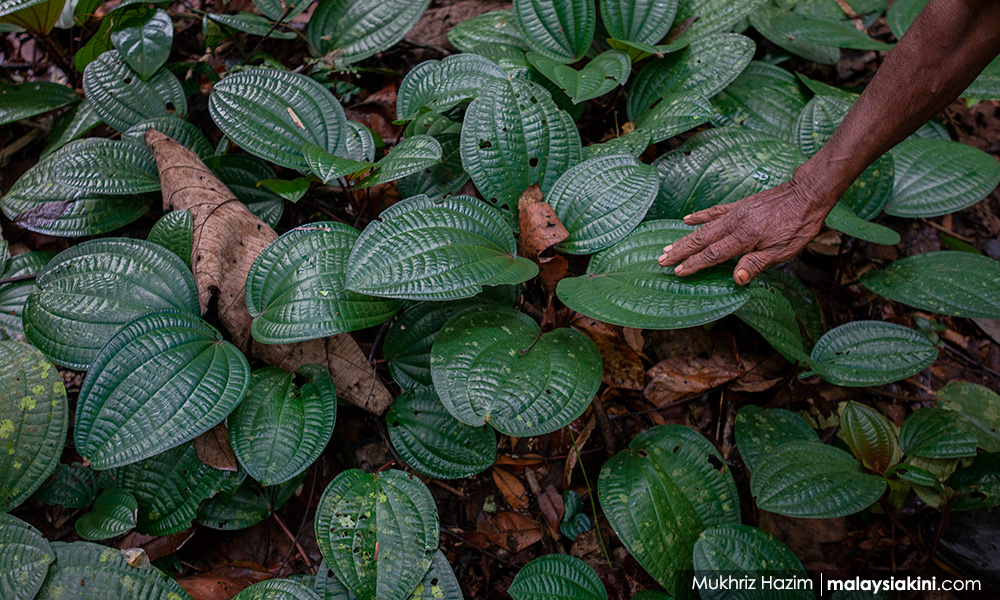
I think there is no other major township in the world that has a vast peat swamp forest in its midst. Being located next to the Kuala Lumpur International Airport, it will be a major eco-tourism destination, to be enjoyed even on a day’s stopover. The KLNP can be easily recognised as the Asean Heritage Park and a World Natural Heritage site giving it global significance.
This will attract funding and expertise to conserve and sustainably manage the KLNP. Based on the work we did on Asean Peatland Management, the Global Environment Facility has committed an RM5 million grant for further work in Selangor peatlands including KLNFR. This is just the tip of the iceberg.
There are many other sources of funds such as the UN, World Bank and financial institutions’ green funds, developed countries’ commitment to invest in greening efforts, carbon funds, debt for nature swap, nature philanthropic organisations, private sector and crowdfunding. The only condition imposed is the permanency of land use.
This is not just a wish but easily attainable, based on my experience in establishing institutions and flagship programmes in the region. I was responsible, among others, for setting up the Asean Centre for Biodiversity, the Asean Heritage Parks, and bringing in international expertise and funds to synergise national efforts through regional collaboration.
The timing is perfect.
With nature’s call expressed through KLNFR, the people have come together in solidarity. The many public interest groups should take the lead in conserving and promoting KLNP. There is no shortage of funds, expertise or manpower. The federal and state government should show their sincerity to establish KLNP or face the wrath of the voters at the next election.

The public interest groups should now channel their advocacy and activism energy into managing and conserving the forest. Draw up a three-to-five-year work plan to transform the forest into an iconic park.
The task force should include representation from all sectors, including the government and private sector. A total economic valuation (term used in environmental economics) of the KLNP should be immediately conducted to bring out its full potential and contribution.
I always believed economic arguments best refutes all the naysayers, especially those in power who think peatlands are a wasteland. If the economics is right, the forest gets to stay, and the biodiversity and the local community will thrive, not the other way round.
If we, in the most developed region of the country, could not even protect and manage a relatively small but fast disappearing forest in our backyard, how can we honestly claim to fight for the rights of the local community and our forests in faraway remote areas?
As I express my opinion, I cannot help feeling that I am teaching a fish how to swim.
Over the last two years, almost a trillion ringgit of people’s money has been spent. Worse, the government is known worldwide for squandering people’s money through kleptocracy and continues to fatten itself through unnecessary plum positions and programmes. Yet, the government is so cash strapped having to sell off nature for a few hundred million ringgit.
The people’s representatives incessantly talk about working together for self-interest political reforms. What about reforms for nature and the people’s wellbeing?
We are watching.
RAMAN LETCHUMANAN was director, Environment/Conservation, Ministry of Science, Technology and the Environment (1993-2000), head of Environment/Haze/Disaster Management, Asean Secretariat, Jakarta (2000-2014), and senior fellow at S Rajaratnam School of International Studies (RSIS), Nanyang Technological University, Singapore (2014-2016). He is a subscriber of Malaysiakini. Email: raman.asean@gmail.com.
The views expressed here are those of the author/contributor and do not necessarily represent the views of Malaysiakini.




Report this comment
Are you sure you want to delete this comment?
This action cannot be undone.