



COMMENT | Sarawak - the outsiders looking in
COMMENT | As the tide of war turned decisively against the Japanese Empire, paratroopers under the command of the eccentric and abrasive Major Tom Harrisson, later to be appointed the postwar curator of the Sarawak Museum, landed in the deep interior highlands of Sarawak.
They came supplied with money, weapons and the necessary reserves to begin guerrilla operations against the Imperial Japanese Army, and in the process allied with the Kelabit, who, as Paul Malone notes in Kill the Major, “[a]part from the fact that they raided and killed others and irrigated their rice fields, little was known about them” by the outside world.
Decades later in 2015, the major’s former staff sergeant, Jack Tredrea, the last surviving member of his Semut 1 force, was welcomed back to Bario on the anniversary of the jump, the ceremony recorded by Liew Suet Fun in her journals, herself a sojourner in the isolated settlement.
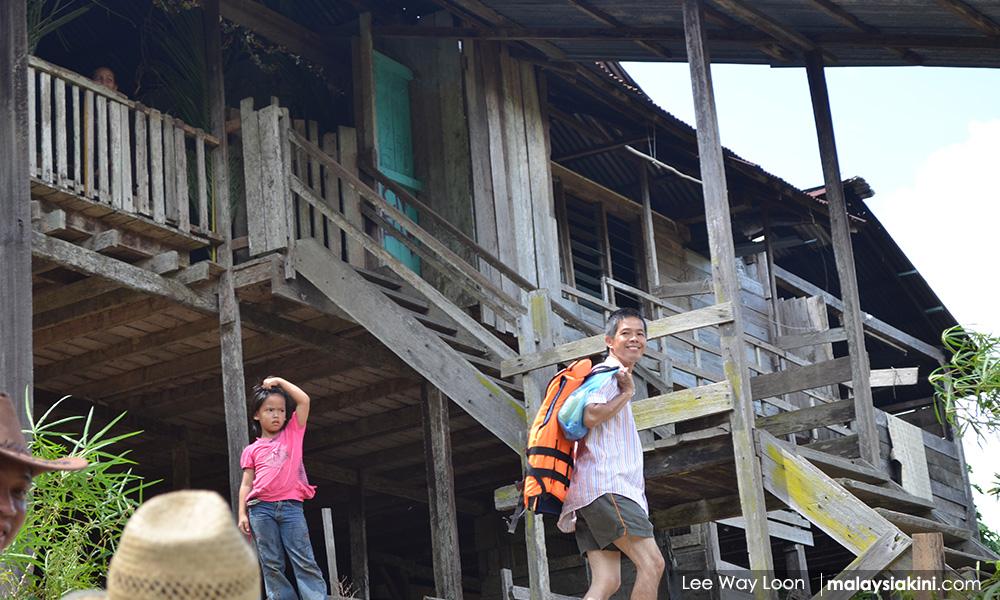
Liew’s journals of her sojourn in Bario, eventually published as Lem Ayu’ Ulun, span a period of several years when she and her eventual husband, the nephew of the paramount chief of the Kelabit, moved to the highland community and built a new life there, starting a new life in middle age.
By doing so, she became linked, through one of those strange quirks of history, to the stories of the major, who had profiled her eventual father-in-law in his writings, describing him as “unmistakably Kelabit”.
But her new familial ties did not provide a shortcut to assimilation: within weeks, the scandal caused by her to-be husband’s ongoing divorce proceedings and her arrival caused her to-be husband’s uncle to despatch his headmen to Bario, who curtly informed her that she was to depart on the first flight to Miri – air travel...
COMMENT | As the tide of war turned decisively against the Japanese Empire, paratroopers under the command of the eccentric and abrasive Major Tom Harrisson, later to be appointed the postwar curator of the Sarawak Museum, landed in the deep interior highlands of Sarawak.
They came supplied with money, weapons and the necessary reserves to begin guerrilla operations against the Imperial Japanese Army, and in the process allied with the Kelabit, who, as Paul Malone notes in Kill the Major, “[a]part from the fact that they raided and killed others and irrigated their rice fields, little was known about them” by the outside world.
Decades later in 2015, the major’s former staff sergeant, Jack Tredrea, the last surviving member of his Semut 1 force, was welcomed back to Bario on the anniversary of the jump, the ceremony recorded by Liew Suet Fun in her journals, herself a sojourner in the isolated settlement.
Liew’s journals of her sojourn in Bario, eventually published as Lem Ayu’ Ulun, span a period of several years when she and her eventual husband, the nephew of the paramount chief of the Kelabit, moved to the highland community and built a new life there, starting a new life in middle age.
By doing so, she became linked, through one of those strange quirks of history, to the stories of the major, who had profiled her eventual father-in-law in his writings, describing him as “unmistakably Kelabit”.
But her new familial ties did not provide a shortcut to assimilation: within weeks, the scandal caused by her to-be husband’s ongoing divorce proceedings and her arrival caused her to-be husband’s uncle to despatch his headmen to Bario, who curtly informed her that she was to depart on the first flight to Miri – air travel was the most practical way of getting in or out of the highlands.
Dramatic incidents aside, what follows is a record of quotidian pleasures and hardships, interspersed with the region’s history. The major’s arrival, with his medicines, wireless technology and automatic weapons, forced open a door.
By the time of the Konfrontasi, the old hands-off policy of the Brooke rajahs was over, and the task of nation-building and securing the Indonesian frontier became a question of national importance, with the resettlement of the locals and the slow, dripping provision of the amenities promised by the first Malaysia Day.
Regardless, some things remain unchanged – “the twin peaks of Batuh Lawih … the River Dapur curling around the plain” – landmarks that can never be altered by something as artificial as nation-building.
As Liew notes, all this has taken place within the short span of generations, and now the outside world encroaches with subsidised Twin Otter flights, cellphones and instant noodles – although, at the time of journal-writing, Wifi access was still spotty.
Liew is careful not to romanticise the old isolation, being cognisant of the allure of the outside world, which even the once nomadic Penan have become more accustomed to, working in fields on occasion, coming down to town in single file for its amenities, where “a persistent trail of music from their mobile phones betrays them.”
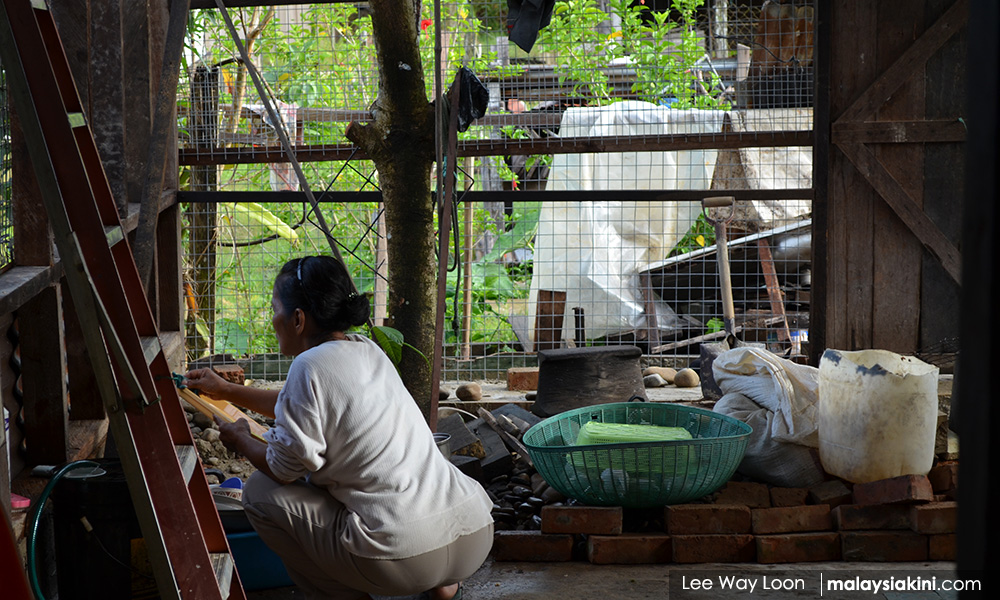
She is not the only outsider in Bario – scholars from the School of Oriental and Asian Studies, missionaries and schoolteachers cycle in and out – but she is one of few who attempt a long-term stay, making her a different category of “outsider” altogether.
From the beginning, the popular conception of “Malaya” in the Sarawakian imagination has been that of a vaguely threatening entity, and as The Sarawak Gazette reports on Oct 31, 1964, the year after the new federation’s formation, there remained an “excessive reaction at several levels to any (emphasis in the original) hint of mainland, Malayan, directive, any trace of suspected domination (page 268).”
Not only is Liew ethnically Chinese, but she is also from the mainland – a Malayan. It is in coming to terms with the homogenous community and slowly deepening roots into the rhythms of life – with its bursts of mist and sun and rain, of intense heat and seeping cold – that gives her more insights and understanding, but in the end, she still recognises that she is from a different world.
Once, she recalled a friendly local waving to them from his motorcycle, which her husband casually insisted was a local thief, whose activities were well-known but tolerated. “And what makes it rather glorious is that this is acceptance. The knowledge of thieves, scoundrels balanced on a human scale … you are not judged too harshly on past transgressions.”
National imagination
I have still not been to Sarawak – I have often wanted to go, but for all the effort I put into it, I might as well have said Tierra del Fuego or Greenland – coming from a peninsula-centric perspective, the state seemed to exist solely in the national imagination, even if I had friends from there or read about it in stories.
How easy it was to forget the vastness of Sabah and Sarawak, their histories fraught, divided between multiple spheres of influence, of sultanates and European colonists alike.
The islands of the Malay Archipelago have become contested terrain, imagined into parts of new sovereign states and larger, grander narratives – as Benedict Anderson observes of the Indonesian experiment in Imagined Communities, “Sukarno never saw the West Irian for which he fought so hard till he was over 60.”
Thus Sarawak, despite having no tangible everyday connection, was not altogether separate from my every day, peninsular life – it came to life through stories of the resistance of Rentap, the World-Shaker, eluding the control of the White Rajah from his ironwood fortress; Esca, the illegitimate half-Malay son of Rajah Charles; unable to reclaim his birthright from his lodgings in Toronto; Somerset Maugham’s gloomy stories of human foibles and isolated upriver colonials; the wartime campaigns waged in the jungles as the Japanese retreated deeper inland.
And then there were also Teach for Malaysia’s programmes, offering Bario as a possible posting, which intrigued me and was how I had first come to know about the settlement.
I first came across Liew’s work in the wake of the first MCO, now seemingly a lifetime ago, reading her writings about a different set of highlands: those of Bukit Larut in her hometown of Taiping. The gloom brought about by Covid-19 meant that books on escape were all the rage: works such as Jeanne Cuisinier’s Kelantanese lectures on Radio Paris in the 1930s sold well.
In the same vein, Liew’s writings were an adventure, told through a weary eye, yet still open to the possibility of small discoveries even as the certainties of eventual death and inconsequence became daily musings – an anaesthetic for urban life and the grind of the globalised corporate world.
Lem Ayu’ Ulun is a different sort of read, though. There is the familiar blend of history, community, concern for the environment and frank conversations. Here are no ethnographic studies, but records of personal philosophy, the nature of life and death and the acceptance of such, and the Kelabit saying for “this is life” lends itself to the title.
“Finding oneself”, in an Eat, Pray, Love vein, isn’t the question at stake here: it’s more of coming to terms with the realities of life, and of the people and their environment. There is much to be angry or frustrated about, but in the end, the only solution is perseverance.
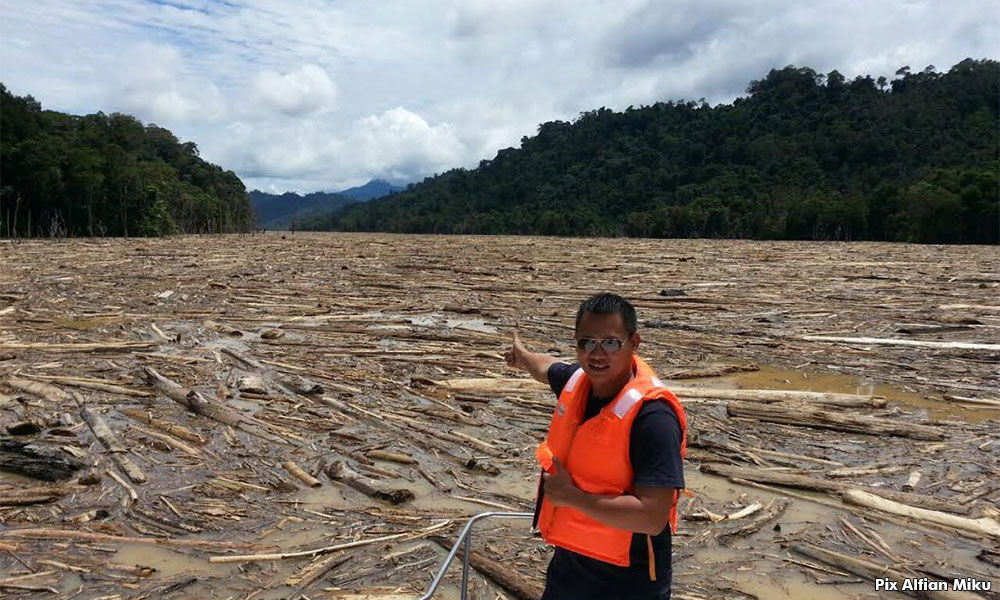
Here, the highland wilderness ties in with the lives of the people, where humans and nature are not isolated entities. The forest isn’t boxed away in a protected zone, but it also isn’t exploited to the point of exhaustion, unlike the downhill situation, where the land road in and out is dominated by the ever-powerful timber industry.
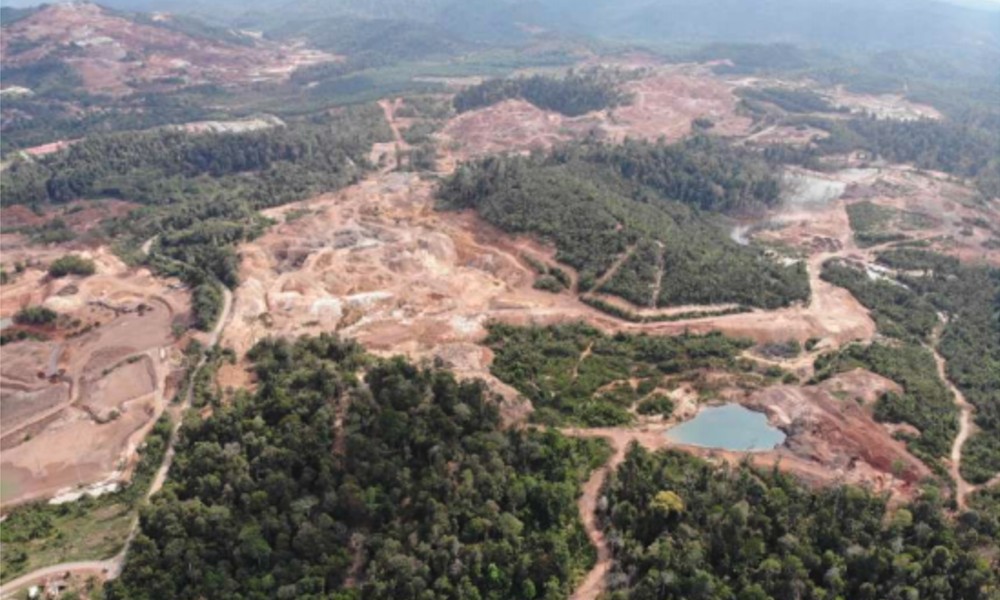
Reading this at a time when the latest outrage in the news, in this case, the wanton declaration of the alienation of the Kuala Langat North Forest Reserve by the Selangor state government, in turn, linked to powerful entities, among them are linked to interests in Sarawak’s lucrative timber reserves, was sobering.
It becomes necessary to tell the story of the people, in any environmental issue. And it’s not just a matter of preserving an authentic lifestyle.
In a personal conversation, Liew mentioned her unease with the approach taken by some activists who campaigned to preserve the indigenous way of life, at a time when their keenness to explore the outside world was rising, hoping not to be left behind.
The airdrops and observations of the major had opened that door long ago. Yet nostalgia is a powerful thing: even those who return to Bario from regular life in the outside world remark that things are no longer the same.
With nostalgia come reminders of culture, history and the transience of life, but it should also be a lesson not to romanticise places, or to fix them into an immutable, idealised past – an act which creates new sets of boundaries.
WILLIAM THAM WAI LIANG is an editor at large for Wasifiri. His new novel, The Last Days, is set in 1981 and covers the continuing legacy of the Emergency. His first book, Kings of Petaling Street, was shortlisted for the Penang Monthly Book Prize in 2017.
The views expressed here are those of the author/contributor and do not necessarily represent the views of Malaysiakini.



Report this comment
Are you sure you want to delete this comment?
This action cannot be undone.