


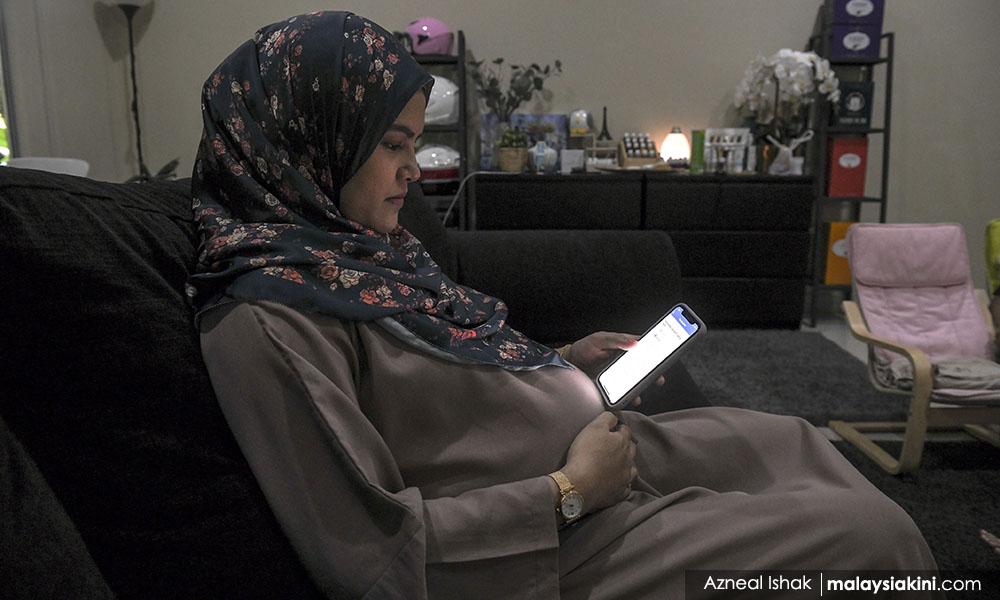

COMMENT | Women falling between the cracks in pandemic recovery
COMMENT | Three years ago, I attended the Syariah Court hearing of a woman in Terengganu who was accused of attempted prostitution. It was the woman's first offence - an act driven by desperation as socioeconomic protection nets failed.
She was a single mother who had exhausted attempts to get financial help for herself and her child.
On the day she appeared in court, the man who was found in the hotel room with her was nowhere to be seen and was never charged.
Her abusive ex-husband who failed to provide any alimony or child support for years was also not charged. She, on the other hand, was sentenced to both prison and caning.
It needs to be noted that Section 289 of the secular Criminal Procedure Code prohibits caning on a few groups of people including women.
However, the Syariah court has, on more than one occasion...
COMMENT | Three years ago, I attended the Syariah Court hearing of a woman in Terengganu who was accused of attempted prostitution. It was the woman's first offence - an act driven by desperation as socioeconomic protection nets failed.
She was a single mother who had exhausted attempts to get financial help for herself and her child.
On the day she appeared in court, the man who was found in the hotel room with her was nowhere to be seen and was never charged.
Her abusive ex-husband, who failed to provide any alimony or child support for years, was also not charged. She, on the other hand, was sentenced to both prison and caning.
It needs to be noted that Section 289 of the secular Criminal Procedure Code prohibits caning on a few groups of people, including women.
However, the Syariah court has, on more than one occasion, meted out caning to women, including public caning.
Last month, we watched helplessly as an elderly woman cried inconsolably. She was given the death penalty for the possession of 113.9g of drugs.
But she is also a woman who was driven by desperation. She is a single mother. She has nine children to care for. She lives in Sabah, one of the poorest states in Malaysia.
These are just two of thousands of women in Malaysia who are at the receiving end of a system that punishes the outcome of unfair circumstances but ignores the root of the problem.
Harrowing experiences of women
There are thousands of poor women who cannot get jobs because they can't own bank accounts. Their ex-husbands used their identities to apply for bad loans. As a result, the women's names have been blacklisted.
There are thousands of poor women who are afraid to give birth outside their homes because they cannot afford hospital fees and/or lack legal documentation.
They give birth at home, often enduring painful complications with almost no care.
There are thousands of poor women who are on the brink of homelessness. With their last ringgit of the day, they are forced to make a hard decision between food or shelter.
It is unfortunate to see that even as the world begins to recover from the Covid-19 pandemic, women remain disproportionately disadvantaged.
Somehow, it has fallen on the shoulders of women to juggle their children’s hybrid virtual school arrangement, which has greatly impacted their own employment prospects.
As we wake up to the grim reality that our B40 population could dangerously slip into a B60 situation, we are also forced to acknowledge that a growing number of these households are headed by women.
In this respect, there is a critical need to provide not only socioeconomic safety nets but also policies and programmes that actively remove barriers to gender equality.
Especially in light of these situations, the effectiveness of welfare agencies set up to protect vulnerable women and their children needs to be questioned and redesigned.
Programmes aimed at building economic empowerment and resilience of women must be indiscriminate and include all women, regardless of their creed or walk of life.
A system needs to be put in place to check up on men who default on alimony and childcare payments.
Currently, court hearings to compel these men to pay up are often biased against women, can drag out for years, and more importantly, are expensive – resulting in a situation that favours the defaulting men. This must change.
Most of all, a shift of mindset is needed from seeing women for the gender roles they are expected to play to the person they are.
In the instances of the two stories I began this article with, these women are more than single mothers. They are heads of households. They are protectors and providers for their families.
Mechanisms need to be put in place to recognise these critical responsibilities that women bear.
Clearly, there are more to women’s experiences than meets the eye. Serious considerations are needed to examine and remove systemic barriers faced by women.
For the longest time, women have been disproportionately left out of policies and programmes that could have benefitted and empowered them. Therefore, targeted changes are needed, and they are needed now.
MAJIDAH HASHIM is a human rights defender.
The views expressed here are those of the author/contributor and do not necessarily represent the views of Malaysiakini.


Report this comment
Are you sure you want to delete this comment?
This action cannot be undone.