



HISTORY | Malay chiefs and Chinese tin miners
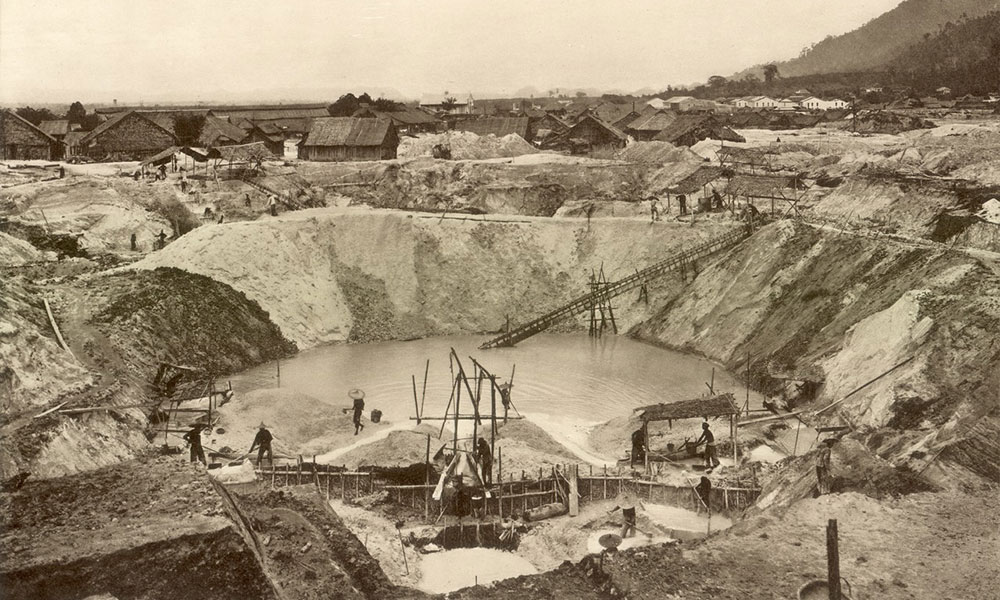
HISTORY: TOLD AS IT IS | The tin mining industry in Peninsular Malaysia was dominated by the Chinese for more than half a century beginning from the middle of the 19th century. Indeed, William Tai Yuen, an authority on Chinese capitalism in British Malaya, describes the period from 1874 to 1914 as the ‘golden age’ of the Chinese tin mining industry.
Similarly, Frank Swettenham – the first Resident-General of the Federated Malay States (FMS) comprising Perak, Selangor, Negeri Sembilan and Pahang – writing in 1906, states that it was Chinese capital and labour that “succeeded in producing more than half of the world’s tin supply” at the end of the 19th century. He adds further: “Their energy and enterprise have made the Malay states what they are today.”
Regrettably, the vital role of the Chinese in the development of Peninsular Malaysia’s tin mining industry, which in turn, greatly impacted the nation’s economic and infrastructure development is dismissed in about two to three sentences in the Form Three school history textbook. Hence, this article seeks to highlight the major contribution of the Chinese to the tin mining industry and its impact on the development of our nation.
Historically, tin mining had been carried out in Peninsular Malaysia since the early centuries of the Common Era (CE). According to Arab writers, tin ore had been traded since the 9th century CE on the west coast of the Malay peninsula, most likely Kedah. Further, Chinese records indicate that tin was a minor product of Kelantan and Pahang in the 13th century and one of Malacca’s principal exports in the 15th century.
Until 1820, tin mining was almost entirely a Malay enterprise with limited production. The two main Malay methods of mining tin were lampan mining (ground sluice) and the dulang method (panning of alluvial tin with a large wooden dish). The main areas of tin production were Kinta and Batang Padang districts in Perak, Pahang, and parts of...
HISTORY: TOLD AS IT IS | The tin mining industry in Peninsular Malaysia was dominated by the Chinese for more than half a century beginning from the middle of the 19th century. Indeed, William Tai Yuen, an authority on Chinese capitalism in British Malaya, describes the period from 1874 to 1914 as the ‘golden age’ of the Chinese tin mining industry.
Similarly, Frank Swettenham – the first Resident-General of the Federated Malay States (FMS) comprising Perak, Selangor, Negeri Sembilan and Pahang – writing in 1906, states that it was Chinese capital and labour that “succeeded in producing more than half of the world’s tin supply” at the end of the 19th century. He adds further: “Their energy and enterprise have made the Malay states what they are today.”
Regrettably, the vital role of the Chinese in the development of Peninsular Malaysia’s tin mining industry, which in turn, greatly impacted the nation’s economic and infrastructure development is dismissed in about two to three sentences in the Form Three school history textbook. Hence, this article seeks to highlight the major contribution of the Chinese to the tin mining industry and its impact on the development of our nation.
Historically, tin mining had been carried out in Peninsular Malaysia since the early centuries of the Common Era (CE). According to Arab writers, tin ore had been traded since the 9th century CE on the west coast of the Malay peninsula, most likely Kedah. Further, Chinese records indicate that tin was a minor product of Kelantan and Pahang in the 13th century and one of Malacca’s principal exports in the 15th century.
Until 1820, tin mining was almost entirely a Malay enterprise with limited production. The two main Malay methods of mining tin were lampan mining (ground sluice) and the dulang method (panning of alluvial tin with a large wooden dish). The main areas of tin production were Kinta and Batang Padang districts in Perak, Pahang, and parts of Negeri Sembilan.
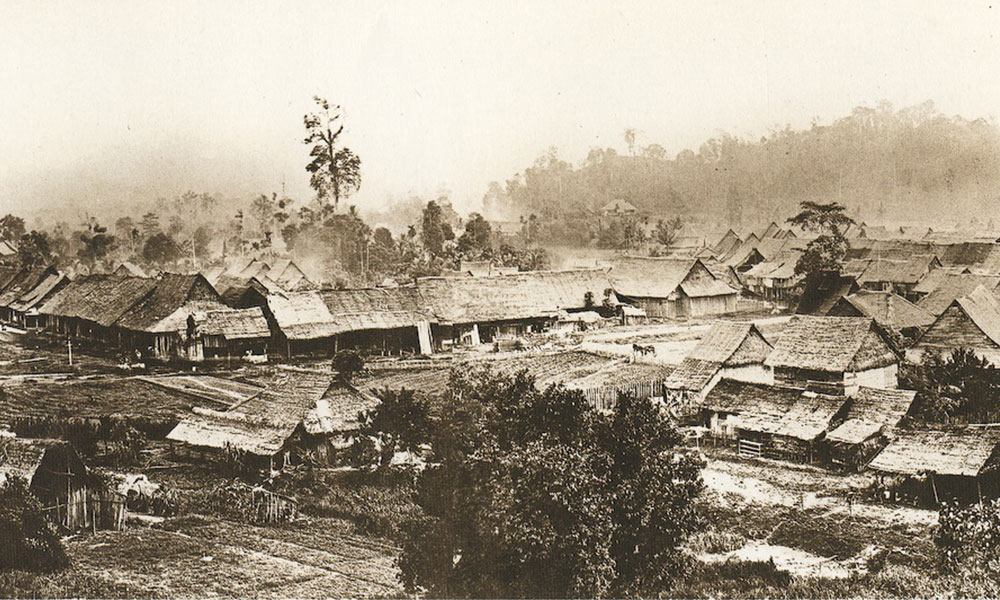
At the beginning of the 19th century, the annual output of tin from Perak was estimated at 500 tons. In the 1820s, the Chinese began to participate in the tin mining industry, particularly on the west coast of Peninsular Malaysia. In 1824, there were about 200 Chinese miners in Lukut, which was then a coastal province of Selangor (now part of Negeri Sembilan) and about 400 of them were in Perak.
In 1828, there were almost 1,000 Chinese miners at Sungai Ujong, Negeri Sembilan. At the same time, Chinese tin miners had also made inroads into the mining districts on the east coast of Peninsular Malaysia - Pahang and Terengganu.
From the 1840s, Chinese tin mining activity in Peninsular Malaysia rapidly increased due to the discovery of many rich tin fields, particularly in Perak; encouragement by several enterprising Malay chiefs to open up tin mines; an increase in the price of tin; and the mass influx of Chinese immigrants.
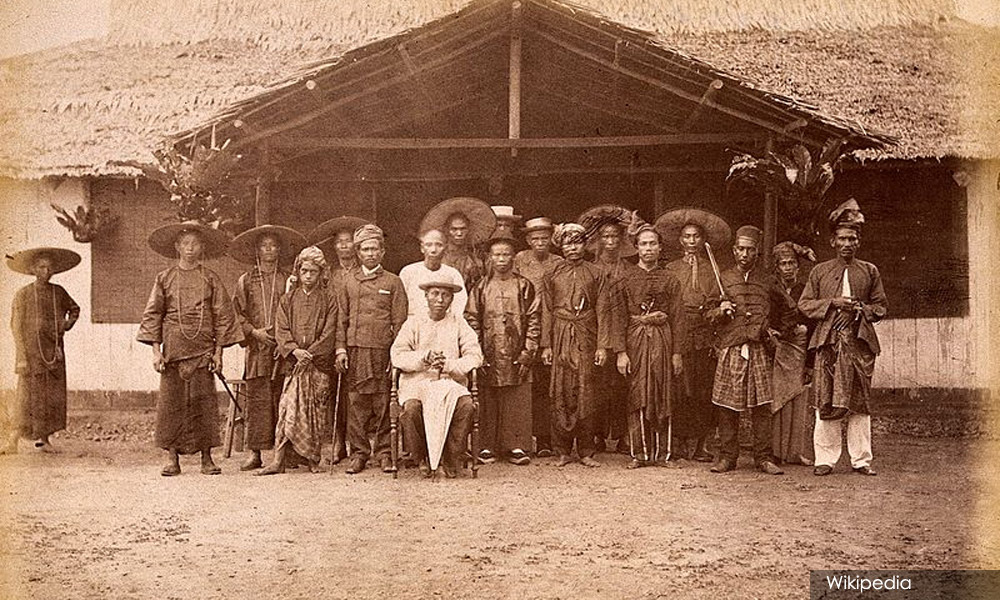
The territorial chief of Larut
In 1848, Long Jaafar, the territorial chief of Larut, discovered rich mining land at Klian Pauh (present-day Taiping) and later at Klian Baharu (Kamunting), which resulted in it becoming an important tin mining district. The Malays, despite being renowned as energetic traders, were disinclined to work for wages in mines. Hence, Long Jaafar developed the tin mines with borrowed capital and Chinese labour.
Upon Long Jaafar’s death in 1857, he was succeeded by his son, Ngah Ibrahim, who further promoted the development of the tin mining industry. He granted mining permits to Chinese entrepreneurs, built a road 12 miles long to connect the tin mines with the Larut river, and established a police force of about 40 men to keep the peace. Consequently, the number of Chinese tin miners in Larut increased from three in 1848 to between 20,000 and 25,000 in 1862.
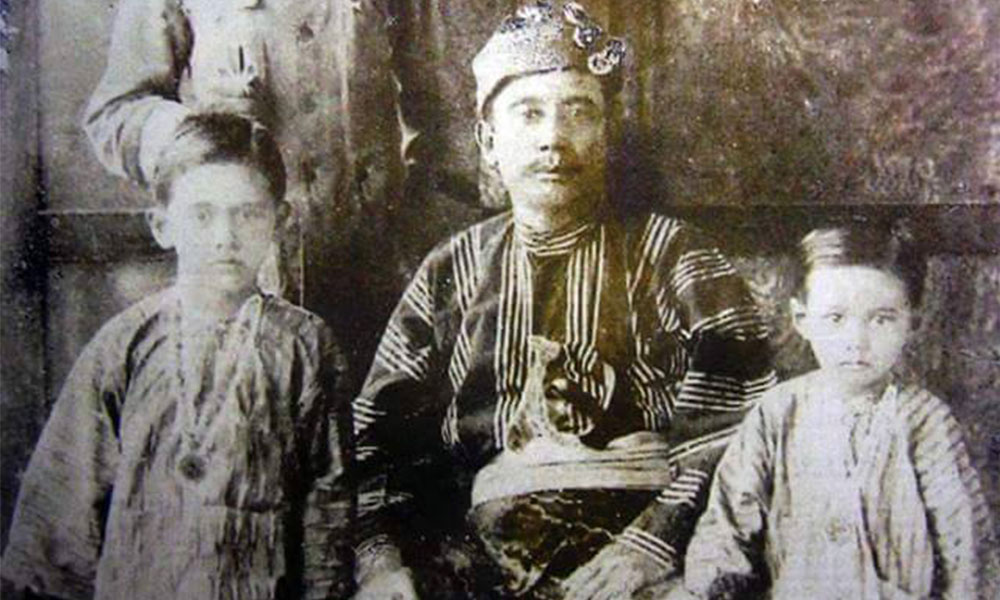
Another example of an enterprising Malay chief is that of Raja Jumaat, who worked in partnership with Chinese merchants from the Straits Settlements, including Chee Yam Chuan, a fifth-generation Malacca Baba Chinese, to develop tin mining in Lukut. His brother, Raja Abdullah too borrowed money from Chinese merchants to open up tin mines in Ampang, Selangor.
In the second half of the 19th century, world demand for tin had increased following the development of the tinplate industry in Britain and the United States. The bulk of the tinplate then was consumed by the can manufacturing industry. The price of tin rose from US$20 a pikul in the mid-1870s to above US$30 in 1879 and remained generally at that level until 1890. This increase in tin price further stimulated the growth of the tin mining industry in Peninsular Malaysia.
The Chinese merchants imported labour on a contract basis from China, mainly from Fukien (Fujian) and Kwangtung (Guangdong) to work in the tin mines. In 1872, there were about 40,000 Chinese miners in Larut, Perak and about 15,000 of them in Sungai Ujong. In 1874, there were about 10,000 Chinese miners in Lukut.
The number of Chinese miners in the Kinta district increased from about 1,000 in 1880 to nearly 45,000 in 1889. By the end of 1889, the Kinta district took over the lead in tin production from Larut district. Interestingly, during 1899-1900, about 100,000 Chinese swarmed into the FMS, mainly to work in the tin mines.
The Chinese introduced the open-cast lombong method of mining tin. They also adopted in the 1880s some Western mining methods such as the use of steam engines and centrifugal pumps to increase production. Steam engines, which were used for pumping water, enabled tin mining to be done much deeper and without the danger of flooding.
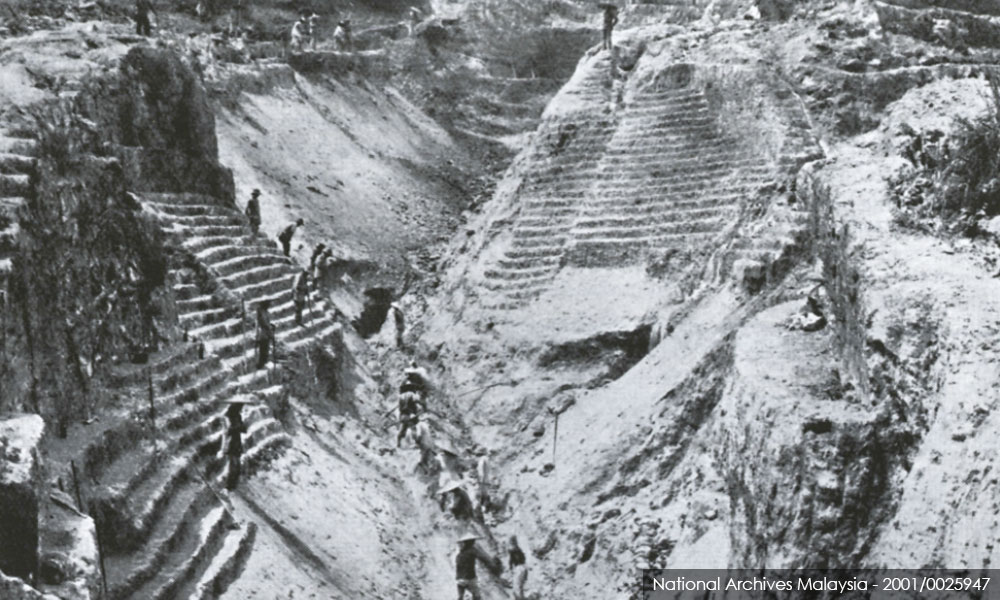
Tin output in Peninsular Malaysia increased from 7,200 tons per annum during 1871-80 to 41,700 tons per annum during 1891-1900. By the end of the 19th century, Peninsular Malaysia became the largest tin producer in the world. In 1900, total production of Malaya’s tin was 43,111 tons which amounted to 54 percent of the world’s output.
For the record, in 1903, there were about 223,600 Chinese engaged in the tin mining industry in the FMS. In 1913, Chinese mines still produced 74 percent of Peninsular Malaysia’s tin output. Among the Chinese tin barons were Yap Ah Loy, Loke Yew, Yap Ah Shak, Yap Kwan Seng, Chan Sow Lin, Loke Chow Kit, Choo Cheng Khay, San Ah Wing, Loke Chow Thye, Chung Keng Kwee and Lee Kong Lam.
End of Chinese dominance
The Chinese dominance of Peninsular Malaysia’s tin mining industry ended with the introduction of dredge mining, beginning 1912 in Perak and 1918 in Selangor. Dredge mining did away with the need for mass labour and allowed the Europeans to dominate the tin mining industry by the 1920s. Chinese entrepreneurs largely shied away from using the tin dredge as it required a large capital outlay and technological expertise to operate successfully.
By 1930, there were 107 tin dredges operating in Peninsular Malaysia. Consequently, in 1938 about two-thirds of tin production in Peninsular Malaysia was by European-owned mines. Tin production rose from 51,600 tons in 1913 to 77,000 tons in 1937 as dredges expanded mining operations to very wet or swampy areas.
The tin mining industry contributed greatly to the economic and infrastructure development of our nation. Between 1880 and 1905, the export duty on tin amounted to one-third to one-half of the total revenue of the then FMS. By 1899, the duty on the export of tin amounted to 46 percent of the total revenue of the FMS.
The revenue from the tin mining industry was used to develop infrastructure and to modernise the FMS. Railways were built to transport tin ore from the mining areas to the ports. Among the railways built were those connecting Taiping with Port Weld (1885), Kuala Lumpur with Port Swettenham (1889), Seremban with Port Dickson (1891), and Ipoh with Teluk Anson (1895). Roads were also built to connect the tin mining areas with ports.
Of great significance, the tin mining industry transformed a jungle-covered country into a thriving economy. Frank Swettenham sums it up best in his book, ‘British Malaya: An Account of the Origin and Progress of British Influence in Malaya’ (1906): “Tin mining has enabled the administration to open up and develop rapidly a country which, 30 years ago, was practically covered by virgin forest.”
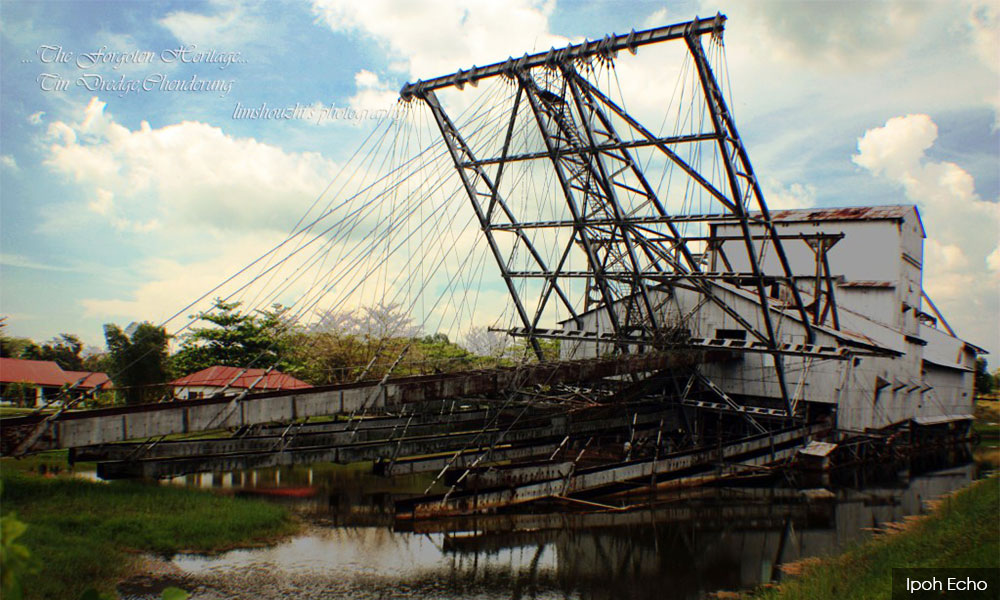
The tin mining industry also spurred the emergence of new towns such as Kuala Lumpur, Taiping, Ipoh, Kampar, Seremban, Bentong and Kuantan. Port cities also were developed to export tin ore. They include Port Swettenham (Port Klang), Port Dickson, Port Weld (Kuala Sepetang) and Teluk Anson (Teluk Intan).
Tin mining also gave rise to a new industry: tin smelting industry. In 1887, the Straits Trading Company, the largest tin smelting company in Malaya was established. The other major smelter was the Eastern Smelting Company (ESC) which was founded by a Chinese entrepreneur in 1902. The ESC was subsequently taken over by Europeans in 1911 and became part of Consolidated Tin Smelters, London's largest tin smelter.
To conclude, it was primarily Chinese capital and labour, with the early encouragement of enterprising Malay chiefs, that led to Peninsular Malaysia becoming the world’s largest tin producer at the end of the 19th century. Of equal importance is the fact that the revenue derived from the tin mining industry greatly facilitated the economic and infrastructure development of our nation. Our school history textbooks should not omit this vital part of our nation’s history.
RANJIT SINGH MALHI is an independent historian who has written 19 books on Malaysian, Asian and world history. He is highly committed to writing an inclusive and truthful history of Malaysia based upon authoritative sources.
The views expressed here are those of the author/contributor and do not necessarily represent the views of Malaysiakini.





Are you sure you want to delete this comment?
This action cannot be undone.