


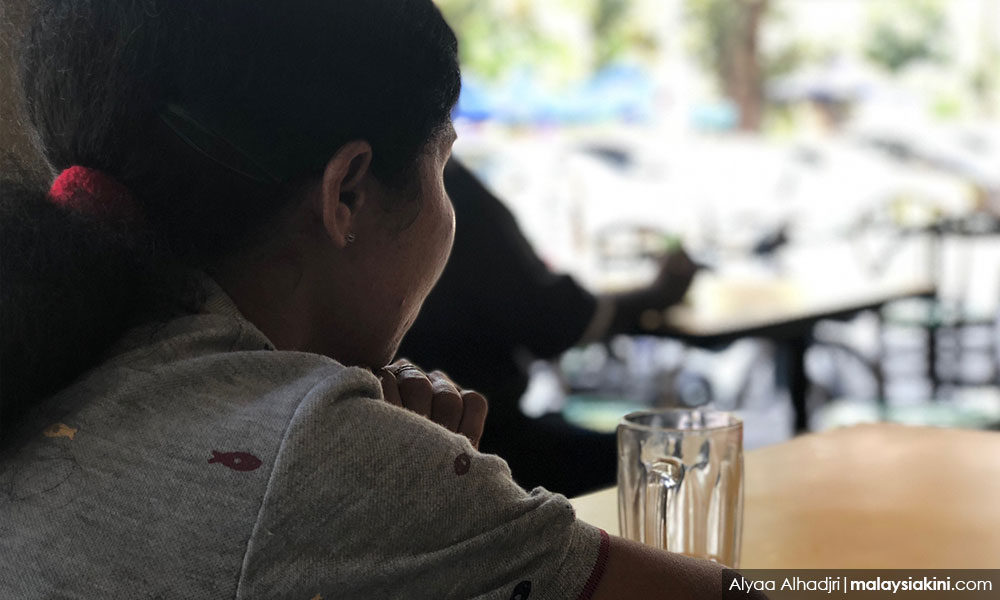

COMMENT | Are we complicit in abuse of domestic workers?
COMMENT | Migration continues to have a woman’s face today, represented by domestic workers, comprising mainly women and children.
Domestic workers live in the most unprotected and vulnerable situations. They work in isolated and individualised work environments which facilitate a plethora of rights violations and bonded labour.
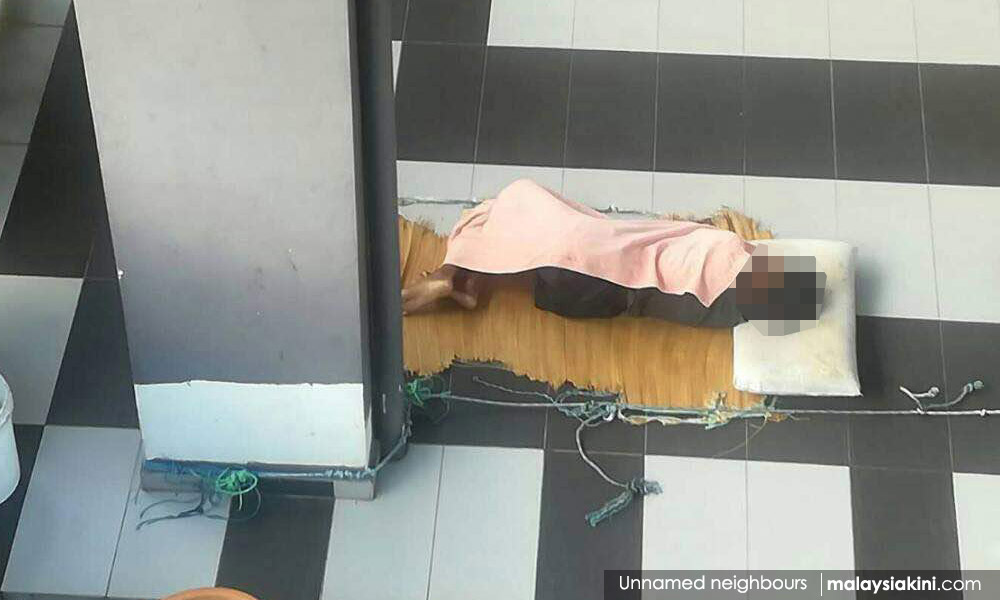
Domestic workers are abused, unpaid, overworked, isolated and confined, raped unrecognised and neglected to the point of death. They continue to be in trafficked situations in Malaysia.
Tenaganita has rescued more than 220 domestic workers from June 2019 to June 2021 with over 3,025 human rights violations committed by employers and recruiting agencies and other stakeholders. This situation reflects that one domestic worker goes through multiple forms of rights violations including rape and other forms of violence.
Each case we have handled tells us the same story, over and over. The abuse, the violence and the violations of rights are born out of systemic issues no matter if the domestic worker is from Indonesia, Cambodia or the Philippines.
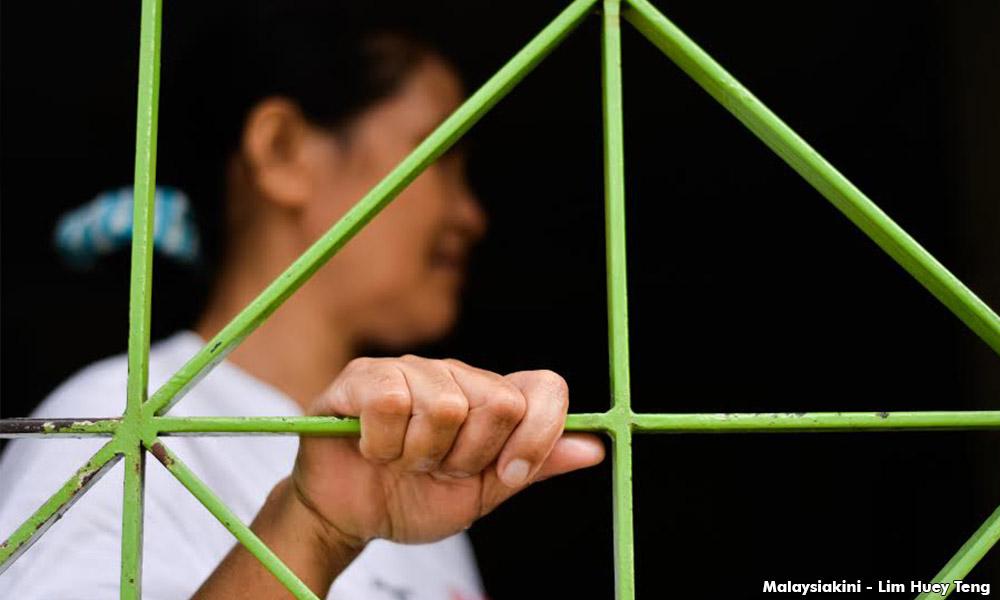
It is of great concern to us that every domestic worker who was abused could not seek help early because she had no off day, her passport was held by the employer and she lacked information as she remained isolated and confined. And this is clearly reflected in a number of cases of abuse and death.
After decades of advocating for the recognition of domestic workers, it is indeed sad to see that the Malaysian government has failed to provide functioning and accessible avenues for support and redress for domestic workers when it is the government’s responsibility to ensure that all workers in the country have knowledge of their rights and avenues for support.
We must accept that the workers’ trust in enforcement agencies is almost completely undermined by a reputation for complicity in the crime as well as fear-mongering by employers, hence they don’t seek help.
Even if they do access enforcement, the truth is no one is really looking out for them in the system. No one seems to be even equipped to look out for them from the beginning until the end since case management is fragmented across different agencies attending to different aspects of a case.
Cases with clear elements of trafficking and forced labour are approached from a punitive, prosecution perspective, where if the employer isn’t charged, the victim also loses the protection of the law, whereas these should be separate processes.
Sadly, our laws are weak seemingly against all but the most physically injurious abuse.
So where are we in this reality? Are we complicit in the violence, abuse and trafficking of domestic workers in Malaysia?
The number of rescues and cases should be decreasing but it is not. Why?...
COMMENT | Migration continues to have a woman’s face today, represented by domestic workers, comprising mainly women and children.
Domestic workers live in the most unprotected and vulnerable situations. They work in isolated and individualised work environments which facilitate a plethora of rights violations and bonded labour.
Domestic workers are abused, unpaid, overworked, isolated and confined, raped unrecognised and neglected to the point of death. They continue to be in trafficked situations in Malaysia.
Tenaganita has rescued more than 220 domestic workers from June 2019 to June 2021 with over 3,025 human rights violations committed by employers and recruiting agencies and other stakeholders. This situation reflects that one domestic worker goes through multiple forms of rights violations including rape and other forms of violence.
Each case we have handled tells us the same story, over and over. The abuse, the violence and the violations of rights are born out of systemic issues no matter if the domestic worker is from Indonesia, Cambodia or the Philippines.
It is of great concern to us that every domestic worker who was abused could not seek help early because she had no off day, her passport was held by the employer and she lacked information as she remained isolated and confined. And this is clearly reflected in a number of cases of abuse and death.
After decades of advocating for the recognition of domestic workers, it is indeed sad to see that the Malaysian government has failed to provide functioning and accessible avenues for support and redress for domestic workers when it is the government’s responsibility to ensure that all workers in the country have knowledge of their rights and avenues for support.
We must accept that the workers’ trust in enforcement agencies is almost completely undermined by a reputation for complicity in the crime as well as fear-mongering by employers, hence they don’t seek help.
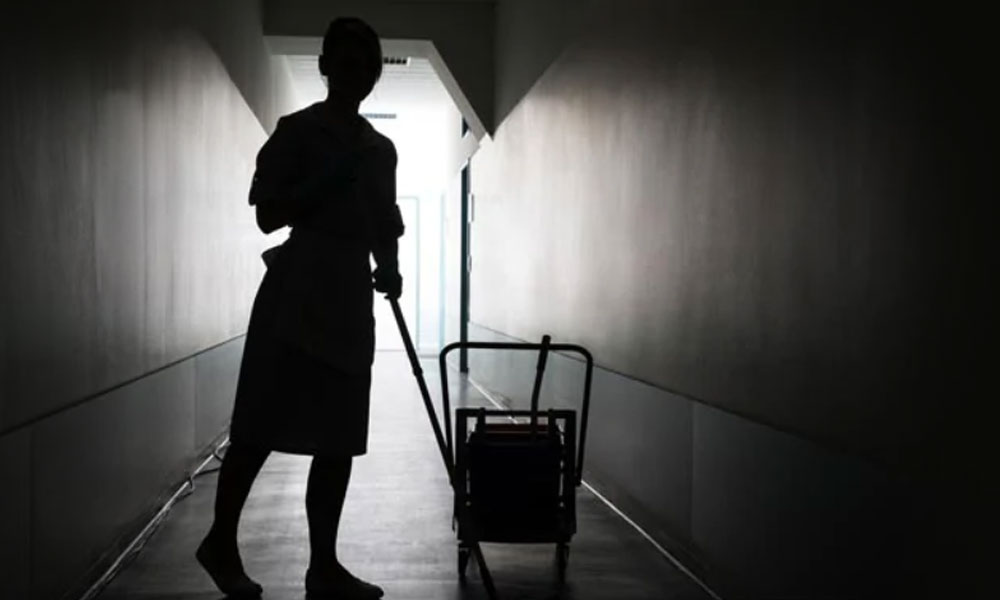
Even if they do access enforcement, the truth is no one is really looking out for them in the system. No one seems to be even equipped to look out for them from the beginning until the end since case management is fragmented across different agencies attending to different aspects of a case.
Cases with clear elements of trafficking and forced labour are approached from a punitive, prosecution perspective, where if the employer isn’t charged, the victim also loses the protection of the law, whereas these should be separate processes.
Sadly, our laws are weak seemingly against all but the most physically injurious abuse.
So where are we in this reality? Are we complicit in the violence, abuse and trafficking of domestic workers in Malaysia?
The number of rescues and cases should be decreasing but it is not. Why?
Home is place of work
For decades, we have emphasised that as long as domestic workers are not recognised as workers under the Employment Act, domestic workers will continue to be treated as servants without any rights, and the state remains complicit in creating slavery-like practices.
In fact, as we know, the concept of domestic servant is rooted in slavery since colonial times. Furthermore, the work involved in the house – all the household chores, child-rearing, caregiving and nurturing – has historically been deemed the role and responsibility of a woman, a wife and a mother.
As such, housework has never been recognised as work. It is still not recognised as important as “real” paid productive work performed outside the home. It is no surprise then that we find through our work that one of the key causes of the continuous abuse, violence and exploitation, and withholding of off days is this perception.
The non-recognition of domestic work as work is further entrenched through the idea of the home as an irrevocably private domain, in which outsiders cannot interfere.

It is not only the individual employer who holds this concept and perception but the state as well. We must accept that once a Malaysian family employs someone at home, their home becomes a place of work that should be subject to government scrutiny.
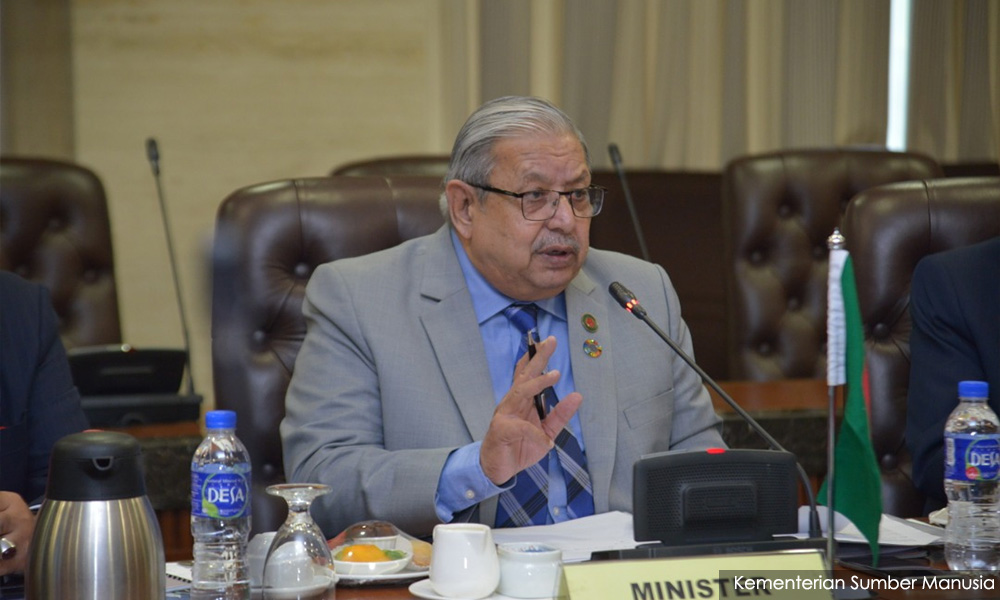
Amending the definition from domestic “servant” to “employee" under the Proposed Employment (Domestic Employee) Regulations 2019 is one step forward by the Human Resources Ministry. However, it would only serve as a useful guideline for employers on how to treat their domestic employees/workers, although it does not have the weight of any law.
Aside from the Employment Act, do current laws such as the Anti-Trafficking in Persons and Anti-Smuggling of Migrants (Atipsom) Act really protect domestic workers? Although the Act looks great on paper with all the amendments, in reality, in the course of our work we have found that it still fails to protect domestic workers who are found to be in human/labour trafficking situations most times.
How is it that the Atipsom Act does not see years of unpaid wages, employers’ failure to renew documents, forcing to work in multiple places, as elements/indicators of human/labour trafficking?
Even when cases are referred to task forces and enforcement agencies to intervene, they are not able to act purportedly because such cases are not seen as trafficking or forced labour situation.
Further to that, we have had many cases where DPPs (deputy public prosecutors) make the decision to deny or revoke protection orders, or even send victims to detention centres/camps when cases and investigations are still ongoing.
In 90 percent of the cases handled, we find domestic workers are undocumented because employers and agents fail to obtain or renew their domestic workers work permit, yet, when they are rescued, or leave the house due to violence and abuse, they are criminalised by the DPPs and the courts for their immigration status.

Immigration offences are often given precedence by the enforcement agencies with a lack of empathy and investigation on how that person becomes undocumented in the first place. Once victims are found to be undocumented, they are immediately seen as criminals.
There are also tremendous challenges in filing cases at Labour Department offices due to the victims’ immigration status, and the onus of proof falls on the victim, not on the employer or agents.
From our case management, we have evidence that many domestic workers are subjected to excessive working hours from morning to night, physically, verbally, psychologically abused, but she is not able to “prove her allegations”, unless she is rescued with fresh injuries.
As such, she is not taken seriously and is unable to obtain any compensation.
Rarely is an effort made by authorities to obtain evidence or corroboration of the affected domestic worker’s testimony from others such as neighbours, other workers in the employer’s home, or NGOs who may have been in contact with the domestic worker.
Separate law on domestic workers
We have found that many of them are also severely traumatised and consequently impaired mentally /psychologically after prolonged abuse.
However, there is no psychiatric assessment carried out to establish whether her mental/psychological state is the consequence of her abuse at the hands of the employer. Most times she is simply labelled as “mentally unsound” which absolves the employer of any responsibility for the mental/psychological harm caused to the worker.
Are the above examples from the cases handled by Tenaganita in any way reflective of the "victim-centred approach” touted by the Malaysian government in documents such as the National Action Plan on Anti-Trafficking in Persons?
So on this International Migrants Day, we once again call the Malaysian government to give importance to increasing the protection by enacting a separate law that encompasses the entirety of domestic work.
We must have the political will to push this through, to address the needs and rights of one of the most exploited and abused labour sectors (consisting mainly of women and children), the domestic workers.
Malaysians must wake up to the need for this separate legislation in line with international standards of rights for domestic workers as described in International Labour Organization’s Convention 189. It is indeed an outstanding irony that Malaysia holds a seat on the UN Human Rights Council, while it continues to deny domestic workers basic human rights and dignity.
In conjunction with the International Migrants Day, Tenaganita had produced two videos under the Feminist Participatory Action Research (FPAR) project funded by Asia Pacific Forum on Women, Law and Development (APWLD) highlighting the many exploitations faced by domestic workers, including being at risk of human trafficking, labour exploitation, forced labour and sexual exploitation whilst calling to ensure their access to decent work, starting with the implementation of labour and social security laws for all domestic workers and a separate law for domestic workers in Malaysia.
GLORENE A DAS is executive director of Tenaganita Women’s Force.



Report this comment
Are you sure you want to delete this comment?
This action cannot be undone.