



HISTORY | The Ceylon Tamils connection
HISTORY: TOLD AS IT IS | The story of Malaysia, to paraphrase Sir Gerald Templer, the former High Commissioner of Malaya, is not the story of one ethnic group alone, but rather of all its people. Each ethnic group has made its own contribution towards nation-building, and consequently, our young must be provided with an inclusive and truthful narrative of our nation’s multicultural heritage.
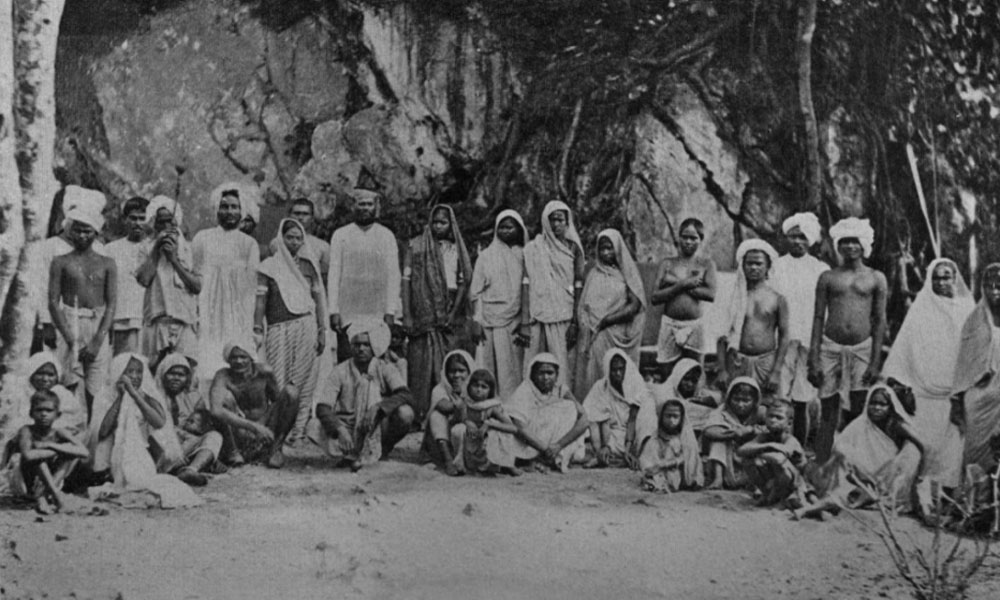
In this regard, not much has been written about the important roles and significant contributions of the Ceylon or Jaffna Tamils (or Sri Lankan Tamils) towards the progress of our nation, particularly in the early development of British Malaya. This community played a crucial role in the British administration of Malaya from the late 1880s until the 1930s which spurred rapid economic and social development, particularly in the Federated Malay States.
According to Sir George Maxwell, the former chief secretary of the Federated Malay States, Malaya owes a great debt of gratitude to the Jaffna Tamils who have “rendered invaluable service” towards the development of Malaya. He adds further that the Jaffna Tamils courageously worked “far away in the jungle, in connection with some road or railway-construction work which the men born and bred in the country would refuse to accept. Throughout the Malay States, there are lonely graves of these men...”.
Hence, this article seeks to fill the gap by narrating the migration of Ceylon Tamils to Malaya, their distribution, growth and progress as a community as well as their roles and contributions towards nation-building.
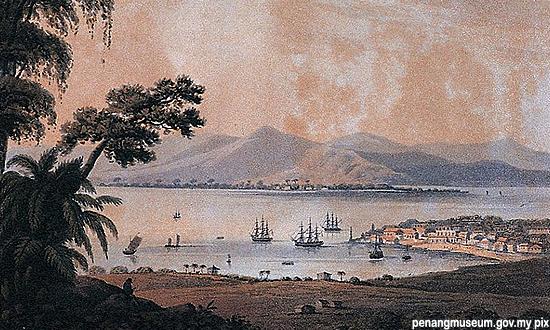
The Ceylon Tamils, who mostly originated from the Jaffna district of northern Ceylon (now Sri Lanka), started migrating to Malaya in considerable numbers beginning from the 1880s due to a combination of “push” and “pull” factors that were essentially economic-driven.
By the middle of the 19th century, the economic conditions in the Jaffna district had become adverse due to the rapid increase in population, increased cost of living, and scarcity of jobs. Among the “pull” factors, the Ceylon Tamils were lured by attractive job opportunities in Malaya as a result of British colonial expansion, favourable climate and reliable transportation routes.
In 1896, the four Malay states of Perak, Selangor, Negeri Sembilan and Pahang were officially amalgamated to form the Federated Malay States (FMS). By 1914, British colonial rule over Malaya was consolidated and...
HISTORY: TOLD AS IT IS | The story of Malaysia, to paraphrase Sir Gerald Templer, the former High Commissioner of Malaya, is not the story of one ethnic group alone, but rather of all its people. Each ethnic group has made its own contribution towards nation-building, and consequently, our young must be provided with an inclusive and truthful narrative of our nation’s multicultural heritage.
In this regard, not much has been written about the important roles and significant contributions of the Ceylon or Jaffna Tamils (or Sri Lankan Tamils) towards the progress of our nation, particularly in the early development of British Malaya. This community played a crucial role in the British administration of Malaya from the late 1880s until the 1930s which spurred rapid economic and social development, particularly in the Federated Malay States.
According to Sir George Maxwell, the former chief secretary of the Federated Malay States, Malaya owes a great debt of gratitude to the Jaffna Tamils who have “rendered invaluable service” towards the development of Malaya. He adds further that the Jaffna Tamils courageously worked “far away in the jungle, in connection with some road or railway-construction work which the men born and bred in the country would refuse to accept. Throughout the Malay States, there are lonely graves of these men...”.
Hence, this article seeks to fill the gap by narrating the migration of Ceylon Tamils to Malaya, their distribution, growth and progress as a community as well as their roles and contributions towards nation-building.
The Ceylon Tamils, who mostly originated from the Jaffna district of northern Ceylon (now Sri Lanka), started migrating to Malaya in considerable numbers beginning from the 1880s due to a combination of “push” and “pull” factors that were essentially economic-driven.
By the middle of the 19th century, the economic conditions in the Jaffna district had become adverse due to the rapid increase in population, increased cost of living, and scarcity of jobs. Among the “pull” factors, the Ceylon Tamils were lured by attractive job opportunities in Malaya as a result of British colonial expansion, favourable climate and reliable transportation routes.
In 1896, the four Malay states of Perak, Selangor, Negeri Sembilan and Pahang were officially amalgamated to form the Federated Malay States (FMS). By 1914, British colonial rule over Malaya was consolidated and comprised the Straits Settlements (Penang, Singapore and Malacca), FMS, and the Unfederated Malay States (Perlis, Kedah, Kelantan, Terengganu and Johor).
The burgeoning British bureaucracy required English-educated Asians to staff the lower ranks of the Malayan Civil Service. Additionally, the European-owned coffee, oil palm and rubber estates also required English-educated supervisory and clerical staff.
Civil service
British colonial administrators, many of whom had previously served in the Ceylon Civil Service, favoured employing the Ceylon Tamils in the subordinate ranks of the Malayan Civil Service for several reasons.
First, the Ceylon Tamils were regarded as being intelligent, hardworking, loyal and honest. Second, they had a good command of both written and spoken English and thus could communicate easily with the British bureaucrats. Third and finally, the Ceylon Tamils were excellent in mathematics and accounts which made them valuable in departments such as the Federal Treasury and Customs.
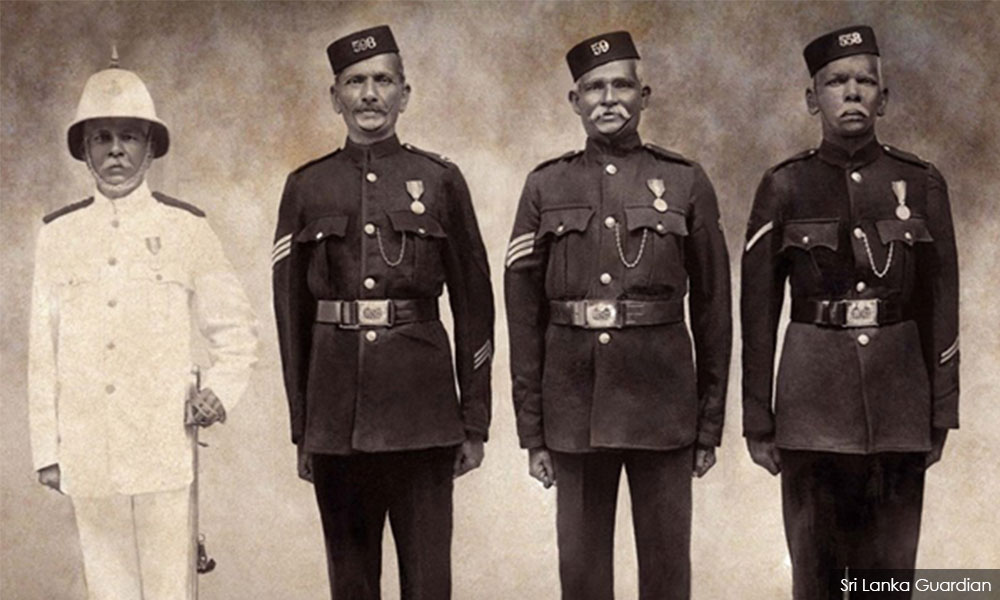
Among the early Ceylon Tamil immigrants to Malaya were several members of the community who were seconded for service in the Malay States as early as November 1874. Subsequently, the Ceylon Pioneer Corps (CPC), which consisted of about 200 surveyors, overseers, clerks, dressers and artisans, was seconded for service in Perak in 1883.
Apart from constructing roads and bridges, the CPC successfully supervised the construction of the first railway line in Malaya from Taiping to Port Weld which was completed in 1885. The CPC was subsequently transferred to Selangor to construct the railway line connecting Kuala Lumpur to Klang.
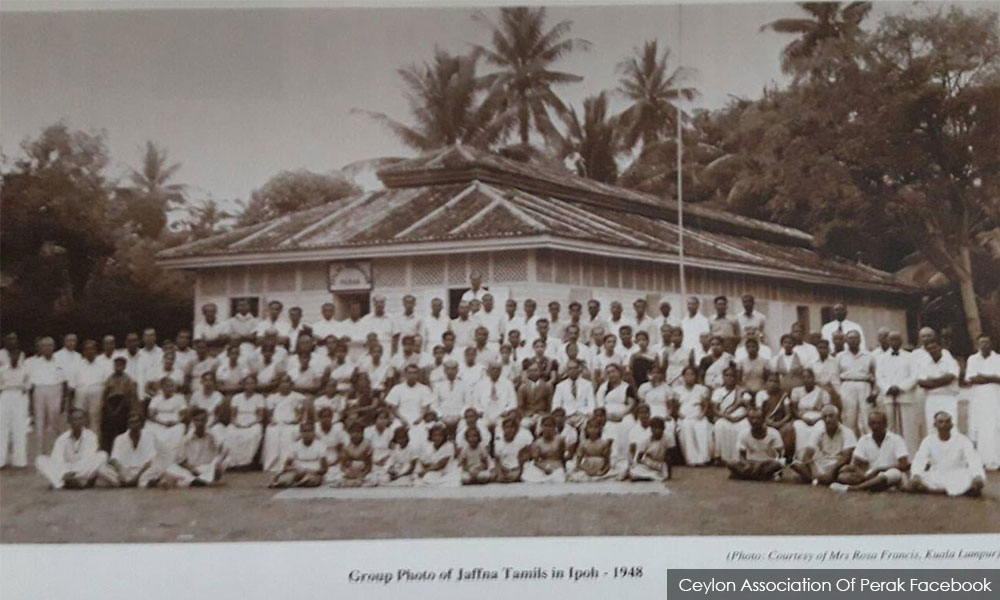
The formation of the FMS in 1896 resulted in the creation of numerous federal departments, including Railway, Survey, Post and Telegraph, Medical, Public Works, Federal Treasury, and Audit. Thousands of Asians (mainly Ceylon Tamils) were recruited to fill vacancies in Division II and III of the Civil Service.
The population of Ceylon Tamils in Malaya (excluding Singapore) increased from about 7,000 in 1911 to about 14,500 in 1931. About 90 percent of them resided in the FMS, with the largest concentration in Selangor, followed by Perak, Negeri Sembilan and Pahang.
As stated by Rajakrishnan Ramasamy in his well-researched book, ‘Sojourners to Citizens: Sri Lankan Tamils in Malaysia 1885-1965’, the Ceylon Tamils virtually dominated the clerical and technical services in British Malaya for almost 50 years from 1885 until 1930. In 1919, they formed 46 percent of the FMS Clerical Service.
It was not uncommon for all the clerks in government departments to be of Ceylon Tamil origin. For example, in 1920, all of the clerks in the Kuala Langat District Office were Ceylon Tamils. By 1921, more than 50 percent of subordinate officers in the government services were Ceylon Tamils, and by 1930, this figure had reached 65.3 percent.
As a vital component of the British Civil Service in Malaya before the 1930s, the Ceylon Tamils contributed significantly towards the opening up of the country and laying the foundations of a modern state. The Ceylon Tamils served admirably as technical assistants in the construction of roads, railways and bridges; assistant land surveyors; overseers; educators; railway station masters; chief clerks; clerks; office assistants; and dressers and hospital assistants.
In the words of Rajakrishnan Ramasamy again, it was “the Ceylon Tamil junior officers of the Malayan railways … who surveyed and brought out specifications for the laying of lines, maintained accounts, regulated the smooth running of the trains and managed the isolated railway stations in every remote part of early Malaya as station masters”.
Further, according to JHM Robson, a British government official and the first editor of The Malay Mail, Jaffna Tamils “who were placed in charge of many of the smaller hospitals did magnificent work within the limits of their qualifications.” For the record, Ceylon Tamil subordinate officers assisted the British to design and construct the Pudu Jail, Klang Water Works and numerous other government buildings in the FMS.
Self-reliant and far-sighted
Being self-reliant and far-sighted, the Ceylon Tamils established various associations to cater to the needs of the community. In 1900, they established the Selangor Ceylon Tamils Association to promote their interests and wellbeing. The Ceylon Tamils also established the Vivekananda Ashrama in 1904 in Brickfields, Kuala Lumpur to spread the Vedantic teachings among Hindus as propounded by the eminent Hindu sage, Swami Vivekananda.
Subsequently, in 1924, the Jaffnese Cooperative Society Limited was formed to prevent indebtedness and to promote thrift among the Ceylon Tamils. Being an enterprising lot, they also established a housing estate, Taman Kanagapuram, along Old Klang Road, Kuala Lumpur.
To promote sporting activities, the Ceylon Tamils formed the Tamilian Physical Culture Association (TPCA) in 1914 and built their first clubhouse in 1919. The TPCA not only emerged as a leading sports club but also nurtured several individuals who helmed important positions in national sporting organisations.
These individuals include NM Vasagam, the first secretary of the Federation of Malaya Olympic Council; K Aryaduray, the first secretary of the Malayan Hockey Federation; V Rajaratnam, the first secretary of the Lawn Tennis Association of Malaya; and G Vijayanathan, Malaysia’s legendary hockey umpire and eminent secretary of the Malaysian Hockey Federation for 26 years.
Among Malaysians of Ceylon Tamil descent who have made notable contributions at the national level are EEC Thuraisingham who has the distinction of being the first local Member (Minister) for Education in the Communities Liaison Committee; DR Seenivasagam and SP Seenivasagam (brothers), two renowned politicians and lawyers who founded the People’s Progressive Party; and K Thanabalasingam, the first Malaysian and youngest Chief of the Navy who retired as Rear Admiral.
Among the prominent Ceylon Tamil high ranking civil servants and military personnel who have served the nation admirably are Ramon Navaratnam, former secretary-general of the Transport Ministry and deputy secretary-general of the Finance Ministry; Major-General N Selvarajah (Army); S Kandiah, first Asian auditor-general of Malaysia (1966-69); M Rajasingam, director-general of Pos Malaysia 1976-86, the man behind Malaysia’s postal code system and mini-post offices; P Alagendra, former police chief of Selangor (retired as deputy commissioner of police); and S Kulasingam (retired as assistant commissioner of police) who was widely regarded as the most fearless Malaysian police officer in the 1970s.
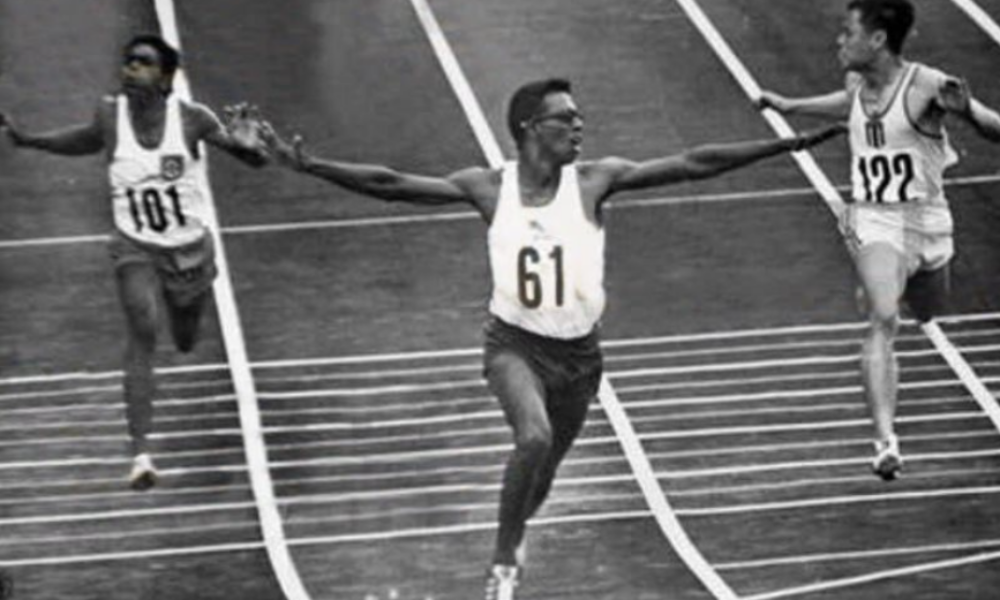
In the field of sports, Malaysians of Ceylon Tamil origin who brought glory to the nation include Mani Jegathesan (The “Flying Doctor”) who was the fastest man in Asia in the 1960s and Sportsman of the Year 1966; M Rajamani, the first Malaysian female athlete to clinch gold (400 metres) at the Asian Games and Sportswoman of the Year 1966 and 1967; Sri Shanmuganathan, triple Olympian and captain of the renowned 1975 Malaysian World Cup hockey team; Karu Selvaratnam, a double international at cricket and athletics; R Yogeswaran, who represented the nation in hockey at the 1964 Tokyo Olympics and 1968 Mexico Olympics; and MC Kailasapathy, one of the nation’s best cricket all-rounders.
There are many more members of the community who have stamped their mark in the past, and continue to make important contributions in various fields in contemporary Malaysia.
Malaysians of Ceylon Tamil descent can take great pride in having made significant contributions to the growth and development of the nation that far outweigh their tiny representation. In the words of Abdul Razak Hussein, Malaysia’s second prime minister, the Ceylon Tamils in Malaysia “have served the country in every field rather well”.
RANJIT SINGH MALHI is an independent historian who has written 19 books on Malaysian, Asian and world history. He is highly committed to writing an inclusive and truthful history of Malaysia based upon authoritative sources.
The views expressed here are those of the author/contributor and do not necessarily represent the views of Malaysiakini.



Report this comment
Are you sure you want to delete this comment?
This action cannot be undone.