



COMMENT | EPF withdrawals a time bomb, universal solutions needed
COMMENT | When the Employees Provident Fund (EPF) withdrawal for emergency relief purposes was announced, many rejoiced, while others opposed the move vehemently.
While the B40 (Bottom 40 percent of income earners) group has definitely been hard hit by the pandemic, significant numbers of the M40 have seen more drastic changes to their standard of living and sources of income.
That is the main reason the EPF withdrawal resonated with so many out there.
Prime Minister Ismail Sabri Yaakob said 580,000 M40 households in Malaysia fell to the B40 percentile.
With Malaysia’s average household size of four, that is...
COMMENT | When the Employees Provident Fund (EPF) withdrawal for emergency relief purposes was announced, many rejoiced, while others opposed the move vehemently.
While the B40 (bottom 40 percent of income earners) group has definitely been hard hit by the pandemic, significant numbers of the M40 (middle 40 percent of income earners) have seen more drastic changes to their standard of living and sources of income.
That is the main reason the EPF withdrawal resonated with so many out there.
Prime Minister Ismail Sabri Yaakob said 580,000 M40 households in Malaysia fell to the B40 percentile.
With Malaysia’s average household size of four, that is 2.2 million people and these do not include the people who fell in between the four-decile matrix of the M40.
Meanwhile, EPF only has 7.6 million actively contributing members (15.9 million total members), which equates to 24 percent of the Malaysian population.
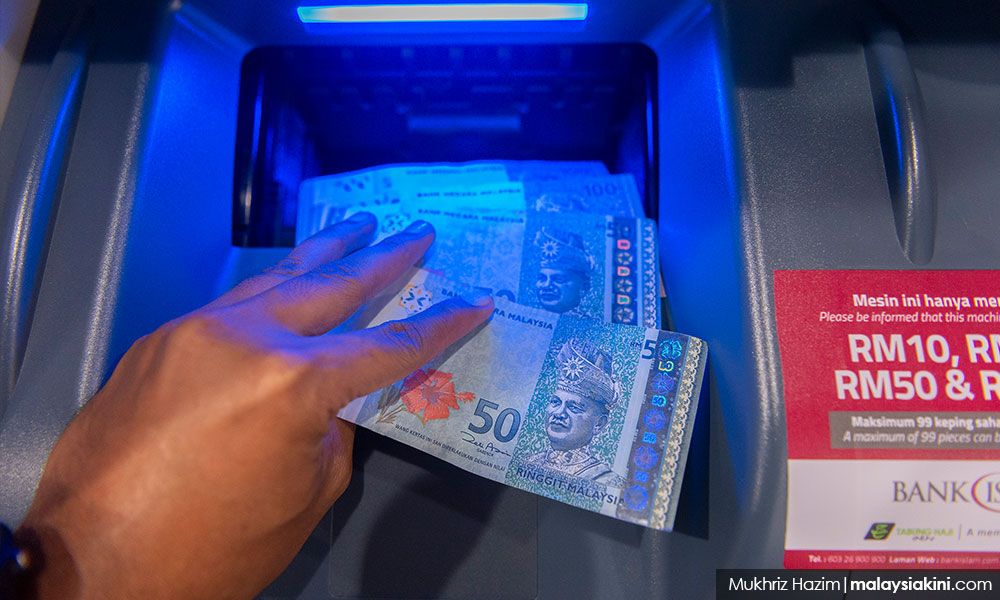
With i-Lestari, i-Sinar and i-Citra, a total of RM101 billion has been withdrawn.
The EPF has rightly voiced its belief that another round of withdrawals might negatively impact the capital market in the country.
A few days ago, it was reported that Bangunan KWSP on Jalan Raja Laut, owned by EPF, was sold to a private company. This signals troubling times for the pension fund.
Finance Minister Tengku Zafrul Abdul Aziz made it clear that more EPF members will retire below the poverty line if the government allows additional withdrawals of their savings.
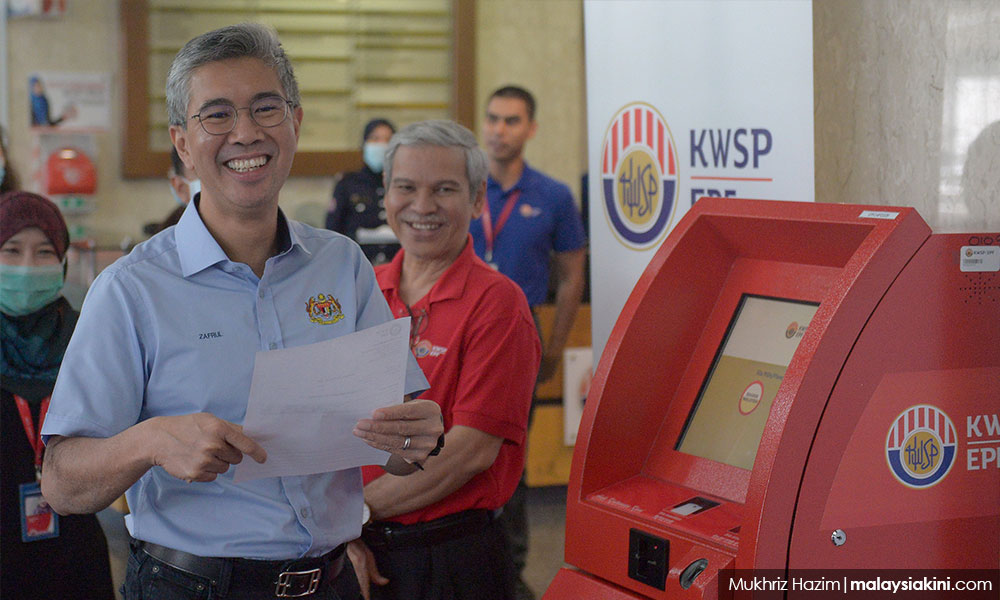
He said this was due to the continuous decline in EPF members’ retirement savings and that currently almost half of the members had less than RM10,000 in their accounts.
On the other hand, former prime minister Najib Abdul Razak is supporting the further withdrawal of EPF i-Citra savings of RM10,000 for flood-affected victims and Umno Youth is still championing this move.
Taking stock, the root of this debate lies in the fact that the M40 is the majority of actively contributing EPF members and they need the money to continue paying for mortgages and other daily necessities.
With 6.1 million EPF members having less than RM10,000 in their accounts, the dwindling savings are worrying for those who have made withdrawals because Malaysia is fast becoming an ageing nation.
The nation can expect 14 percent of its population to be aged 65 and over within a couple of decades.
I agree with Klang MP Charles Santiago that a robust social protection system is needed and PSM's S Arutchelvan’s call for addressing inequality by increasing the tax on the rich.
However, more specific solutions to reform the social protection system are needed, and it has to address the needs of the M40.
Some recommendations
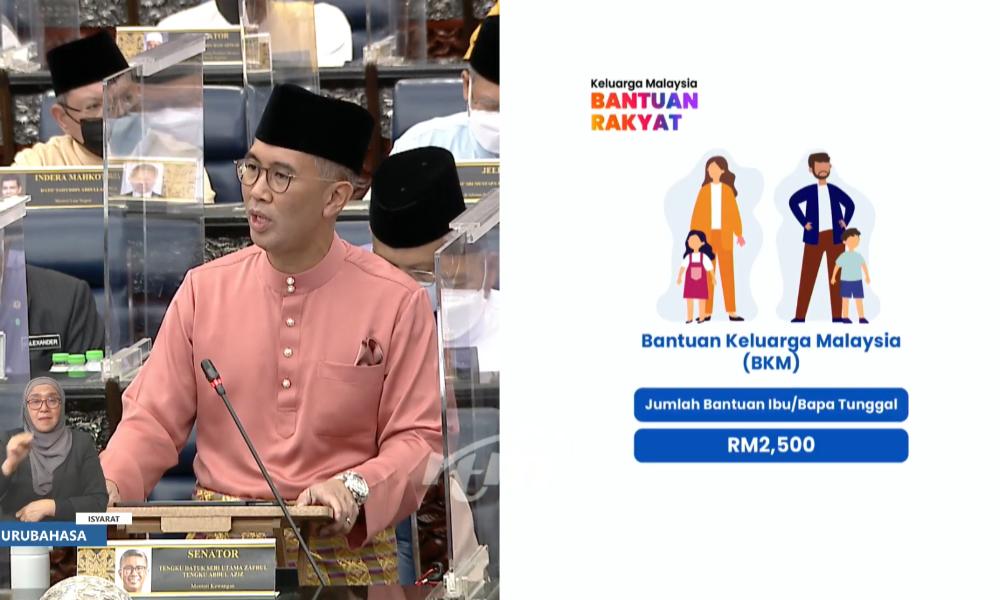
The first recommendation is to introduce a monthly child benefit within the framework of the Bantuan Prihatin Rakyat at between RM150 and RM200, depending on the child’s age.
Child benefits are a best practice of social security for high-income countries (HIC) such as Australia and Canada.
An old-age benefit within the same framework can be introduced as well.
For informal sector workers, new social security products need to be designed with legal and administrative processes reduced.
With Malaysia’s intention to transit to a HIC (high-income country), the government needs to progressively adopt such social security standards.
This would lead to arguments of possible abuse that children from the T20 would benefit from the cash transfers. This was the same contention when BR1M was introduced and other similar cash transfers the government has implemented.
I believe an analogy can be made with water lost to leaks in the water supply system, where in the US it is reported at 50 percent.
Knowing this fact, would you, as a consumer, choose to subscribe and pay for clean tap water or refuse the use of water from the water distribution pipe system because of the leaks?
Let us accept the fact that “leakages” will happen, and preventing and fixing "leakages" will cost more than turning a blind eye on the minor “leakages”.
There are bound to be people who should not have benefited from cash transfers.
Having a broad, comprehensive and all-inclusive cash transfer will cover those most in need but if the social protection system targets specific groups, the most vulnerable will often be left behind due to red tape and stringent requirements imposed to prevent “leakages”.
Malaysia needs to go beyond seeing social protection as building resilience and reducing the risk of poverty. Social protection should be an investment in human capital and social cohesion.
CHRISTINE YP is a former journalist working on development programmes.
The views expressed here are those of the author/contributor and do not necessarily represent the views of Malaysiakini.



Report this comment
Are you sure you want to delete this comment?
This action cannot be undone.