




Organ trade - human race's road to perdition
Associate Professor Lee Wei Ling, the director of the National Neuroscience Institute and daughter of Singapore's Minister Mentor Lee Kuan Yew, in a letter to the Straits Times on Feb 6 opined that an organ is no different from a life-saving drug and urged the Singapore government to legalise organ trading to overcome the republic's chronic organ shortage.
Currently, under Singapore's controversial Human Organ Transplant Act (Hota), organs are allowed to be removed from brain-dead patients who are not Muslims, unless patients opt out.
Associate Professor Lee Wei Ling, the director of the National Neuroscience Institute and daughter of Singapore's Minister Mentor Lee Kuan Yew, in a letter to the Straits Times on Feb 6 opined that an organ is no different from a life-saving drug and urged the Singapore government to legalise organ trading to overcome the republic's chronic organ shortage.
Currently, under Singapore's controversial Human Organ Transplant Act (Hota), organs are allowed to be removed from brain-dead patients who are not Muslims, unless patients opt out.
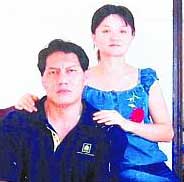 The family of the late Sim Tee Hua found out just how controversial and uncompromising the Hota could be when Sim, a lorry driver, lay dying at the Singapore General Hospital following a stroke he suffered on Feb 1. The family's nightmare began when three days later, following further brain hemorrhage, he was certified as brain dead. The family was told that Sim had not opted out of the Hota and so his organs would be harvested for transplant on that same day.
The frantic family asked for more time and were given an additional day. The following day, there was pandemonium when further pleas for an extension of time was declined and Sim was being prepared for urgent "harvesting" of his deteriorating organs. A standoff between Sim's 20 odd relatives and hospital staff at the hospital's ICU saw nine police officers and additional hospital staff walking in to calm the situation.
Sim was apparently wheeled through an "alternate" door to the operating theatre where the "harvesting" of his organs was presumably carried out in an orderly fashion.
Singapore's Ministry of Health subsequently announced later that Sim's kidneys went to patients who had waited six to eight years for donor organs. His parents were offered five years of subsidised hospital fees and his family received a thank-you letter from the ministry for their "generous organ donation."
Following this episode, it has suddenly dawned on many Singaporeans that when it comes to organ transplantation at least, compassion in this industry of caring can be all but a footnote - at least for Sim's family. Organ transplantation programmes can be tricky. Could this alarming scenario apply to the Malaysian society in general?
First heart donor
Modern organ transplantation had its beginnings early last century but really came into existence when Alexis Carrel showed it was surgically possible in dogs in 1905. His efforts won him the Nobel Prize. The advent of the ventilator in 1928 at Harvard and the heart-lung machine by Gibbons in 1937 meant that liver and heart transplantation were now possible. Christian Barnard on Dec 3, 1967 showed that heart transplantation was possible in humans when he transplanted the heart of 25 year-old Denise Durval, a mixed-race girl and the world's first heart donor who was hit by a vehicle while walking to her car from a fast food shop in South Africa.
Brain tissue began leaking from her ear. Durval was dying. Her father consented to the removal of her heart and Barnard transplanted it to 55-year-old Louis Washkansky, a Lithuanian Jew in end-stage heart failure at Groote Schuur Hospital, Cape Town, South Africa.
Washkansky lived for eighteen days before succumbing to rejection and pneumonia. Barnard gained instant recognition for his efforts and in the following two years many countries jumped on the bandwagon and performed almost 100 transplants with almost all the patients dying within 60 days. Heart transplants almost instantly stopped as quickly as they had begun. The cause was there was no proper treatment for acute rejection until the discovery of cyclosporine in 1974 and eventually the introduction of FK-506 in 1994 to the field of transplantation.
However, analysis of the events before and after Barnard's pioneering heart transplant is what is being highlighted today, transplantation's final two hurdle's which appear not to diminish in importance despite almost 40 years in existence the question of:
1. Brain death and
2. Financial implications
Barnard unknowingly at that time by performing the world's first heart transplant opened up a Pandora's Box of controversies and arguments pertaining to these two problems which till this day influence transplant programmes all over the world today.
Brain death
Christiaan Barnard trained in the United States with Norman Shumway of Stanford University Medical Centre and Richard Lower from the Medical College of Virginia, Richmond, Virginia. Although everyone knew that technically heart transplantation itself was fairly straightforward, no surgeon in the US dared take a risk as matters pertaining to immunosuppressants and a scientific definition of brain death had not been established. Why take brain death as the definition of death and not the traditional definition of death which is stoppage of the heart?
Organ viability is greater only if organs receive all necessary nutrients at the time of removal. Thus a liver, lung, kidney or heart would have better viability and therefore would result in better surgical outcomes if it was perfused by the body's blood. But no brain death laws had been established then and removing Durval's heart without having the heart stopped would constitute murder. Barnard had to confront this question when he had to remove Durval's heart.
No one really knows what happened in the operating theatre on Dec 3, 1967. But when Durval's heart finally stopped, there was confusion in the operating rooms. Incredibly, Barnard thought his brother Marius, also a surgeon, would remove the heart and he, Barnard, would transplant it. It was resolved that Barnard would do both. But by the time he removed Durval's healthy, pink heart, it had declined to a morbid greyish-blue. It was put into a dish and taken to the anaesthetized Washkansky waiting in the next room. There was a feeling of pessimism and doubt that this heart could be restarted. But Barnard recounts that after a few electrical shocks, Durval's heart began beating strongly. (One Life, Barnard, Christiaan and Curtis Bill Pepper. Australasian Publishing Company, Sydney, Australia 1972)
The following year, an ad hoc committee at Harvard Medical School rejected the notion that death was when the heart stopped. Rather, they claimed a person was dead when higher neurological functions ceased. They came out with a list of criteria and quickly established brain death laws which were challenged half-heartedly in US courts. (Report of Ad Hoc Committee of the Harvard Medical School to Examine the Definition of Brain Death: A definition of irreversible coma. JAMA 1968; 205:337).
These criteria subsequently became the law of the land. As all things were done in a hurry no one knew the implications it would have in the future. An ever-trusting American public believed the medical fraternity who were largely responsible for coming up with these criteria. Not so in Japan.
Science vs religion
After Barnard's accomplishment, an American-trained Japanese surgeon Juro Wada wanted to become the first surgeon to do a heart transplant in Japan. And he achieved this in 1968 when he successfully transplanted a heart and the operation was heralded as a victory for Japanese medicine. Then the controversy began. It seemed that Wada had been in charge of ascertaining the suitability of the donor, as well as the recipient's need for a heart. Soon, doubts emerged about whether the donor had been brain-dead after all. Two and a half months after the operation the recipient died, and Wada's reputation plummeted.
Records indicated that the recipient might not have needed a new heart in the first place; later testimony suggested that someone had tampered with the patient's old heart to make it appear closer to failure. Government prosecutors wanted to charge Wada with murder, and the case might well have led to an indictment but for the untimely death of a key witness. The young doctor who was with Wada during the operation died of stomach cancer before prosecutors could gather his testimony. After two years of investigation, the charges were dropped for lack of evidence. Wada remained defiant, but public opinion had turned against him. After the briefest of honeymoons, heart transplantation was suddenly taboo in Japan.
Such a sudden and decisive backlash against medical technology didn't crystallize overnight. In fact, most Japanese have never trusted doctors trained in Western medicine; after the Wada controversy, they rejected the idea of brain death altogether. Japanese religious tradition treasures the torso and heart as vessels of the soul. Spiritually speaking, the notion that a person whose heart was still beating could be dead was ridiculous. Japan's Shinto Buddhists protect bodies for days after death in the belief that reluctant souls linger. And hoping for the death of another to prolong one's own life could only create bad karma. The doctors did little to help their cause: their disdain for these traditional beliefs only alienated their patients.
The 1968 committee that endorsed brain-death syndrome in the US consisted largely of physicians. But when Japan established its own brain-death committee in 1989, it included human rights activists, social scientists, a Buddhist lawyer, a Catholic novelist, a newspaper editor, an environmentalist, and a labour leader. While the American committee had reached a consensus quickly, the Japanese committee debated for three years. Finally, in a hotly contested vote, a slim majority agreed that brain death was an appropriate definition of death. The government promised action. But nothing happened. No laws were passed. The committee's recommendation settled into an uneasy political limbo. No heart transplants were performed in Japan.
In December 1996, brain death became an issue again. A physician-turned-parliamentarian submitted a bill to codify brain-death syndrome in Japan, and the ruling party offered its support. Resistance was immediate, but it came from an unpromising source: an obscure opposition-party parliamentarian named Takashi Yamamoto and his deputy, Hiroshi Suda.
Suda was careful to clarify Yamamoto's position. "We support people's individual right to choose to donate organs," he said. "But Yamamoto's experience has taught him that the most painful thing about losing a family member to a traffic accident is the suddenness. If you define human death as brain death and give doctors the power to demand organs, a family member might have his heart or lung ripped out before you even have a chance to mourn. And with all the secrecy surrounding doctors in Japan, it would be easy for them to make money harvesting organs from the disadvantaged - from working-class kids who die in car crashes, for instance."
Dr Yusho Muranaka, a scholar and a priest is an outspoken critic of organ transplantation and the author of a book about brain death and Buddhism. How did he become interested in brain death in the first place? "I can't tell you how many funerals I've conducted over the years for poor youngsters who've been killed in traffic accidents." Part of Muranaka's job was to help identify and purify bodies before cremation. "Seeing them like that is awful. These kids who die violent deaths in traffic accidents would become Japan's organ factories if we had America's brain-death laws. I can't bear the thought of it." This sounded familiar.
But what Muranaka said next was more surprising. "And to think that these innocent young organs would be used to help people who don't deserve them." Muranaka hastened to explain: "Most patients who want replacement organs are older people who have brought their condition on themselves through destructive lifestyles. They drink or smoke too much; they destroy their bodies. In this cutthroat, dog-eat-dog, high-tech society of ours, people forget to stay healthy by cultivating their spiritual lives. If they cultivate bad karma, they shouldn't be allowed to get off the hook by pilfering pieces of some hapless youngster. We are trying to use technology to fix these problems, when many of them are caused by technology in the first place. "
On June 16, 1997, brain death became a legal definition of death in Japan, but not the legal definition of death. Under the amended law, only people who sign up in advance to be donors can be pronounced legally dead upon meeting brain-death criteria. For citizens uncomfortable with brain death, the age-old stopped-heart criterion remains the standard. The Japanese public contested the aggressive designs of their doctors, but Americans simply let the medical industry, and the state, choose death for them.
US doctors encountered little resistance, and their demands for organs inevitably influenced decisions that should have fallen to philosophers, patients, and priests. When the state defines death, further abuses are bound to follow. In America, organ shortages are driving the government and medical establishment to increasingly Orwellian tactics: federal agents trafficking in organs, strong-arming local officials into surrendering body parts; doctors ratcheting the standards of death downward in an endless quest for organs. In fact they are not far from the blessedly idiotic achievement of killing people to save the dying.
Financial implications
When Nelson Mandela came to power in 1994, his government passed a moratorium against heart transplants saying it squanders scarce medical resources in a society where many citizens still lack basic health care. In 1997, South Africa's Constitutional Court ruled against kidney transplants as well. These days, organ transplants in South Africa are available only to wealthy patients who can afford to pay for the procedure themselves. Ironically, this happened in the very country where Barnard carried out the world's first heart transplant.
Mandela's "rainbow nation" is also home to one of the world's most rapidly rising rates of HIV infection - as high as 12 to 13 percent of South Africa's population, the United Nations estimates.
"It's a biological holocaust," says Johannesburg epidemiologist Dr Reuben Sher. In no place is the disparity between dreams and realities of the new South Africa more apparent then in Durban, the urban center of the province of KwaZulu/Natal, where one of every four people is HIV positive. In the breathtakingly beautiful province of KZN, the infant mortality rate is 52.1 (US rate for1998 was 7.2- data from National Center for Health Statistics). Furthermore, less than 50 percent of the population has access to piped water and even if antiretroviral agents were routinely available within the public health sector (which they are not), the average distance a patient would have to walk to the nearest clinic to get the drugs is 2.8 miles.
In South Africa, the roots of the epidemic lie in the legacy of apartheid. It provided less than second-class medical services to its black majority while Pretoria poured resources into a world-class medical system for the white minority. In the post-World War Two decades when South Africa could boast of world firsts in heart and organ transplants, black Africans suffered epidemic rates of syphilis, tuberculosis and other infectious diseases. When South African heart surgeon, Dr Fanus Serfontein took a scalpel to his 22-year-old heart and lung patient in Pretoria in July 1995, he opened a can of ethical and political worms. At the centre of the controversy then was a two-month old moratorium in Gauteng on heart transplants, and the provincial health administration's attempts to redirect resources from specialised surgery to health services in poor areas.
In its coverage of the controversy, the media had largely failed to provide a complete picture of the health care debate. Several radio news broadcasts announced that Serfontein was facing disciplinary action "for saving a man's life". The broadcasts were inaccurate and misleading. Whatever disciplinary action Serfontein was facing, it was not for saving someone's life, it was for using provincial resources for an operation which was in contravention of provincial health policy. Other media focused on the effect the moratorium would have on people awaiting heart transplants.
SABC TV news interviewed a woman in Pretoria who had been waiting for a heart transplant, and couldn't afford to travel to Cape Town to have one there. Radio 702 interviewed the parents of a boy who had recently received a heart transplant. His mother "couldn't understand" the moratorium. The Mail and Guardian carried a story by a journalist whose life had been saved by a transplant. Yet nowhere among all this coverage was there an interview with a mother in a rural area whose child had died of diarrhea because of the lack of primary health care facilities; or an interview with a father whose child had been saved from pneumonia because of the existence of a township clinic.
Granted it is more difficult to find and interview individuals whose lives have been 'saved' through primary health care. By its very nature, primary health care seeks to address illness long before it reaches the life-threatening stage. Yet if the media wishes to present a balanced perspective it needs to put effort into documenting the successes of primary health care - and the need for it. It should look at issues like infant mortality; the importance of basic nutritional education; the cost to the nation of preventable diseases like tuberculosis. It might not make for the same kind of human drama that someone who desperately needs a new lung does. But at least it allows the public to make informed decisions about the direction of the country's health policy.
On the horizon looms the possibility that organ shortages are a temporary problem: someday we may be able to grow livers from scratch. Growing organs like tomatoes might solve some ethical problems, but if the process turns out to require human hosts, who will play host and allow chipping of his regenerating liver each day? Medical science - with its hosts of nursing angels - transforms our bloody offerings into the promise of immortality. But it is a false promise. The sewn-up sick simply recommence dying, often just a short time later. (Transition Trevor Corson Issue 84; Volume 9, Number 4; 2000).
As doctors, just as journalists, we cannot forget that as much as we have a responsibility to save the lives of ill men, women and children, we equally must respect the rights of donors. We must ask ourselves: Does the average Malaysian layperson, whether he is dying after a motorcycle accident or a brain tumor know what he or she is doing or is he or she just trusting the good word of the doctor and all his coordinators when it comes to donating organs. Does death not strike the average Malaysian also suddenly? Has his family had time to grief? Importantly are our brain death laws uniform and applied without any medical bias?
Do we have the financial resources to support this programme or should we focus on alarmingly high incidences of dengue, HIV, hepatitis or looming epidemics like bird flu or SARs? Or is the money better spent on educating the public regarding dietary habits, exercise and controlling spiraling rises in the incidences of hypertension, diabetes and heart disease.
Or should we like Taiwan still have a transplant programme, albeit a small one which is done on a research basis at local universities to keep in touch with medical technology or should we, like South Africa, allow transplants in only patients who can afford them? These questions are difficult to answer and only we Malaysians who have the pulse of our people culturally, historically, racially and economically must decide whether this is right for us.
AHMAD SOBRI is the pseudonym for surgeon who has served in both the public and private sectors. He is currently preparing to migrate.


