


/file/publisher-c1a3f893382d2b2f8a9aa22a654d9c97/2022/05/ede069d6014cd51423593d63e128d521.jpg)

COMMENT | Empower Talentcorp, not shut it down
COMMENT | The brain drain issue in Malaysia recently hit the headlines when the former dean of Universiti Malaya’s medical faculty, Dr Adeeba Kamarulzaman, tweeted that the university loses 30 of its best and brightest medical graduates to Singapore annually.
This tweet, and the news articles which reported it, provoked a number of public reactions. One such reaction was an opinion piece that was widely shared asking for Talentcorp to be shut down due to its inability to stem the brain drain problem.
I brought up the issue of Malaysians giving up their citizenship back in 2016 when I was the member of Parliament for Serdang. But rather than putting all of the blame of Talentcorp, we should instead empower Talentcorp so that it can achieve better results moving forward. Shutting down Talentcorp is akin to throwing out the baby with the bathwater and ignores the productive work this agency has done since its creation in 2011.
Talentcorp’s purview
Before we discuss how Talentcorp can be empowered, it is necessary to point out what Talentcorp is not responsible for.
Firstly...
COMMENT | The brain drain issue in Malaysia recently hit the headlines when the former dean of Universiti Malaya’s medical faculty, Dr Adeeba Kamarulzaman, tweeted that the university loses 30 of its best and brightest medical graduates to Singapore annually.
This tweet, and the news articles which reported it, provoked a number of public reactions. One such reaction was an opinion piece that was widely shared asking for Talentcorp to be shut down due to its inability to stem the brain drain problem.
I brought up the issue of Malaysians giving up their citizenship back in 2016 when I was the member of Parliament for Serdang. But rather than putting all of the blame of Talentcorp, we should instead empower Talentcorp so that it can achieve better results moving forward. Shutting down Talentcorp is akin to throwing out the baby with the bathwater and ignores the productive work this agency has done since its creation in 2011.
Talentcorp’s purview
Before we discuss how Talentcorp can be empowered, it is necessary to point out what Talentcorp is not responsible for.
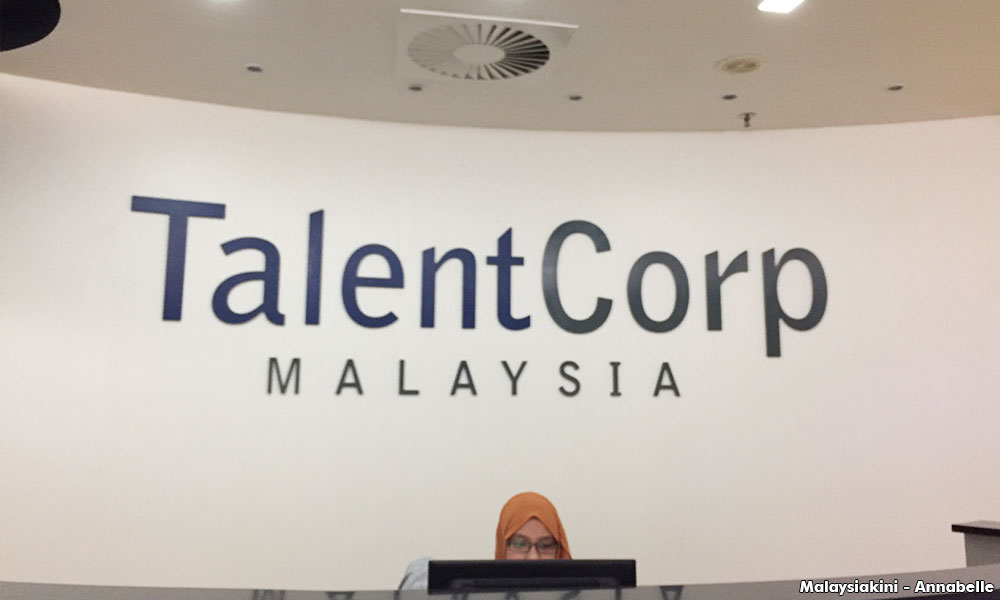
Firstly, it is not responsible for the human resource policies within the civil service, including among the medical fraternity. Issues such as long delays in applying for house officer positions among medical graduates and insufficient opportunities for specialist training for government doctors are under the purview of the Health Ministry and the Public Service Department (PSD).
Secondly, it is not responsible for the creation of high-paying jobs or raising the minimum wage to attract Malaysians abroad to come back home to work.
Thirdly, it is not a recruitment or a job search agency, although it carries out limited facilitation meetings between employers and employees to better understand the job market dynamics in the country.
What Talentcorp is responsible for is increasing the availability of high-skilled human capital in Malaysia. This includes bringing back overseas Malaysians who have accumulated skills and experience in certain critical occupation sectors under the Returning Experts Programme (REP).
Catherine Lian was a beneficiary of the REP, returning home from Indonesia to take over the position of country manager of IBM Malaysia. She is one of many thousands of Malaysians who have benefited from the programme.
While the number of successful applicants under this programme is small relative to the estimated number of Malaysians who have left our shores, the quality of these returnees and their overall impact in their respective workplaces should not be overlooked.
The Human Resources Ministry should push for the REP to be given a fresh mandate with enhanced incentives, especially with the increase in FDI flows into Malaysia and the opportunity to bring home highly experienced Malaysians from different parts of the globe in different industries.
These incentives may not necessarily be financial but come in the form of other low-hanging fruit such as expediting permanent residency (PR) applications for spouses and children of returning experts.
Talentcorp also brings highly skilled non-Malaysians into the country through the processing of expatriate work visas via their one-stop Malaysia Expatriate Services Centre (MyXpats Center).
The efficient processing of these work visas is one of the reasons why Malaysia is an attractive FDI location, not just in Southeast Asia but globally, in the manufacturing and increasingly, global business service (GBS) sectors.
Out with the ineffective, keep what works
One of the current challenges facing many multinational corporations is the requirement that they must advertise positions for 30 days in a Perkeso job portal before such a position can be offered to an expatriate worker.
Not only is this policy ineffective in “protecting” jobs for Malaysians, it also fails to recognise that the hiring of expatriates for such positions will often result in the hiring of Malaysians in complementary roles as the operations of the corporation in question expands and grows. Over time, many of these expatriates will also be replaced by home-grown talent.
Getting rid of such requirements, especially since we are well into our post-Covid-19 recovery, would enable Talentcorp to bring in highly skilled expatriates (some of whom may be ex-Malaysians) more efficiently as part of the process to grow the talent base.
At a time when every country in the world is facing labour shortages post-pandemic, one of the solutions proposed by Talentcorp is to allow companies in Malaysia to hire foreign graduates of Malaysian universities in selected sectors via special visas.
This is a commonplace practice in developed countries in sectors such as IT, higher education, and STEM-related occupations. This is also an effective way to reverse the brain drain in the country.

Talentcorp also has the responsibility of upgrading the quality of human capital currently existing in Malaysia. It has strategically chosen to focus on the area of internships so that it doesn’t overlap with HRD Corp in the training and upskilling of workers who are currently in the workforce.
It has advised many private companies on how best to put in place structured internship programmes as a way to provide a value-added experience to interns and to identify suitable candidates for their future workforce.
Talentcorp has also leveraged its experience in internship programmes to come up with an internship matching service called MyNext for potential interns and employers based on carefully collected data from qualified candidates.
Companies with Talentcorp-approved structured internship programmes were eligible for various tax deductions that were slowly expanded over time. These deductions should be continued and perhaps even enhanced.
One of Talentcorp’s key goals from its inception was to increase the female labour participation rate in Malaysia by introducing family-friendly work-life practices in the workplace.
Partly as a result of its focus on this objective, Talentcorp has been at the forefront of encouraging innovation and flexibility in the workplace by advising companies on work-life best practices.
During the pandemic, it pushed for tax deductions for companies practising flexible work arrangements such as the option of working from home a certain number of days a week. Even though we are at the post-pandemic stage of recovery, such flexible work arrangements should continue to be encouraged including through tax deductions.
Proper governmental support
I have only briefly outlined some of the programmes under Talentcorp. These programmes can only be effective if Talentcorp receives the cooperation and buy-in from other government ministries and agencies including the Immigration Department, the Home Ministry, the Inland Revenue Board, and the Higher Education Ministry, just to name a few.
Since Talentcorp was not created by an Act of Parliament, it does not have the same kind of leverage with government ministries in the same way as the Mida or Matrade. This means that the Human Resources Ministry needs to support the work of Talentcorp through cabinet decisions and ministerial circulars to the relevant stakeholders which include other ministries and government agencies.
Moving forward, there is a need to have a more dynamic view of the brain drain phenomenon. Malaysians who work abroad are human capital assets who can be called upon when the Malaysian economy is able to provide attractive job opportunities for some of them to return home.
This was the case for Penang-born Soon Kuek, who was appointed in 2021 as the general manager of the Malaysian operations of Lam Research, a cutting-edge semiconductor company which is headquartered in Silicon Valley.
Malaysians abroad who are working for multinationals can also act as advocates to bring FDI to a place which they are familiar with. The Malaysian overseas network can also be utilised to help Malaysian companies venture out to attractive markets in China, Vietnam, and Indonesia, just to name a few.
Singapore’s Economic Development Board established the Singapore Global Network in recognition of the untapped potential of Singaporeans outside their borders. This network also includes those who have worked, lived, or studied in Singapore.

With enough support, Talentcorp could also coordinate such efforts, perhaps together with Mida and Matrade, both of which have an international network of offices and people.
The work carried out by government agencies such as Talentcorp does not “grab” the headlines in the same manner as negative news about Malaysian talent leaving for greener pastures abroad. But this kind of work brings about incremental changes that contribute positively to the current and future talent landscape in Malaysia.
Rather than entertaining thoughts of shutting down Talentcorp, this agency should be empowered to do more so that its objectives can be better achieved for the betterment of the nation.
ONG KIAN MING is a former MP and former deputy international trade and industry minister.
The views expressed here are those of the author/contributor and do not necessarily represent the views of Malaysiakini.
/file/publisher-c1a3f893382d2b2f8a9aa22a654d9c97/2022/12/8fb993f9d25db9c8bd9adff739b17a05.jpg)
/file/publisher-c1a3f893382d2b2f8a9aa22a654d9c97/2021/11/0dd456e661da7f23e04ad9a9890abbfc.jpg)
/file/publisher-c1a3f893382d2b2f8a9aa22a654d9c97/2022/05/512dc923c0daafc1f481980e31de7ebb.jpg)
/file/publisher-c1a3f893382d2b2f8a9aa22a654d9c97/2021/04/af32a3e126ba5ed3a80820c1a7857547.jpg)




Report this comment
Are you sure you want to delete this comment?
This action cannot be undone.