


/file/1284/81803bebcad98fa8176746fc461fa22b.jpeg)

COMMENT | If head up to no good, don’t expect tail to be good
COMMENT | It was not an admonishment. It was a tacit confirmation of what ails the government’s financial system. It was a valid admission of the existence of individuals and groups milking the system.
Last week, MACC deputy chief commissioner (operations) Ahmad Khusairi Yahaya termed them as “financial crocodiles” who make false claims to obtain government funds, causing those who should actually benefit to be left out.
This, he said, prevents the economy from growing as expected.
He said the value of integrity seemed to be fading in a handful of companies that were responsible for helping the government through the distribution of funds or assistance to the needy.
This may not be totally true. The correct version should be that except for a few companies that value honesty and integrity, the rest have all been up to no good.
According to him...
COMMENT | It was not an admonishment. It was a tacit confirmation of what ails the government’s financial system. It was a valid admission of the existence of individuals and groups milking the system.
Last week, MACC deputy chief commissioner (operations) Ahmad Khusairi Yahaya termed them as “financial crocodiles” who make false claims to obtain government funds, causing those who should actually benefit to be left out.
This, he said, prevents the economy from growing as expected.
He said the value of integrity seemed to be fading in a handful of companies that were responsible for helping the government through the distribution of funds or assistance to the needy.
This may not be totally true. The correct version should be that except for a few companies that value honesty and integrity, the rest have all been up to no good.
According to him, the government also has no clear mechanism to monitor programmes or activities carried out to ensure they are actually implemented with the right number of participants.
There are also no clear rules or laws to take action against applicants such as having them blacklisted, filing civil suits, and reclaiming unused funds.
So, it is an admission of sorts that no one is keeping track of the funds after they are disbursed. The government has over the years given out money for various projects ranging from chilli-planting programmes to training workers for the oil and gas industry.
Was anything achieved? A big fat zero. The money simply disappeared into the pockets of the organisers.
A matter of leadership
Khusairi said the leakage in funds occurred as a result of several factors, including weaknesses in reviewing the authenticity of the information provided, which caused several companies owned by the same individual to make claims, and the “emergency” used as an excuse for not performing due diligence on applicants.
But what about those charged with responsibilities in checking the authenticity of the claims submitted? The Malay adage - Kalau kepala tak betul, macam mana ekor mau betul? (If the head is up to no good, don’t expect the tail to be good) - comes to mind.
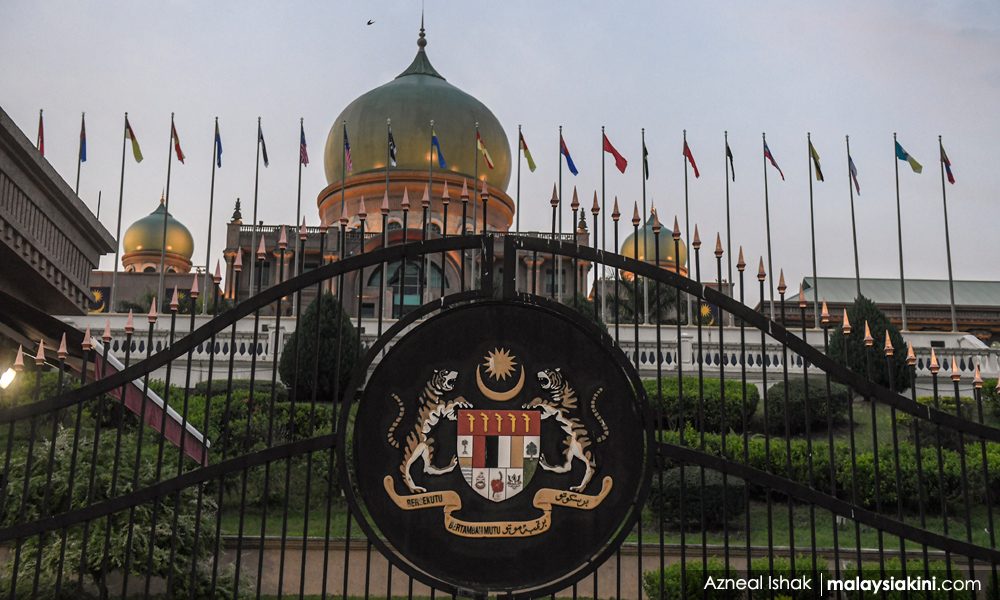
What kind of leadership are some of our political leaders (including ministers) and senior government officials providing? In the private sector, especially the GLCs, are fit and proper persons of integrity managing them?
What about thousands of cases reported in the auditor-general’s report over the years? Among them was the issue of the armed forces buying packets of instant noodles for RM4.50 each and another government department buying screwdrivers for RM80 each.
What has become of them?
In 2007, the then opposition leader Lim Kit Siang challenged the Anti-Corruption Agency (the predecessor to the MACC) to prove that it is not a “toothless tiger” and called on its director-general to disclose how many persons had been arrested and prosecuted for corruption and criminal breach of trust from previous Auditor-General’s Reports.
No answer had been forthcoming. Now that Prime Minister Anwar Ibrahim has told his cabinet colleagues to take seriously and scrutinise all remarks made in the Auditor-General’s Report 2021, can we expect the MACC to do something?
The big fishes carry on
Besides the AG’s report, there are dozens of other reports on the abuse of power and money. One of them is the purchase of student accommodation in Melbourne by Mara Inc.
Prepared by EY Consulting in September 2019, it was a 100-page report that provided detailed accounts of the transactions - complete with supporting documents and how and who made money out of the deals, and even fingered several non-Mara officials involved.
Then Mara Inc chairperson Mohd Lan Allani, former CEO Abdul Halim Rahim, and its head of property investment Zainal Zol Kulop Alang were among dozens of personalities, here and in Australia, named in the report.
Among others, the report alleges that multiple serving and former officials - including a powerful Malaysian political figure - may have extracted bribes worth up to A$23.5 million (RM70 million) by laundering funds via Australian property deals.
Like the AG’s report, the EY report also provides incidences of misuse of power, non-consultation or approval of the board, and non-compliance with laws, rules, and regulations.
Lan was slapped with several charges including money laundering last year - seven years after the media here and in Australia uncovered and published details of the web of deceit in the purchases. But other recipients of the dirty money are walking free with expensive watches on their wrists and driving expensive cars.
Then, there’s another report on Human Resources Development Fund (HRDF) by the Governance Oversight Committee, which was tasked with responsibilities that include reviewing all aspects of the board’s governance framework and its weaknesses.
It submitted a comprehensive report on the billion-ringgit establishment, citing various cases of disbursement for non-existent training programmes and an 11-month bonus payout to its former CEO. It also reported that it bought an RM400,000 car and shipped it to Sarawak for the minister’s personal use.
There are many other cases of “financial crocodiles” lurking in our system without any fear of being hunted down or caught.
One has to agree with Khusairi that there are many out there devoid of honesty, integrity, and morality who have and are still amassing wealth at the expense of the rakyat.
Unless they are relentlessly pursued and brought to book, the government and its system of governance will fall down like a house of cards.
R NADESWARAN is a veteran journalist who writes on bread-and-butter issues. Comments: citizen.nades22@gmail.com
The views expressed here are those of the author/contributor and do not necessarily represent the views of Malaysiakini.
/file/publisher-c1a3f893382d2b2f8a9aa22a654d9c97/2023/01/8b0dbf5e3ef58fe34717488c9224e7a3.jpg)
/file/publisher-c1a3f893382d2b2f8a9aa22a654d9c97/2023/01/8640706b2a519c7c9bc221b5023fe824.jpg)
/file/publisher-c1a3f893382d2b2f8a9aa22a654d9c97/2022/01/704b44365e23a8e241a429027829325e.jpg)
/file/1284/81803bebcad98fa8176746fc461fa22b.jpeg)
/file/publisher-c1a3f893382d2b2f8a9aa22a654d9c97/2022/03/730eb4633feac88e1933f09d60c9ffa4.jpg)
/file/publisher-c1a3f893382d2b2f8a9aa22a654d9c97/2022/11/3499f9f7ad863a11d6c9364f09db897f.jpg)
/file/publisher-c1a3f893382d2b2f8a9aa22a654d9c97/2023/01/1327d1176f5f5bbe202fb5790f652b2d.jpg)


Mkini..why is The English Word 'Thief' not accepted in the Comment column.Is it that sensitive word to be used..
Are you sure you want to delete this comment?
This action cannot be undone.