


/file/publisher-c1a3f893382d2b2f8a9aa22a654d9c97/2023/03/96751e6c41cd887eb106f09c0a2d646a.jpg)

COMMENT | Does not recognising LGBT mean they have no right to protest?
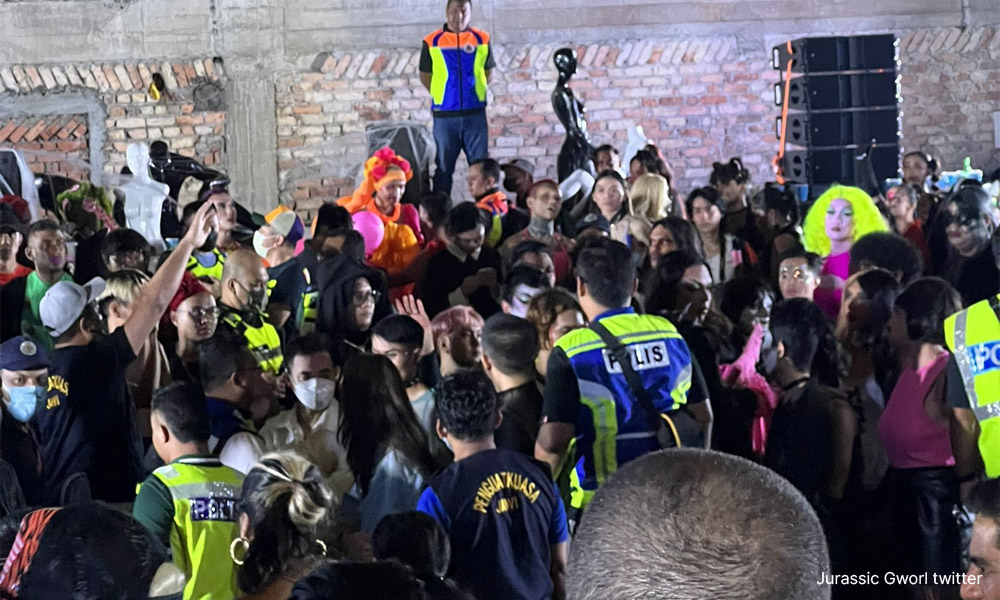
COMMENT | A peaceful assembly allegedly linked to the lesbian, gay, bisexual and transgender (LGBT) movement took place at Dataran Merdeka in Kuala Lumpur recently. The assembly was in conjunction with International Women's Day.
The issue created unnecessary uproar in Parliament as if the LGBT issue was considered by some "holier than thou" elements in this country to be the be-all and end-all.
In other words, some of our parliamentarians seem to view that the LGBT issue trumps other important national issues that ought to be debated in the august House.
At present, the case is being investigated for...
COMMENT | A peaceful assembly allegedly linked to the lesbian, gay, bisexual and transgender (LGBT) movement took place at Dataran Merdeka in Kuala Lumpur recently. The assembly was in conjunction with International Women's Day.
The issue created unnecessary uproar in Parliament as if the LGBT issue was considered by some "holier than thou" elements in this country to be the be-all and end-all.
In other words, some of our parliamentarians seem to view that the LGBT issue trumps other important national issues that ought to be debated in the august House.
At present, the case is being investigated for an alleged crime pursuant to Section 9 of the Peaceful Assembly Act 2012 as well as Section 14 of the Minor Offences Act 1955, respectively.
In the West, the LGBT group has always been framed as a human rights issue.
In 2008, the Liberal International Congress in Belfast adopted a resolution prohibiting persecution and discrimination on the basis of sexual orientation.
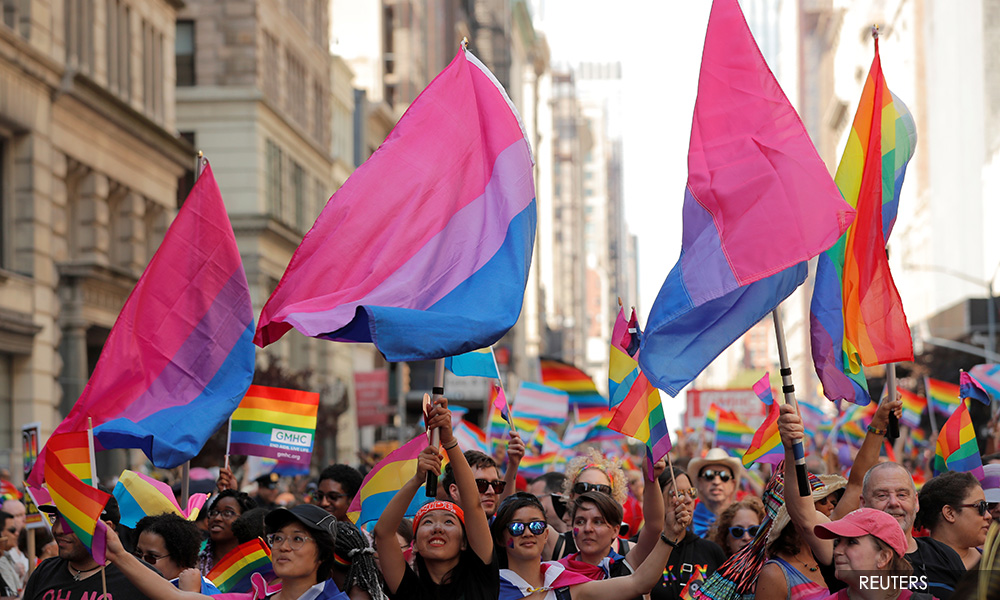
The proponents of LGBT rights hailed the said resolution as a small victory.
After all, the resolution reaffirmed the Yogyakarta Principles as a guiding document in interpreting existing human rights in relation to sexual orientation and gender identity.
If we may recall, in 2010, the then UN secretary-general Ban Ki-Moon stated that “laws criminalising people on grounds of sexual orientation and gender identity violate the principle of non-discrimination".
In Muslim-majority Asian countries such as Malaysia, the LGBT group has never been viewed from the prism of human rights.
One who closely follows the jurisprudential debate on this issue may realise that even in Muslim-minority Asian states, more often than not the LGBT movement is said to be inimical to Asian values. The East tends to view family values to trump individual rights.
Be that as it may, being LGBT is not recognised as a universal right as guaranteed by certain international human rights instruments such as the Universal Declaration of Human Rights or the International Covenant of Civil and Political Rights.
Having said that, in what way shall we view the present issue, namely the rights of the LGBT community to assemble peacefully in Malaysia?
Should the law totally prohibit them from exercising their fundamental rights as duly enshrined under Article 10 of the Federal Constitution?
As far as I am concerned this issue ought to be approached from these two dimensions.
Frankly speaking, I don’t think LGBT practices would be legally or constitutionally recognised as part of human rights in Malaysia, at least not now or in a near future.
Hence, like it or not, the LGBT community - being a minority group - has to reluctantly bend to the majority's wishes.
Nevertheless, the right of the LGBT group to hold and participate in a peaceful assembly is totally a different ball game.
Such a sacrosanct right is duly embedded in our apex law and is to be freely enjoyed by anyone, including the LGBT community.
Any attempt to deny such a fundamental right would be unconstitutional as it infringes the equal protection clause in Article 8 of the Constitution.
It also violates the right to freedom of peaceful assembly enshrined in Article 10 of our supreme law. This fundamental right ought to be jealously safeguarded by the government. A punishable assembly cannot be said to be a fundamental or constitutional freedom.
In the circumstances, the police, in my view, ought to stop the unnecessary intimidation against the LGBT community by halting their investigation forthwith.
MOHAMED HANIPA MAIDIN is a former deputy minister in the Prime Minister’s Department (Parliament and Law).
The views expressed here are those of the author/contributor and do not necessarily represent the views of Malaysiakini.
/file/publisher-c1a3f893382d2b2f8a9aa22a654d9c97/2023/03/d4a0d63c6a204348aa807633e861bcf2.jpg)
/file/1183/e8402277d154fb2370462f8549b0dd99.jpeg)
/file/publisher-c1a3f893382d2b2f8a9aa22a654d9c97/2023/03/ce0319817058e16d6036feb3c75d01e2.jpg)
/file/publisher-c1a3f893382d2b2f8a9aa22a654d9c97/2023/03/e61703999f244e28e7763077b2946a6c.jpg)
/file/publisher-c1a3f893382d2b2f8a9aa22a654d9c97/2023/03/96751e6c41cd887eb106f09c0a2d646a.jpg)


Report this comment
Are you sure you want to delete this comment?
This action cannot be undone.