


/file/1358/7b88d2078a18ac6eac91dd67fdeddb56.jpeg)

COMMENT | GE15 voting analysis - Part 4: The Chinese Pole
Due to the mixed composition of seats and a history of living across Malaysia (including in rural areas), their influence in determining the outcome of seats extends well beyond the handful of urban Chinese-majority seats
Arguably, given the intensity of political competition, Chinese Malaysians, minimally, determine the outcome in over a third of Peninsular Malaysia
This article, the fourth in the series, discusses the level, variation and electoral impact of the high Chinese support (or the lack thereof) for different coalitions in GE15
Higher Chinese electoral support modestly boosted the performance of Pakatan Harapan (DAP in particular). The high level of Chinese support underscored the success of the coalition electorally...
COMMENT | At 28 percent of the electorate, comprising 4.9 million voters in Peninsular Malaysia, Chinese Malaysians are the second-largest community.
Due to the mixed composition of seats and a history of living across Malaysia (including in rural areas), their influence in determining the outcome of seats extends well beyond the handful of urban Chinese-majority seats.
Arguably, given the intensity of political competition, Chinese Malaysians, minimally, determine the outcome in over a third of Peninsular Malaysia.
This article, the fourth in the series, discusses the level, variation, and electoral impact of the high Chinese support (or the lack thereof) for different coalitions in GE15.
Higher Chinese electoral support modestly boosted the performance of Pakatan Harapan (DAP in particular). The high level of Chinese support underscored the success of the coalition electorally.
A lack of Chinese electoral support weakened an already extremely weak BN, kept the MCA on the political fringe, and limited the national ambitions of Perikatan Nasional (PN) in their complete rejection of this coalition’s narratives.
Even stronger Chinese electoral support
Let’s look at the findings. The estimated electoral support of Chinese Malaysians for Harapan is the highest in history, exceeding earlier elections.
Electoral support increased from an estimated 91 percent in GE14 to an estimated 95 percent in GE15 in Peninsular Malaysia.
Please keep in mind the point made earlier, however, that the Chinese turned out in fewer numbers this general election compared to the last one.
The Chinese electoral support for Harapan in GE15 (Nov 2022) was higher than it was in the state elections of Malacca (Nov 2021) and Johor (March 2022), estimated at 90 percent and 79 percent, respectively, reinforcing the dynamic of a swing in support toward Harapan (a trend that was even larger in Borneo, a point to be discussed in forthcoming pieces).
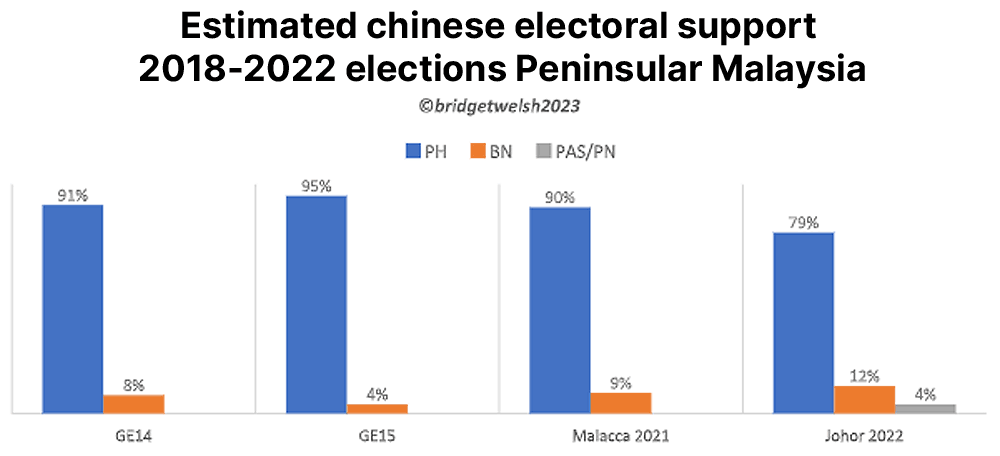
Chinese support represents one pole of the country’s ethnic divisions. Chinese support is at the core of Harapan’s political strength, as it is the highest of all different ethnic communities supporting it.
Unlike the other political coalitions, Harapan’s political support extends meaningfully across different communities, although at different levels.
A complete lack of Chinese support is also the weakness of other political coalitions. Both the BN and PN coalitions should ask themselves why they have limited cross-ethnic support.
For Umno/BN, the impact of corruption, discriminatory policies, and its collapse as a multi-ethnic coalition has long been told. The impact of Umno on destabilising politics for the past four years and party president Ahmad Zahid Hamidi’s leadership in the GE15 campaign also soured many Chinese voters.
For PN, the relatively new coalition on the block, its racialised and religious exclusionary rhetoric and repeated attacks on Chinese cultural and religious practices, institutions, and persons left an imprint.
PN’s political narratives have portrayed a Malaysia without Chinese, one in which they are not only to be displaced but targeted along the way to gaining power.
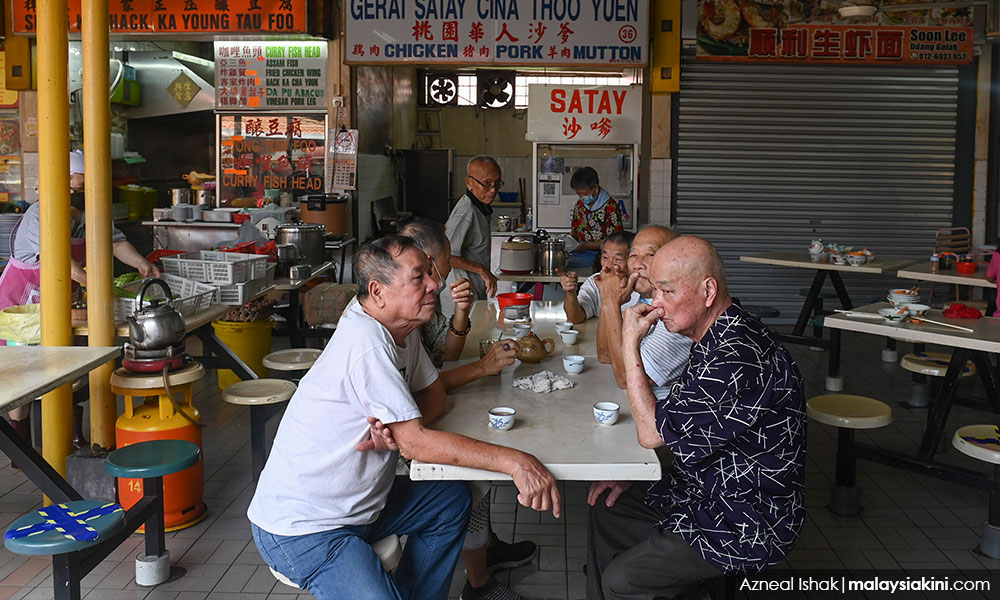
Like other communities, Chinese Malaysians vote for where they are respected, where their aspirations of belonging and hopes for their future - and their children’s future - are actualised.
PN has yet to fully appreciate that it cannot win power electorally when its rhetoric and approach to national politics polarises and alienates a large share of the electorate.
Variations of Chinese electoral support
Historically, the Chinese community has been the most common electoral swingers, political risk-takers, and punishers for lack of political performance. This latter phenomenon was most clear recently in Sarawak 2021 and reversed in GE15, as will be discussed in my next piece.
Yet, in GE14 and GE15, Chinese electoral support has been steady for Harapan; a clarion call for inclusion, better governance, and a stronger economy.
PN’s promise of political stability did not resonate among Chinese voters as the coalition’s rhetoric was actually destabilising social harmony and the important place of the Chinese in Malaysia.
A look at ethnic voting by state provides insights into the varied patterns of Chinese support. The increased Chinese support for BN in the Johor 2022 polls was party to punish the Dr Mahathir Mohamad-led Harapan for its poor economic management in 2018-2020.
It was also an appreciation of the Umno state leadership of Johor and menteri besar Hasni Mohammad at that time, who was since displaced from his position despite securing a victory for his party/coalition in the state elections.
The findings detailed below show that Chinese support for Umno/BN was cut more than half in Johor, from an estimated 13 percent in the 2022 state polls to six percent in GE15 just eight months later.
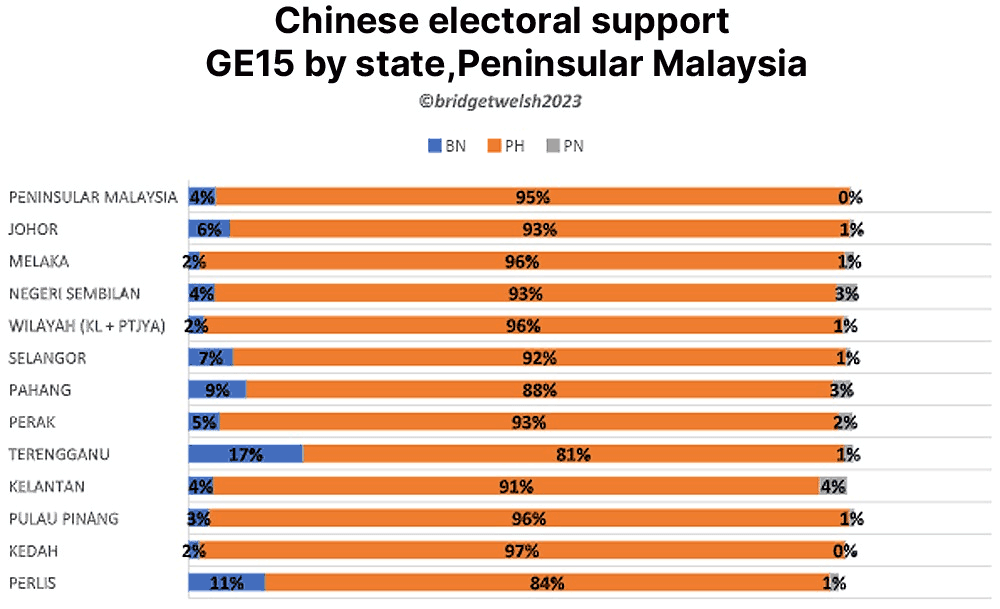
The largest percentage of Chinese support for Umno/BN was in Terengganu, but this is partly influenced by the small number of Chinese there, contributing to a higher percentage value. It is also due to a weaker Harapan in this state.
The minimal level of Chinese support for PAS/PN in GE15 in states they govern – Kelantan estimated four percent, Terengganu one percent, and Kedah zero percent - is an illustration of the Chinese rejection of the PAS/PN government and its campaign.
The findings are dismal for MCA. What the various state findings show is that MCA has long lost its base of support in states such as Perak, Johor, and Pahang.
The very low Chinese electoral support in these states speaks to the party’s greater dependence on Umno and loss of place in national politics.
Umno’s weakness in GE15, and its collapse, became a collapse of its BN partners. MCA’s performance was its weakest since 1986 and the party has yet to recover from its mass loss of Chinese support in the 2008 general election (GE12).
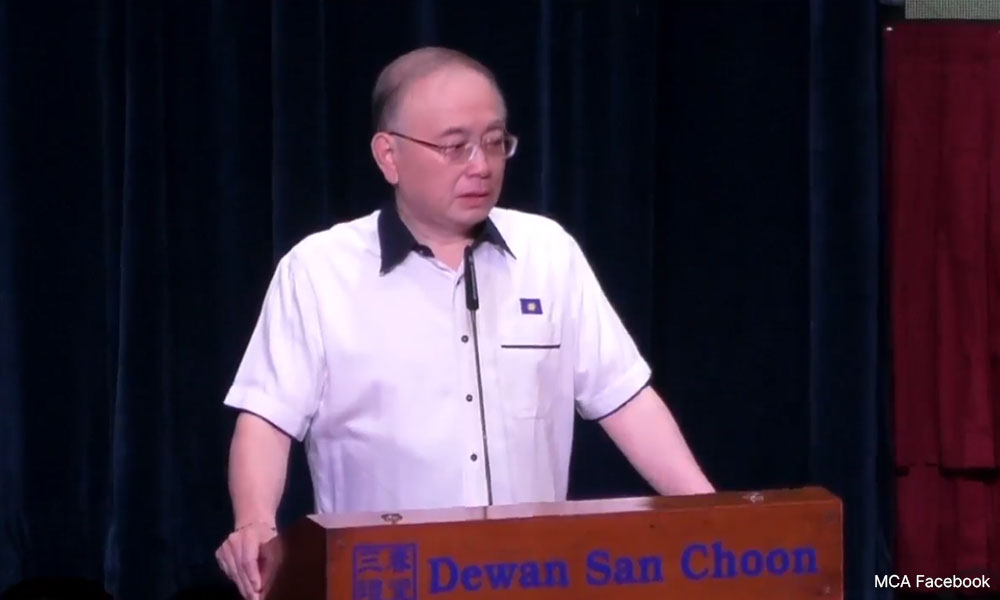
Only the president, Wee Kia Siong, and one of his party allies, Wee Jeck Seng, won in Ayer Hitam and Tanjung Piai respectively, albeit with lower margins. The party itself is on the political margins.
Impact of greater Chinese electoral polarisation
In assessing Chinese electoral support in GE15, it is necessary to look both at the not-insignificant turnout drop of 14 percent and the modest swing in support for Harapan of an estimated four percent.
The turnout drop suggests that more Chinese are dissatisfied with their options. The failure of Mahathir-Harapan 1.0 to adequately respond to the concerns of Chinese small businesses and address long-standing grievances in areas such as education and the protection of cultural and religious rights remains salient.
A trend of voters opting for political exit remains ever-present. It is especially salient in state polls when more voters outstation do not return to vote.
In looking at specific seats where Chinese support mattered electorally, attention returns to the close contests and traditional battles involving DAP and other parties, notably MCA.
There were three DAP-contested seats that offer insights: Bentong, Raub, and Ayer Hitam. In the first two, high Chinese support was decisive in the victories of DAP.
Reduced turnout and slightly lower Chinese support for the Harapan candidate in Ayer Hitam strengthened MCA’s victory. In all of these seats, however, the small Indian minority also was important, boosting the DAP candidates in both Bentong and Raub where there was a tighter margin for victory.
The need for non-Malay support to win was important as the ethnic polarisation of the electorate – Malays favouring PN – extended nationally.
With ethnic polarisation, and with three coalitions, the contests are highly competitive and make every vote important.
Looking ahead
For Harapan, there is a clear electoral dependence on Chinese support, not just in the seats discussed above. In GE15, Chinese Malaysians made up Harapan’s largest political base.
History has shown that the Chinese expect results and good performance and will punish those in power if those are not delivered. There is intense scrutiny on what is being delivered to the political base and how the party most of them voted for, DAP, is treated.
Importantly, more Chinese are exiting the political landscape, feeling a lack of ability to change the politics that is displacing their place in Malaysia and of hurtful political narratives.
The polarisation of national politics is made real by “clothing regulation” incidents against minorities, stoking division.
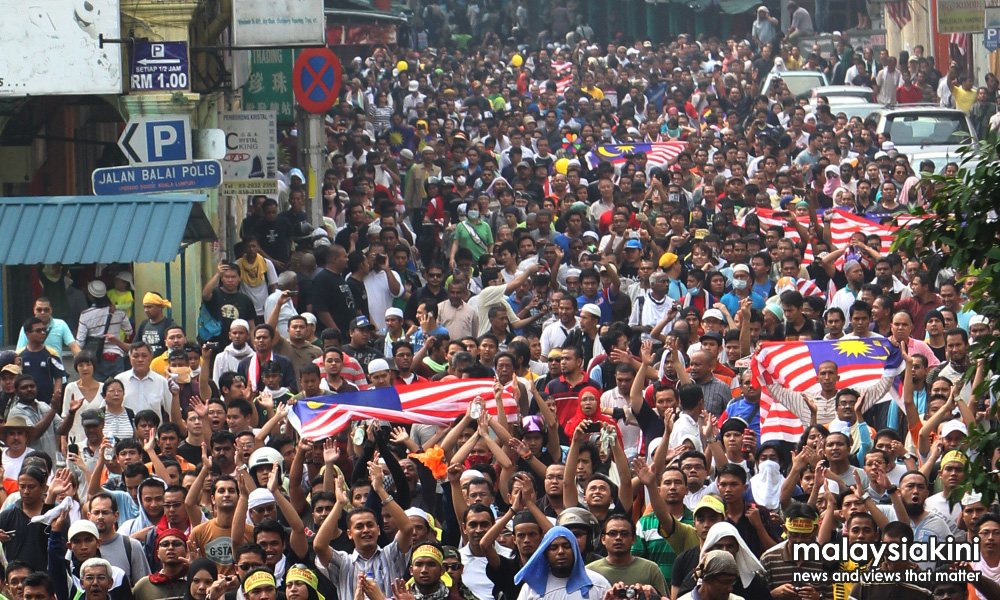
Political disengagement and dissatisfaction, even quiet anger, is strong and palpable on the ground. Electoral ethnic polarisation speaks to serious undercurrents in how communities are being treated and governed.
At the same time, there is cautious hope; hope for a stronger nation for all Malaysians. For now, as the findings confirm, the overwhelming support of the Chinese and their hopes lie with Harapan and Anwar Ibrahim’s government.
PN has made itself a non-option for the majority of Chinese voters. Umno/BN/MCA arguably did the same in GE15. It remains to be seen whether this will change in the coming state elections.
The GE15 Chinese electoral support patterns showed clarity and cohesiveness in voting. In this cohesiveness, a common pattern of support, they mattered electorally. They continue to hope that they will be treated as if they matter.
READ MORE:
GE15 ethnic voting analysis - Part 1: An introduction
GE15 ethnic voting analysis - Part 2: Who voted?
GE15 voting analysis - Part 3: Hidden, pivotal Indian swing
GE15 voting analysis - Part 5: Sarawak electoral swing
GE15 voting analysis - Part 6: A Sabah mix
GE15 voting analysis - Part 7: Battle for Malays
BRIDGET WELSH is an honorary research associate of the University of Nottingham, Malaysia’s Asia Research Institute (Unari). She is also a senior research associate at the Hu Fu Centre for East Asia Democratic Studies and a senior associate fellow of The Habibie Centre. Her writings can be found at bridgetwelsh.com.
The views expressed here are those of the author/contributor and do not necessarily represent the views of Malaysiakini.
/file/publisher-c1a3f893382d2b2f8a9aa22a654d9c97/2023/03/c63025815e0ab6c21e3f02a41cabfb7c.jpg)
/file/publisher-c1a3f893382d2b2f8a9aa22a654d9c97/2023/02/95185ac3a92c3c1b6c14b1a60eeffc61.jpg)
/file/publisher-c1a3f893382d2b2f8a9aa22a654d9c97/2023/01/996a8dfacc0f7a70cb96dba95952e347.jpg)


Are you sure you want to delete this comment?
This action cannot be undone.