


/file/publisher-c1a3f893382d2b2f8a9aa22a654d9c97/2021/09/e708d09449da05d6d632f6b556877590.jpg)

COMMENT | The costs of financing education and risk of elite capture
COMMENT | This piece responds to the recent furore regarding fee-paying MRSMs and, using some back-of-envelope calculations, discusses whether I think there’s a business case for government-funded private schools.
Spoiler alert: I think that on the balance of pros and cons, there really isn’t and we should be spending our limited budget for capital expenditure elsewhere. I offer my opinion just as an ordinary, concerned citizen whose field of study is education.
Introduction
More recently, there has been public discussion about the prospect of creating a special fee-paying Mara Junior Science Colleges (MRSM), ostensibly in response to demand by wealthy parents whose children cannot enrol due to limited places and preference given to children from lower-income backgrounds (or “B40” as we call it here). This was announced by the chairperson of Mara himself and sparked some debate.
Or in Malaysia, more likely a Facebook comments and TikTok storm.
For background...
COMMENT | This piece responds to the recent furore regarding fee-paying MRSMs and, using some back-of-envelope calculations, discusses whether I think there’s a business case for government-funded private schools.
Spoiler alert: I think that on the balance of pros and cons, there really isn’t and we should be spending our limited budget for capital expenditure elsewhere. I offer my opinion just as an ordinary, concerned citizen whose field of study is education.
Introduction
More recently, there has been public discussion about the prospect of creating a special fee-paying Mara Junior Science Colleges (MRSM), ostensibly in response to demand by wealthy parents whose children cannot enrol due to limited places and preference given to children from lower-income backgrounds (or “B40” as we call it here). This was announced by the chairperson of Mara himself and sparked some debate.
Or in Malaysia, more likely a Facebook comments and TikTok storm.
For background, Mara is a government agency set up in 1966 under the Rural and Regional Development Ministry, with a remit to support the socio-economic development of bumiputera (Malays and other indigenous Malaysians) in business and industry. Their programmes are wide-ranging but (to me at least) one of the flagship programmes is a countrywide network of 55 selective, fully-residential “science colleges” for secondary school students, otherwise known as MRSMs.
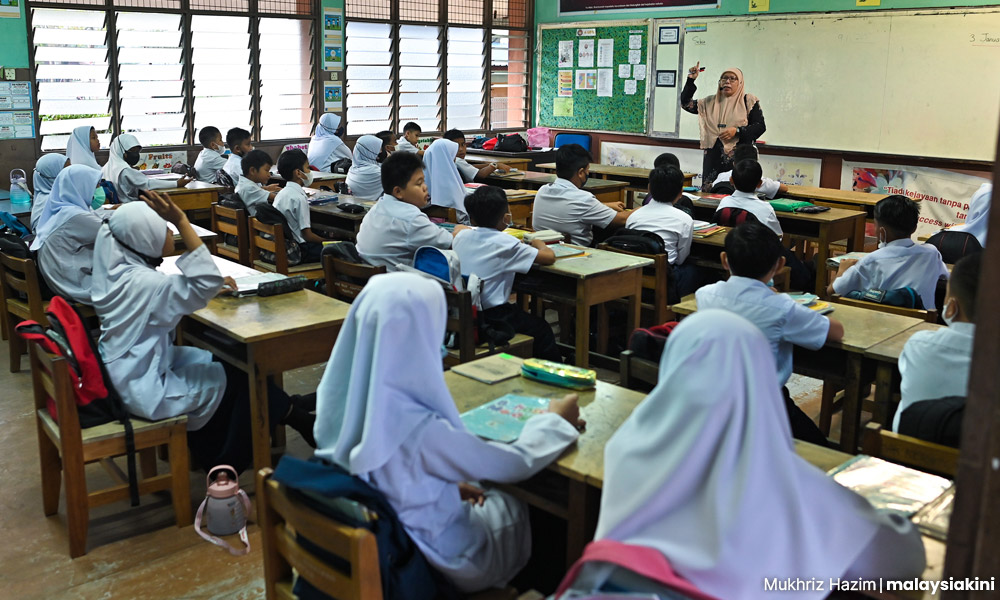
Students typically enrol at Form 1 (13 years of age), post-primary school. MRSMs are especially well-resourced compared to normal secondary schools - selected MRSMs even conduct additional international academic programmes such as IGCSEs (by Cambridge Assessment in the UK), or the notoriously difficult-to-spell International Baccalaureate, a progressive, rigorous but costly programme headquartered in Geneva, Switzerland. MRSMs are considered prestigious and highly sought after.
Before proceeding, full disclosure: I confess to not having much personal experience with MRSMs as I do not meet the ethnic criterion for enrollment - a quota of 10 percent was granted for non-bumiputera like myself post-2004 but by that point I was too old to be just starting secondary school anyway and had been whisked off to Singapore on an Asean scholarship.
But since returning from Singapore and re-establishing my life here in Malaysia, I’ve befriended many MRSM graduates who speak highly of their experience. Curiously enough, I’ve still not met any non-bumiputera graduate of MRSMs despite the 10 percent quota, though I know many non-bumiputera who have utilised the 10 percent quota that also exists for matriculation colleges (pre-university).
If anyone knows why, I’d love to hear it (for more context, non-bumiputera are currently around 30 percent of the Malaysian population, according to national statistics).
Government-funded private schools? Why not, if it makes a profit and even subsidises lower-income students? As promised in the title, here’s the main question: is there a business case for government-funded private schools?
One pattern of responses to this issue seems to go like this:
There’s demand for the MRSM brand, especially from alumni who’ve made it big. There is, however, limited supply, especially after you account for MRSM intentionally selecting students who come with social disadvantage (aligned, by the way, with Mara’s stated mission).
If wealthy parents are willing to pay, why not? Perhaps these MRSM’s can then become self-funding, even generating a profit for Mara. After all, Mara is in the business of supporting entrepreneurship and business. Everybody wins.
Cost calculations
As I’ve alluded to already, I think this position is naive with regard to the costs and risks of doing business. Let me try to do some back-of-envelope calculations to see where it takes us:
How much does public education cost? Some guesstimates derived from public data:
Let’s use the Education Ministry’s budget as a proxy. It varies from year to year but this year it’s RM55.2 billion for approximately 4.8 million students nationwide, based on MOE statistics. So we’re looking at… *checks calculator*, RM11,500 per student per year. So, let’s use that as the baseline and then add the following provisos:
MRSMs are fully residential, not day schools. Whatever supplementary fees that parents pay are unlikely to make up the difference. On a fully fee-paying basis (when I survey the fee structures of some private schools that have both day and boarding fees), boarding fees are usually around half of the tuition fees. So let’s round down and conservatively add RM5,500 per year.
The Education Ministry’s average figure of RM11,500 also takes into account primary schools which tend to spend less per student (because secondary schools have more differentiation in subjects, more financially demanding facilities, etc).
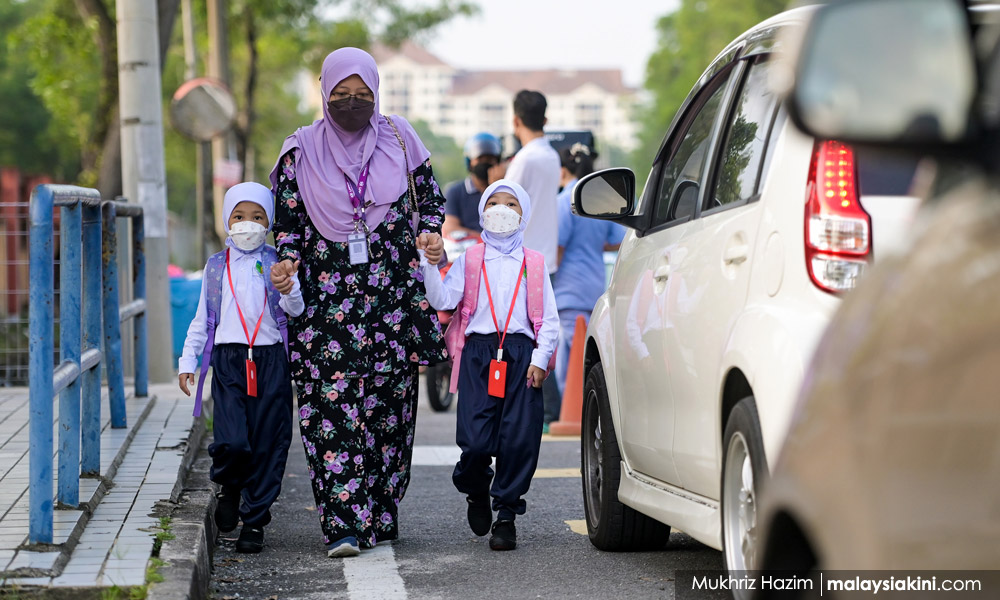
This will definitely be the case for MRSMs which emphasise higher-quality facilities for the sciences and some even have to teach according to special curricula. Perhaps the staff are high performers or more qualified personnel who cost more per head. Moreover, for vague reasons, secondary school teachers in the government sector tend to be on higher salary grades (though personally, I think in many ways, teaching in primary school is just as, if not more demanding).
So let’s conservatively add a premium of 50 percent again, or RM5,500.
MRSMs also do not have the kind of economies of scale that the Education Ministry has. I would add a premium here of another 10-20 percent but perhaps that can be cancelled out by the supplementary fees that parents have to pay.
So, all in all, that takes us to roughly RM22,5000 per year per student in pure operating expenditure (which is what the Education Ministry budget mostly is - paying salaries and bills to keep schools running).
We’ve not even talked about the potential costs of constructing new colleges (capital expenditure), which if you borrow and amortise over 20 years might add a significant amount per student per year. And so we enter the region of costing the public purse upwards of RM30,000 per student, per year, for five years (the duration of the study). How many Myvis is that?
If a Mara insider sees this and knows the true expenditure per student, please let me know if I’m far off.
But personally, I think I am erring on the side of giving a lower estimate and I would not be surprised at all if, because of my conservative estimates, the true operating expenditure per student is in the realm of RM30,000-40,000 per year, not counting capital expenditure.
To me, this expense is fine and well worth the expense if it adheres to the mission of affirmative action. But if these funds disproportionately benefit elites, then sadly I think that’s a classic case of elite capture and really quite undesirable.
To put it simply, elite capture just refers to whenever public resources are biased to be for the private benefit of elites or people of superior social status in a way that is detrimental to the general welfare of the public.
Elites are able to capture these resources through connections (kabel, as we might call it), privileged access to information, and political party affiliation as well as the accumulated advantage of knowing how to navigate the system (knowledge that is denied to the less-privileged).
Elite capture is considered by some as a form of corruption, though different from outright criminality.
But anyway, back to the topic of MRSMs.
What do the numbers mean?
So how do we interpret the numbers? Is there a business case?
So let’s say Mara opens a fee-paying MRSM and charges RM15,000 per year (a pretty hefty sum I’m sure - I definitely wouldn’t be able to afford it), and parents swarm in to send their kids. It would seem like business is booming but based on the calculations above, that still means that public coffers foot the bill of at least RM7,500, probably much more, per student.
So let’s dispense of this idea that a fee-paying MRSM can pay for itself, let alone make a profit - unless we’re saying we’re going to charge RM35,000-40,000 year to break even (still cheaper than Epsom College or Kolej Tuanku Ja'afar by a wide margin). But if that’s the case, will parents still be knocking on the door?
Let’s say MRSMs charge a high enough fee to be a good business, but this high fee causes parents to turn away, then Mara will have to bear the risk and cost of the initial capital expenditure to set up these colleges too (amidst ballooning government debt), to the tune of many millions.
That would be money better spent elsewhere, such as investing in our ready-made government schools (some of which are in desperate need of repair), or widening the school feeding programme, which I believe the science is very much supportive of and will be one of the best value for money in terms of sheer impact and equity (if delivered properly without leakages, as is the case for any programme).
Fee-paying MRSMs sound like awful fiscal discipline to me, in addition to contributing to further segregation and fragmentation in our education system.
Yet as we see here, discipline is the basis of success.
Conclusion
I’ll close by saying this. Public education is costly and we should be grateful to already live in a country that guarantees universal access. That SMK down the road from us? We are entitled to send our kids there at close to zero cost, regardless of whether we’re rich or poor.
Moreover, through the Parent-Teacher Association, we have a statutory channel (provided by the Education Act of 1996) through which we can communicate our concerns to teachers and school leaders, as well as contribute some of our discretionary income to benefit our children and the children of others.
Parents can and should be partners with local schools, especially parents who have become wealthy in part due to the infrastructure, resources, and legal frameworks provided by the country.
With regards to why we have MRSMs, my reading of it is that our country recognises that due to historical disadvantages, some students deserve a higher expenditure per student (concentrating limited public resources) because they do not have access to other forms of inherited capital (tangible and non-tangible) that will help them get ahead, fulfil their potential and contribute to society. That is the logic behind Mara, which I understand and respect.
I fear, however, that elites agitating for their “rights” to these concentrated resources are unaware that they have, by virtue of their elevated position, disqualified themselves from it.
Sorry, you just have to send your kids to normal schools like the rest of us or pay your own way to unsubsidised private schools, also like the rest of us who choose to (though I wouldn’t personally recommend it - martabatkan SK/SMK!).
It is, as I said earlier, a form of elite capture which should not be condoned, and I’m not even sure if the people pushing for this are fully aware of the moral dimension of what they are doing. Additionally, I am 98 percent sure that the business case for a fee-paying MRSM is a very poor one, and should be dismissed as a red herring.
This article first appeared in the blog Pedagogeek Thinking.
TIONG NGEE DERK is senior lecturer at the Centre for English Language Studies, Sunway University. His research interests include language education, education policy, and professional learning.
The views expressed here are those of the author/contributor and do not necessarily represent the views of Malaysiakini.
/file/publisher-c1a3f893382d2b2f8a9aa22a654d9c97/2023/03/29928959e49421268821dc7cfd1cf364.jpg)
/file/publisher-c1a3f893382d2b2f8a9aa22a654d9c97/2023/01/7339b074af37a63879473eb60b5ffd53.jpg)
/file/publisher-c1a3f893382d2b2f8a9aa22a654d9c97/2022/11/2ce88b78a61f0546047576312d68962e.jpg)
/file/970/401eae23688b844b4cf40a2b8bf06b68.jpg)
/file/publisher-c1a3f893382d2b2f8a9aa22a654d9c97/2023/02/a42611367dec4c2452ad8c723b5a00ce.jpg)


Report this comment
Are you sure you want to delete this comment?
This action cannot be undone.