/file/publisher-c1a3f893382d2b2f8a9aa22a654d9c97/2020/07/708e270880b0c81c24f368d852736ed7.jpg)

COMMENT | Should Malaysia ratify UN Torture Convention?
In justifying the government’s decision, the minister gave several reasons. One such reason was that by doing so, it would require the government to amend several laws.
He also said the UN convention prohibits a country from enacting laws with elements of “severe pain” as part of its punishment.
He argued that if the government decides to ratify UNCAT, it may need to remove caning as a punishment in our current criminal legal system.
Under the present system, caning is provided as a punishment for several offences such as rape under the Penal Code as well as crimes dealing with drug trafficking under the Dangerous Drugs Act 1952.
Additionally, the minister lamented that...
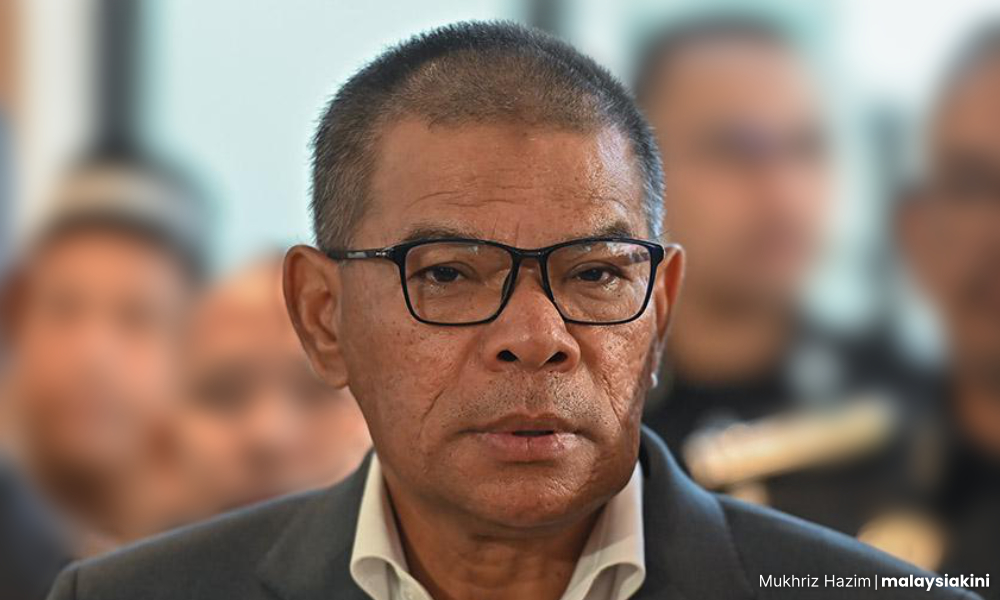
COMMENT | In his recent ministerial reply in Parliament, Home Minister Saifuddin Nasution Ismail told the Dewan Rakyat that Malaysia will not be ratifying the United Nations Convention Against Torture (UNCAT).
In justifying the government’s decision, the minister gave several reasons. One such reason was that by doing so, it would require the government to amend several laws.
He also said the UN convention prohibits a country from enacting laws with elements of “severe pain” as part of its punishment.
He argued that if the government decides to ratify UNCAT, it may need to remove caning as a punishment in our current criminal legal system.
Under the present system, caning (above) is provided as a punishment for several offences such as rape under the Penal Code as well as crimes dealing with drug trafficking under the Dangerous Drugs Act 1952.
Additionally, the minister lamented that the government may also need to remove caning as a form of punishment under syariah law.
With the greatest respect for the minister, I find some of his reasons are inherently flawed. But before rebutting such feeble arguments, it would be good for us to have at least a cursory understanding of UNCAT and the true nature of ratifications of any international covenants under international law.
When the international community via the United Nations agreed to enact UNCAT which came into force on June 26, 1987, it basically recognised that those rights were derived from the inherent dignity of the human person.
It also acknowledged that no one shall be subjected to torture or to cruel, inhumane, or degrading treatment or punishment.
It goes without saying that torture and other cruel, inhumane, or degrading treatment would constitute serious violations of human rights.
The minister was right in saying that ratifying UNCAT would require the government to amend a slew of legislations.
By virtue of Article 2 of UNCAT, any party which agrees to ratify the said convention would need to take, inter alia, legislative measures to prevent acts of torture from occurring within their territorial jurisdiction.
Such legislative measures may include amendments to several existing laws so that such laws would be kept in tandem with provisions contained in UNCAT.
Having to amend laws
But are amendments to any law necessarily or inherently bad? After all, even in the absence of ratification of any international covenants, the government has been amending a whole raft of legislation. Hence, with due respect, it is quite difficult to accept his argument on this point.
In fact, amendments to any law are highly necessary especially if such laws are considered bad laws, particularly when they contain provisions that are oppressive or repugnant to human dignity.
To be fair to the minister, his concern that Malaysia may need to remove certain punishments such as the punishment of caning, as it may be seen to be violating UNCAT, is not unfounded. There are merits to his concern.
The whole foundation of international law is essentially premised on the consent of state parties.
Thus, even if state parties have duly agreed to sign and ratify any international conventions, such ratifications can also be made with certain declarations, reservations, and understandings. This is expressly provided under the 1969 Vienna Convention on the Law of Treaties.
After all, when Malaysia agreed to sign and ratify the Convention on the Elimination of all Forms of Discrimination Against Women (Cedaw) - which contained several provisions which were incompatible with syariah - Malaysia ratified it with a certain number of reservations.
One may not realise that many positive laws have been introduced since the ratification of Cedaw which duly protected, affirmed, and safeguarded the rights of women.
Making reservations
It is submitted that UNCAT does not exclude the possibility that states may make reservations at ratification or accession.
Hence, I firmly believe there would be many positive elements that could be introduced to many of our laws should Malaysia agree to ratify UNCAT, especially on matters relating to some mind-boggling criminal investigations.
When the United States signed UNCAT on April 18, 1988, and ratified the same on Oct 21, 1994, such ratification was also subject to certain declarations, reservations, and understandings, including a declaration that Articles 1 through 16 of UNCAT were not self-executing, therefore required domestic-implementing legislation.
Likewise, when China agreed to ratify UNCAT, it made the following reservations - “The Chinese government does not recognise the competence of the Committee against Torture as provided for in article 20 of the Convention” and “The Chinese government does not consider itself bound by paragraph l of article 30 of the Convention”.
To conclude, I think it is high time for Malaysia to seriously consider ratifying UNCAT.
MOHAMED HANIPA MAIDIN is a former deputy minister in the Prime Minister’s Department in charge of legal affairs and he has a master's degree in international law.
The views expressed here are those of the author/contributor and do not necessarily represent the views of Malaysiakini.
/file/publisher-c1a3f893382d2b2f8a9aa22a654d9c97/2024/06/2ffacf6dbb9b0452143ee6e75039b4e6.jpg)
/file/publisher-c1a3f893382d2b2f8a9aa22a654d9c97/2024/05/4764c3a87a9274a93527282dd5c0d72d.jpg)
/file/publisher-c1a3f893382d2b2f8a9aa22a654d9c97/2023/08/fdbcc1cb4090d0cf614f6448de1332d3.jpg)